
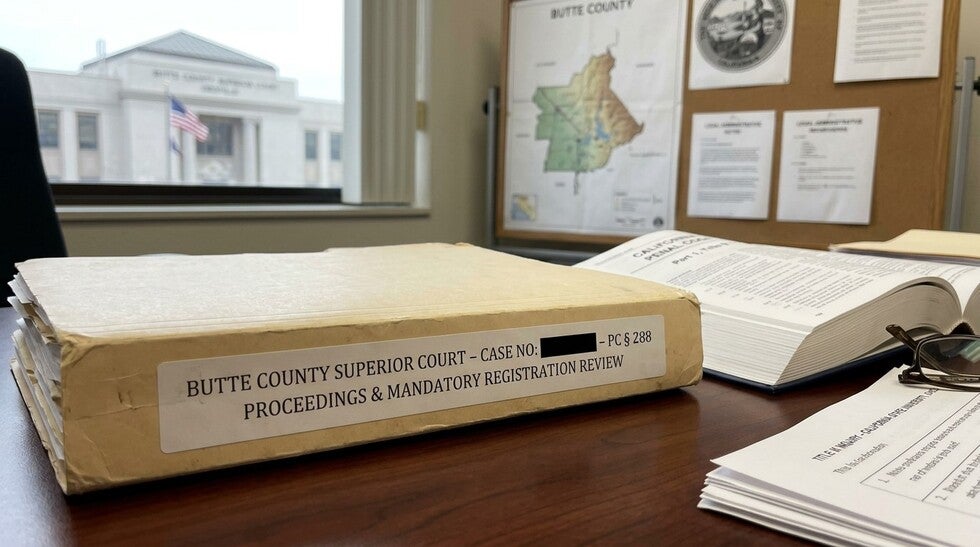
Sex Crime Charges in Butte County can affect a person's liberty, reputation, housing, employment, immigration status, education, and future registration duties long before a case reaches trial. A charge involving Penal Code section 288, sexual battery, assault with intent to commit a sexual offense, online communications, or a CSU Chico-related allegation requires immediate and careful defense planning.
California sex crime cases are highly fact-specific. The defense must examine what was alleged, who made the report, whether there is digital evidence, whether statements were lawfully obtained, whether the accusation involves a minor, whether mandatory sex offender registration could apply, and whether a school, employer, licensing board, or federal agency is also involved.
Sex Crime Charges in Butte County under PC § 288
Penal Code section 288 generally prohibits lewd or lascivious acts with a child. The prosecution must prove the specific elements of the charged subsection, including the child's age, the defendant's conduct, and the required sexual intent. A conviction under PC § 288 can carry prison exposure and mandatory sex offender registration, with the exact consequences depending on the subsection, prior record, facts, and final conviction.
PC § 288(a) addresses lewd or lascivious acts involving a child under 14. PC § 288(b) addresses more aggravated allegations involving force, violence, duress, menace, or fear. PC § 288(c) can apply in certain cases involving a 14- or 15-year-old child and an accused person who is at least 10 years older. These distinctions matter because the penalties, defenses, and negotiation options can differ substantially.
County context also matters. A case involving Madera County PC § 288 allegations may involve different local practices, agencies, and courthouse procedures than a Butte County case in Chico or Oroville.
Sex Crime Charges in Butte County and mandatory registration
Many California sex offense convictions require registration under Penal Code section 290. Registration can affect where a person lives, works, studies, travels, and appears in background checks. For PC § 288 and other serious sex offenses, registration is often one of the most important consequences in the case.
Registration is not the same for every conviction. California uses a tiered registration system, and the required period can depend on the offense, subsection, risk level, prior convictions, and other statutory rules. A defense lawyer should analyze registration exposure before any plea, not after sentencing.
The defense should also review whether the charged offense is overbroad, whether a lesser non-registerable or different-registerable offense is legally supported, whether the evidence supports the charged subsection, and whether the case involves mistaken age, lack of sexual intent, false allegation, unreliable disclosure, contamination of statements, or digital evidence problems.
CSU Chico Title IX and student conduct proceedings
When an allegation involves CSU Chico students, campus housing, fraternity or sorority events, athletics, university employment, study groups, or off-campus conduct connected to the school environment, a Title IX or student conduct process may run alongside the criminal case. That process is separate from Butte County Superior Court and can move on a different timeline.
Students should be careful. A statement made in a campus process can affect the criminal case. A no-contact directive, interim suspension, housing restriction, class schedule change, or campus exclusion can affect day-to-day life before criminal charges are resolved. A student accused of misconduct should not assume the school process is informal or harmless.
Title IX rules and school procedures can change, and universities may also apply student conduct rules outside Title IX. The defense strategy should coordinate criminal court, campus deadlines, evidence preservation, witness communications, and any school-imposed restrictions without implying that the criminal lawyer controls the university process.
Butte County courthouse process for sex crime cases
Sex crime cases in Butte County are handled in the Superior Court of California, County of Butte. The Butte County Courthouse is located at One Court Street, Oroville, CA 95965-3303. The North Butte County Courthouse is located at 1775 Concord Avenue, Chico, CA 95928. These are public court facilities, and Bulldog Law has no affiliation, endorsement, partnership, special access, or legal relationship with the court.
A felony sex crime case may involve arraignment, bail or release conditions, protective orders, discovery, forensic evidence, digital evidence, preliminary hearing, motion practice, negotiations, and trial. Misdemeanor sex cases can also carry serious collateral consequences, especially when registration, professional licensing, student discipline, immigration, or family court issues are involved.
Release conditions can be strict. The court may order no contact with the complaining witness, stay-away terms, restrictions involving minors, electronic search terms in some cases, travel limits, or firearm restrictions. Violating release conditions can create new problems even if the person believes the underlying accusation is false.
Digital evidence, messages, and online allegations
Modern sex crime cases often involve phones, social media, dating apps, direct messages, cloud accounts, photos, videos, location data, deleted messages, and screenshots. Digital evidence can help either side, but it must be preserved and interpreted carefully.
A person accused of a sex crime should not delete messages, alter accounts, contact the complaining witness, or post online explanations. Deleting evidence can create separate legal problems and may make the defense harder. Instead, counsel can evaluate preservation letters, forensic downloads, subpoena issues, authentication, metadata, and context.
Online sexual images can create separate exposure. Bulldog Law's article on posting intimate images online explains why consent, distribution, privacy, and digital publication can turn a personal dispute into a criminal investigation.
Sexual battery and assault-related charges
Not every Butte County sex crime allegation is a PC § 288 case. Penal Code section 243.4 sexual battery focuses on touching an intimate part of another person for sexual arousal, gratification, or abuse under circumstances covered by the statute. The facts may involve alleged touching in a bar, workplace, campus event, home, rideshare, party, or custody setting.
Defenses may include lack of sexual intent, accidental contact, consent where legally available, mistaken identity, unreliable witness identification, intoxication-related perception issues, video inconsistencies, or insufficient evidence. A focused review of sexual battery defense under PC § 243.4 can help separate that charge from more serious felony sex offenses.
Penal Code section 220 is different. It addresses assault with intent to commit certain sexual offenses and can carry severe felony exposure. The prosecution must prove both an assault and the specific intent to commit the alleged sexual offense. Bulldog Law's discussion of assault with intent under PC § 220 is relevant when prosecutors claim conduct went beyond words, flirting, or ambiguous contact.
Federal sex crime investigations and child exploitation allegations
Some Butte County cases may become federal or involve federal agencies, especially when allegations include online enticement, interstate communications, cloud storage, child sexual abuse material, travel, coercion, or exploitation. Federal cases are prosecuted under different statutes, in a different court system, and often carry severe mandatory or guideline-driven consequences.
A state PC § 288 case does not automatically become federal. But if agents contact a suspect, execute a search warrant, seize devices, or ask for an interview, the person should not assume the matter is routine. Statements to federal agents can create serious risks.
Bulldog Law's overview of federal enticement and child exploitation defense addresses why online conduct, device evidence, and interstate communication issues require immediate attention.
Survivor-support laws may also appear in the broader legal landscape. For example, victim support for child sexual exploitation survivors reflects a federal policy framework that is separate from the state criminal defense issues in a Butte County prosecution.
Victim and witness immunity issues in sexual assault cases
California law includes protections for certain sexual assault victims and witnesses who report or participate in proceedings. Penal Code section 1324.2 addresses immunity issues in specified circumstances. The purpose is to reduce fear that reporting or cooperating will automatically expose a victim or witness to prosecution for certain related conduct.
For the defense, these rules matter because witness incentives, immunity, prior statements, credibility, and the scope of protected conduct may become relevant. Immunity does not mean an accusation is true or false. It means the legal setting around a witness's statement must be understood accurately.
Bulldog Law's discussion of automatic immunity for sexual assault victims and witnesses explains why these issues can affect both investigation strategy and courtroom cross-examination.
Confidential communications and workplace-related issues
Some sex-related allegations arise in employment, education, healthcare, counseling, human resources, or internal complaint settings. Communications may be privileged, confidential, partially protected, or discoverable depending on who made the statement, who received it, and the legal context.
Confidentiality issues are especially important when allegations involve sexual harassment, workplace complaints, campus reporting, therapy records, medical records, or internal investigations. Bulldog Law's article on sexual harassment communication privilege addresses why not every statement can be treated the same way in litigation.
Defense strategies in Butte County sex crime cases
Sex crime defense requires a careful, evidence-driven approach. The defense should not rely on stereotypes about accusers or assumptions about the accused. The question is what the prosecution can prove beyond a reasonable doubt and whether the evidence supports the exact charge filed.
Key defense issues may include:
- False accusation, misidentification, or mistaken memory.
- Contaminated child interview or suggestive questioning.
- Lack of sexual intent required by the statute.
- Age, relationship, or timing problems in the allegation.
- Digital evidence that contradicts the accusation.
- DNA, medical, or forensic evidence that is missing, weak, or inconclusive.
- Unlawful search, seizure, interrogation, or device access.
- Title IX statements that were misunderstood or taken out of context.
- Overcharging compared with the evidence.
Defense planning may differ across counties. A case involving San Joaquin County PC § 288 charges may involve different local practices and evidentiary patterns than a Butte County case tied to CSU Chico, rural communities, or the Chico and Oroville courthouses.
What to do after a sex crime accusation in Butte County
A person accused of a sex crime should not try to “clear things up” alone. Contacting the complaining witness, sending apologies, asking mutual friends to intervene, deleting messages, or making social media posts can seriously damage the defense and may violate court or campus orders.
Practical steps include:
- Do not speak to police without a lawyer.
- Preserve phones, messages, photos, call logs, location data, and social media accounts.
- Do not delete, edit, or factory reset devices.
- Save school, employer, court, or police notices.
- List possible witnesses and timelines privately for counsel.
- Comply with no-contact and stay-away orders.
- Tell counsel immediately about immigration, licensing, military, school, or professional consequences.
Sex Crime Charges in Butte County lawyers in California
Bulldog Law helps clients facing Sex Crime Charges in Butte County, including PC § 288 allegations, sexual battery, assault with intent, digital evidence cases, registration exposure, Title IX parallel proceedings, federal investigation risk, witness-immunity issues, and courthouse proceedings in Chico and Oroville.
No lawyer can promise a dismissal, reduction, acquittal, or registration outcome. What Bulldog Law can do is review the evidence, protect constitutional rights, examine digital records, challenge unreliable allegations, coordinate collateral proceedings, and build a defense focused on what the prosecution must prove.