
By the The Bulldog Law Criminal Defense Team • Reviewed by a licensed California criminal defense attorney
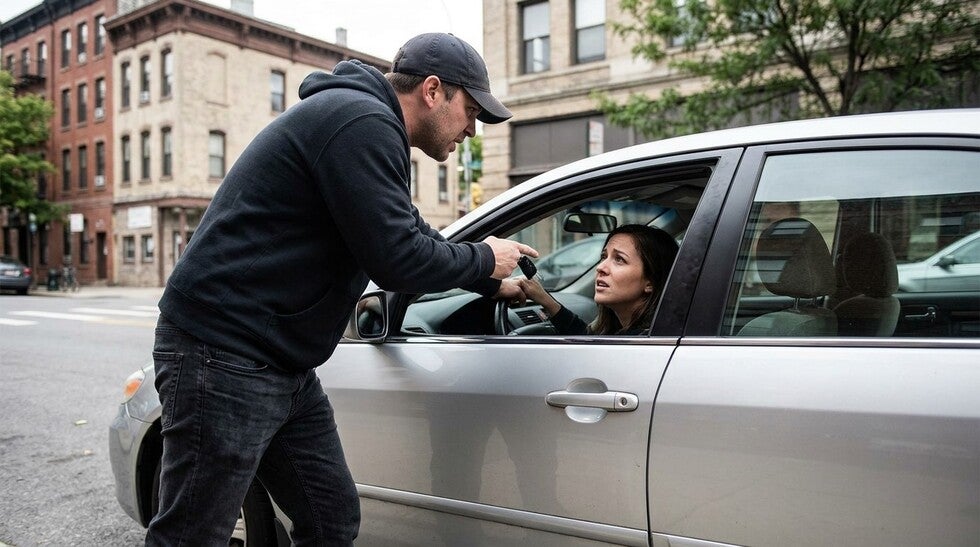
Carjacking under Penal Code § 215 is taking a motor vehicle from the possession or immediate presence of a person driver OR passenger against their will, by force or fear, with intent to deprive them of it either permanently or temporarily. It is a straight felony carrying 3, 5, or 9 years PER VICTIM, a strike and violent felony, with the 10–20–life firearm enhancements (§ 12022.53) stacking on top and it sits one element away from its neighbors: add force-or-fear to grand theft auto and you have carjacking; make robbery's target a car and you have carjacking.
Those single-element gaps are where the defense works, because each step down the ladder carjacking to GTA, completed to attempted removes years and strikes. This guide from The Bulldog Law's theft crimes defense practice covers the elements, the sentencing math, the felony-murder shadow over these cases, and how they're actually defended.
The Elements and the Details That Decide Cases
- A motor vehicle taken movement of any distance completes the taking; the stalled getaway three feet later still counts.
- From the possession or IMMEDIATE PRESENCE of a driver or passenger the element that distinguishes § 215: someone must be there. The parked empty car is GTA; the owner at the pump, the passenger waiting inside, the driver pulled from the seat that's carjacking territory, and ‘immediate presence' stretches to people forced away from their vehicles first.
- Against their will, by force or fear the robbery engine imported whole: actual force, brandished weapons, or intimidation; the element contested when keys were handed over ambiguously, when the ‘victim' was a willing participant in something else, or when fear is recited rather than proven.
- Intent to deprive permanently or even TEMPORARILY broader than robbery's intent element: the ‘just needed to get away' taking still qualifies, which is why borrowed-under-pressure and fleeing-a-scene cases get charged and why intent litigation focuses on consent and force instead.
Sentencing: Why § 215 Cases Get Big Fast
The base triad 3, 5, or 9 years is only the opening bid: each occupant is a separate carjacking COUNT (a family in the car = multiple 9-year exposures), personal gun use adds 10 years, firing adds 20, GBI with a gun adds 25-to-life, and kidnapping-during-carjacking (§ 209.5 moving the victim beyond the taking) carries LIFE with parole eligibility.Above it all hangs the felony-murder shadow: carjacking is an enumerated felony, so a death during one any participant's conduct, a victim's heart attack in the struggle, a crash in flight exposes participants to murder liability under the modern felony-murder rules (with SB 1437's limits for non-killers the live battleground). Add the strike, violent-felony custody math, and the reality that these cases draw the most aggressive charging in the property-crime world, and the defense's mission statement writes itself: contest the elements, sever the enhancements, and move the case down the ladder to GTA, to attempted, to counts that end in years instead of decades.
How Carjacking Cases Are Defended
- Identification the #1 issue: carjackings are seconds long, adrenaline-soaked, often at night, frequently cross-racial the exact conditions eyewitness science distrusts; showups, lineups, and video get attacked first, and weak IDs make weak cases.
- Driving ≠ taking the person found driving the car hours later faces the possession inference, not proof of the taking; the innocent-acquisition chain (bought, borrowed, lent by the actual taker) severs § 215 and leaves at most receiving/joyriding exposure.
- Element attacks nobody present (GTA, not carjacking), consent or claim-of-right complications, force that never happened, fear that the record contradicts each failed element is a ladder step down.
- Accomplice and getaway edges passengers and drivers-after-the-fact get swept into § 215 counts on association; intent and knowledge must be proven per person.
- Enhancement and charge negotiation striking gun allegations, defeating 209.5 movement theories, structuring resolutions as GTA or attempted carjacking and for non-citizens, managing the aggravated-felony cliff through immigration-safe pleas the moves that convert decade-exposure files into survivable outcomes.
Frequently Asked Questions
How many years is carjacking in California?
Base term: 3, 5, or 9 years per victim and ‘per victim' matters, since every occupant supports a separate count. Enhancements do the real damage: +10 for personally using a gun, +20 for firing, +25-to-life for gun-caused GBI, and life with parole for kidnapping-during-carjacking when the victim is moved. It's always a felony, always a strike, always a violent felony (85% custody math). The realistic range therefore runs from low-term GTA-reduced resolutions to multi-decade sentences driven almost entirely by the elements and enhancements your defense contests in the first months.
What's the difference between carjacking and grand theft auto?
One element: a person. GTA (PC 487(d)(1)) is stealing a vehicle the empty parked car; carjacking (PC 215) is taking it from someone's immediate presence by force or fear the occupied or attended car. The consequences diverge wildly: GTA is a wobbler (up to 3 years, no strike); carjacking is a straight strike felony up to 9 per victim plus enhancements. That's why the presence and force elements get litigated so hard ‘the owner was walking away,' ‘no force was used,' ‘the keys were surrendered in a different dispute' are arguments worth six years and a strike. Our full GTA guide covers the theft-side statutes.
Can you be charged with carjacking if the owner handed over the keys?
If the handover was produced by force or fear yes, that IS carjacking: intimidated compliance doesn't become consent. But genuinely voluntary transfers keys given in a deal gone bad, a shared-use relationship, a repossession dispute, payment arguments between people who know each other fail the against-the-will and force-or-fear elements, and those relationship cases are where § 215 charges most often overreach. The evidence is the interaction itself: messages before and after, witnesses, the ‘victim's' conduct following the taking. Preserve all of it and let counsel present the transaction whole carjacking allegations between acquaintances collapse on complete context with regularity.
Is carjacking a federal crime too?
It can be the federal carjacking statute (18 U.S.C. § 2119) covers takings of vehicles by force with intent to cause death or serious harm, carrying up to 15 years, 25 with serious injury, and life (or capital exposure) where death results. Federal charging typically follows multi-state rings, weapons cases, and task-force operations; ordinary single-incident cases stay in state court under § 215.
Which forum you're in changes everything sentencing rules, detention, plea mechanics so if federal agents appear anywhere in the case, engage counsel with genuine federal experience immediately.Carjacking sits at the top of the property-crime ladder precisely because it's one element away from lesser crimes in every direction and cases that start at the top can be moved. Contest the ID, sever the enhancements, litigate the elements, and make the ladder work downward.
The Bulldog Law's theft crimes defense team defends § 215 cases across California. Contact the firm online or call (888) 928-1609 24/7.