
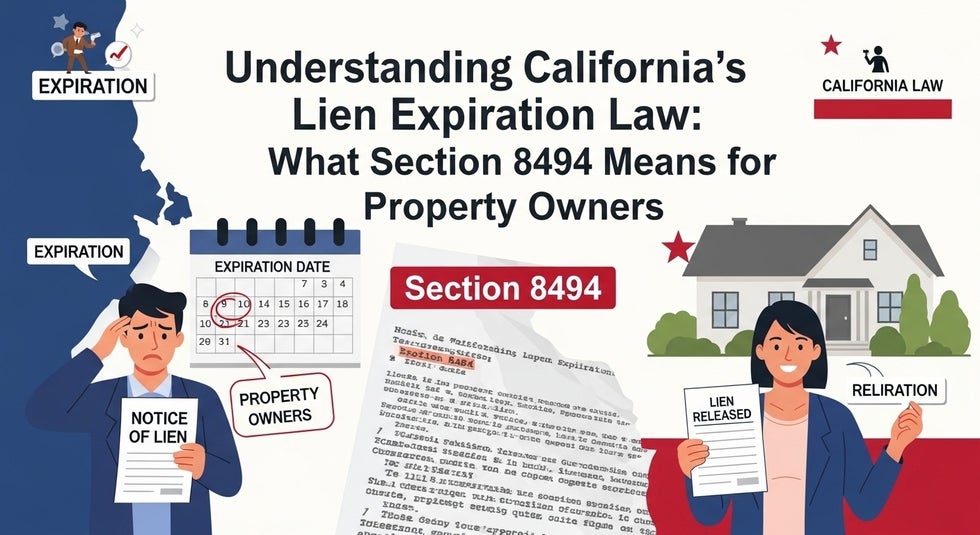
When a mechanics lien expires or becomes unenforceable in California, property owners gain significant legal protection under Civil Code Section 8494. This provision serves as a critical safeguard, ensuring that expired or invalidated liens no longer cloud property titles or create ongoing obligations for subsequent purchasers and lenders.
The Legal Shield Against Expired Lien Claims
Section 8494 establishes a fundamental principle: once a mechanics lien expires under Section 8460 or is eliminated through a court judgment under Section 8490, it loses all legal effect. The statute explicitly states that such liens no longer constitute actual or constructive notice of any matters they originally contained. This means the expired lien is treated as if it never existed for purposes of title examination and property transactions.
This protection extends beyond mere technicality. The law recognizes that expired liens should not continue to haunt property records indefinitely. When a claimant fails to enforce their lien within the statutory timeframe, they forfeit not only their lien rights but also any residual effect the recorded document might otherwise have on subsequent parties dealing with the property.
Breaking Down Constructive Notice Requirements
Understanding constructive notice is essential for grasping the full impact of Section 8494. In California real estate law, recording a document in the county recorder's office typically provides constructive notice to the world. This means anyone dealing with the property is legally presumed to know about the recorded document, whether they actually reviewed it or not.
However, Section 8494 creates a crucial exception to this general rule. When a mechanics lien expires or is judicially invalidated, the recorded claim of lien no longer provides constructive notice. This distinction matters tremendously for title companies, lenders, and prospective purchasers. They can proceed with transactions without concern that the expired lien creates hidden risks or undisclosed claims.
The statute goes further by eliminating any duty of inquiry. Normally, when a title examiner discovers a recorded document, they must investigate its current status and potential impact on the property. Section 8494 removes this burden entirely for expired liens. There is no obligation to determine what the lien originally claimed, whether any portion might remain valid, or what disputes may have surrounded it.
Court Orders and Judicial Determinations
Section 8494 applies equally to liens eliminated through court proceedings under Section 8490. When a property owner successfully challenges a mechanics lien in court and obtains a judgment declaring it invalid, that judicial determination carries the same effect as natural expiration. The lien loses its status as constructive notice, and subsequent parties need not concern themselves with the underlying allegations.
This provision encourages property owners to pursue judicial remedies when facing questionable lien claims. Knowing that a favorable court ruling will completely cleanse the title of the lien's effect provides a strong incentive to litigate rather than simply waiting for expiration. The finality offered by Section 8494 makes the investment in legal proceedings worthwhile.
Property owners defending against mechanics liens should understand that obtaining a judgment under Section 8490 does more than just remove the immediate threat. It affirmatively establishes that the lien provides no notice to future parties, creating a clean slate for subsequent transactions.
Protecting Subsequent Purchasers and Lenders
The most significant practical impact of Section 8494 falls on subsequent purchasers and lenders. These parties frequently rely on title reports and recorded documents when making decisions about property transactions. Without Section 8494's protections, expired liens could continue to raise questions and concerns, even though they lack enforceability.
Consider a common scenario: a contractor records a mechanics lien but fails to foreclose within the 90-day deadline required by Section 8460. The lien expires by operation of law. Without Section 8494, a potential buyer reviewing the title might discover the recorded lien and demand explanations, seek indemnification, or even refuse to proceed with the purchase. The expired lien, though legally toothless, could still interfere with property marketability.
Section 8494 solves this problem by declaring that the expired lien provides no notice whatsoever. Title companies can clear such liens from their reports without requiring additional documentation or bonding. Purchasers need not investigate the circumstances surrounding the original claim. Lenders can extend financing without concern that the expired lien creates a competing interest.
The Absence of Duty to Investigate
One of Section 8494's most powerful protections is its elimination of any duty of inquiry. California law generally imposes a duty on parties dealing with real property to investigate matters that might affect title. Recorded documents, visible encumbrances, and certain other circumstances can trigger this duty, requiring reasonable investigation before proceeding with a transaction.
For expired mechanics liens, Section 8494 completely removes this obligation. Even if a title examiner discovers the recorded claim of lien, they have no duty to investigate what the lien claimed, whether any valid basis supported it, or what relationship existed between the claimant and the property owner. The statute treats the expired lien as legally irrelevant for all purposes affecting subsequent parties.
This protection proves especially valuable in commercial transactions where time is critical and due diligence costs accumulate quickly. Without the need to investigate expired liens, transactions can close more efficiently and with greater certainty.
Strategic Implications for Property Owners
Property owners facing mechanics liens should recognize the defensive advantages Section 8494 provides. While the immediate concern often focuses on removing the lien's enforcement threat, the statute's elimination of constructive notice creates additional strategic value.
When defending against a mechanics lien, property owners can take comfort knowing that even if the lien remains recorded for some period, its expiration will completely eliminate its effect on future transactions. This knowledge can inform settlement negotiations, litigation strategy, and decisions about whether to pursue affirmative relief.
For those involved in construction disputes, understanding how Section 8494 interacts with other lien law provisions becomes essential. The statute works in conjunction with enforcement deadlines, release bond procedures, and judicial remedies to create a comprehensive framework protecting property owners against stale or invalid claims.
Practical Application in Title Examination
Title examiners and escrow officers regularly encounter recorded mechanics liens in their work. Section 8494 provides clear guidance for handling expired claims. Once a lien's enforcement deadline has passed, the examiner can note the expiration and treat the lien as having no continuing effect on title.
This approach streamlines the closing process and reduces costs for all parties. Rather than requiring release documents, indemnifications, or bonding arrangements, expired liens can simply be noted as no longer providing constructive notice under Section 8494. The statute creates certainty where ambiguity might otherwise exist.
Understanding these protections helps property owners, attorneys, and real estate professionals navigate California's mechanics lien system with confidence, ensuring that expired claims do not create unnecessary obstacles to legitimate property transactions.Call (888) 928-1609 or contact us online.