
When someone you love faces criminal charges, the prospect of prison separation can feel overwhelming. Fortunately, California has invested substantial resources in developing community based punishment programs that allow certain offenders to serve sentences close to home while receiving treatment and supervision.
Understanding how these programs are created, funded, and evaluated helps defendants and families recognize opportunities for alternative sentencing that serves justice while preserving family bonds and employment.
This comprehensive guide explores the administrative framework ensuring these programs deliver real results for public safety and rehabilitation.
The Oversight Board's Critical Role in Program Development
California assigns responsibility for administering community based punishment programs to a dedicated board that works collaboratively with state agencies, local jurisdictions, and community organizations. This partnership model ensures programs reflect both statewide standards and local realities, creating alternatives to incarceration that actually work in diverse communities across California.
Rather than imposing rigid requirements from Sacramento, the board facilitates a collaborative process where local innovation meets evidence based standards. This balance produces programs tailored to specific county needs while maintaining quality and accountability standards protecting public safety and taxpayer investments.
Establishing Parameters for Effective Programming
The board's first responsibility involves defining what makes community based punishment programs effective. This foundational work establishes clear expectations about program goals, essential components, outcome measures, and the respective roles of state and local entities in achieving success.
Effective programs must balance competing priorities. They need rigorous supervision ensuring public safety while providing supportive services promoting rehabilitation. They must hold offenders accountable for their criminal behavior while addressing underlying issues like substance abuse or mental health challenges that contribute to reoffending. They should cost less than traditional incarceration while delivering better outcomes measured through reduced recidivism.
The board describes these parameters through research reviews, expert consultations, and analysis of successful programs operating elsewhere. By establishing clear standards based on evidence rather than assumptions, the board creates frameworks that guide local program development toward approaches most likely to succeed.
This work also clarifies how state and local jurisdictions share responsibility for program success. The state provides funding, technical assistance, evaluation support, and regulatory oversight. Counties design and implement programs suited to their populations, manage day to day operations, and deliver services to program participants. This division of labor leverages the strengths of both levels of government.
Selecting Counties for Pilot Program Participation
Not every California county immediately participates in community based punishment programs. The board develops selection processes identifying jurisdictions ready to pilot innovative approaches before statewide expansion. This measured rollout allows careful testing and evaluation before investing resources broadly.
Criteria for Pilot Participation
Counties interested in piloting community based punishment programs must demonstrate their readiness through several factors. The board examines existing correctional infrastructure, treatment provider availability, stakeholder support, data collection capacity, and ability to implement evidence based practices consistently.
Counties with established relationships among criminal justice partners, community treatment providers, and local government officials prove better positioned for successful program implementation. Jurisdictions where district attorneys, public defenders, judges, probation departments, and sheriffs already collaborate effectively can more readily develop and operate complex community programs.
The selection process also considers geographic and demographic diversity, ensuring pilot programs test approaches in different contexts. Urban counties face different challenges than rural areas. Regions with significant immigrant populations require different resources than predominantly English speaking communities. Testing programs across diverse settings generates knowledge applicable throughout California.
Benefits of Pilot Program Approach
Piloting programs before statewide implementation provides multiple advantages. It allows identifying and resolving implementation challenges on a manageable scale before they affect programs across dozens of counties. Early pilot experiences reveal which program components work as designed and which require modification.
Pilot programs also generate outcome data demonstrating whether approaches actually reduce recidivism and maintain public safety. Rather than assuming programs work based on theory, California demands evidence of effectiveness before major investments. Successful pilots provide that proof while unsuccessful elements get refined or abandoned.
For defendants in pilot counties, participation in these innovative programs offers access to cutting edge alternatives to incarceration. Being among the first to benefit from new approaches can make the difference between prison separation and remaining in your community under supervision while receiving treatment.
Annual Program Proposal and Approval Process
Counties participating in community based punishment programs engage in annual planning cycles ensuring programs remain current, effective, and aligned with evidence based practices. This iterative approach promotes continuous improvement based on experience and outcome data.
Preparing County Program Proposals
Each year, participating counties prepare comprehensive proposals describing their planned community based punishment programming. These documents detail target populations, program designs, expected outcomes, budget requirements, staffing plans, partnerships with service providers, and evaluation methodologies.
Counties must articulate how their proposed programs advance the purposes of community based punishment while maintaining public safety and promoting offender accountability. Simply wanting funding isn't sufficient. Jurisdictions must demonstrate their programs rest on solid evidence based foundations and include components proven effective at reducing recidivism.
The proposal process requires counties to examine their previous year's results, identify strengths and weaknesses, and adjust programming accordingly. Programs that achieved strong outcomes might expand to serve more participants. Components that underperformed get modified or replaced with more promising approaches. This annual review ensures programs evolve based on evidence rather than continuing ineffective practices simply because they already exist.
Board Review and Approval
The board carefully reviews county proposals, evaluating whether they meet established standards for evidence based programming. Reviewers examine program logic, assess whether proposed interventions match targeted offender populations, evaluate budget reasonableness, and determine if evaluation plans will generate meaningful outcome data.
The board provides feedback to counties, sometimes suggesting modifications strengthening program designs or addressing identified weaknesses. This collaborative review process improves programs while building county capacity for planning and implementation. Counties learn from board expertise while maintaining primary responsibility for their programs.
Once proposals meet established standards, the board approves them for implementation and funding. Counties can then proceed with confidence that their programs satisfy state requirements and qualify for financial support. This approval process ensures taxpayer dollars fund quality programming likely to deliver promised outcomes.
Working with experienced criminal defense attorneys familiar with which programs operate in your county helps identify realistic sentencing alternatives worth advocating for during plea negotiations or sentencing hearings.
Funding Distribution and Financial Oversight
Approving program proposals represents just the beginning. The board must then distribute funds to counties and monitor how those resources get used, ensuring responsible stewardship of public money while supporting effective program implementation.
Annual Funding Awards
After approving county proposals, the board awards funds for program implementation based on approved budgets and projected participant numbers. Funding formulas consider factors like county size, offender populations, program costs, and available resources. The goal involves equitable distribution ensuring all participating counties receive adequate support regardless of their wealth or tax base.
Funding covers various program costs including staff salaries for probation officers and program coordinators, contracts with treatment providers, technology for electronic monitoring, space rental for day reporting centers, drug testing supplies, and administrative overhead. Comprehensive funding allows counties to implement programs as designed rather than cutting corners that undermine effectiveness.
The board also maintains flexibility to adjust funding allocations during the year based on actual participation rates, emerging needs, or changed circumstances. This responsiveness ensures counties have resources needed for program success rather than being locked into allocations that no longer fit reality.
Monitoring Expenditures and Reporting
Counties receiving state funds must demonstrate responsible use through regular reporting on expenditures, participant numbers, program activities, and outcome measures. This financial accountability prevents waste or misuse of taxpayer dollars while documenting how resources translate into services and results.
The board reviews spending reports to ensure funds are used for approved purposes consistent with program proposals. Expenditures must align with budget categories and support program components described in approved plans. Counties cannot redirect funds to unrelated purposes or spend money on activities outside their approved programming.
Beyond financial reporting, counties provide data on program operations including participants served, services delivered, supervision contacts completed, violations addressed, treatment sessions attended, and sanctions imposed. This operational data documents program fidelity, showing whether counties implement programs as designed or deviate from approved models.
When monitoring reveals problems like overspending, underspending, or deviation from approved programming, the board works with counties to implement corrective actions. Sometimes this involves technical assistance addressing capacity challenges. Other times it requires budget modifications or program adjustments aligning operations with approved plans.
Providing Technical Assistance and Support
Successful community based punishment programs require expertise many counties lack internally. The board offers essential technical assistance helping local jurisdictions determine whether to participate, develop quality programs, and overcome implementation challenges.
Supporting County Decision Making
Counties considering participation in community based punishment programs need information about requirements, costs, expected outcomes, and implementation demands. The board provides this information through consultations, written materials, site visits to existing programs, and connections with counties already operating successful initiatives.
This support helps county officials make informed decisions about whether participation makes sense for their jurisdictions. Not every county possesses the infrastructure, partnerships, or political support needed for successful program implementation. Better to recognize limitations early than commit to programs likely to fail.
For counties deciding to participate, the board offers planning assistance covering program design, budget development, stakeholder engagement, provider recruitment, staff training, and evaluation planning. This comprehensive support increases the likelihood that new programs launch successfully rather than struggling through avoidable problems.
Annual Program Updates and Improvement
Technical assistance continues after programs launch. Counties must annually update their programs based on performance data, changing populations, emerging best practices, and lessons learned through implementation. The board supports this continuous improvement process through consultation, training, research sharing, and problem solving assistance.
When counties encounter specific challenges like recruiting quality treatment providers, maintaining adequate supervision staffing, engaging resistant participants, or addressing program violations consistently, board staff can help troubleshoot solutions. Sometimes this involves connecting counties with peers who solved similar problems. Other times it requires bringing in outside experts with specialized knowledge.
This ongoing support relationship ensures counties aren't left to struggle alone with implementation challenges. The board's investment in county success produces better programs serving more offenders effectively while maintaining public safety.
Facilitating Information Sharing and Collaborative Learning
Counties implementing community based punishment programs accumulate valuable knowledge about what works, what doesn't, and how to navigate common challenges. The board facilitates information sharing ensuring this collective wisdom benefits everyone involved in program development and implementation.
Creating Forums for Knowledge Exchange
The board organizes regular convenings where county correctional administrators, program staff, treatment providers, and other stakeholders share experiences and learn from each other. These gatherings might include formal presentations about program innovations, panel discussions addressing common challenges, workshops on evidence based practices, or informal networking opportunities building relationships among practitioners.
Beyond in person meetings, the board maintains online platforms where counties can access program materials, evaluation reports, training resources, and discussion forums. These digital tools allow continuous information exchange rather than limiting learning to periodic conferences.
The board also produces publications synthesizing lessons from multiple counties, highlighting promising practices, documenting common pitfalls, and translating research findings into actionable guidance for practitioners. These resources help counties avoid reinventing wheels, learning from others' experiences rather than making every mistake themselves.
Sharing Diverse Program Information
Information sharing covers numerous topics relevant to successful community based punishment programming. Counties exchange insights about effective program structures, appropriate populations for specific interventions, successful partnerships with service providers, supervision strategies balancing accountability and support, and responses to common violations or challenges.
Program evaluation results get shared broadly, allowing counties to learn which approaches produce the best outcomes with different offender populations. When one county discovers that intensive outpatient treatment works better than residential programming for certain participants, or that swift sanctions prove more effective than lengthy incarceration for technical violations, other counties can apply these lessons.
Beyond formal data, the board helps share practical wisdom and anecdotal insights gained through implementation experience. Sometimes the most valuable information comes from correctional professionals describing how they solved specific problems, built productive partnerships, or adapted programs to local circumstances.
This collaborative learning environment accelerates program improvement across California. Counties benefit from collective knowledge rather than each jurisdiction learning identical lessons through separate trial and error processes.
For defendants and their defense lawyers, this information sharing produces better programs with higher success rates, increasing opportunities for effective alternative sentencing that serves both accountability and rehabilitation goals.
Establishing Regulatory Framework
Effective program administration requires clear regulations providing structure and consistency while allowing flexibility for local adaptation. The board adopts and periodically revises rules governing community based punishment program implementation.
Initial Regulatory Development
Regulations address numerous topics including eligibility criteria for program participation, minimum supervision standards, required program components, prohibited practices, reporting requirements, funding restrictions, and evaluation methodologies. By establishing clear expectations, regulations help counties develop programs meeting state standards while giving them latitude for innovation within established parameters.
The regulatory development process involves stakeholder input from counties, practitioners, researchers, advocates, and others with expertise or interest in community corrections. This inclusive approach produces regulations informed by diverse perspectives and practical implementation realities rather than theoretical assumptions disconnected from operational challenges.
Ongoing Regulatory Revision
Regulations aren't static. As programs operate and generate outcome data, as research reveals new evidence based practices, and as implementation experiences identify needed improvements, regulations require updating to reflect current knowledge and emerging best practices.
The board periodically reviews regulations to ensure they remain current, remove outdated requirements, add provisions addressing new issues, and incorporate lessons learned through program operation. This commitment to continuous regulatory improvement ensures rules facilitate rather than hinder effective programming.
Rigorous Program Evaluation and Analysis
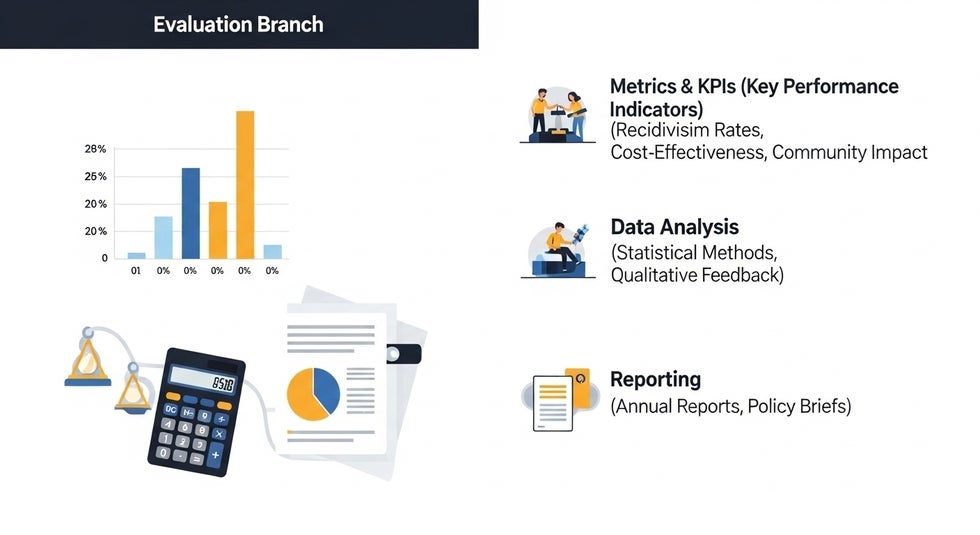
Perhaps the board's most critical function involves designing and providing for comprehensive evaluation of community based punishment programming. Evaluation determines whether programs achieve intended outcomes, identifies areas needing improvement, and provides evidence justifying continued public investment.
Evaluating Individual Program Performance
Regular evaluation examines multiple dimensions of program operations and outcomes. It assesses whether programs serve intended populations, deliver promised services with fidelity to evidence based models, maintain appropriate supervision levels, and operate within approved budgets.
More importantly, evaluation measures outcomes including recidivism rates, program completion rates, employment status, housing stability, substance abuse treatment success, family reunification, and victim restitution payment. These outcome measures reveal whether programs actually improve participant lives and reduce future criminal behavior.
Evaluation also compares program participants against similar offenders receiving traditional sentences, isolating the program's actual effects. Without comparison groups, it's impossible to know whether observed outcomes result from program interventions or would have occurred anyway.
This rigorous approach to evaluation ensures programs prove their worth through evidence rather than surviving based on good intentions or political support. Programs demonstrating effectiveness continue and expand. Those failing to produce results get modified or discontinued regardless of how much people like them conceptually.
Comprehensive System Level Analysis
Beyond evaluating individual programs, the board conducts broader analysis examining how the entire community based punishment initiative functions and what impacts it produces across California's criminal justice system.
This analysis explores the relationship between the board and participating counties, assessing whether the collaborative model works effectively and whether the oversight structure facilitates successful programming. It evaluates whether the funding process, technical assistance, and regulatory framework adequately support county efforts.
Analysis also examines whether community based punishment programs effectively encourage use of intermediate sanctions alongside traditional penalties. Intermediate sanctions like electronic monitoring, intensive supervision, day reporting, and residential treatment provide graduated responses matching punishment intensity to offense seriousness and offender risk levels. The goal involves expanding the sentencing toolkit available to judges and correctional officials beyond simply choosing between prison and standard probation.
The board analyzes which offender categories prove most suitable for specific intermediate sanctions and program components. Not every defendant benefits from every program type, so understanding which interventions work for which populations helps match people with appropriate programming likely to succeed.
Measuring Public Safety and Cost Effectiveness
Two fundamental questions drive all evaluation efforts: Do community based punishment programs maintain public safety? Are they cost effective compared to traditional incarceration?
Public safety analysis compares recidivism rates among program participants against similar offenders receiving traditional sentences. Programs producing higher reoffending rates fail the public safety test regardless of other benefits. Conversely, programs reducing recidivism demonstrate that community based punishment can protect public safety while offering additional advantages like maintaining family stability and employment.
Cost effectiveness analysis compares community program expenses against incarceration costs. Since housing someone in state prison costs tens of thousands of dollars annually, much more than community supervision and services, even moderately successful programs typically prove cost effective. Savings can fund program expansion, victim services, crime prevention, or other priorities.
Impact on Correctional Populations
Finally, analysis examines how community based punishment programs affect prison, jail, and juvenile justice populations. A major goal involves reducing reliance on costly institutional corrections by diverting appropriate offenders to community programs.
Evaluation measures whether programs successfully reduce incarceration rates, how much institutional capacity they free up, and whether they allow focusing secure beds on offenders who truly require custody. These impacts matter enormously for state and county budgets while creating opportunities for defendants who might otherwise face prison separation from families and communities.
Advocating for Evidence Based Community Sentencing
Understanding California's comprehensive framework for developing, funding, and evaluating community based punishment programs empowers defendants and their attorneys to advocate for appropriate alternative sentences.
When programs exist in your county, when evidence supports their effectiveness, and when your circumstances make you suitable for community programming, knowledgeable advocacy can secure sentences allowing you to serve your time while maintaining employment, supporting your family, and accessing treatment services.
Working with experienced criminal defense counsel who understand available community corrections options in your jurisdiction provides the best opportunity for accessing these alternatives when appropriate. Not every case qualifies for community based sentencing, but when programs exist and circumstances align, these options offer hope for outcomes serving justice while building foundations for successful lives after completing your sentence.