
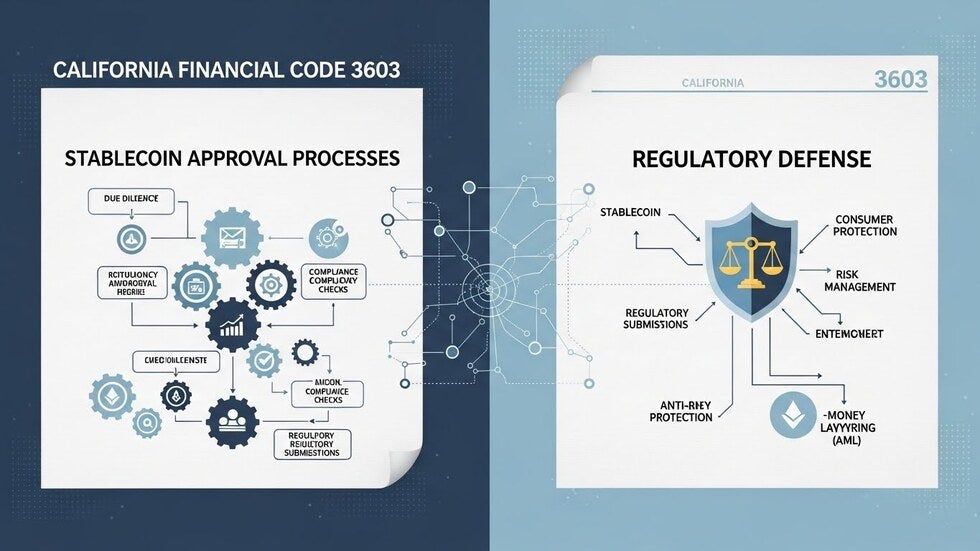
California Financial Code Section 3603 establishes the commissioner's authority to approve stablecoins for use within the state, creating a discretionary regulatory framework that balances innovation with consumer protection.
This statute provides the commissioner with broad authority to evaluate stablecoin proposals based on resident interests while establishing specific factors for consideration and conditions for approval.
For defense attorneys representing stablecoin issuers and related entities, understanding this approval process is crucial for navigating regulatory challenges and developing effective compliance strategies in California's evolving digital asset landscape.
The Commissioner's Discretionary Authority
California Financial Code Section 3603 grants the commissioner significant discretionary power to approve stablecoins based on whether they compromise the interests of California residents. This broad standard allows for flexible regulation that can adapt to technological developments while maintaining focus on consumer protection as the primary regulatory concern.
The discretionary nature of the approval process creates both opportunities and challenges for stablecoin issuers seeking to operate in California. While it allows for case-by-case consideration of unique business models and innovations, it also creates uncertainty about approval criteria and potential liability for operating without proper authorization.
Balancing Innovation and Consumer Protection
The statute reflects California's attempt to balance support for financial innovation with robust consumer protection requirements. This approach recognizes that stablecoins can provide legitimate benefits while acknowledging the potential risks they pose to consumers and the broader financial system.
Cryptocurrency regulatory compliance requires understanding how regulators balance these competing interests and developing strategies that address consumer protection concerns while preserving innovative business models.
Resident Interest Standard
The "interests of residents" standard provides broad authority for the commissioner to consider various factors that might affect California consumers, including financial stability, market integrity, and consumer protection. This flexible standard allows for comprehensive evaluation of stablecoin proposals.
Defense strategies must address how clients' stablecoin operations serve or at least don't compromise resident interests while demonstrating appropriate consumer protection measures and operational safeguards.
Key Evaluation Factors Under Section 3603
The statute identifies specific factors that the commissioner may consider when evaluating stablecoin approval applications, providing guidance for both applicants and defense attorneys regarding regulatory priorities and concerns.
Redemption Rights and Consumer Protection
Redemption rights represent a critical consumer protection element that ensures stablecoin holders can convert their tokens back to underlying assets at predictable values. The commissioner's focus on redemption rights reflects understanding that stablecoins function as payment instruments that require reliable value preservation mechanisms.
Defense attorneys must understand how clients' redemption policies and procedures address regulatory concerns while providing practical mechanisms for consumers to access their funds when needed. Strong redemption frameworks can support approval applications and provide defenses against regulatory enforcement actions.
Quality of Assets Held by Issuers
The quality of backing assets directly affects stablecoins' ability to maintain stable value and honor redemption requests. The commissioner's evaluation of asset quality ensures that issuers maintain appropriate reserves that can support their obligations to token holders.
Asset backing compliance defense requires demonstrating that clients maintain high-quality, liquid assets that provide adequate security for stablecoin holders while meeting regulatory standards for safety and soundness.
Issuer Representations and Transparency
The commissioner considers representations made by stablecoin issuers regarding their operations, asset backing, and consumer protection measures. These representations create ongoing compliance obligations and potential liability for inaccurate or misleading statements.
Defense strategies must ensure that client representations are accurate, complete, and supported by appropriate operational systems and controls. Any discrepancies between representations and actual operations can create significant regulatory and legal exposure.
Licensing Requirements and Conditions
Section 3603 authorizes the commissioner to require stablecoin issuers to obtain licenses and impose additional conditions to protect California residents. This authority creates a comprehensive regulatory framework that can address specific risks associated with different stablecoin models.
Mandatory Licensing Determinations
The commissioner's authority to require licensing ensures that stablecoin operations that pose significant risks to consumers operate under appropriate regulatory oversight. Licensing requirements typically include capital adequacy, operational standards, and ongoing compliance obligations.
Defense attorneys must understand when licensing becomes mandatory and help clients navigate the application process while addressing any regulatory concerns that might affect approval decisions.
Additional Protective Conditions
The statute allows the commissioner to impose additional conditions beyond basic licensing requirements to address specific risks or operational concerns. These conditions might include enhanced reporting requirements, additional capital reserves, or specific operational safeguards.
Understanding potential conditions helps defense attorneys prepare clients for regulatory expectations and develop compliance strategies that address likely regulatory requirements.
Approval Process and Regulatory Considerations
The stablecoin approval process under Section 3603 involves comprehensive regulatory review that examines multiple aspects of proposed operations while considering their impact on California residents.
Application and Review Procedures
While the statute doesn't specify detailed application procedures, the approval process typically involves comprehensive documentation of business models, operational systems, and consumer protection measures. This review process allows regulators to understand proposed operations thoroughly before making approval decisions.
Regulatory application defense requires careful preparation of application materials that address regulatory concerns while presenting clients' operations in the most favorable light possible.
Ongoing Compliance Obligations
Approval under Section 3603 creates ongoing compliance obligations that continue throughout the period of operations. These obligations typically include regular reporting, maintenance of required asset backing, and adherence to any conditions imposed as part of the approval process.
Defense strategies must address both initial approval requirements and ongoing compliance obligations to ensure that clients maintain regulatory good standing and avoid potential enforcement actions.
Defense Strategies in Stablecoin Approval Cases
Defending clients in stablecoin approval proceedings requires comprehensive understanding of both the regulatory framework and the operational realities of digital asset businesses. Successful defense strategies often combine technical compliance demonstrations with broader policy arguments about innovation and consumer benefits.
Demonstrating Resident Benefits
One effective defense strategy involves demonstrating how clients' stablecoin operations benefit California residents through improved financial services, lower costs, or enhanced access to digital payment systems.
Evidence supporting resident benefits includes market research, user testimonials, and comparative analysis of stablecoin advantages over traditional payment systems. These benefits can support approval applications and provide defenses against regulatory challenges.
Comprehensive Risk Mitigation
Defense strategies should demonstrate that clients have implemented comprehensive risk mitigation measures that address regulatory concerns about consumer protection, financial stability, and operational security.
Documentation of risk management systems, compliance programs, and consumer protection measures can support arguments that clients' operations don't compromise resident interests and deserve regulatory approval.
Industry Standards and Best Practices
Demonstrating compliance with emerging industry standards and best practices can support approval applications by showing that clients operate according to accepted norms within the digital asset industry.
Industry compliance standards continue evolving as the stablecoin market matures, creating opportunities for defense arguments based on adherence to recognized best practices.
Constitutional and Legal Challenges
The discretionary nature of the approval process under Section 3603 raises potential constitutional and legal challenges that defense attorneys should consider when representing clients facing regulatory scrutiny.
Due Process and Regulatory Fairness
The broad discretionary authority granted to the commissioner must be exercised in accordance with due process requirements and administrative law principles. Defense strategies may challenge approval denials or enforcement actions that lack adequate procedural safeguards or clear regulatory standards.
Constitutional challenges require demonstrating that regulatory decisions lack adequate legal foundation or violate fundamental fairness principles in ways that harm clients' legitimate business interests.
Equal Protection and Competitive Concerns
The approval process must be applied fairly across different stablecoin issuers and business models to avoid equal protection violations or anticompetitive effects. Defense attorneys should examine whether clients receive treatment consistent with similarly situated entities.
Evidence of discriminatory enforcement or inconsistent application of approval standards can support constitutional challenges and provide leverage in regulatory negotiations.
Enforcement and Penalties
Understanding potential enforcement mechanisms helps defense attorneys evaluate risks and develop appropriate response strategies when clients face regulatory challenges under Section 3603.
Civil Enforcement Actions
Regulatory violations typically result in civil enforcement actions seeking monetary penalties, injunctive relief, and corrective action rather than criminal prosecution. These proceedings focus on achieving compliance and protecting consumers rather than punitive sanctions.
Defense strategies in civil enforcement should emphasize clients' compliance efforts, cooperation with regulatory authorities, and willingness to implement corrective measures that address regulatory concerns.
License Revocation and Operational Restrictions
Serious violations can result in license revocation or operational restrictions that effectively prevent clients from conducting stablecoin business in California. These consequences often represent more significant impacts than monetary penalties.
License defense strategies must address both immediate compliance issues and long-term operational concerns to protect clients' ability to continue business operations.
Coordination with Federal Regulation
Stablecoin regulation operates within a complex framework involving both state and federal oversight, creating potential coordination issues and jurisdictional challenges that affect defense strategies.
Federal Agency Jurisdiction
Various federal agencies assert jurisdiction over different aspects of stablecoin operations, creating potential conflicts between state approval requirements and federal regulatory positions.
Defense attorneys must understand these jurisdictional boundaries and develop strategies that address both state and federal requirements while avoiding conflicts between different regulatory frameworks.
Preemption and Supremacy Issues
Federal regulation of certain stablecoin aspects may preempt state requirements or create conflicts that defense attorneys can use to challenge state enforcement actions.
Understanding federal regulatory developments helps defense attorneys anticipate changes in the regulatory landscape and position clients for compliance with evolving requirements.
Technology and Operational Considerations
Stablecoin operations involve complex technology and operational requirements that affect both approval prospects and ongoing compliance obligations under Section 3603.
Technical Infrastructure Requirements
The commissioner's evaluation includes consideration of issuers' technical infrastructure and operational capabilities to maintain stable value and honor redemption requests.
Defense strategies should demonstrate that clients have implemented robust technical systems that can handle operational demands while maintaining appropriate security and reliability standards.
Audit and Verification Systems
Maintaining regulatory compliance requires sophisticated audit and verification systems that can demonstrate adherence to asset backing requirements and other regulatory obligations.
Technology compliance defense involves showing that clients have implemented appropriate systems for monitoring compliance and addressing any operational issues that might affect regulatory standing.
Future Regulatory Developments
The stablecoin regulatory landscape continues evolving rapidly, with new developments at both state and federal levels that may affect how Section 3603 is interpreted and applied.
Federal Stablecoin Legislation
Proposed federal legislation could significantly affect state regulatory authority and create new frameworks for stablecoin oversight that might preempt or modify California's requirements.
Understanding these federal developments helps defense attorneys anticipate regulatory changes and position clients for compliance with evolving requirements.
Industry Evolution and Standards
The stablecoin industry continues developing operational standards and best practices that influence regulatory expectations and approval criteria.
Staying current with industry developments helps defense attorneys understand regulatory priorities and develop strategies that align with emerging best practices and regulatory expectations.
Conclusion: Strategic Approach to Stablecoin Approval
California Financial Code Section 3603 creates a flexible but demanding regulatory framework that requires careful navigation by stablecoin issuers and their legal counsel. The commissioner's broad discretionary authority allows for case-by-case consideration while maintaining focus on protecting California residents from potential risks associated with digital assets.
For defense attorneys, success in stablecoin approval proceedings requires comprehensive understanding of both regulatory requirements and operational realities facing digital asset businesses. Effective strategies must address consumer protection concerns while demonstrating the benefits that innovative financial technologies can provide to California residents.
The discretionary nature of the approval process creates both opportunities and challenges that require careful preparation and strategic thinking. Defense attorneys must understand regulatory priorities, develop compelling arguments for approval, and prepare for ongoing compliance obligations that continue after initial authorization.
As the stablecoin regulatory landscape continues evolving, defense strategies must adapt to changing requirements while maintaining focus on protecting client interests and supporting legitimate innovation within appropriate regulatory boundaries. Success requires balancing regulatory compliance with business objectives while building strong relationships with regulatory authorities based on transparency and cooperation.
The key to effective stablecoin approval defense lies in demonstrating that clients' operations serve legitimate business purposes, implement appropriate consumer protection measures, and contribute positively to California's financial ecosystem while maintaining compliance with all applicable regulatory requirements.
Call (888) 928-1609 or contact us online to find out if we can help you get a fresh start.