
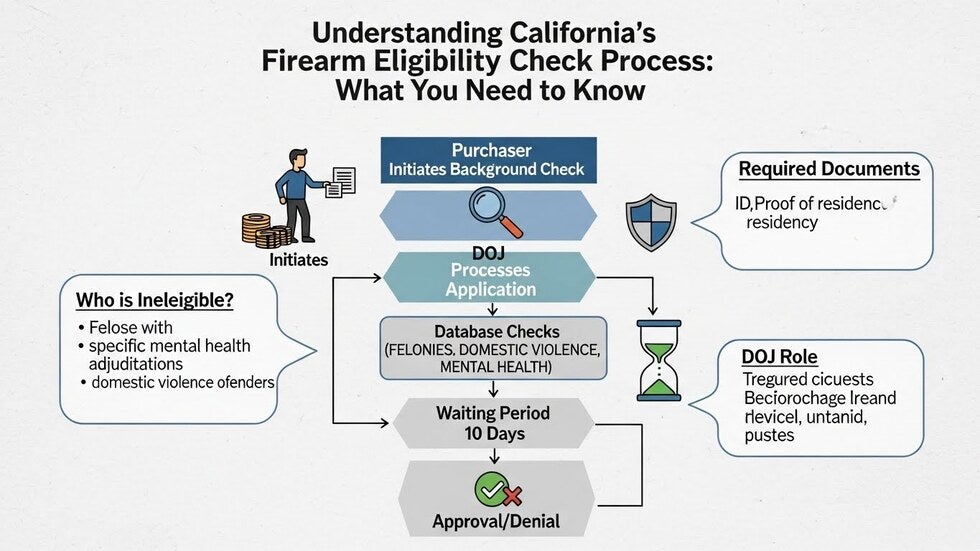
California's firearm regulations include specific procedures for determining whether individuals can legally possess firearms, ammunition feeding devices, or ammunition.
Section 33865 of the California Penal Code establishes the framework for these eligibility checks, outlining a process that affects thousands of California residents each year. Understanding this process is essential for anyone navigating firearm possession laws in the Golden State.
The Application Review Process
When the Department of Justice receives a properly completed application along with the required processing fee, they initiate a comprehensive eligibility check. This review determines whether the applicant meets all legal requirements to possess the firearm, ammunition feeding device, or ammunition in question.
The department has established a 30 day timeline to complete this background check from the date they receive the application. However, this timeframe can extend beyond 30 days when circumstances outside the department's control cause delays.
Applicants can monitor their application status through the California Firearms Application Reporting System, commonly known as CFARS, which provides a portal for checking on any delays and understanding their causes.
This waiting period, while sometimes frustrating for applicants, serves an important purpose in the broader framework of California gun laws. The timeframe allows the department to conduct thorough background checks while still providing a reasonable processing schedule for law abiding citizens seeking to exercise their Second Amendment rights.
Approval Notifications and Documentation
When the Department of Justice determines that an applicant meets all eligibility requirements, they provide written notification containing specific information. This approval documentation includes the applicant's identity, a clear statement confirming their eligibility to possess the firearm, ammunition feeding device, or ammunition, and detailed information about the firearm itself.
For firearms that can be specifically identified, the notification includes the make, model, and serial number. However, California law recognizes that not all firearms particularly older long guns have serial numbers or identification marks.
In these cases, the documentation notes this absence of serial number information rather than treating it as a deficiency.
This written approval serves as important documentation for firearm owners. It provides official confirmation of legal possession and can be valuable if questions about ownership ever arise. Keeping this documentation in a safe, accessible location is a prudent practice for any firearm owner.
The Automated Firearms System Registration
Upon approving an application, the Department of Justice enters a record of the firearm into the Automated Firearms System, California's central registry for tracking firearm ownership. This database serves multiple law enforcement purposes while creating an official record of legal firearm possession.
The AFS entry includes all available identifying information about the firearm. When a firearm lacks a serial number, identification number, or identification mark, the system specifically notes this fact rather than leaving the field blank. This notation ensures accurate record keeping while acknowledging the reality that some legally possessed firearms predate modern serialization requirements.
Understanding that your firearm information enters this system helps clarify how California tracks legal gun ownership. For law abiding gun owners, this registration process provides documentation of legal possession rather than creating legal jeopardy.
Application Denials and Your Options
Not all applications receive approval. When the Department of Justice denies an application for an otherwise legal firearm, they follow specific notification procedures and provide important information about next steps.
The department notifies denied applicants through CFARS, explaining the specific reasons for the denial. This explanation is crucial because it allows applicants to understand what legal barrier prevented approval. Common reasons for denial might include prohibited person status, restraining orders, certain criminal convictions, or mental health adjudications.
Along with the denial notification, the department provides information about the appeals process. This appeals procedure represents an essential safeguard for applicants who believe their denial was erroneous. The administrative appeals process allows individuals to challenge denials and present evidence supporting their eligibility.
For denied applicants who possess the physical firearm, the department provides a form for selling or transferring the firearm to a licensed dealer. This ensures that individuals who cannot legally possess a firearm have a legal pathway to divest themselves of it rather than facing potential criminal liability for continued possession.
Protecting Your Rights During the Process
The eligibility check process established by Section 33865 balances public safety interests with constitutional rights. Understanding your rights throughout this process helps ensure fair treatment and provides avenues for addressing any issues that arise.
First, applicants have the right to timely processing of their applications. While the 30 day timeframe can extend due to circumstances beyond the department's control, unexplained excessive delays may warrant follow up or legal consultation. The CFARS system provides transparency about processing status and helps applicants stay informed.
Second, denial notifications must include specific reasons and information about appeals. Vague or unclear denial reasons may not satisfy the department's legal obligations. Applicants receiving denials should carefully review the stated reasons and consider whether they accurately reflect their legal status.
Third, the appeals process provides meaningful recourse for erroneous denials. Working with experienced firearms attorneys during the appeals process can significantly improve outcomes, as legal professionals understand the evidentiary requirements and procedural nuances involved.
Common Issues and Practical Considerations
Several practical issues frequently arise during the eligibility check process. Understanding these common scenarios helps applicants navigate the system more effectively.
Processing delays often occur when records require clarification or when similar names create confusion in background checks. Providing complete and accurate information on the initial application reduces these delays. Including any available documentation of past legal issues that have been resolved can also expedite processing.
The absence of serial numbers on older firearms sometimes causes confusion. Applicants should not feel concerned about noting this absence, as California law specifically accommodates firearms without serialization. Accurately reporting that no serial number exists is far preferable to inventing or guessing at identification numbers.
Understanding the distinction between denials for prohibited person status versus denials for other reasons matters significantly. Some denial reasons may be temporary or subject to restoration of rights procedures, while others may be permanent. Consulting with knowledgeable legal counsel helps clarify your specific situation and available options.
Effective Date and Ongoing Compliance
Section 33865 became operative on July 1, 2020, establishing the current framework for eligibility checks. This relatively recent implementation means that procedures continue to evolve as the department refines its processes and addresses emerging issues.
Staying informed about procedural changes and updates to the CFARS system helps ensure smooth processing of applications. The Department of Justice periodically updates its online resources and guidance documents, which applicants should review before submitting applications.
For individuals with questions about their eligibility or concerns about the application process, seeking legal guidance before submitting applications can prevent problems and ensure compliance with all requirements. Understanding California's complex firearm regulations requires attention to detail and awareness of how different legal provisions interact.
The eligibility check process serves as a gateway to legal firearm possession in California. While the system creates administrative hurdles, understanding the process and your rights within it helps ensure that law abiding citizens can successfully navigate these requirements while protecting their Second Amendment rights.
With years of experience, Bulldog Law has the capability to provide advice and guidance tailored to your needs to fight against charges for a weapons or firearms offense.
We invite you to arrange a free consultation with one of our California criminal defense attorneys by calling (888) 928-1609 or by contacting us online.