
Understanding Tenant in Common Liability Protection Under Civil Code Section 5805
Owning property in a homeowners association comes with unique legal considerations that most homeowners never anticipate. One of the most concerning involves the legal concept of tenancy in common ownership of shared spaces. In many California common interest developments, you don't just own your individual unit or home.
You also hold an undivided interest as a tenant in common in all the association's common areas, from swimming pools and clubhouses to walkways and landscaping.
This ownership structure historically created a troubling vulnerability. If someone suffered an injury in a common area, they could potentially sue every individual homeowner personally, not just the association. Imagine facing a lawsuit because a visitor slipped on association property you had no control over maintaining. California law now provides crucial protection against this scenario, but only when your association maintains specific insurance coverage.
The Legislative Intent Behind Homeowner Protection
The California Legislature recognized an inherent unfairness in the traditional application of tenancy in common liability. Homeowners in associations have no practical control over common area maintenance, safety decisions, or day to day operations. The board of directors manages these responsibilities on behalf of all owners.
Yet under conventional legal principles, each owner's fractional interest in common property could expose them to personal liability for accidents or injuries occurring anywhere in the development. A pool drowning, a trip and fall on a sidewalk, or an accident in the parking garage could theoretically trigger lawsuits against hundreds of individual homeowners.
This legal exposure created several problems. It discouraged people from purchasing homes in common interest developments. It forced individual homeowners to carry additional personal liability insurance for risks they couldn't control. Most importantly, it imposed potential financial devastation on innocent homeowners who happened to own property where an accident occurred.
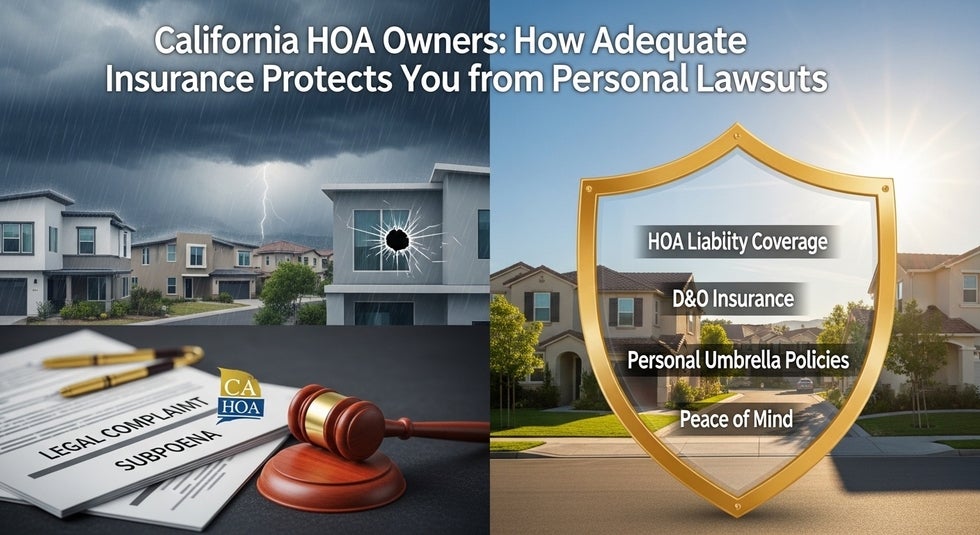
The legislature addressed these concerns by creating a shield that redirects liability away from individual owners and toward the association itself, provided the association carries sufficient insurance coverage.
The Foundation of Your Protection: Tenancy in Common Ownership
Understanding how this protection works requires grasping the unique ownership structure of most California HOAs. When you purchase a condominium, townhouse, or home in a planned development, you typically receive two distinct property interests.
First, you own your separate interest, the individual unit or lot that comprises your home. You hold this interest outright, just like owning a traditional single family house.
Second, you receive an undivided fractional interest in the common areas as a tenant in common with all other owners. Common areas might include hallways, elevators, recreational facilities, parking structures, landscaped areas, and building exteriors.
This tenancy in common ownership traditionally meant you shared proportional liability for anything happening in those common spaces. If the association failed to repair a broken step and someone fell, every owner could face personal liability based on their ownership percentage.
How the Liability Shield Works
California Civil Code Section 5805 fundamentally changes this liability landscape. When your association maintains the required insurance coverage, tort claims arising solely from your tenancy in common ownership interest must be brought against the association alone, not against you as an individual homeowner.
The protection applies specifically to causes of action in tort. Tort claims include personal injury lawsuits, property damage cases, wrongful death actions, and other civil claims arising from negligence or intentional misconduct. These represent the most common and potentially devastating legal exposures facing common interest developments.
The statute uses precise language: the cause of action must arise "solely by reason of an ownership interest as a tenant in common in the common area." This means the claim stems from your status as a fractional owner of shared property, not from your personal actions or negligence.
For example, if a guest drowns in the association pool due to inadequate safety measures, that claim arises from the ownership and operation of a common area facility. The lawsuit must target the association, not individual homeowners. However, if you personally invited someone to use the pool and your own negligent supervision contributed to an injury, you might still face individual liability for your personal conduct.
Insurance Requirements: The Key to Protection
Your protection from personal liability depends entirely on your association maintaining adequate insurance coverage. The law establishes two requirements that must both be satisfied.
General Liability Coverage Requirement
The association must maintain and have in effect one or more insurance policies that include coverage for the general liability of the association. This coverage must exist both when the incident occurs and when the lawsuit gets filed.
General liability insurance protects against claims of bodily injury, property damage, and personal injury arising from the association's operations and maintenance of common areas. This standard commercial insurance product covers slip and fall accidents, injuries from defective common area conditions, and similar tort claims.
The policy must actually cover the specific type of claim being asserted. If someone files a lawsuit alleging a type of harm excluded from the association's insurance policy, the liability protection may not apply. This makes careful policy selection and regular review essential.
Minimum Coverage Amounts
The statute establishes minimum insurance amounts based on the size of your common interest development. These requirements exceed the minimums for board member protection, reflecting the potentially larger exposure from common area accidents.
For developments consisting of 100 or fewer separate interests, the association must carry at least $2,000,000 in general liability coverage. This applies whether your community contains 10 units or 100 units.
For larger developments exceeding 100 separate interests, the minimum coverage increases to $3,000,000. The larger requirement recognizes that bigger communities typically have more extensive common areas, higher traffic volumes, and correspondingly greater liability exposure.
These amounts represent minimums, not recommendations. Many associations wisely carry coverage exceeding statutory minimums to ensure adequate protection against catastrophic claims. A single serious injury could easily generate damages exceeding minimum coverage levels.
What Happens When Insurance Requirements Are Not Met
The protection provided by Section 5805 is not automatic. It functions as a conditional shield that only activates when your association maintains the required insurance coverage.
If your association fails to carry adequate insurance, or if coverage lapses at the time an incident occurs or a claim gets filed, the traditional rules of tenancy in common liability may apply. This means individual homeowners could face personal lawsuits based on their fractional ownership interest in common areas.
This creates a crucial vulnerability that many homeowners never consider. You may have no idea whether your association maintains adequate coverage. You probably don't review the association's insurance policies annually. Yet your personal assets depend on the board's diligence in maintaining proper coverage.
Protecting Yourself: Steps Every Homeowner Should Take
Given the stakes involved, informed homeowners take proactive steps to verify their protection remains in place.
Review Association Insurance Annually
Request copies of the association's current insurance policies and declarations pages. Verify that general liability coverage meets or exceeds the statutory minimums for your development's size. Check the policy period to ensure coverage remains current.
Most associations provide insurance information in annual disclosure statements sent to homeowners. Review these documents carefully rather than filing them away unread.
Understand Your Association's Coverage
Don't just verify that coverage exists. Understand what it covers and what exclusions apply. Some policies contain exclusions for specific types of claims or activities that could leave gaps in protection.
Ask your board whether the association carries umbrella or excess liability coverage beyond the base policy. This additional coverage provides crucial protection against catastrophic claims that exceed primary policy limits.
Attend Association Meetings
Insurance coverage often gets discussed at board meetings, particularly during budget season when renewal premiums get addressed. Attending meetings or reviewing minutes keeps you informed about your association's insurance decisions and any coverage issues.
Consider Your Personal Liability Coverage
While Section 5805 provides important protection, it doesn't eliminate all personal liability exposure. Your homeowners insurance should include personal liability coverage for claims arising from your own conduct or conditions within your separate interest.
The Relationship Between Association and Individual Coverage
Understanding how different insurance policies interact helps you maintain comprehensive protection. The association's general liability policy covers claims arising from common area conditions and operations. This protection shields you from lawsuits based solely on your ownership interest.
Your personal homeowners policy covers liability arising from conditions within your unit and your personal conduct. If a guest trips on a broken tile in your entryway or your dog bites a visitor, your personal policy responds.
Some overlap exists between these coverages, which generally benefits homeowners. If a claim involves both common area and separate interest elements, multiple policies might provide coverage, increasing available protection.
Beyond Tort Claims: What This Protection Does Not Cover
Section 5805 specifically addresses tort liability arising from tenancy in common ownership. It does not protect against other types of legal claims or obligations.
Contract claims, assessment collection actions, and disputes over governing document interpretation fall outside this protection. If the association enters a contract for services and defaults, creditors might pursue remedies against individual owners depending on the contract terms and applicable law.
Similarly, the protection doesn't shield owners from claims based on their personal conduct or decisions, even if those actions relate to association business. If you serve on the board, separate protections apply to your role as a volunteer director, as discussed in our article on board member liability protection.
The Broader Impact on Community Living
The liability protection offered by Section 5805 serves important public policy goals beyond protecting individual homeowners. It promotes the viability of common interest developments as a housing option by removing a significant legal uncertainty that might otherwise deter buyers.
It also encourages associations to maintain adequate insurance coverage by making that coverage the gateway to important legal protections. The statute creates a strong incentive for responsible risk management.
For homeowners, it means you can enjoy community amenities without constant worry that an accident in shared spaces could trigger personal financial catastrophe. You can use the pool, walk common area paths, and park in association garages with confidence that your personal assets remain protected from claims arising solely from your fractional ownership interest.
Moving Forward with Confidence
Owning property in a California common interest development involves complex legal relationships that most homeowners never fully consider. The tenancy in common ownership structure creates potential liability exposure that feels fundamentally unfair given your lack of control over common area management.
California law provides crucial protection through Section 5805, but that protection depends entirely on your association maintaining adequate insurance coverage. As a homeowner, you cannot afford to remain passive about this issue.
Take time to verify your association carries the required minimum coverage. Encourage your board to regularly review insurance policies and consider coverage levels that exceed statutory minimums. Stay informed about association insurance decisions by reviewing disclosures and attending meetings when coverage gets discussed.
Understanding your legal protections empowers you to enjoy your home and community amenities without constant anxiety about potential personal liability. The law provides a strong shield, but only when the conditions are met. Make sure your association keeps that shield in place.
Free consultation, call our law firm toll free at (888) 928-1609 or contact us by email.