
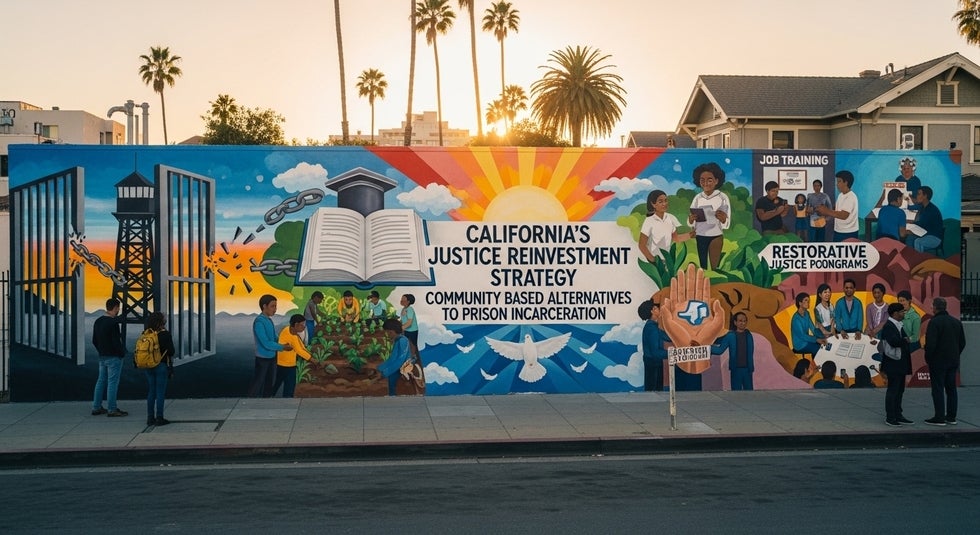
For decades, the response to rising crime rates followed a predictable pattern: build more prisons, impose longer sentences, and remove more people from their communities. California participated fully in this approach, watching corrections spending skyrocket while recidivism rates remained stubbornly high.
Recognizing this system's failure, California's legislature enacted sweeping reforms embracing evidence based practices and community corrections.
Understanding these reforms and the philosophy behind them opens doors for defendants seeking alternatives to traditional incarceration that better serve public safety, personal rehabilitation, and family stability.
The Failed Promise of Mass Incarceration
California's legislature made remarkable findings acknowledging the criminal justice system's shortcomings and charting a new direction. These legislative declarations, codified in Penal Code Section 17.5, represent more than political rhetoric. They constitute official recognition that previous policies failed and that fundamental change is necessary.
Rising Costs Without Improved Safety
Over two decades leading to these reforms, corrections spending in California increased dramatically. Taxpayers invested billions constructing new prisons, hiring additional staff, and operating an ever expanding correctional system. Despite this enormous investment, public safety outcomes disappointed.
National data revealed that approximately 40 percent of individuals released from prison returned to incarceration within three years. California's numbers proved even worse, with recidivism rates exceeding the national average. More spending on prisons clearly wasn't producing the promised improvements in public safety.
This disconnect between investment and results forced honest evaluation of whether incarceration focused policies actually worked. The answer proved uncomfortable for those who promoted tough on crime approaches, but unavoidable for anyone examining the evidence objectively.
The Unsustainability of Prison Expansion
Beyond poor outcomes, the legislature recognized that criminal justice policies relying primarily on prison construction and operation were fundamentally unsustainable. The fiscal burden of maintaining massive prison populations competed with funding for education, healthcare, infrastructure, and other essential government services.
States cannot indefinitely dedicate growing portions of their budgets to corrections while neglecting investments that prevent crime and build healthy communities. Eventually, the math stops working and difficult choices become necessary.
California faced that inflection point, forcing decision makers to either continue down an unsustainable path or embrace different approaches with better prospects for improving public safety while managing costs responsibly.
The Justice Reinvestment Framework
Rather than simply reducing incarceration without replacement, California adopted a comprehensive justice reinvestment strategy designed to redirect resources toward interventions actually proven to reduce recidivism and improve public safety.
Understanding Justice Reinvestment Principles
Justice reinvestment represents a data driven approach fundamentally different from traditional corrections policy. Instead of assuming incarceration produces public safety, this framework demands evidence that interventions actually work. Resources get allocated based on demonstrated effectiveness rather than political assumptions or gut feelings about what should work.
The approach involves managing criminal justice populations more cost effectively, generating savings through reduced reliance on expensive prison beds, and reinvesting those savings in evidence based strategies proven to reduce reoffending. The goal involves better outcomes for both public safety and offenders while using taxpayer resources more efficiently.
This philosophy acknowledges that not every person convicted of a crime requires removal from society through incarceration. Many offenders can be supervised safely in their communities through structured programs addressing the issues underlying their criminal behavior. When appropriate people receive appropriate interventions, recidivism drops and public safety improves.
Realignment of Low Level Offenders to Counties
A cornerstone of California's reforms involved realigning responsibility for certain offenders from state prisons to county supervision. Low level felons without prior convictions for serious, violent, or sex offenses now serve their sentences under county jurisdiction rather than going to state prison.
This realignment wasn't simply cost shifting that dumped state problems onto local governments. Instead, it came with resources and a mandate to develop strengthened community based corrections programs incorporating evidence based practices, improved supervision strategies, and enhanced local capacity.
The theory recognizes that local officials better understand their communities than distant state bureaucrats. Counties know which employers might hire program participants, which treatment providers deliver quality services, and what supervision approaches work with their populations.
Empowering local jurisdictions to develop tailored responses increases the likelihood of successful outcomes.
For defendants facing charges, realignment creates opportunities for alternative sentencing that keeps them closer to home, maintaining family connections, employment, and community ties while serving sentences and receiving needed services.
The Spectrum of Community Based Punishment Options
California's reforms embrace a comprehensive view of community based punishment encompassing diverse sanctions and programming options. Rather than offering a single alternative to incarceration, the framework provides a menu of responses that can be combined and calibrated to individual circumstances.
Custodial Community Based Options
Community based punishment doesn't necessarily mean no incarceration. Several options involve custody while maintaining offenders within their local communities rather than shipping them to distant state prisons.
Short term flash incarceration allows swift jail sanctions lasting no more than 10 days for violations of supervision conditions. This immediate consequence provides accountability without the disruption of lengthy imprisonment. Offenders quickly learn that violations have real consequences while avoiding the destabilizing effects of extended incarceration.
Home detention with electronic monitoring or GPS tracking provides secure supervision without physical incarceration. Technology allows monitoring offender whereabouts and ensuring compliance with movement restrictions while they remain in their residences. This option maintains custody's restrictive element while allowing continued employment and family contact.
Work furlough programs and work release in lieu of confinement permit offenders to maintain employment during their sentences. Rather than losing jobs through incarceration, they work during the day and return to custody during non working hours. This preserves income for supporting families and paying victim restitution while maintaining accountability through supervision.
Day reporting programs require offenders to report to designated facilities for programming, supervision check ins, drug testing, and structured activities. Rather than remaining in custody 24 hours daily, they spend specific periods at reporting centers receiving services and supervision before returning to their communities.
Non Custodial Supervision and Services
Beyond custodial options, community based punishment includes intensive supervision approaches and service delivery that occur entirely in community settings without physical custody.
Intensive community supervision provides much closer monitoring than traditional probation. Offenders receive frequent contacts with supervision officers, must maintain employment or participate in approved activities, submit to regular drug testing, and face swift consequences for violations. This heightened accountability keeps offenders on track without incarceration's expense and disruption.
Mandatory community service requires offenders to contribute labor benefiting the community they harmed through their criminal behavior. Rather than sitting in prison cells, they perform visible work in parks, schools, or other public spaces, directly repaying their debt to society while remaining connected to their communities.
Restorative justice programs focus on repairing harm caused by criminal behavior. Mandatory victim restitution ensures offenders compensate those they injured financially. Victim offender reconciliation programs facilitate dialogue between offenders and their victims, promoting accountability, healing, and understanding that traditional punishment models rarely achieve.
Working with knowledgeable defense counsel helps identify which community based punishment options best fit your circumstances and provides the strongest foundation for successful rehabilitation while maintaining public safety.
Treatment Focused Programming
Many offenders engage in criminal behavior driven by underlying issues like substance abuse, mental health challenges, lack of education, or unemployment. Community based punishment explicitly incorporates treatment and services addressing these root causes rather than simply warehousing people in prisons.
Substance Abuse Treatment Programs
Mandatory residential or non residential substance abuse treatment represents a crucial component of community based punishment for many offenders. Rather than leaving prison with untreated addiction that predictably leads to reoffending, participants receive evidence based treatment proven to support recovery.
Residential programs provide intensive treatment in structured living environments where participants focus entirely on recovery without the distractions and temptations of their regular environments. Non residential programs allow people to maintain employment and family connections while attending treatment sessions and receiving support services.
Mandatory random drug testing provides accountability ensuring participants remain substance free during their supervision. Regular testing creates consequences for relapse while allowing early intervention when people struggle with maintaining sobriety.
Comprehensive Support Services
Beyond substance abuse treatment, community based punishment programs offer or require participation in diverse services addressing the multiple factors contributing to criminal behavior.
Mother infant care programs recognize that incarcerated mothers often lose custody of their children, devastating families while making successful reintegration nearly impossible. These programs allow mothers to maintain custody and parent their infants while serving sentences and receiving parenting education, substance abuse treatment, and other supportive services.
Community based residential programs provide structure and supervision in non prison settings while delivering comprehensive services. Participants might receive substance abuse treatment, mental health counseling, literacy education, employment training, and psychological support all within supportive residential environments.
Literacy programming addresses the reality that many offenders lack basic educational skills limiting their employment prospects and contributing to criminal behavior. Teaching people to read, write, and perform basic mathematics opens doors to legitimate opportunities reducing incentives for criminal activity.
Employment counseling and job training prepare offenders for successful workforce participation. Rather than releasing people from prison without marketable skills, community programs help participants develop abilities employers value, increasing their prospects for stable employment supporting themselves and their families legally.
Mental health treatment serves offenders whose untreated psychiatric conditions contributed to their criminal behavior. Appropriate medication, therapy, and ongoing mental health support can dramatically reduce recidivism among this population while improving their quality of life.
Local Partnerships for Program Development
California's reforms emphasize collaboration between local entities in developing and implementing community based punishment programs. Each county's Local Community Corrections Partnership brings together diverse stakeholders to design programs fitting local needs and resources.
Building Effective Partnerships
These partnerships typically include county probation departments, sheriffs, district attorneys, public defenders, court administrators, treatment providers, and community organizations. This diverse representation ensures programs balance public safety concerns, offender needs, victim interests, and available resources.
The collaborative approach recognizes that no single agency possesses all the expertise or resources needed for successful community corrections. Prosecutors bring public safety perspectives, defense attorneys advocate for fair treatment and rehabilitation opportunities, treatment providers offer clinical expertise, and community organizations connect programs with neighborhood resources and support.
By involving all stakeholders in program design, partnerships build buy in and reduce resistance to innovative approaches that might otherwise face opposition. When everyone participates in developing solutions, they share ownership of outcomes and commitment to making programs work.
Tailoring Programs to Local Contexts
Different counties face different challenges requiring customized responses. Urban areas might emphasize day reporting centers accessible via public transportation, while rural counties might focus on residential programs serving dispersed populations. Counties with significant gang problems might develop specialized interventions, while areas struggling with methamphetamine epidemics might prioritize substance abuse treatment capacity.
This flexibility allows counties to develop programs responding to their specific circumstances rather than implementing one size fits all approaches imposed by state mandates. Local innovation produces diverse programming that collectively generates knowledge about what works in different contexts with different populations.
For defendants, understanding what programs operate in your county helps you and your criminal defense attorneyidentify realistic sentencing alternatives worth advocating for during plea negotiations or sentencing hearings.
Evidence Based Practices Reduce Recidivism
The reforms explicitly require that community based punishment programs incorporate evidence based practices demonstrated through scientific research to reduce recidivism. This commitment to proven interventions rather than ideological preferences or untested theories marks a significant evolution in corrections policy.
What Makes Practices Evidence Based
Evidence based practices undergo rigorous evaluation measuring their impact on recidivism and other outcomes. Researchers compare participants in specific programs against similar individuals receiving different interventions or no intervention, isolating the program's actual effects.
Practices earn the evidence based designation only after multiple studies demonstrate consistent positive results. This high standard ensures programs adopted under California's reforms actually work rather than simply sounding good or aligning with prevailing political winds.
Common evidence based practices include cognitive behavioral therapy helping offenders recognize and change thinking patterns leading to criminal behavior, motivational interviewing techniques increasing participant engagement in treatment, risk and needs assessment tools matching supervision intensity to offender characteristics, and graduated sanctions providing swift but proportionate consequences for violations.
The Importance of Fidelity to Program Models
Simply labeling a program as evidence based doesn't guarantee results. Programs must be implemented with fidelity to the models proven effective through research. Cutting corners, skipping components, or modifying programs in ways that undermine their core elements can eliminate their effectiveness.
California's framework emphasizes not just adopting evidence based practices but implementing them correctly with adequate resources, trained staff, and quality assurance processes ensuring consistent delivery of program components. This attention to implementation quality increases the likelihood that programs produce the outcomes research predicts.
Holding Offenders Accountable While Building Better Futures
Critics sometimes characterize community based punishment as soft on crime or failing to hold offenders accountable for their actions. This misunderstands both the nature of these programs and the concept of accountability itself.
True accountability involves more than simply inflicting punishment. It requires offenders to acknowledge harm they caused, take responsibility for their behavior, make amends to victims and communities, and change their lives to avoid future criminal conduct. Community based punishment programs pursue all these accountability goals more effectively than simply warehousing people in prisons.
Participants in intensive supervision face frequent monitoring, strict conditions, mandatory treatment, community service requirements, victim restitution obligations, and swift consequences for violations. Many describe community supervision as more demanding than prison time because it requires actively working on change rather than passively serving time.
The difference lies in whether punishment serves only retribution or also pursues rehabilitation and public safety. California's reforms embrace the latter approach, recognizing that eventually nearly everyone in prison returns to society.
When they do, would we prefer they return unchanged and likely to reoffend, or rehabilitated and prepared to contribute productively to their communities?
Advocating for Community Based Sentencing
Understanding California's commitment to justice reinvestment and community based punishment empowers defendants and their attorneys to advocate effectively for appropriate alternative sentences.
When circumstances make you suitable for community programming and local options exist in your county, knowledgeable advocacy can secure outcomes serving justice while preserving opportunities for successful rehabilitation.
Working with experienced criminal defense lawyers familiar with available community corrections resources in your jurisdiction provides the best chance of accessing these alternatives. Not every case qualifies and not every county offers robust programming, but where opportunities exist, they offer hope for sentences that hold you accountable while building foundations for better futures.