
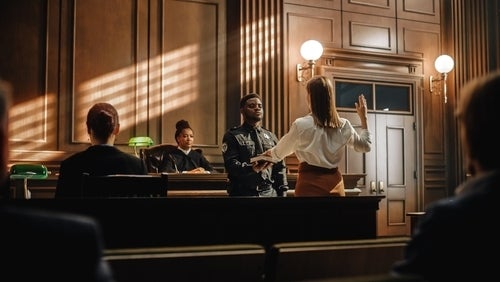
California Penal Code 119 defines the term oath to include affirmations and every other mode of attesting the truth that is authorized by law. Although Section 119 is a definitional statute rather than a charging statute, it is the gateway that determines when statements are treated as sworn and therefore when perjury and related offenses can be alleged. Understanding how this definition operates across court filings, declarations, and administrative proceedings is critical to building a strong defense.
What California Penal Code 119 Says
- Oath includes traditional sworn oaths, affirmations, and any other legally authorized form of truth attestation.
- The attestation method must be authorized by law to expose a person to perjury risk.
- Section 119 itself does not create criminal liability. It sets the foundation for prosecutions under other statutes.
Why the Definition Matters in Perjury and False Statement Cases
- It broadens the situations in which statements are deemed sworn, including written declarations and administrative forms.
- It captures modern attestation language such as declarations under penalty of perjury.
- It creates opportunities for the defense to challenge whether the attestation was in a form authorized by law or properly administered.
How Section 119 Applies Across Proceedings
- Court filings and testimony: Pleadings, affidavits, and in-court statements given under oath or affirmation.
- Declarations under penalty of perjury: Common in civil and regulatory contexts, often replacing notarized affidavits.
- Administrative and licensing matters: Forms and certifications that require truthful statements under an authorized attestation.
- Electronic and remote proceedings: E-filed declarations, remote testimony, and digital signatures when the process is authorized by law.
Elements The Prosecution Still Must Prove
Even when Section 119 applies, prosecutors must establish the traditional perjury elements beyond a reasonable doubt:
- A statement made under an oath or equivalent attestation authorized by law.
- The statement was false and material to the proceeding.
- The defendant knew the statement was false and acted willfully.
- Any required procedural formalities were satisfied, including authority of the person administering the oath or acceptance of the declaration.
Related Statutes and Charging Theories
Perjury and related accusations are typically charged under other statutes. In practice, prosecutors rely on California Penal Code 118 and 118.1 perjury and false report charges, while Section 119 explains when a statement is considered sworn.
Penalties in Related Perjury Offenses
California Penal Code 119 does not impose penalties. When a case proceeds under a substantive statute such as Penal Code 118, the potential consequences can be severe.
- Felony exposure: Perjury is generally a felony that can carry a state prison sentence.
- Fines and probation: Courts may impose significant fines and, in some cases, grant probation subject to strict conditions.
- Collateral consequences: Professional licensing problems, employment issues, immigration impacts, and reputational harm.
The precise penalty range depends on the charging statute, the facts, prior record, and aggravating or mitigating factors.
Case Law Interpreting Section 119
People v. Simpton and People v. Teixeira illustrate the courts' practical approach to oath definitions. The decisions recognize that Section 119 is meant to prevent technical gamesmanship about the form of an oath while still requiring that the attestation be authorized by law. These cases support defense arguments where procedures were irregular, authority was lacking, or the defendant was not on fair notice of a binding truth obligation.
Defenses That Often Work When Section 119 Is In Play
- Not authorized by law: The form of attestation or the official administering it lacked legal authority.
- Procedural irregularities: Missing jurats, defective declarations, or failures to comply with statutory formalities.
- Lack of materiality: The statement was not material to the matter at issue.
- No willful falsehood: Honest mistake, ambiguity, or misunderstanding rather than knowing falsity.
- Due process and notice: The defendant lacked fair notice that the statement carried perjury exposure.
- Evidentiary challenges: Insufficient proof that the statement was false or that the defendant knew it was false.
Evidence Considerations
Perjury cases often turn on documents, forms, metadata, and the surrounding circumstances of the attestation. These proof questions overlap with forensic evidence in criminal cases understanding its role and limitations, especially where digital records or scientific methods are disputed.
Impact On Electronic and Remote Proceedings
- Remote oaths: Courts increasingly authorize remote administration of oaths. The defense should confirm the statutory authority and compliance.
- Digital declarations: E-signed declarations under penalty of perjury may be valid if the format is authorized and the identity of the signer is reliable.
- Record integrity: Audit trails, version history, and transmission records can support or undermine the prosecution narrative.
Preliminary Hearings and Hearsay Issues
Statements and attestations can surface at early stages of a case. The framework under California Constitution Article I Section 30 Proposition 115 preliminary hearings and hearsay evidence shapes what sworn statements may be used at this stage and how they are presented.
Practical Steps If You Are Under Investigation
- Do not sign or submit any new declaration without legal advice.
- Preserve all drafts, emails, forms, and metadata related to the statement.
- Avoid explaining or correcting statements informally. Coordinate any clarification through counsel.
- Identify all officials involved in administering any oath or accepting any declaration.
- Engage counsel early to assess materiality, willfulness, and procedural defenses.
Connections To Related Offenses
Because Section 119 sets the definitional stage, prosecutors may pair it with charges that address specific contexts such as public records, mail fraud, or obstruction. Early defense work should map all potential exposure areas to avoid piecemeal risk.
Perjury Oath Definition under California Penal Code 119 Lawyers in California
If you are facing allegations tied to sworn statements, Bulldog Law can help. Our defense team understands how California Penal Code 119 interacts with perjury statutes and modern attestation practices across courts, agencies, and electronic platforms. We investigate procedure, challenge materiality and willfulness, and develop targeted strategies to protect your record, career, and freedom. Contact Bulldog Law to speak with an attorney about your options.