
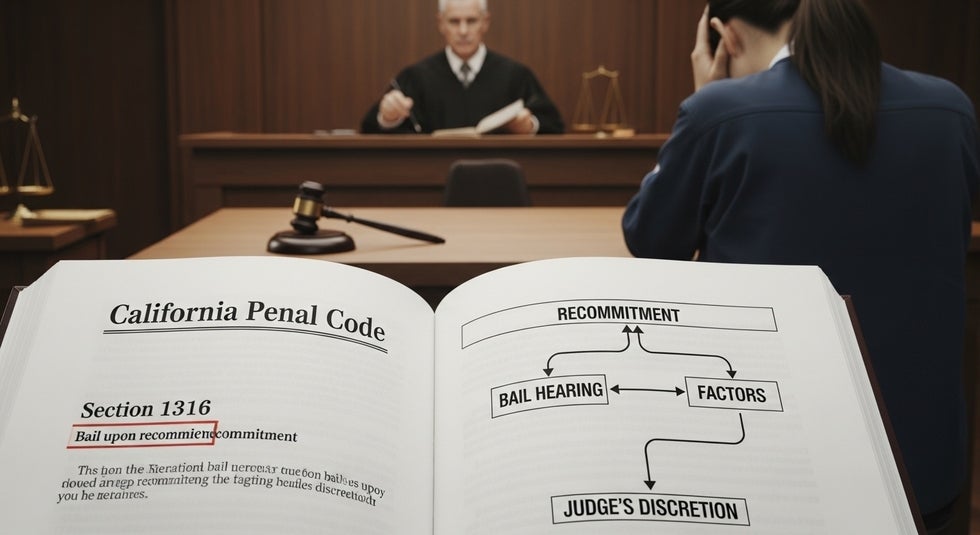
What Is Recommitment and When Does It Apply?
California's criminal justice system includes various circumstances where a defendant who was previously released on bail may be taken back into custody and then released again under new bail conditions. This process, known as recommitment, triggers specific legal requirements under Penal Code Section 1316 that differ from the initial bail undertaking.
Understanding recommitment and the unique bail requirements that apply in these situations is essential for anyone navigating criminal proceedings. At Bulldog Law, we help clients understand their rights when facing recommitment and ensure that bail undertakings comply with legal requirements while protecting our clients' interests.
Understanding the Recommitment Process
Recommitment occurs when a defendant who was previously released on bail is returned to custody and then released again under a new or modified bail arrangement. This can happen in several different scenarios throughout criminal proceedings.
Common Recommitment Situations
Bail revocation followed by new bail – If your original bail is revoked due to a violation of release conditions, the court may later decide to release you again under stricter conditions or higher bail amounts.
New charges while on bail – When you are arrested for new offenses while already out on bail in another case, you may be recommitted and then released on bail covering both cases or separate bail for each matter.
Appeal bond situations – After conviction, if you are initially taken into custody and then granted bail pending appeal, this constitutes a form of recommitment requiring the specific undertaking language prescribed in Section 1316.
Modified bail conditions – Sometimes courts order defendants back into custody temporarily to reconsider bail amounts or conditions, then release them under new arrangements.
Why Recommitment Matters Legally
The distinction between initial bail and bail upon recommitment is not merely technical. Different statutory language applies, creating distinct legal obligations for defendants and sureties. Section 1316 prescribes specific wording that must appear in recommitment bail undertakings, ensuring all parties understand the modified circumstances under which release is granted.
The Required Language for Recommitment Bail
California law is very specific about the language that must appear in bail undertakings upon recommitment. While Section 1316 uses somewhat archaic phrasing reflecting its historical origins, the core requirements remain binding today.
Essential Elements of the Undertaking
The recommitment bail undertaking must identify the court that ordered the defendant admitted to bail, specify the date when the bail order was made, and state the bail amount set by the court. It must also describe the type of charging document involved, whether an information, presentment, indictment, or appeal.
The undertaking must clearly identify the sureties, including their names, places of residence, and occupations. This information allows courts to verify the suitability and sufficiency of the sureties before accepting the bail bond.
Defendant Obligations in Recommitment Bail
The language prescribed in Section 1316 creates several specific obligations for defendants released on recommitment bail. You must appear in the court named in the undertaking or any other court where your appearance is lawfully required. This broad language ensures you cannot evade obligations by claiming the wrong court issued orders.
You must remain amenable to all orders and processes of the court throughout your case. This means complying not just with appearance requirements but with any conditions the court imposes, including travel restrictions, substance testing, or participation in treatment programs.
You must appear for judgment when your case concludes and surrender yourself for execution of that judgment if you are convicted. This language emphasizes that bail upon recommitment continues through final disposition, including sentencing and the beginning of any custody time ordered.
Surety Obligations and Financial Exposure
The sureties who sign recommitment bail undertakings assume significant financial responsibility. If the defendant fails to perform any of the conditions specified in the undertaking, the sureties become liable to pay the full bail amount to the State of California.
This liability is not proportional or negotiable. Each surety becomes responsible for the entire amount, meaning courts can pursue any surety for the full bail rather than dividing it among multiple sureties. This joint and several liability makes serving as a surety a serious financial commitment that should not be undertaken lightly.
Differences Between Initial Bail and Recommitment Bail
While both initial bail under Section 1287 and recommitment bail under Section 1316 serve similar purposes, important differences exist in their language and legal implications.
Scope of Court Jurisdiction
Initial bail undertakings typically reference appearing in the court where charges are pending. Recommitment bail explicitly includes "that or any other Court in which his appearance may be lawfully required," acknowledging that recommitment situations often involve multiple courts or transfer of cases between courts.
This broader language protects the state's interests when defendants face charges in multiple jurisdictions or when cases move between courts during appellate proceedings. For defendants, it means obligations extend beyond a single courtroom or judge.
Execution of Judgment Language
Recommitment bail includes explicit language requiring defendants to "surrender himself in execution thereof" referring to the judgment. This phrase emphasizes that bail continues through sentencing and that you must voluntarily surrender to begin serving any custody time imposed.
Initial bail undertakings focus primarily on appearance for trial and adjudication. Recommitment bail extends these obligations through the complete resolution of the case, including post conviction proceedings.
Strategic Considerations in Recommitment Bail
When you face recommitment and need to post new bail, several strategic considerations affect how you should approach the process.
Negotiating Bail Amounts
Recommitment often involves higher bail amounts than initial release, particularly if the recommitment resulted from violations of previous bail conditions or new criminal charges. However, you retain the right to challenge excessive bail under the Eighth Amendment.
At Bulldog Law, our criminal defense attorneys present evidence demonstrating that despite the circumstances leading to recommitment, you do not pose an unreasonable flight risk and can be safely released under appropriate conditions. We argue for bail amounts proportional to the actual risks involved rather than punitive amounts that effectively deny release.
Addressing the Reasons for Recommitment
If your recommitment resulted from alleged violations of previous bail conditions, addressing these allegations directly in your new bail motion is crucial. Courts will be more willing to grant recommitment bail if you can explain the circumstances, demonstrate they were not willful violations, and show you will comply with future conditions.
For example, if you were recommitted for missing a court date due to a documented medical emergency, presenting medical records and demonstrating your immediate attempts to notify the court can overcome concerns about future appearances.
Proposing Enhanced Conditions
Recommitment situations often require defendants to accept more restrictive release conditions than applied to their initial bail. Being proactive about proposing appropriate conditions demonstrates responsibility and makes courts more comfortable granting release.
Enhanced conditions might include electronic GPS monitoring, more frequent check ins with pretrial services, restrictions on travel or association, participation in substance abuse treatment or mental health counseling, or residence at a specific approved location.
Protecting Sureties in Recommitment Situations
If family members or friends are considering serving as sureties for your recommitment bail, they need to understand the risks and protections available.
Evaluating the Surety Decision
Potential sureties should carefully consider whether they have adequate assets to cover the bail amount if forfeiture occurs, whether they trust the defendant to comply with all bail conditions, and whether they can afford to lose the entire bail amount if the defendant fails to appear or comply.
Recommitment situations inherently involve higher risk than initial bail because something has already gone wrong, whether a bail violation, new charges, or other circumstances requiring return to custody. Sureties must honestly assess whether the defendant will successfully navigate these more challenging circumstances.
Surety Rights and Remedies
Sureties are not powerless once they sign bail undertakings. If you become concerned that the defendant may flee or violate conditions, you can surrender the defendant back to custody and be released from your obligations. This right allows sureties to protect themselves from forfeiture when they lose confidence in the defendant's compliance.
Our experience with bail and pretrial matters includes advising sureties about their rights, helping them monitor compliance with bail conditions, and assisting with surrender procedures when necessary to protect their financial interests.
Compliance With Recommitment Bail Conditions
Successfully maintaining your freedom on recommitment bail requires meticulous attention to all conditions and obligations.
Appearance Requirements
Missing a single court date while on recommitment bail typically results in immediate forfeiture and issuance of a bench warrant. Courts show less leniency for failures to appear when you are on recommitment bail because you have already received a second chance.
Maintain a detailed calendar of all court dates, set multiple reminders, and confirm dates with your attorney before each scheduled appearance. If any emergency prevents appearance, contact your attorney immediately so they can notify the court and request a continuance before the hearing time passes.
Condition Compliance Documentation
Keep detailed records of your compliance with all bail conditions. If you are required to attend counseling, maintain attendance records. If you must submit to drug testing, keep copies of clean test results. This documentation protects you if questions arise about your compliance.
Communication With Your Attorney
Maintain regular contact with your defense counsel throughout the recommitment bail period. Report any issues that might affect your compliance with bail conditions, notify your attorney immediately of any new arrests or legal problems, and seek guidance before making decisions that might impact your bail status.
When Recommitment Bail Is Denied
Courts sometimes refuse to grant bail upon recommitment, particularly when the circumstances leading to recommitment involve serious violations or new violent offenses. If you are denied recommitment bail, you still have legal options.
Requesting Reconsideration
As circumstances change or as you demonstrate compliance with other court orders while in custody, you can file renewed motions requesting bail. Changed circumstances, additional information about the reasons for recommitment, or passage of time may support reconsideration.
Appealing Bail Denial
In appropriate cases, you can seek appellate review of decisions denying bail upon recommitment. While appellate courts generally defer to trial court discretion on bail matters, they will intervene if the trial court abused its discretion or applied incorrect legal standards.
Expediting Case Resolution
When recommitment bail is unavailable, expediting your underlying criminal case becomes even more critical. We push for early trial dates, negotiate resolution where appropriate, and work to minimize the time you spend in custody awaiting case disposition.
How Bulldog Law Protects Your Rights
At Bulldog Law, we provide comprehensive representation for clients facing recommitment and bail issues throughout that process.
Thorough Case Evaluation
We analyze the circumstances that led to your recommitment, identify any defenses to alleged bail violations, and develop strategies for securing your release under appropriate conditions.
Persuasive Bail Advocacy
Our criminal defense team prepares detailed bail motions addressing court concerns while highlighting evidence supporting your release. We present testimony from family members, employers, and others who can vouch for your reliability.
Ongoing Support and Monitoring
Beyond securing recommitment bail, we help you comply with all conditions, address any issues that arise during the bail period, and protect your interests throughout your case.
Conclusion: Navigating Recommitment Bail Successfully
California Penal Code Section 1316 establishes specific requirements for bail undertakings when defendants are recommitted to custody and then released again. Understanding these requirements and the unique challenges of recommitment situations is essential for protecting your freedom and your sureties' financial interests.
If you are facing recommitment or need to post bail after being returned to custody, Contact Bulldog Law immediately for experienced legal representation. We will fight for your right to reasonable bail, help you understand your obligations under any undertaking, and work to keep you free while your case proceeds.
Your liberty matters, and we are committed to protecting it at every stage of your case.