
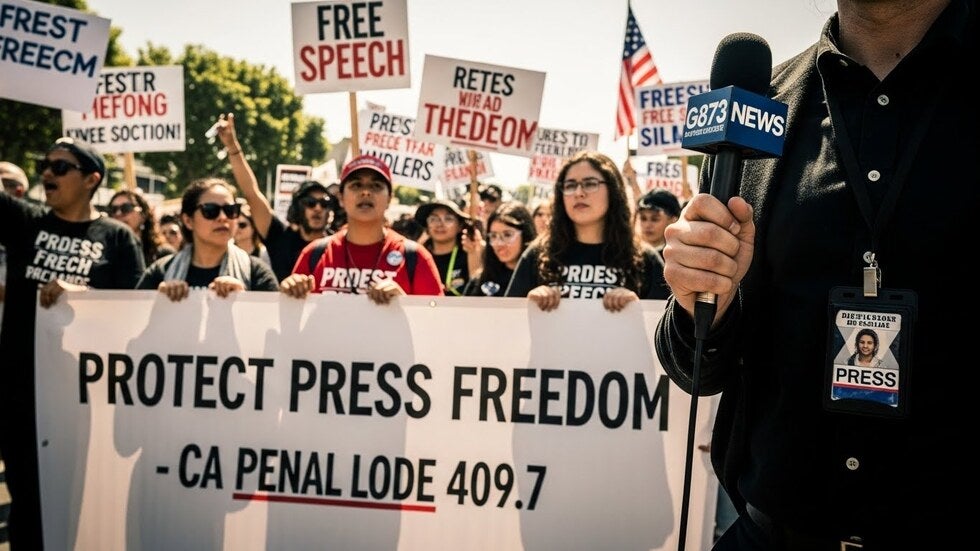
California recognizes that constitutional rights don't disappear during civil unrest. Penal Code 409.7 establishes crucial protections for journalists covering demonstrations, protests, marches, and rallies. If you're facing charges after documenting First Amendment activities, understanding this statute reveals powerful defenses that prosecutors often overlook.
The Foundation of Penal Code 409.7
This law emerged from California's commitment to press freedom and public accountability during protests. Unlike standard emergency closures, Section 409.7 specifically addresses situations where law enforcement establishes perimeters around constitutionally protected activities.
The statute applies when peace officers create emergency field command posts, establish police lines, or implement rolling closures at demonstrations where people exercise First Amendment rights. This includes protests, marches, rallies, and similar gatherings protected under both the United States Constitution and California's own constitutional provisions.
Understanding when this law applies versus other statutes makes the difference between a successful defense and wrongful conviction. Many people charged at protests don't realize they had explicit legal protection for their presence and activities.
Who Receives Protection Under This Statute?
California law provides clear protections for duly authorized representatives of news organizations. This includes journalists from traditional news services, online news platforms, newspapers, radio stations, television stations, and broadcasting networks.
The term "duly authorized representative" extends beyond staff reporters. Freelance journalists on assignment, photographers documenting events, videographers recording demonstrations, and other media professionals gathering news all qualify for protection. What matters is whether you were legitimately engaged in newsgathering activities, not your employment status.
Courts have broadly interpreted press protections to include independent journalists and citizen reporters in the digital age. If you were genuinely gathering, receiving, or processing information for public communication, you likely qualify for statutory protection regardless of your outlet's size or reach.
What Actions Does Penal Code 409.7 Explicitly Protect?
This statute provides three distinct layers of protection that create powerful defense arguments.
Right to Access Closed Areas
Subdivision (a)(1) grants media representatives explicit authority to enter closed areas surrounding command posts and within police lines at protests. This access right is absolute when you're performing legitimate newsgathering functions.
Law enforcement cannot categorically exclude press from areas where they've established perimeters. While officers may direct journalists to specific locations for safety reasons, blanket exclusions violate this statute. If you were arrested simply for being present in a closed area while documenting a protest, you have a statutory defense.
Protection From Police Interference
Subdivision (a)(2) prohibits peace officers from intentionally assaulting, interfering with, or obstructing media representatives gathering news. This protection goes beyond physical assault to include any intentional obstruction of legitimate journalism.
Common violations include officers deliberately blocking camera views, confiscating recording equipment, demanding journalists stop filming, or physically preventing access to areas where news is occurring. These actions violate California law when directed at credentialed media performing their constitutionally protected functions.
If officers interfered with your newsgathering activities, this creates both a defense to any charges you face and potential grounds for civil remedies. Documentation of these interactions through video, witness statements, and contemporaneous notes strengthens your position.
Immunity From Specific Charges
Subdivision (a)(3) provides perhaps the most powerful protection. Journalists in closed areas during protests cannot be cited for failure to disperse, curfew violations, or obstruction charges under Penal Code 148(a)(1) when gathering news.
This immunity is remarkable. Even if officers issue dispersal orders or curfews apply generally, media representatives documenting these events receive explicit exemption. Prosecutors cannot overcome this statutory bar, making it an absolute defense when properly asserted.
The statute also requires that detained journalists receive immediate access to supervisory officers to challenge their detention. This procedural protection prevents street level enforcement from overriding statutory press protections.
Building Your Defense Around Press Protections
If you're charged with offenses arising from protest coverage, several defense strategies flow from Penal Code 409.7.
Establish Your Status as a Media Representative
Document your newsgathering purpose and authorization. Press credentials from established outlets provide strong evidence, but lack of traditional credentials doesn't disqualify you. Courts increasingly recognize that modern journalism includes independent reporters, bloggers covering local events, and citizen journalists documenting matters of public concern.
Gather evidence of your journalistic work including published articles, social media posts, video uploads, and any correspondence about covering the event. Testimony from editors, assignment letters, and examples of prior reporting establish your legitimate media role.
The key question is whether you were genuinely gathering information for public dissemination, not whether you work for a major outlet. California's courts have embraced this functional definition of press activity.
Document Law Enforcement Interference
If officers prevented you from recording, blocked your access, or otherwise interfered with newsgathering, thoroughly document these interactions. Video footage from your camera or others present, photographs showing officer actions, and witness statements from fellow journalists create powerful evidence.
Many protesters and other media representatives witness these interactions. Identify and contact potential witnesses immediately, as memories fade and people become difficult to locate as time passes.
File complaints with the law enforcement agency involved. While these complaints serve administrative purposes, they also create contemporaneous records corroborating your account of events.
Challenge Charges Explicitly Prohibited by Statute
When prosecutors charge you with failure to disperse, curfew violations, or Penal Code 148(a)(1) obstruction for activities while covering a protest, Section 409.7(a)(3) provides complete immunity. File motions to dismiss based on this statutory bar.
Prosecutors sometimes charge journalists under other statutes to circumvent Section 409.7's protections. Carefully analyze whether these alternative charges actually describe different conduct or simply repackage prohibited charges under different labels. Courts will not allow prosecutors to evade clear statutory protections through creative charging decisions.
Understanding the Statute's Limitations
While Section 409.7 provides robust protections, understanding its boundaries prevents surprise and strengthens your defense strategy.
Other Laws Still Apply
Subdivision (b) clarifies that press protections don't immunize unlawful conduct beyond the specifically protected activities. Journalists cannot claim immunity for assault, vandalism, theft, or other crimes unrelated to newsgathering.
This limitation rarely impacts legitimate journalists. It exists to prevent people from using press credentials as licenses for criminal conduct. If you're charged with offenses genuinely unrelated to documenting events, you'll need defenses beyond Section 409.7.
However, carefully scrutinize whether charged conduct actually involved unlawful activity or whether officers mischaracterized protected newsgathering as something else. Officers unfamiliar with press protections sometimes confuse vigorous journalism with unlawful interference.
The Statute Creates No Criminal Liability
Subdivision (c) specifies that Section 409.7 doesn't create new crimes. This provision prevents law enforcement from using the statute itself as a basis for charging people who allegedly interfere with protected press activities.
Procedural Rights When Detained
The statute's requirement that detained journalists immediately access supervisory officers creates important procedural protections. If officers detain you while covering a protest, invoke this right clearly and repeatedly.
Request to speak with a supervisor immediately. Make this request clearly and document it if possible. Refusal to provide this access violates the statute and may support suppression of evidence or dismissal of charges.
Supervisors generally better understand press protections and constitutional limitations. They also face greater accountability for civil rights violations. Escalating detention decisions to supervisory level often results in release without charges.
First Amendment Implications Beyond State Law
Penal Code 409.7 reinforces protections already existing under the First Amendment. Even without this statute, courts recognize that press freedom includes the right to observe and report on matters of public concern, particularly government actions during protests.
Federal civil rights claims under 42 USC Section 1983 may arise from violations of press freedom. These claims provide remedies including damages, attorney fees, and injunctive relief. Don't limit your analysis to state criminal defenses when federal constitutional violations occurred.
California's strong history of protecting press freedom means state courts often provide broader protections than federal minimums. This statute represents California's policy judgment that robust press protections serve the public interest.
Connecting Protest Coverage to Police Accountability
Understanding why California enacted Section 409.7 illuminates how to use it effectively. The legislature recognized that police accountability depends on independent documentation of law enforcement activities during civil unrest.
Without press presence, allegations of excessive force, unlawful arrests, and civil rights violations become difficult to prove. Journalists serve as witnesses holding both protesters and police accountable. This statute protects their ability to perform this crucial democratic function.
When asserting your rights under this law, emphasize that you were serving this accountability function. Courts understand and value this role, making judges receptive to press freedom defenses.
Practical Steps After Being Charged
If you face charges after covering a protest, take immediate action to preserve your rights and build your defense.
Secure all footage, photographs, and notes from the event. Back up this evidence in multiple locations to prevent loss. This documentation proves both your newsgathering purpose and any law enforcement interference with your activities.
Identify and contact other journalists and witnesses who observed relevant events. Exchange contact information with fellow media representatives at protests specifically for this purpose.
Research similar cases in your jurisdiction. Patterns of law enforcement violating press freedom at protests create powerful context for your defense.
Consider connecting with press freedom organizations that may provide resources or advocacy. Groups monitoring journalist arrests often track these cases and can provide valuable information about successful defense strategies.
The Intersection With Other Protest Related Offenses
Penal Code 409.7 often overlaps with other statutes governing protest activities. Understanding how this law interacts with related offenses strengthens your overall defense strategy.
Many protest arrests involve charges under unlawful assembly statutes, trespass laws, or specific municipal ordinances. While Section 409.7 doesn't explicitly address all these charges, its underlying principles about protecting First Amendment activity inform defenses to related offenses.
Moving Forward With Your Defense
Charges arising from protest coverage require aggressive defense emphasizing your constitutional and statutory protections. Prosecutors and police sometimes misunderstand or disregard press freedom laws, making vigorous advocacy essential.
California explicitly chose to protect press freedom during civil unrest. This wasn't accidental. The legislature understood that documenting protests and police responses serves vital public interests that justify strong legal protections.
Your role in documenting these events matters. Courts recognize this importance even when individual officers on the street don't. Effective defense means ensuring judges understand you were exercising protected rights essential to democratic accountability.
Section 409.7 provides powerful tools for defending against charges stemming from protest coverage. Whether through pre-filing intervention demonstrating that charges violate statutory protections, motions to dismiss based on immunity provisions, or trial defenses emphasizing constitutional rights, multiple paths can lead to favorable outcomes. If you are facing charges related to protest coverage or newsgathering activities, contact Bulldog Law to consult with experienced criminal defense attorneys who understand media protections and will aggressively defend your rights.