
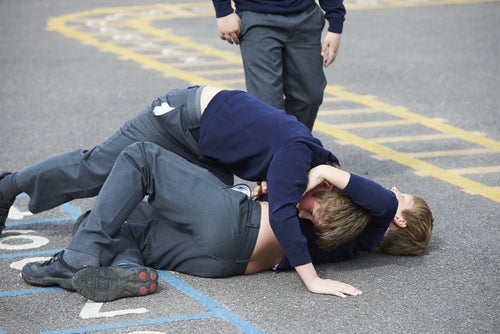
California Penal Code Section 415.5 makes it a crime to disturb the peace on school property, such as through fighting, loud noise, or provocative speech, but it carves out specific protections for registered students. The law is stricter than general disturbing the peace statutes and carries escalating penalties for repeat offenses. Understanding your rights and possible defenses is essential if you're facing charges under this school-specific statute.
Key Elements Required for a PC 415.5 Conviction
To secure a conviction under PC 415.5, prosecutors must show that the alleged conduct occurred on school grounds and involved one of three behaviors: unlawful fighting, loud and unreasonable noise, or the use of offensive words likely to incite violence. A knowledgeable attorney can help assess whether the incident meets these legal definitions or if it more appropriately falls under general disturbing the peace charges under California Penal Code 415.
Registered Student Exemption: A Powerful Legal Shield
One of the most significant features of PC 415.5 is its exemption for registered students. This exemption ensures that enrolled students cannot be prosecuted under this statute, recognizing that school discipline is more appropriate than criminal charges for campus behavior. Proving current enrollment through tuition records, class schedules, or school-issued IDs can serve as a complete defense in these cases.
Jurisdictional Limitations and Proper Charge Classification
Charges under PC 415.5 only apply if the conduct occurred within school buildings or on school grounds—not on nearby sidewalks, parks, or private property. If prosecutors try to sidestep student protections by filing under general PC 415 or other codes, your defense should invoke case law like Scott v. County of San Bernardino to push back. In more complex cases, they may even attempt to allege conduct that overlaps with resisting or threatening an executive officer under Penal Code Section 69, making it vital to distinguish between statutes early in your defense.
Escalating Penalties and Repeat Offense Enhancements
The penalties for violating PC 415.5 become more severe with each conviction:
- First offense: Up to six months in county jail, a fine up to $500, or both
- One prior conviction: Mandatory minimum of 10 days in jail
- Two or more prior convictions: Mandatory minimum of 90 days in jail
Because prior convictions drastically increase exposure, a defense strategy may focus on challenging the validity or applicability of earlier PC 415.5 offenses. In certain situations, you may also face added complications if school-related behavior is misinterpreted as stalking under California law, particularly in repeated conflicts involving the same individual.
First Amendment Protections and Due Process Defenses
Speech-based charges must be evaluated for potential First Amendment protections. If your alleged conduct involved protest, political expression, or emotional but constitutionally protected speech, the court must balance campus safety against your right to free expression. Moreover, vague terms like “offensive words” can trigger legal challenges based on due process and overbreadth. When enforcement seems arbitrary or discriminatory, your attorney may explore whether the prosecution violates equal protection under the law.
Juvenile Proceedings and Alternative Sentencing
For minors, PC 415.5 charges are often processed through the juvenile system, which emphasizes rehabilitation. Courts may order counseling, school re-engagement programs, or community service instead of incarceration. These cases frequently involve coordination with school administrators, where rules related to witness testimony under Penal Code Sections 2624 and 841.5 may influence how minors and educators participate in the proceedings.
Investigating Evidence: Witness Credibility and Surveillance
Testimony from students or staff may be inconsistent or emotionally charged. Your attorney should evaluate witness bias, personal relationships, and disciplinary pressures that may affect credibility. Additionally, many school campuses have surveillance systems that can offer objective evidence. Obtaining and analyzing footage quickly is critical to verify facts, establish timelines, and challenge inaccurate accounts of events.
Restorative Justice and Educational Diversion Programs
First-time offenders may benefit from restorative justice alternatives or behavioral diversion programs. These options focus on accountability and rehabilitation while avoiding criminal records. Courts are often open to these resolutions when supported by mitigation materials, including letters of support, evidence of remorse, and willingness to participate in positive school community efforts. Educational interventions may also be helpful if the behavior involved overlaps with poor firearm storage practices, topics addressed under California's school-based firearm storage laws in Penal Code 25135.
Building a Strong, Multi-Faceted Defense
Defending against PC 415.5 requires immediate action to preserve evidence, interview witnesses, and document student status. Legal teams may also consult experts in acoustics, psychology, or surveillance technology when cases involve complex crowd dynamics or video analysis. In some scenarios, it may also be necessary to counteract assumptions rooted in policies like those addressed in California Penal Code 25145, which affect how conduct is interpreted on school grounds.
Disturbing the Peace on School Grounds Defense Lawyers in California
At Bulldog Law, we understand the high stakes of PC 415.5 charges, especially when they threaten your education, career, or freedom. Our experienced defense attorneys have successfully defended clients by proving student status, challenging unconstitutional speech restrictions, and discrediting unreliable witnesses. Whether you're a parent, minor, or non-student adult accused of disrupting school grounds, we will fight to protect your rights and minimize the impact on your future.
Contact Bulldog Law today to speak with trusted disturbing the peace on school grounds defense lawyers in California. We are ready to help you understand your legal options and build the strongest defense possible.