
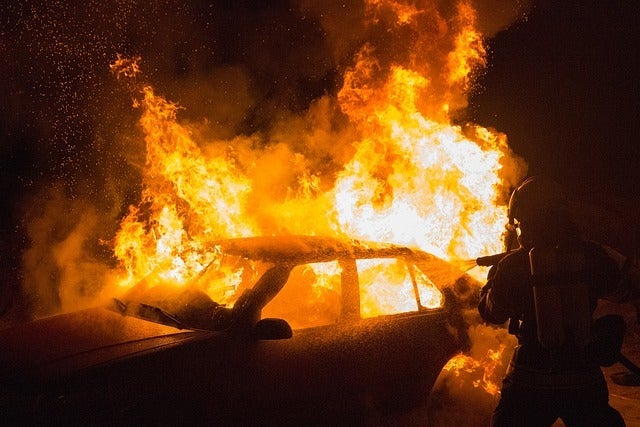
Arson charges in California carry severe consequences, with potential prison sentences ranging from 16 months to nine years depending on the circumstances. When you face allegations under Penal Code Section 451, understanding the statute's requirements and available defenses can make the difference between conviction and acquittal. This comprehensive guide examines arson law from a defense perspective, helping you understand your rights and options, including how the burden of proof shapes these cases.
What Constitutes Arson Under California Law
California Penal Code 451 defines arson as willfully and maliciously setting fire to or burning any structure, forest land, or property. The statute also criminalizes causing something to be burned or aiding, counseling, or procuring the burning. While this definition may seem straightforward, each element requires careful examination.
The prosecution must prove two critical mental state elements: the defendant acted willfully and maliciously. These requirements separate criminal arson from accidents, negligence, or other non-criminal fires. Understanding these elements is essential for mounting an effective defense.
Breaking Down the Elements Prosecutors Must Prove
From a defense standpoint, recognizing what the government must establish beyond a reasonable doubt is fundamental. Each element represents a potential vulnerability in the prosecution's case.
Willful Conduct: The defendant must have acted willfully, meaning on purpose or deliberately. Accidental fires, no matter how careless the conduct, do not constitute arson. If you accidentally knocked over a candle, left a stove on without realizing it, or experienced an equipment malfunction, these scenarios lack the willful element necessary for conviction.
Malicious Intent: Beyond acting willfully, the defendant must have acted maliciously. In California law, malicious means with intent to do a wrongful act or with intent to injure or annoy another person. This requirement means that even deliberate fire setting may not be arson if done without wrongful intent. For example, controlled burns conducted for legitimate land management purposes lack malicious intent.
Setting Fire or Causing Burning: The defendant must have actually set fire to something or caused it to be burned. This element requires proof that your actions directly led to the fire. If someone else independently caused the fire, or if the fire resulted from a chain of events you could not have anticipated, this element may fail.
Burning of Covered Property: The fire must involve a structure, forest land, or property as defined by California law. The specific category of property burned determines the severity of charges and potential penalties.
Understanding the Different Degrees of Arson
Arson Causing Great Bodily Injury: This most serious category applies when the fire causes significant physical harm to another person. Great bodily injury means substantial injury beyond minor harm. Convictions carry potential sentences of five, seven, or nine years in state prison. From a defense perspective, challenging whether injuries actually constitute great bodily injury under legal standards can be crucial.
Arson of Inhabited Structures or Property: When fire damages an inhabited structure or inhabited property, sentences range from three to eight years in state prison. The key term "inhabited" means currently used for dwelling purposes, whether or not anyone was present at the time of the fire. Proving a structure was truly inhabited at the relevant time is a factual question that deserves scrutiny.
Arson of Structures or Forest Land: This category covers structures not currently inhabited and forest land. Penalties range from two to six years in state prison. The distinction between inhabited and uninhabited structures can significantly impact sentencing, making this classification critical.
Arson of Property: The least severe category involves burning property that does not fall into other categories. Sentences range from 16 months to three years in state prison. Importantly, this subsection includes an exception for burning your own personal property, absent intent to defraud or injury to others or their property.
Key Defenses to Arson Charges
Lack of Willfulness: If the fire was accidental, you cannot be convicted of arson regardless of how negligent your conduct might have been. Perhaps you fell asleep while cooking, experienced an electrical malfunction, or miscalculated when disposing of smoking materials. Accidents, even careless ones, are not crimes under this statute. Evidence showing you took reasonable precautions, had no reason to expect a fire, or that the fire resulted from truly accidental causes can defeat arson charges.
Absence of Malice: Even deliberate fire setting is not criminal arson without malicious intent. If you were conducting a controlled burn for legitimate agricultural purposes, performing authorized fire prevention work, or engaged in other lawful activities involving fire, malice is absent. Understanding how intent operates in California criminal law helps demonstrate why your conduct lacked the required wrongful purpose.
Insufficient Evidence of Causation: The prosecution must prove your actions caused the fire. If evidence shows someone else started the fire, or if the fire's origin remains unclear, reasonable doubt exists about causation. Fire investigation is complex, and investigators sometimes reach conclusions not fully supported by evidence. Challenging fire investigation methodology and conclusions through expert testimony often proves effective — see our guide on forensic evidence in criminal cases.
Burning Your Own Property: The statute explicitly allows burning your own personal property unless you intended to defraud someone or the fire injured others or their property. If you burned items you owned on your own land, away from others, without fraudulent intent, you may have a complete defense. However, this exception requires careful analysis, as burning personal property that endangers others or involves insurance fraud remains criminal.
False Accusations: Unfortunately, arson charges sometimes result from false allegations. Disgruntled neighbors, estranged family members, or others with motives to harm you may falsely claim you started a fire. Investigating the accuser's credibility, motive to lie, and inconsistencies in their account can expose false accusations.
Mistaken Identity: Fires often occur when no one is watching. If the prosecution's case relies on witness identification, eyewitness reliability becomes crucial. Factors like darkness, smoke, distance, and witness bias all affect identification accuracy. Demonstrating you were elsewhere when the fire started or that witnesses cannot reliably identify you creates reasonable doubt.
Special Considerations for Property Owners
The statute's exception for burning personal property provides important protection for property owners, but boundaries exist. You generally can burn your own belongings on your property for legitimate reasons. However, this right has limits.
If your fire injures another person or damages someone else's structure, forest land, or property, the exception does not apply. Similarly, if you burned property to commit insurance fraud or other deception, arson charges can proceed even though you owned the property. The key is whether your purpose was legitimate and whether your actions endangered or harmed others.
Local ordinances and fire safety regulations may also restrict your ability to burn materials, even on your own property. While violating such regulations might result in civil penalties or minor infractions, it does not automatically constitute arson under Penal Code 451. However, evidence of regulatory violations can be used to establish willfulness or malice in arson prosecutions.
Enhanced Penalties for Incarcerated Individuals
Penal Code 451 includes a special provision for defendants who commit arson while confined in state prison, prison camps, county jail, or other custodial facilities while serving felony or misdemeanor sentences. Any sentence imposed for arson committed during confinement must run consecutively to the sentence being served.
This provision reflects the serious security concerns raised by fires in confined facilities where evacuation is difficult and many people are at risk. If you face arson charges arising from conduct during incarceration, the mandatory consecutive sentencing significantly increases potential time served.
The Critical Role of Fire Investigation
Arson prosecutions heavily rely on fire investigation evidence. Fire investigators examine burn patterns, point of origin, accelerant presence, and other physical evidence to determine whether fires were deliberately set. However, fire investigation is not infallible.
Historical fire investigation methods have been called into question by modern science. Burn patterns once thought to indicate arson can result from natural fire behavior. Investigators sometimes reach conclusions based on flawed assumptions or outdated training. From a defense perspective, scrutinizing fire investigation methods and conclusions through qualified experts is essential.
Your defense team should examine whether investigators properly documented the scene, considered alternative explanations, tested for accelerants using reliable methods, and reached conclusions supported by scientific evidence. Challenging unreliable fire investigation can undermine the prosecution's entire case.
Arson and Related Charges
Prosecutors often file multiple charges in arson cases. You might face charges under Penal Code 451 alongside other offenses like unlawfully causing a fire (Penal Code 452), burglary if you entered a structure to commit arson, or various other crimes depending on circumstances.
Understanding how different charges interact is important for comprehensive defense strategy. Sometimes fighting one charge strengthens defenses to others. Conversely, evidence relevant to one charge may impact others. Coordinated defense addressing all allegations together typically proves more effective than treating each charge in isolation. Consulting with attorneys experienced in complex criminal defense matters ensures your entire case receives proper attention.
Protecting Yourself If Accused
If you face arson allegations, taking immediate protective steps is essential:
Exercise Your Right to Remain Silent: Arson investigations often begin with investigators asking questions. You have constitutional rights against self incrimination. Statements you make, even if you believe they are exculpatory, can be used against you. Politely declining to answer questions without your attorney present protects your rights.
Preserve Evidence: If you have evidence supporting your innocence, such as receipts showing you were elsewhere, photographs of conditions before the fire, or documentation of equipment malfunctions, preserve this carefully. Your attorney can help determine what evidence is relevant and how to present it effectively.
Avoid Discussing the Case: Do not discuss your case with anyone except your attorney. Conversations with friends, family, cellmates, or others can be discovered and used against you. Even seemingly innocent comments can be misinterpreted or taken out of context.
Document Your Activities: If you can establish your whereabouts when the fire started or demonstrate legitimate reasons for your presence near the scene, document this information. Witness statements, electronic records, surveillance footage, or other evidence establishing your timeline can be invaluable.
Why Experienced Legal Representation Matters
Arson cases involve complex scientific evidence, serious penalties, and specialized investigation techniques. The stakes are simply too high to navigate without experienced legal counsel. Attorneys knowledgeable in fire science, investigation methods, and criminal defense strategies can identify weaknesses in the prosecution's case, challenge unreliable evidence, and present compelling defenses.
Your attorney can retain fire investigation experts to review the evidence, identify flaws in the prosecution's theories, and provide alternative explanations for the fire. Expert testimony often proves decisive in arson cases where the prosecution's case rests heavily on investigation conclusions.
Conclusion
California Penal Code 451 arson charges carry serious consequences, but every element must be proven beyond a reasonable doubt. The requirements of willful and malicious conduct mean that accidents, lack of wrongful intent, and numerous other factors can defeat arson charges.
From challenging fire investigation methods to demonstrating lack of intent, multiple defense strategies exist. The exception for burning personal property, the requirement of proving causation, and constitutional protections against unreliable evidence all provide opportunities for effective defense.
If you face arson allegations, remember that you are presumed innocent, and the prosecution bears the burden of proof. With thorough investigation, expert analysis, and experienced legal representation, you can protect your rights and fight for the best possible outcome in your case. The complexity of arson prosecutions means that seemingly strong cases often contain significant weaknesses that skilled defense counsel can exploit to achieve favorable results.
Need help now? Speak with our defense team about a tailored strategy for a PC 451 accusation: Contact Experts Team The Bulldog Law farm