
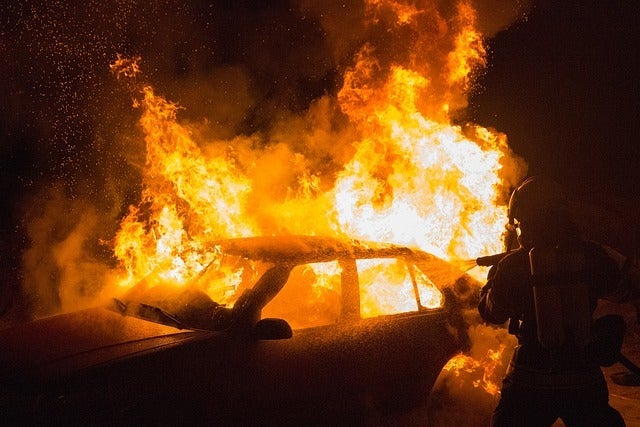
California takes fire-related crimes very seriously, including cases where no actual fire occurs. Penal Code Section 455 criminalizes attempted arson, allowing prosecutors to file felony charges against individuals accused of trying to set fires or taking preparatory steps toward burning structures, forest land, or property.
Understanding how this statute operates and what defenses exist is crucial for anyone facing allegations that could result in years of state prison time — even when no flames ever appeared.
If you're under investigation or charged with attempted arson, contact an experienced criminal defense attorney at The Bulldog Law Firm immediately for a consultation. Early action can make all the difference.
What Constitutes Attempted Arson Under California Law
Section 455 casts a wide net, capturing various behaviors that prosecutors characterize as moving toward arson. The statute prohibits willfully and maliciously attempting to set fire to or burn structures, forest land, or property. Additionally, it criminalizes aiding, counseling, or procuring such burning, along with committing any act preliminary to arson or in furtherance of it.
This broad language means prosecutors can file charges even when defendants took only initial steps toward a fire that never ignited. The law reaches conduct occurring well before any actual burning, creating substantial challenges for individuals who never intended to complete an arson but whose actions prosecutors interpret as preparatory.
The Two Pathways to Attempted Arson Charges
California law provides two distinct ways prosecutors can establish attempted arson, each requiring different proof and presenting unique defense opportunities.
The attorneys at The Bulldog Law Firm's Criminal Defense Division regularly handle fire-related and arson investigations, helping clients fight back against unfair or exaggerated charges.
Direct Attempt to Burn
The first pathway involves traditional attempt liability where someone willfully and maliciously tries to set fire to structures, forest land, or property but fails to actually ignite a fire. This might include situations where someone strikes matches that blow out, uses a lighter that malfunctions, or attempts ignition in ways that simply do not work.
From a defense perspective, these cases often involve questions about whether the defendant actually attempted to start a fire or engaged in entirely different conduct that prosecutors misinterpret. Surveillance footage, witness testimony, and physical evidence become critical in establishing what actually occurred versus what prosecutors allege.
Placing Flammable Materials
The second pathway involves a statutory presumption unique to arson law. Section 455 specifically states that placing or distributing flammable, explosive, or combustible materials or devices in or around structures, forest land, or property in an arrangement or preparation with intent to eventually burn them constitutes attempted arson.
This provision allows prosecutors to file charges based purely on material placement without proving the defendant took any direct step toward ignition. The prosecution must still prove intent to eventually burn the target, but the act of arranging materials satisfies the attempt element automatically.
This statutory presumption creates significant defense challenges because it eliminates arguments that the defendant never took a substantial step toward completing the crime. However, it also creates opportunities to challenge whether the materials were actually arranged with arson intent or served legitimate purposes.
Understanding the Intent Requirement
Like all arson-related offenses, Penal Code Section 455 requires prosecutors to prove willful and malicious intent. This demanding mental state requirement forms the foundation of many successful defense strategies in attempted arson cases.
What “Willful and Malicious” Means
“Willful” conduct refers to intentional or purposeful behavior. “Malicious” conduct refers to acts done with intent to harm, injure, or damage property.
Together, these elements mean prosecutors must prove the defendant purposefully attempted to burn something with harmful intent.
Accidental conduct, negligent behavior, or actions taken without understanding their consequences do not satisfy this requirement. Defense attorneys evaluate every surrounding circumstance to identify evidence disproving malicious intent.
Challenging Intent in Material Placement Cases
When prosecutors rely on the material placement provision, proving intent becomes even more critical. The case may hinge entirely on whether the defendant actually intended to burn the target or had a legitimate reason for positioning flammable materials.
Construction workers, maintenance staff, and property owners often handle gasoline, solvents, and other combustible substances for normal tasks. The mere presence of these materials doesn't automatically prove criminal intent.
Penalties for Attempted Arson Convictions
Violations of Penal Code Section 455 are felonies punishable by 16 months, two years, or three years in state prison.
While these sentences are lighter than for completed arson, they still represent serious consequences with long-term effects beyond incarceration.
Sentencing Factors
Judges consider numerous factors when determining appropriate sentences within the statutory range. Prior criminal history, the specific circumstances of the alleged attempt, whether anyone was endangered, and the value of targeted property all influence sentencing decisions.
Defense attorneys present mitigation evidence showing factors warranting lower sentences. Mental health issues, substance abuse problems, lack of criminal history, good character evidence, and remorse can all persuade judges toward the minimum 16 month sentence rather than the maximum three year term.
Collateral Consequences
Beyond direct incarceration, attempted arson convictions create felony records that affect employment, professional licenses, housing, and even firearm ownership.
Some industries permanently ban individuals with arson-related convictions, even when no actual fire occurred. These collateral consequences make defending Section 455 charges absolutely critical.
For tailored guidance, individuals can consult the experienced attorneys at The Bulldog Law Firm who routinely defend fire-related and property-damage offenses across California.
Key Defense Strategies for Attempted Arson Charges
Successfully defending against Penal Code 455 charges requires thorough case analysis and strategic legal advocacy based on the evidence and facts.
Lack of Intent Defense
The most common and often most effective defense questions whether prosecutors can prove willful and malicious intent to burn property.
Many attempted-arson allegations stem from misunderstandings, accidents, or misinterpreted conduct.
Defense counsel investigates what the defendant was actually doing, reviews witness accounts, and collects physical evidence that supports legitimate explanations.
No Substantial Step Toward Completion
In “direct attempt” cases, prosecutors must show that the defendant took a substantial step toward committing arson — not just preparation or planning.
Defense lawyers closely evaluate each alleged action to determine if it truly crossed the legal line into an “attempt.”
Thinking about starting a fire or performing unrelated tasks usually doesn't qualify as a substantial step under California law.
Legitimate Purpose for Material Placement
When cases rely on the presumption about placing flammable materials, showing lawful reasons for doing so completely defeats the prosecution's theory.
Documentation, witness statements, and expert testimony demonstrating proper use of materials — such as for construction or maintenance — often secure dismissals or acquittals.
Challenging Aiding and Abetting Allegations
Section 455 extends liability to anyone who aids, counsels, or procures an arson attempt.
Prosecutors often charge multiple defendants when they believe one person encouraged or assisted another's actions.
Defense strategies focus on whether the accused truly knew about and intended to assist any criminal conduct.
Mere presence at a scene or providing materials without knowledge of their misuse does not amount to aiding and abetting.
Preliminary Acts Must Connect to Actual Arson Intent
The law criminalizes acts preliminary to arson, but prosecutors must still prove those acts were directly tied to arson intent.
Actions that serve multiple lawful purposes do not become crimes simply because they could theoretically lead to a fire.
Defense lawyers highlight timing, motivation, and the defendant's background to show no link between conduct and arson intent.
Constitutional Challenges and Procedural Defenses
In addition to factual defenses, attempted arson cases may involve constitutional violations requiring dismissal or suppression of evidence.
Fourth Amendment Search Issues
Evidence often comes from searches of homes, vehicles, or personal property.
If searches were done without warrants or beyond their lawful scope, any seized evidence can be excluded.
This is one of the most effective defenses when handled by skilled federal crimes attorneys familiar with constitutional litigation.
Fifth Amendment Concerns
Statements made during interrogations are inadmissible if Miranda rights were violated.
Defense counsel reviews every interview to ensure rights were respected before statements were taken.
Entrapment Defense
In some cases, law enforcement encourages or facilitates conduct that the accused would never have undertaken otherwise.
When officers or informants induce criminal behavior, entrapment becomes a complete defense.
Proving entrapment requires showing that law enforcement initiated the idea and that the defendant was not predisposed to commit arson.
The Legal Blog Center covers several cases exploring entrapment defenses in California.
The Critical Importance of Early Legal Representation
Individuals facing attempted arson allegations must immediately seek legal advice.
Early involvement allows defense counsel to preserve evidence, secure witnesses, and negotiate with prosecutors before charges solidify.
The Bulldog Law Firm's Criminal Defense and Federal Crimes teams combine deep knowledge of California arson laws with courtroom experience to protect clients from harsh penalties.
Those in Southern California can contact the firm's Los Angeles or San Diego offices for immediate consultation.
Moving Forward With Your Defense
Facing attempted arson charges creates serious consequences even though no fire actually occurred. Understanding California Penal Code Section 455 and available defenses empowers defendants to make informed decisions and work effectively with legal counsel.
Every attempted arson case presents unique facts and circumstances that skilled defense attorneys can use to challenge prosecution allegations. Whether the case involves questions about intent, substantial steps, legitimate purposes, or constitutional violations, thorough investigation and aggressive advocacy make the difference between conviction and acquittal or between maximum prison sentences and favorable plea agreements.
The stakes remain too high to navigate these charges without experienced legal guidance. Protecting your rights, freedom, and future requires knowledgeable representation from attorneys who understand arson law complexities and know how to build winning defense strategies.