
The Hearing Process for Wrongful Conviction Claims
After years of fighting to prove your innocence and finally achieving exoneration, submitting a claim for wrongful conviction compensation marks another crucial step toward justice.
However, filing the claim is only the beginning. Understanding what happens during the hearing process before the California Victim Compensation Board can mean the difference between receiving the compensation you deserve and walking away empty handed.
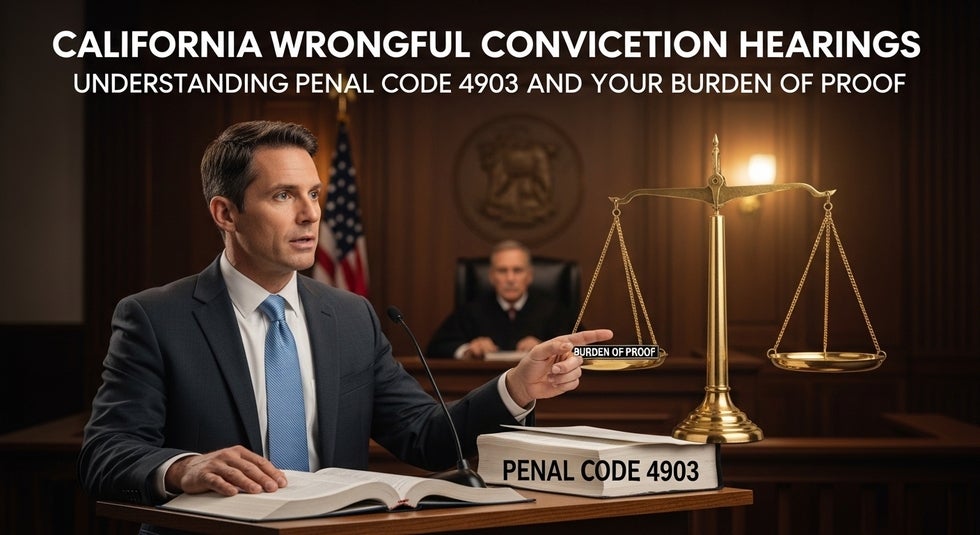
Penal Code Section 4903 establishes the procedural framework governing how the Board evaluates wrongful conviction claims. This statute determines who bears the burden of proof, what evidence can be presented, and how previous court findings impact the compensation hearing.
For wrongfully convicted individuals and their advocates, mastering these procedural details is essential to successful claim resolution.
Standard Hearing Procedures and Evidence Requirements
In most wrongful conviction cases, the California Victim Compensation Board schedules a formal hearing to evaluate the claim. The Board sets the time and place for this proceeding, providing both the claimant and the Attorney General representing the state with notice and opportunity to participate.
During the hearing, the claimant carries the initial responsibility of introducing evidence supporting their claim. This evidence must establish the factual allegations set forth in the claim statement submitted with the application. The burden falls on the claimant to prove several critical elements through competent evidence.
First, the claimant must demonstrate that the crime for which they were charged either was not committed at all, or if the crime did occur, that the claimant was not the person who committed it. This requirement focuses squarely on actual innocence rather than mere procedural errors or technical deficiencies in the criminal proceedings.
Second, the claimant must prove the injuries they sustained through their erroneous conviction and incarceration. These injuries encompass not only the loss of liberty during imprisonment but also the cascading consequences that flow from wrongful conviction, including lost employment opportunities, damaged relationships, psychological trauma, and social stigma.
The Attorney General may introduce evidence opposing the claim. This authority allows the state to contest factual assertions, challenge the sufficiency of evidence, or raise legal defenses to compensation. However, as explained below, important limitations restrict what arguments the Attorney General can make and what evidence carries weight in these proceedings.
Streamlined Process When Attorney General Objects
California law recognizes that certain categories of wrongful conviction cases have already undergone extensive judicial scrutiny establishing innocence. For claims falling under the streamlined approval process described in Section 4900(b), involving habeas corpus relief or motions to vacate followed by charge dismissal or acquittal, the Board normally approves payment without a hearing.
However, the Attorney General retains authority under Section 4902(d) to object to these streamlined claims by establishing that the claimant is not entitled to compensation. When such objection is raised, the Board must schedule a hearing to resolve the disputed claim.
In these contested streamlined cases, the burden of proof shifts dramatically in favor of the claimant. Rather than requiring the wrongfully convicted individual to prove innocence all over again, the statute places the burden on the Attorney General to prove by clear and convincing evidence that the claimant actually committed the acts constituting the offense.
This heightened evidentiary standard recognizes that courts have already determined the conviction was improper and charges were dismissed or the defendant acquitted.
The state should not get another bite at the apple using a lower standard of proof. Clear and convincing evidence represents a demanding threshold, requiring the Attorney General to produce evidence that is highly and substantially more probable to be true than not.
The claimant retains the right to introduce evidence supporting their claim even when the burden has shifted to the Attorney General. This ensures the wrongfully convicted person can present their full story and counter any evidence the state offers.
Binding Effect of Prior Court Findings
One of the most significant protections in Penal Code Section 4903 involves the binding effect of factual findings and credibility determinations made by courts in prior proceedings. When a court grants a writ of habeas corpus, a motion to vacate under Section 1473.6 or Section 1473.7(a)(2), or an application for a certificate of factual innocence under Section 1485.5, the factual findings establishing the basis for that relief bind all parties in the compensation hearing.
This means the Attorney General cannot relitigate factual issues already decided by the court. If a judge found that prosecution witnesses lacked credibility, that newly discovered evidence established innocence, or that constitutional violations undermined the reliability of the conviction, those determinations carry forward into the compensation proceeding.
The factfinder at the Board hearing and the Board itself are similarly bound by these prior court findings. They cannot second guess judicial determinations or reach contrary factual conclusions on matters the court already resolved. This provision prevents the compensation process from becoming a backdoor method to relitigate the merits of the exoneration.
The binding effect of court findings serves multiple important purposes. It respects the judicial branch's role as the authoritative fact finder in criminal proceedings. It prevents the state from using the compensation hearing as an opportunity to undermine exonerations obtained through legitimate legal processes. Most importantly, it protects wrongfully convicted individuals from having to prove their innocence repeatedly in multiple forums.
Restrictions on Attorney General Arguments
Penal Code Section 4903 imposes critical limitations on arguments the Attorney General can make when opposing wrongful conviction claims. These restrictions prevent the state from relying on circular reasoning or outdated assumptions to deny compensation to individuals whose innocence has been established through the legal system.
The statute explicitly provides that once a conviction has been reversed and dismissed, it is no longer legally valid. The Attorney General cannot rely on the fact that the state still maintains the claimant is guilty of the crime for which they were wrongfully convicted. Past prosecutorial positions carry no weight once the legal system has determined the conviction cannot stand.
Similarly, the Attorney General cannot point to the fact that the state vigorously defended the conviction through court litigation as evidence against the compensation claim. The state's previous litigation positions represent advocacy for a conviction that has been judicially determined to be improper. Defending a conviction that ultimately proves erroneous does not demonstrate the claimant remains guilty.
Perhaps most importantly, the statute prohibits the Attorney General from establishing that the claimant is not entitled to compensation simply by pointing to the existence of a conviction. The conviction itself, having been reversed and dismissed, cannot serve as evidence of guilt for purposes of denying compensation.
The Attorney General also may not rely solely on the trial record to establish that the claimant is not entitled to compensation. This restriction recognizes that trial records reflect proceedings that were fundamentally flawed, whether due to constitutional violations, false evidence, ineffective assistance of counsel, or other factors that led to wrongful conviction. Allowing the state to deny compensation based solely on these unreliable records would defeat the purpose of the compensation statute.
These limitations fundamentally reorient the compensation hearing away from relitigating guilt or innocence. The hearing focuses instead on whether the statutory requirements for compensation have been satisfied and whether any legitimate defenses apply.
The Specific Intent Exception for Guilty Pleas
While California's wrongful conviction compensation statute provides broad protection for innocent individuals, it includes one significant exception. The Board must deny payment if it finds by a preponderance of the evidence that the claimant pled guilty with the specific intent to protect another person from prosecution for the underlying conviction.
This exception addresses scenarios where someone knowingly accepts criminal responsibility for an offense they did not commit in order to shield the actual perpetrator from legal consequences. Such cases might involve family members taking the fall for relatives, friends protecting associates, or other situations where individuals make calculated decisions to absorb criminal liability on behalf of others.
The burden of proving this exception falls on the party asserting it, typically the Attorney General. The standard is preponderance of the evidence, meaning more likely than not. The state must demonstrate both that the claimant pled guilty and that they did so with the specific intent to protect another from prosecution.
This specific intent requirement creates a high bar. Merely showing that someone else committed the crime is insufficient. The state must prove the claimant knew they were innocent, knew who actually committed the offense, and deliberately chose to plead guilty for the purpose of protecting that person from criminal charges.
The exception reflects a policy judgment that compensation should flow to individuals who were genuinely mistaken victims of erroneous convictions rather than to those who knowingly and voluntarily accepted criminal responsibility as part of a deliberate strategy to protect others. However, the narrow scope of the exception ensures it does not swallow the rule or deny compensation to truly innocent people.
Impact of Denied Claims on Other Proceedings
An important protection in Penal Code Section 4903 addresses what happens if the Board denies a compensation claim. The statute explicitly provides that denial creates no presumption in any other legal proceeding. This means a finding against the claimant in the compensation hearing cannot be used as evidence of guilt in other contexts.
Furthermore, the statute prohibits applying res judicata or collateral estoppel principles based on compensation claim denials. These doctrines normally prevent parties from relitigating issues already decided in prior proceedings. However, Section 4903 ensures that adverse determinations in compensation hearings do not bind claimants in other legal forums.
These provisions recognize that compensation hearings serve a specific administrative purpose within a unique statutory framework. The standards, procedures, and policy considerations governing these hearings differ from those applicable in criminal proceedings, civil lawsuits, or other legal contexts. A denial of compensation should not prejudice a claimant's rights or interests in unrelated matters.
Navigating the Hearing Process Successfully
Successfully navigating a wrongful conviction compensation hearing requires thorough preparation and strategic presentation of evidence. Claimants benefit enormously from experienced legal representation that understands both the substantive requirements of the compensation statute and the procedural dynamics of Board hearings.
Gathering compelling evidence proving innocence and documenting the injuries suffered through wrongful conviction takes substantial time and effort. This evidence might include affidavits from witnesses, expert reports, documentation of lost earnings and opportunities, medical or psychological records demonstrating trauma, and detailed accounts of the wrongful conviction's impact on the claimant's life.
Understanding what arguments the Attorney General can and cannot make helps claimants anticipate and respond to state opposition. Knowing that prior court findings bind the Board allows claimants to focus their presentation on demonstrating compliance with statutory requirements rather than relitigating innocence.
The wrongful conviction compensation process represents a final opportunity to secure some measure of justice after years of fighting to clear your name. While no amount of money can restore lost time or repair all damage caused by erroneous imprisonment, proper navigation of the hearing process ensures you receive the compensation California law provides.
For additional insights on criminal defense matters and protecting your rights in the California justice system, visit The Bulldog Law blog, where we regularly examine important developments affecting individuals accused or convicted of crimes.