
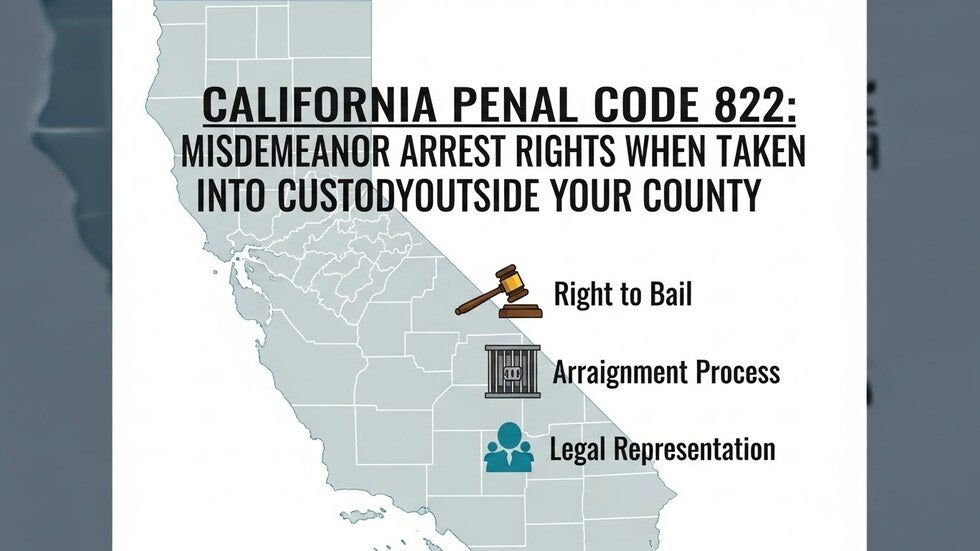
Being arrested on a misdemeanor warrant in a different county than where the charges originated can feel overwhelming and confusing. Many people don't realize they have specific legal rights designed to prevent unnecessary detention far from home. California Penal Code Section 822 establishes critical protections that allow defendants arrested on misdemeanor warrants in different counties to post bail locally and avoid extended custody while awaiting transport.
At Bulldog Law, we ensure clients understand and exercise every available right during the arrest process. The protections of Penal Code 822 can make the difference between spending days in a distant county jail or posting bail immediately and handling your case on your own schedule. This article explains your rights when arrested on a misdemeanor warrant outside the issuing county.
How Misdemeanor Arrests Differ From Felony Procedures
California law treats misdemeanor and felony arrests differently when they occur outside the issuing county. While both scenarios provide defendants with rights to local bail opportunities, the specific procedures and timelines vary in important ways.
Misdemeanor charges are less serious than felonies by definition. They carry maximum potential sentences of less than one year in county jail, as opposed to felonies which can result in state prison time. This difference in severity influences how the law approaches custody and transport procedures.
The fundamental principle remains the same across both misdemeanor and felony arrests: defendants arrested in counties other than where warrants originated should have opportunities to post bail locally rather than being immediately transported while in custody. However, the implementation details differ in ways that can significantly affect defendants' experiences.
Understanding that you face a misdemeanor rather than felony charge helps you know which statutory protections apply to your situation. The rights established by Penal Code 822 specifically address misdemeanor arrests, and knowing these rights allows you to exercise them effectively when arrested.
Your Right to Appear Before a Local Magistrate
When you're arrested on a misdemeanor warrant in a county different from where the warrant was issued, California law requires that the arresting officer inform you in writing, without unnecessary delay, of your right to be taken before a magistrate in the county where you were arrested.
This written notification requirement ensures you receive clear, documented information about your options. Verbal explanations can be misunderstood or forgotten, especially in the stress of arrest. Written notice creates a record and gives you something tangible to review as you decide how to proceed.
The arresting officer must note on the warrant itself that they informed you of this right. This notation creates documentation that can be reviewed later if questions arise about whether proper procedures were followed. If this notation is missing, it may indicate the officer failed to follow required procedures.
Upon your request, the arresting officer must take you before a magistrate in the county where the arrest occurred. This isn't optional once you request it. The statute uses the word "must," creating a mandatory obligation on law enforcement to bring you before a local judicial officer when you exercise this right.
Many defendants don't realize they have this choice or don't understand its significance. Some arresting officers may not enthusiastically explain the option or may suggest it's easier to simply allow transport back to the issuing county. However, the right exists regardless of how convenient law enforcement finds it, and you should exercise it if doing so serves your interests.
The Bail Process Before a Local Magistrate
When you appear before a magistrate in the county where you were arrested, that magistrate has authority to admit you to bail. If the warrant includes a bail amount endorsed on it as specified in Section 815a, the magistrate must admit you to bail in that amount.
If no bail amount is specified on the warrant, the magistrate has discretion to set bail based on the nature of the charges, your criminal history if any, your ties to the community, and other standard bail factors. This discretion allows the magistrate to tailor bail to your specific circumstances rather than being bound by a predetermined amount.
After admitting you to bail, the magistrate directs you to appear before the court or magistrate who issued the warrant on or before a specific date. This appearance date cannot be more than 25 days after you're admitted to bail. This time limit ensures your case moves forward while giving you reasonable time to arrange travel and prepare for your court appearance.
If you post bail immediately at this hearing, the magistrate takes the bail and endorses on it a memorandum of the order requiring your appearance. This creates a record of when and where you must appear, ensuring everyone understands your obligations.
The ability to post bail locally and walk out of custody in the county where you were arrested, rather than being transported hundreds of miles while detained, represents a significant benefit. You avoid the discomfort and indignity of transport in custody, you can arrange your own travel to the issuing county, and you have time to consult with an attorney and prepare your defense.
What Happens When You Don't Exercise Your Rights
Not every defendant will want to appear before a local magistrate or will be able to post bail immediately even if admitted to it. Some lack the financial resources for bail. Others may prefer to be transported to the issuing county without delay. Some may not understand the significance of the right until after they've waived it.
When you don't require the arresting officer to take you before a local magistrate, or when you appear before a magistrate but don't immediately post bail, specific procedures govern what happens next. The arresting officer must immediately notify the law enforcement agency in the issuing county that you're in custody.
This notification triggers a custody transfer requirement. The law enforcement agency that requested the arrest in the issuing county must take custody of you within five days in the county where you were arrested. They must then bring you before the magistrate who issued the warrant or some other magistrate in that county.
Notice that the misdemeanor transfer timeline is simply five days, without the extended five court day option that applies to felony arrests when agencies are more than 400 miles apart. This reflects the less serious nature of misdemeanor charges and creates an expectation that transfers will occur relatively quickly.
The five day deadline prevents you from sitting in an out of county jail indefinitely while agencies coordinate transfers. It creates accountability and ensures that misdemeanor defendants don't face extended detention far from where their cases will be heard.
The Jail Officer's Authority to Accept Bail
Penal Code 822 includes a particularly helpful provision that allows for even faster release in certain circumstances. When you're arrested in another county on a misdemeanor warrant that has a bail amount endorsed on it, and you're being held in jail pending appearance before a magistrate, the officer in charge of the jail has authority to accept bail directly.
This provision parallels the authority granted under Section 1269b, giving jail officers the power to approve and accept bail in the amount endorsed on the warrant, issue and sign an order for your release, and discharge you from custody once bail is posted.
This means you don't necessarily need to wait for a magistrate appearance to post bail and secure release. If the warrant specifies a bail amount and you have the means to post it, you can potentially bail out directly at the jail facility without seeing a judge first.
This streamlined procedure recognizes that waiting for magistrate availability can add hours or even days to custody time, especially if arrests occur on weekends or holidays when courts may not be in session. Allowing jail officers to process bail directly speeds release and reduces unnecessary detention.
For defendants and their families, this provision means that having bail funds available immediately after arrest can result in very quick release. Rather than waiting for a court appearance, you can post bail at the jail and walk out within hours of arrest in many cases.
Comparing Rights Across Different Arrest Scenarios
Understanding how your rights differ depending on where you're arrested helps you appreciate the specific protections Penal Code 822 provides for out of county misdemeanor arrests.
If you're arrested on a misdemeanor warrant in the same county where it was issued, you're simply taken before a magistrate in that county. There's no choice about appearing before a local magistrate because you're already in the local jurisdiction. The process is straightforward, though you still have the right to post bail if it's set or have the magistrate set bail if it's not specified.
When you're arrested in a different county, the complications of distance and transport create additional concerns. The law provides special protections recognizing that being detained far from where your case will be heard creates hardships. The right to post bail locally before being transported represents an important safeguard against unnecessary extended custody.
If you're arrested in another state on a California misdemeanor warrant, entirely different interstate extradition procedures apply. Those processes are generally more complex and time consuming than the intercounty procedures established by Penal Code 822.
Understanding which scenario applies to your situation helps you know what rights you have and what procedures will follow.
Common Mistakes Defendants Make
Many defendants arrested on out of county misdemeanor warrants make avoidable mistakes that result in longer custody time than necessary. Being aware of these common errors helps you avoid them.
One frequent mistake is not asking about the right to appear before a local magistrate. Some defendants assume they have no choice but to be transported back to the issuing county while in custody. They don't realize that California law gives them options, so they never exercise rights they don't know exist.
Another mistake is declining the opportunity to post bail locally without fully understanding the alternative. Some defendants think being transported to the issuing county will be quick and easy, only to spend multiple days in custody during the transfer process. Had they posted bail locally, they could have avoided this extended detention.
Some defendants fail to have bail funds available or accessible. Even when they understand they can post bail locally, they can't take advantage of this opportunity because they don't have the money readily available. Having family members or friends prepared to post bail immediately can make a crucial difference.
Others don't appreciate the 25 day timeline for appearing in the issuing county after posting bail locally. They post bail and then fail to appear by the required date, resulting in additional warrants for failure to appear. Understanding the obligations created by local bail posting is as important as understanding the right itself.
The Importance of Acting Quickly
Time matters significantly when you're arrested on an out of county misdemeanor warrant. The decisions you make in the hours immediately following arrest affect how long you remain in custody and under what conditions.
If you want to appear before a local magistrate and post bail to avoid transport while detained, you need to exercise this right promptly. Don't wait several days to decide. By then, transport arrangements may already be underway, and your opportunity to post bail locally may have passed.
Similarly, if you plan to post bail directly at the jail facility using the authority granted to jail officers, having bail funds available immediately becomes critical. Waiting until business hours the next day or until family members can arrange funds means additional time in custody.
Quick action also allows you to begin working with an attorney sooner. Even for misdemeanor charges, having legal representation from the earliest stages can significantly impact outcomes. An attorney can advise you on whether to exercise your right to local magistrate appearance, help arrange bail, and begin developing defense strategies immediately.
Financial Considerations and Bail Planning
The ability to post bail locally only helps if you actually have the financial means to do so. Understanding bail amounts and planning for how to cover them becomes essential.
Many misdemeanor warrants include endorsed bail amounts, meaning the bail is specified directly on the warrant. If you know you have a warrant outstanding, you can sometimes find out the bail amount in advance and plan accordingly. Having these funds available or arranging for a bail bond can allow immediate release when arrested.
Bail bond companies operate in most California counties. If you cannot afford to post the full bail amount in cash, a bondsman can post it for you in exchange for a non refundable fee, typically 10 percent of the total bail. Understanding how bail bonds work and having a bondsman's contact information ready can speed your release.
Some people choose to keep bail funds in readily accessible accounts specifically for this purpose if they know warrants exist. While it might seem unwise to plan for arrest, the reality is that having funds available makes a practical difference in how quickly you can secure release.
Family members and friends should also understand these financial realities. Being prepared to help post bail quickly can spare their loved ones days in custody.
How Attorneys Can Protect Your Rights
Defense attorneys play crucial roles in ensuring clients arrested on out of county misdemeanor warrants understand and exercise their rights under Penal Code 822.
Experienced attorneys know the procedures and can explain them clearly to clients and their families. They can advise whether exercising the right to local magistrate appearance makes sense given specific circumstances, or whether allowing transport might actually be preferable in particular cases.
Attorneys can also identify when law enforcement has failed to follow proper procedures. If arresting officers didn't provide written notice of rights, if required notations on warrants are missing, or if transfer deadlines aren't met, attorneys can challenge these violations and potentially secure release or other favorable outcomes.
When clients do appear before local magistrates for bail hearings, having attorney representation can improve bail outcomes. Attorneys can present arguments for lower bail amounts, provide information about clients' community ties and reliability, and ensure magistrates have complete pictures of circumstances rather than relying solely on warrant information.
Attorneys can also help clients understand the obligations created by posting bail locally, including the 25 day appearance requirement in the issuing county. They can coordinate with courts to schedule appearances at convenient times and ensure clients comply with all conditions.
Interstate Complications and Limitations
While Penal Code 822 provides clear procedures for arrests in different California counties, it's important to understand that these provisions don't apply to arrests in other states. Interstate arrests follow different rules under extradition laws.
If you're arrested in Nevada, Oregon, Arizona, or any other state on a California misdemeanor warrant, the Interstate Agreement on Detainers and other interstate compacts govern what happens next. These procedures are generally more complex and time consuming than the intercounty processes established by California law.
You may face decisions about whether to waive extradition and return to California quickly or fight extradition and potentially remain in custody in the arresting state longer. These decisions require careful analysis of your specific circumstances and consultation with attorneys familiar with both California law and the law of the state where you were arrested.
Federal arrests present yet another set of complications. Federal law enforcement agencies may handle custody differently than California state and local agencies, and federal courts may become involved in pretrial proceedings.
Understanding these limitations helps you recognize when Penal Code 822's protections apply and when you need to rely on different legal frameworks.
How Bulldog Law Helps Clients Navigate Out of County Arrests
At Bulldog Law, we guide clients through every stage of the criminal process, starting from the moment of arrest. We ensure clients understand their rights under Penal Code 822 and make informed decisions about how to proceed.
We explain the advantages and disadvantages of appearing before local magistrates versus allowing immediate transport. We help clients arrange bail when they choose to post it locally. We represent clients at bail hearings to secure the most favorable terms possible.
When law enforcement fails to follow required procedures, we challenge those violations aggressively. We file motions addressing unlawful detention, improper notification, and missed transfer deadlines. We use procedural failures as leverage in negotiations and as grounds for seeking case dismissals.
We also help families understand what's happening and how they can assist. Knowing which jail holds their loved one, having bail funds available, and understanding realistic timelines all help families navigate this difficult process.
Throughout representation, we protect clients' rights while working toward the best possible case outcomes. The technical requirements of Penal Code 822 represent one component of our comprehensive defense approach. For additional insights into protecting your rights during criminal proceedings, explore our coverage of California misdemeanor defense and bail procedures.
If you've been arrested on a misdemeanor warrant outside the issuing county, or if you know a warrant exists and want to understand your options, contact Bulldog Law immediately. The decisions you make in the hours after arrest can significantly affect how much time you spend in custody and how your case proceeds. Let us help you exercise your rights and achieve the best possible outcome.