
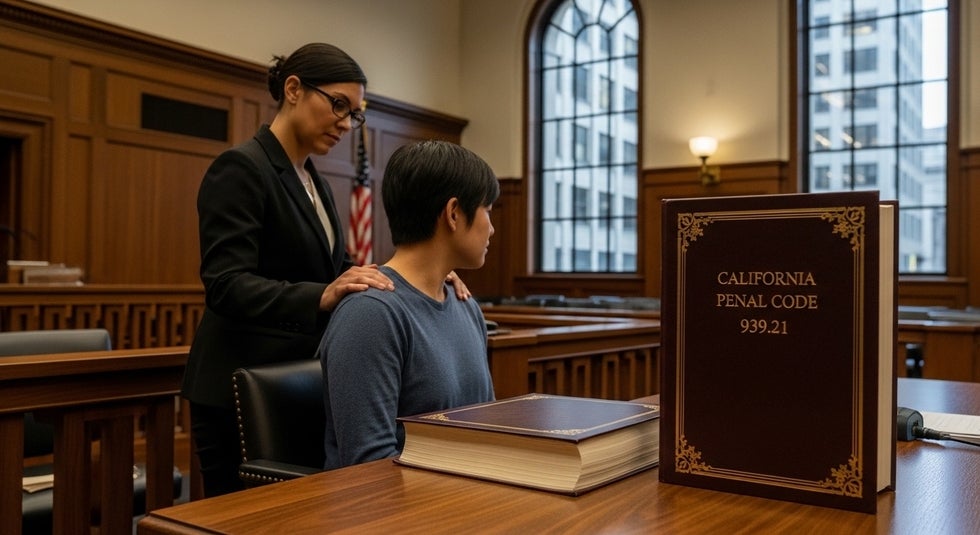
A Support Person in the Room Can Change Everything When a case involves allegations of sexual assault, child abuse, elder abuse, or related offenses, the stakes inside a California grand jury proceeding rise dramatically.
The testimony of a minor or dependent adult witness carries enormous weight, and the law has carved out specific accommodations designed to help those witnesses feel safe enough to testify.
California Penal Code Section 939.21 is one of those accommodations. It allows certain prosecution witnesses, specifically minors and dependent persons, to bring a support person of their choosing into the grand jury room while they testify.
On the surface, this might seem like a straightforward compassionate measure. And in many ways, it is. But for the person accused of the underlying offense, the presence of a support person introduces dynamics that every defendant and their attorney must understand clearly and address strategically from day one.
Who This Law Applies To and When It Is Triggered
Section 939.21 does not apply to every grand jury proceeding. It applies specifically to cases involving violations of particular Penal Code sections. These include sexual battery, rape, child abuse, willful cruelty to a child, corporal injury to a child, incest, sodomy, oral copulation, lewd acts with a minor, continuous sexual abuse of a child, sexual penetration by force, indecent exposure in certain circumstances, elder and dependent adult abuse, annoying or molesting a child, and related offenses.
In short, if the charges involve sexual misconduct, abuse of a vulnerable person, or exploitation of a child, this statute likely applies. The prosecution has the discretion to offer the option of a support person to qualifying witnesses. If the witness is a minor or a dependent adult, and the prosecution chooses to exercise that discretion, the support person may accompany the witness into the grand jury room during their testimony.
The support person selected by the witness cannot be another witness in the same proceeding. They also cannot be a person described under Section 1070 of the Evidence Code, which covers certain privileged relationships such as journalists protecting confidential sources. Beyond those two restrictions, the choice is largely the witness's to make.
What the Support Person Is and Is Not Allowed to Do
This is where the law draws a line that matters enormously from a defense perspective.
The grand jury foreperson is required by statute to inform the support person that grand jury proceedings are confidential. That person may not discuss what occurs in the proceedings with anyone who was not present. This confidentiality obligation applies from the moment they enter the room.
Beyond confidentiality, the foreperson must explicitly admonish the support person not to prompt, sway, or influence the witness in any way. They are there for emotional support only. They are not permitted to coach answers, signal approval or disapproval of testimony, or steer the witness toward any particular narrative.
And there is an important enforcement mechanism built into the statute: the presiding judge retains full discretion to remove a support person from the proceedings if the judge believes that person is prompting, swaying, or influencing the witness. This is not a toothless provision. It is a real check on the support person's conduct, even if exercising it requires the judge to actively step in during what is already a confidential and closed proceeding.
Why Defense Attorneys Must Take This Seriously
Here is the reality: the line between providing emotional support and influencing testimony is not always obvious, and it is not always respected. A supportive nod at the right moment, a visible reaction to a particular question, or even body language that signals anxiety or encouragement can shape how a witness frames their answers. These are human dynamics that no admonishment can fully eliminate.
For a defendant accused of one of the offenses listed under Section 939.21, this matters deeply. The grand jury is already a one-sided process where the prosecution controls what evidence is presented and how the story is told. Adding a support person to the room introduces another variable that the defense has no ability to observe, challenge, or cross-examine in real time.
This does not mean the law is wrong to protect vulnerable witnesses. It means that defendants and their attorneys cannot afford to treat this provision as a footnote. The support person's presence, their identity, their relationship to the witness, and whether they stayed within the bounds the law requires are all legitimate areas of inquiry when building a defense strategy.
Your attorney should be asking from the very beginning: Who was this support person? What is their relationship to the witness? Did the foreperson actually deliver the required admonishment? And is there any indication that the support person crossed the line from comfort into coaching?
For more on how defense attorneys approach cases involving vulnerable witnesses, visit the criminal defense resources on The Bulldog Law blog.
The Confidentiality Obligation Works Both Ways
One aspect of Section 939.21 that deserves more attention than it typically receives is the confidentiality requirement placed on the support person. They are not a passive bystander. By entering that grand jury room, they accept a legal obligation to keep everything they hear confidential.
If it later comes to light that a support person discussed the testimony outside the proceedings, shared details with other potential witnesses, or coordinated in any way with others connected to the case, that is a serious problem. It could affect the integrity of the testimony given. It could open the door to a motion challenging the indictment. And it could, depending on the circumstances, expose the support person to legal consequences of their own.
Defense attorneys working on cases covered by this statute should always investigate whether the confidentiality obligation was honored. In high-stakes cases involving multiple witnesses or a coordinated family response to allegations, the risk of contamination is real and worth examining carefully.
What Defendants Facing These Charges Should Do Right Now
If you are facing charges under any of the offense categories covered by Section 939.21, the grand jury phase of your case is not something to wait out passively. Decisions made during the investigation and charging process can define the shape of everything that follows, including what evidence comes in, how witnesses are perceived, and what arguments remain available at trial.
Start with these steps. First, retain an experienced criminal defense attorney immediately. Do not wait for formal charges to be filed. Second, understand that the prosecution has already been shaping this case before you knew an investigation existed. Third, make sure your attorney is investigating the grand jury process itself, not just preparing for what comes after an indictment.
The laws around vulnerable witnesses reflect legitimate policy choices about how to treat people who have been harmed. But those same laws operate within a system that is supposed to be fair to the accused as well. When the procedures designed to protect witnesses create conditions that can prejudice a defendant, it is your attorney's job to identify that and respond to it.
To read more about defending against serious charges involving vulnerable witnesses and how California's grand jury rules affect your case, explore additional articles at The Bulldog Law blog.
The Balance Between Protection and Fairness
Section 939.21 reflects California's commitment to ensuring that the most vulnerable witnesses, children and dependent adults, are not retraumatized by the legal process. That is a value most people share. But in a system built on the presumption of innocence, protecting witnesses and protecting defendants are not mutually exclusive goals. Both matter.
The presence of a support person in the grand jury room is permitted, not guaranteed, and it comes with specific legal constraints for good reason. Those constraints exist because even well-intentioned support can cross a line. When that line is crossed and a defendant's rights are affected, the law provides tools to address it.
Know those tools. Use them. And make sure the attorney you trust with your defense knows exactly where to look.