
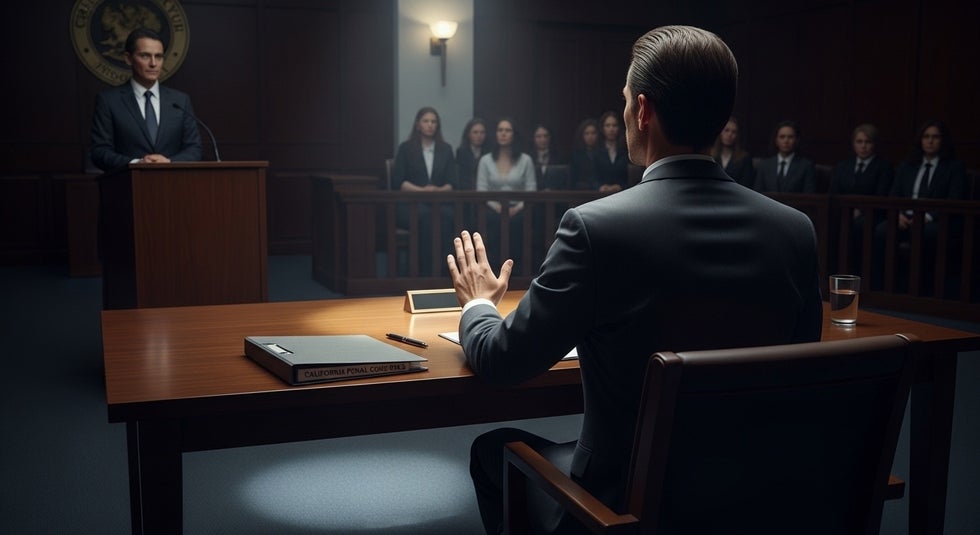
Your Right to Stay Silent Does Not Disappear at the Grand Jury Door
Few constitutional protections are more fundamental than the Fifth Amendment right against self-incrimination. Most people know they have the right to remain silent. What far fewer people understand is how that right operates inside a grand jury proceeding and what the prosecution can do when you exercise it.
California Penal Code Section 939.3 sits at the intersection of those two realities. It acknowledges that a person appearing before a grand jury in a felony investigation may refuse to answer questions or produce evidence on the ground that doing so would incriminate them. But it does not stop there. It also opens the door to proceedings under Penal Code Section 1324, which gives prosecutors a powerful tool to strip away that protection and compel testimony anyway.
Understanding how this works, and what it means for you, is not a matter of legal curiosity. If you are a witness or a target in a grand jury investigation, it is one of the most practically important things you can know before you ever walk into that building.
What Section 939.3 Actually Does
The statute is short but its implications are significant. When a witness before a grand jury refuses to answer a question or produce evidence in a felony investigation, citing the risk of self-incrimination, the prosecution does not simply accept that refusal and move on. Instead, the law allows the case to be referred to proceedings under Section 1324.
Section 1324 is California's immunity statute. It allows a court, on the application of the district attorney, to grant a witness immunity from prosecution in exchange for compelled testimony. Once immunity is granted under that process, the witness no longer has a valid Fifth Amendment basis for refusing to answer. They must testify, and their testimony cannot be used against them directly in a criminal prosecution.
This might sound like a reasonable trade on paper. In practice, it is one of the most consequential legal maneuvers a prosecutor can deploy, and the risks it creates for witnesses and defendants alike are far more complex than the word "immunity" suggests.
The Gap Between "Immunity" and "Safety"
When most people hear that they have been granted immunity, they assume they are protected. The reality is more nuanced and, in many cases, more dangerous.
California's immunity under Section 1324 is what is known as use immunity. It means that the specific testimony a witness gives, and the evidence derived directly from that testimony, cannot be used against them in a criminal prosecution. It does not mean they are immune from prosecution entirely. If the government can establish that it obtained its evidence independently, without using anything the immunized witness said, prosecution remains possible.
This distinction matters enormously. A witness who testifies under compelled immunity may genuinely believe they have been protected, only to find themselves indicted months or years later based on evidence the prosecution claims came from independent sources. Proving that those sources were truly independent, and not tainted by what the witness revealed, becomes an expensive and uncertain legal battle.
This is precisely why no one should agree to, or be forced into, immunized testimony without first consulting a skilled criminal defense attorney who understands how these proceedings unfold in practice and not just in theory.
For more on how immunity agreements affect criminal cases and what questions to ask before accepting one, visit the criminal defense attorneys at The Bulldog Law.
Why Invoking the Fifth Amendment Is Not Always Simple
People sometimes assume that asserting the Fifth Amendment is a clean, uncomplicated act. You say you will not answer, and the matter ends there. In a grand jury proceeding under Section 939.3, that is not how it works.
First, invoking the Fifth Amendment must be done carefully and specifically. A blanket refusal to answer any and all questions can create its own complications. Courts have held that witnesses must assert the privilege in response to specific questions, and the assertion must be based on a genuine, reasonable belief that an answer could be incriminating. Asserting it carelessly or without proper guidance from an attorney can lead to waiver arguments down the line.
Second, once you invoke and the prosecution initiates Section 1324 proceedings, you may face a court order compelling your testimony. Refusing to comply with that order after immunity has been granted is not protected by the Fifth Amendment. It becomes contempt of court, which carries its own serious consequences including the possibility of incarceration until you agree to testify.
Third, the immunity granted may feel comprehensive but leave significant gaps in your protection, as discussed above. What you say in that room, and how you say it, can create exposure in ways that are not immediately obvious without experienced legal counsel guiding you through every step.
What This Means If You Are a Target, Not Just a Witness
Section 939.3 applies to anyone appearing before a grand jury in a felony investigation, but the stakes are highest for someone who is the actual focus of that investigation rather than a peripheral witness. If you are a target and the prosecution is using the grand jury to build its case against you, the question of whether and how to invoke the Fifth Amendment becomes part of your broader defense strategy from day one.
Targets of grand jury investigations do not have to appear and testify simply because they receive a subpoena. The Fifth Amendment protects against compelled self-incrimination, and there are circumstances where asserting that right broadly and unambiguously is the right move.
But those decisions depend entirely on the specific facts of your case, what evidence the prosecution already has, what they are trying to establish through your testimony, and what exposure you face if the immunity offered under Section 1324 turns out to be narrower than it appears.
None of these are decisions to make alone or to make quickly under pressure. A defense attorney who understands grand jury practice in California can evaluate the landscape before you ever sit down to be questioned.
The Prosecution Holds Most of the Cards Here. Your Attorney Levels the Field.
What Section 939.3 makes clear is that the prosecution has a structured legal pathway to overcome your silence. They do not have to accept a Fifth Amendment assertion as the end of the conversation. They can go to court, seek immunity, obtain an order compelling your testimony, and hold you in contempt if you refuse to comply.
That is a formidable set of tools. But it is not unlimited power. Immunity proceedings must follow specific legal requirements. Immunity must be properly granted before testimony can be compelled. The scope of what is covered by that immunity matters and can be challenged. And the use of immunized testimony in subsequent proceedings is subject to ongoing scrutiny.
A well-prepared defense attorney will examine every step of this process for errors, overreach, and opportunities to protect you. They will make sure that if you are compelled to testify, the immunity you receive is as broad and meaningful as the law allows. And they will be watching for any attempt by the prosecution to later use what you said in ways that go beyond what the law permits.
To learn more about defending your rights in grand jury proceedings and understanding how California's immunity statutes affect your case, explore additional articles at The Bulldog Law blog.
Do Not Wait to Get Legal Advice
The moment you learn that your name is connected to a grand jury investigation, whether as a witness or a target, the clock starts. Decisions made in the earliest stages of these proceedings can define the entire shape of what follows.
Invoking the Fifth Amendment is a right, but exercising it effectively in a grand jury context requires preparation, precision, and a full understanding of what happens next. If the prosecution moves forward under Section 1324, you need someone in your corner who can evaluate that process in real time and protect you from the gaps that immunity agreements so often leave behind.
Your silence is a constitutional right. Make sure you have the legal support to exercise it the right way.Call today at (888) 928-1609 or use our email contact form.