
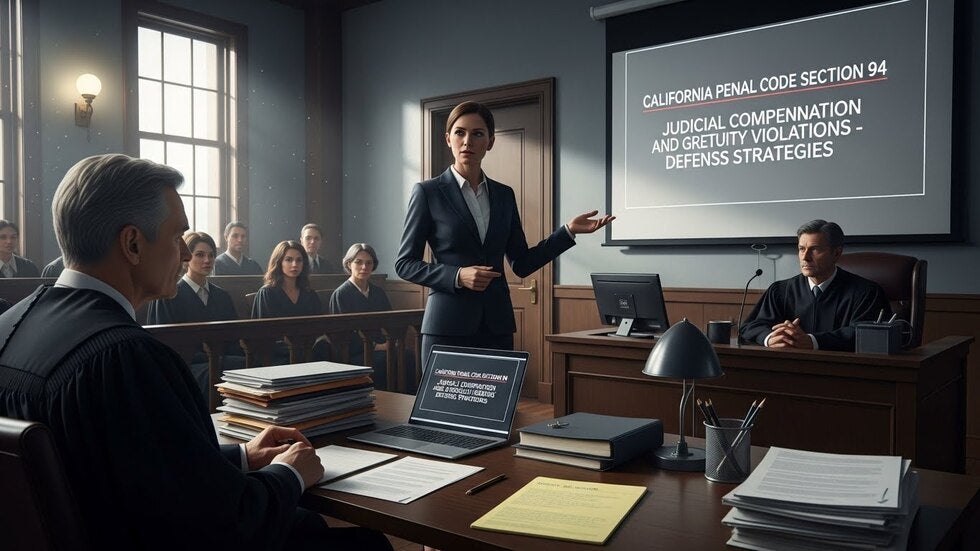
Strategic defense for judges and court personnel facing unauthorized compensation allegations
California Penal Code Section 94 creates serious legal jeopardy for judicial officers and court personnel who may unknowingly violate complex compensation rules.
Unlike more obvious corruption charges, Section 94 violations often arise from technical misunderstandings about what constitutes authorized compensation rather than intentional criminal conduct. Understanding these nuances and building effective defenses is crucial for protecting judicial careers and professional reputations.
As defense attorneys who have represented judges, temporary judicial officers, court reporters, and stenographers in compensation-related cases, we've seen how easily well-intentioned professionals can find themselves facing criminal charges over compensation arrangements they believed were perfectly legal.
The key to successful defense lies in understanding the statute's specific requirements and demonstrating that alleged violations fall within legal exceptions or result from good faith misunderstandings.
Understanding California Penal Code Section 94's Complex Framework
California Penal Code Section 94 addresses multiple types of prohibited compensation arrangements involving judicial officers and court personnel. The statute criminalizes judicial officers receiving unauthorized emoluments, gratuities, or rewards for official acts, while also targeting improper fee-sharing arrangements with court reporters and stenographers.
What makes Section 94 particularly challenging is its focus on "except as authorized by law" language, which requires detailed knowledge of complex regulatory frameworks governing judicial compensation. Many alleged violations involve compensation arrangements that appear reasonable but fail to comply with specific authorization requirements that aren't widely understood.
The statute's misdemeanor classification might suggest these are minor offenses, but the consequences include automatic office forfeiture for certain violations and permanent disqualification from court positions. These professional consequences often represent far more significant punishment than the criminal penalties themselves.
Who Faces Exposure Under Section 94
Section 94's reach extends beyond traditional judges to encompass various judicial officers and court personnel, creating potential liability for professionals who might not realize they're subject to these restrictions.
Permanent and Temporary Judicial Officers
All judicial officers, from municipal court judges to appellate justices, face potential Section 94 liability for receiving unauthorized compensation. This includes retired judges sitting by assignment, visiting judges, and commissioners exercising judicial authority.
The distinction between permanent and temporary judicial officers has become particularly important following amendments addressing temporary judge compensation. The requirement that temporary judge compensation be prescribed by Judicial Council rule, as clarified in Jolie v. Superior Court, creates specific compliance obligations that many temporary judges don't fully understand.
Court Reporters and Stenographers
Court reporters and stenographers face dual exposure under Section 94: they can be prosecuted for paying portions of their fees to secure appointments, and judicial officers can be prosecuted for receiving such payments. This creates complex dynamics where both parties to fee-sharing arrangements face criminal liability.
The permanent disqualification consequences for court reporters convicted under Section 94 effectively end careers in California courts, making aggressive defense essential for these professionals.
Private Arbitrators and Temporary Judges
The growth of private judging and alternative dispute resolution has expanded Section 94's practical application. Private judges, temporary arbitrators, and other quasi-judicial officers must carefully navigate compensation rules that may not clearly address their specific situations.
Common Section 94 Violations and Defense Strategies
Understanding the most frequent types of Section 94 violations helps identify effective defense strategies and prevention measures for judicial officers and court personnel.
Unauthorized Gratuities for Official Acts
The most straightforward Section 94 violations involve judicial officers receiving gifts, payments, or other benefits in exchange for performing official duties. However, many cases involve gray areas where the connection between benefits and official acts isn't clear.
Effective defense often focuses on demonstrating that any benefits received were unrelated to official duties, fell within recognized exceptions for legitimate compensation, or constituted lawful gifts that didn't violate ethical rules. The key is establishing that no quid pro quo arrangement existed and that the judicial officer acted within authorized boundaries.
Fee-Sharing with Court Personnel
Cases involving judicial officers receiving portions of court reporter or stenographer fees require careful analysis of employment relationships, compensation structures, and industry practices. Many alleged violations arise from misunderstandings about what constitutes impermissible fee-sharing versus legitimate employment arrangements.
Defense strategies often involve demonstrating that compensation arrangements served legitimate administrative purposes, complied with applicable regulations, or fell within recognized exceptions for court management activities.
Temporary Judge Compensation Issues
The complex rules governing temporary judge compensation create frequent compliance challenges, particularly when private parties pay for judicial services in alternative dispute resolution settings. The requirement that such compensation be prescribed by Judicial Council rule creates specific technical requirements that aren't always clearly communicated.
Successful defense often involves demonstrating good faith compliance efforts, reliance on official guidance, or arguing that compensation arrangements fall within authorized categories that weren't clearly defined at the time of the alleged violations.
Strategic Defense Approaches for Section 94 Cases
Defending Section 94 charges requires specialized knowledge of judicial administration, compensation rules, and the complex regulatory framework governing court operations. Standard criminal defense approaches must be adapted to address the unique evidentiary and legal challenges these cases present.
Challenging "Except as Authorized by Law" Elements
The most powerful defense strategy often involves demonstrating that challenged compensation was actually authorized by law, even if that authorization wasn't clearly apparent to prosecutors. This requires detailed research into Judicial Council rules, local court policies, administrative directives, and established practices.
Many Section 94 prosecutions collapse when defense attorneys effectively demonstrate that allegedly unauthorized compensation actually fell within recognized legal categories or compliance frameworks that prosecutors failed to consider.
Proving Good Faith Compliance Efforts
Section 94's complex regulatory framework creates opportunities to demonstrate that alleged violations resulted from good faith misunderstandings rather than intentional criminal conduct. Evidence of compliance efforts, consultation with authorities, or reliance on official guidance can support defenses based on lack of criminal intent.
This approach works particularly well when defendants can show they sought guidance from appropriate authorities, attempted to comply with applicable rules, or reasonably relied on information from court administrators or ethics advisors.
Constitutional Challenges to Vague Standards
Section 94's "except as authorized by law" language can be challenged as unconstitutionally vague when applied to specific compensation arrangements. If reasonable people cannot determine what compensation is authorized, criminal prosecution may violate due process requirements.
These constitutional challenges become particularly powerful when compensation rules are unclear, conflicting, or subject to frequent changes that create compliance difficulties for judicial officers and court personnel.
Understanding the Regulatory Framework
Successful Section 94 defense requires understanding the complex web of statutes, rules, and policies that govern judicial compensation. This framework includes Judicial Council rules, local court policies, ethics opinions, and administrative directives that may not be easily accessible or clearly coordinated.
Judicial Council Rules and Temporary Judge Compensation
The Judicial Council's authority to prescribe temporary judge compensation creates a specific regulatory framework that defendants must understand and navigate. Changes to these rules can affect the legality of compensation arrangements retroactively, creating unfair enforcement scenarios.
Defense attorneys must carefully analyze the applicable rules at the time of alleged violations, considering any changes or clarifications that might affect the legality of challenged compensation arrangements.
Local Court Policies and Administrative Directives
Individual courts often have specific policies governing compensation, gift acceptance, and employment relationships that supplement statewide rules. These local policies can provide authorization for compensation that might otherwise appear problematic under general statutory language.
Understanding these local variations and their interaction with statewide rules often reveals defense opportunities that prosecutors overlook in their eagerness to pursue judicial corruption charges.
Ethics Opinions and Advisory Guidelines
Bar associations, judicial ethics committees, and administrative offices often issue opinions and guidelines addressing compensation issues. While these may not have the force of law, they can provide evidence of good faith compliance efforts and reasonable interpretations of ambiguous rules.
The Professional Consequences Beyond Criminal Penalties
Section 94 violations carry professional consequences that often exceed the immediate criminal penalties, making aggressive defense essential even for misdemeanor charges that might seem manageable.
Automatic Office Forfeiture
Certain Section 94 violations trigger automatic office forfeiture, immediately ending judicial careers without regard to the severity of the underlying conduct or the defendant's overall record of service. This harsh consequence applies regardless of whether judges might otherwise receive suspended sentences or minimal criminal punishment.
Permanent Disqualification from Court Positions
Court reporters and stenographers face permanent disqualification from holding similar positions in California courts upon conviction under Section 94. This career-ending consequence applies even to first-time offenders who might receive minimal criminal sentences.
Professional Licensing and Ethics Implications
Beyond the specific consequences outlined in Section 94, convictions can trigger disciplinary proceedings, ethics investigations, and professional licensing issues that compound the damage to legal careers.
Building Your Defense: Evidence and Investigation
Effective Section 94 defense requires comprehensive investigation and evidence development that addresses both the specific criminal elements and the complex regulatory context surrounding alleged violations.
Documentation of Authorization Sources
Thorough research into potential authorization sources often reveals legal bases for challenged compensation that weren't apparent to prosecutors. This includes analysis of statutes, regulations, local policies, ethics opinions, and administrative directives that might provide lawful authority.
Evidence of Good Faith Compliance
Gathering evidence of compliance efforts, consultation with authorities, and reliance on official guidance helps demonstrate that alleged violations resulted from good faith misunderstandings rather than intentional misconduct.
Expert Testimony on Regulatory Compliance
Complex Section 94 cases often benefit from expert testimony explaining the regulatory framework, standard practices, and compliance challenges that judicial officers and court personnel face in their daily operations.
Protecting Your Judicial Career
Section 94 charges represent serious threats to judicial and court careers that require immediate professional response. The intersection of criminal law, professional ethics, and administrative regulations creates complex scenarios that demand specialized expertise.
Early intervention by experienced defense counsel can often prevent charges from being filed, negotiate favorable resolutions that avoid career-ending consequences, or develop comprehensive defense strategies that protect both legal and professional interests.
Understanding your rights and options under Section 94 is crucial for making informed decisions about defense strategy, plea negotiations, and professional planning. The stakes are simply too high to navigate these complex legal waters without knowledgeable advocates who understand both the criminal law and regulatory frameworks involved.
Remember that every Section 94 case involves unique facts, regulatory contexts, and professional circumstances that affect the available defense options. What matters most is ensuring that your rights are protected while developing strategies that preserve your ability to continue serving the judicial system effectively.
The complexity of modern judicial administration creates numerous opportunities for technical violations that don't reflect any intent to engage in corrupt conduct. Don't let prosecutors transform your good faith efforts to comply with complex regulations into criminal convictions that end your career.
This article provides general information about defending California Penal Code Section 94 charges and should not be considered legal advice for your specific situation. If you're facing charges under this statute, consult with experienced criminal defense attorneys who specialize in judicial ethics and compensation issues.
Call us at (888) 928-1609 or send an email to get started.