
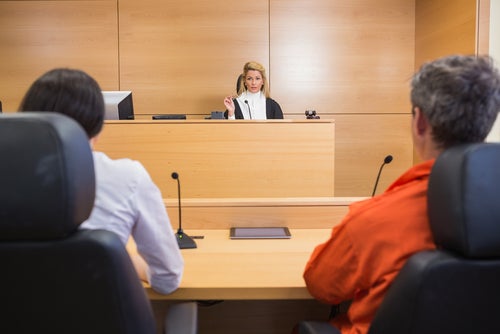
California Penal Code Section 710 authorizes a court or magistrate to require a person to give security to keep the peace when disruptive, threatening, or violent conduct occurs in the presence of the court. This preventive process is not a conviction. Instead, it is a short-term safety measure designed to stabilize proceedings and protect participants.
What Section 710 Covers
Section 710 applies to conduct that happens in front of the judge or magistrate and jeopardizes order or safety. Typical scenarios include:
- Actual assault in the courtroom or adjacent areas.
- Threats to assault someone or to harm a person's property.
- Contentious exchanges of angry words that risk escalation.
If the court finds the conduct meets the statute's threshold, it may require an undertaking to keep the peace for a defined period.
How Security Orders Work
An order under Section 710 usually requires an undertaking, often backed by money or property, promising future peaceful conduct. Courts tailor the requirement to the circumstances, considering risk, history, and the least restrictive means to ensure safety.
Common forms of security:
- Cash posted with the court.
- Property bonds secured by real estate.
- Surety bonds obtained through a licensed bail agent.
- Third-party guarantees where a responsible person pledges compliance.
If a person refuses to provide the required security, the court may order commitment under a related section until the undertaking is provided.
Elements and Threshold Questions
Before imposing an undertaking, courts typically address several questions:
- Presence: Did the conduct occur in the presence of the court or magistrate.
- Nature of conduct: Was there an assault, a credible threat to a person or property, or a disruptive exchange that risks escalation.
- Forward-looking risk: Is there just reason to fear new misconduct if no security is required.
Where the allegations overlap with separate criminal investigations, counsel should also review criminal threat examination procedures to anticipate sworn statements and evidentiary issues.
Penalties and Consequences for Refusal
Section 710 is preventive, not punitive. The immediate consequence for refusing to post the undertaking is custody under a companion statute until the person complies. Separate from custody, a Section 710 order can carry collateral effects:
- Impact on pending matters: Judges and opposing counsel may view the incident as evidence of poor judgment or risk.
- Professional licensing concerns: Certain professions require disclosure of court-ordered restraints or custody events.
- Parallel criminal exposure: If the incident involves witness issues, analyze potential liability under threats against witnesses law.
Defense Strategies and Practical Approach
Effective defense focuses on narrowing the facts, challenging risk assumptions, and proposing targeted alternatives to custody or hefty financial conditions.
- Dispute the factual basis: Obtain transcripts, courtroom audio or video, and witness statements. Apparent threats may be ambiguous in context.
- Proportionality: Argue for the least restrictive terms. If security is warranted, tailor the amount and duration to actual risk and ability to pay.
- Intent and context: Present mitigating factors such as stress, misunderstanding, or communication barriers that undercut a finding of ongoing risk.
- Constitutional considerations: Raise due process and excessive-bail concerns where conditions operate more like punishment than prevention.
Process and Timeline
Section 710 matters move quickly, often within the same hearing where conduct occurred. A typical sequence looks like this:
- On-the-record concern: The court notes disruptive or threatening conduct in its presence.
- Short hearing: The judge hears from counsel and any necessary witnesses and considers limited evidence.
- Decision and terms: If security is required, the court states the terms clearly to permit compliance and review.
- Refusal and custody: If the person refuses to provide security, custody may follow until the undertaking is posted.
When a separate investigation is underway, defense counsel should be ready with criminal threat examination procedures to align strategy across proceedings.
How Section 710 Interacts With Other Courtroom Controls
Section 710 coexists with other judicial tools. Disobedience of court orders or disrespect toward the court may be addressed through contempt procedures. For a broader overview of consequences and defenses in that setting, see contempt of court under PC 166. Section 710 is distinct because it aims to prevent future misconduct while a case is active.
Mitigation: Intent, Emotion, and Communication
Context matters. Emotional distress, medication effects, cultural differences, and language barriers can lead to misunderstandings. Thoughtful mitigation can reduce or eliminate the perceived need for an undertaking by addressing triggers and proposing practical safeguards such as seating plans, staggered exits, or no-contact directives within the courthouse.
Practical Guidance for Defendants and Families
- Do not escalate: Remain silent except through counsel. Even heated words can trigger a security order.
- Come prepared: Bring documentation of finances if an undertaking is likely. Ability to pay can influence terms.
- Offer alternatives: Propose targeted conditions that achieve safety without unnecessary cost or custody.
- Coordinate the big picture: If the facts hint at separate charges, consult our assault with intent charges guide to understand potential exposure outside the Section 710 proceeding.
California Penal Code Section 710 Law Firm in California
Bulldog Law helps clients navigate fast-moving Section 710 hearings with a focus on immediate stabilization and long-term case strategy. We challenge unsupported allegations, argue for the least restrictive terms, and pursue practical alternatives to custody. If your matter also involves witness issues, review threats against witnesses law, and if criminal threat allegations are being explored, see criminal threat examination procedures. Contact Bulldog Law to protect your rights and restore order to your case.