
https://www.thebulldog.law/understanding-indictments-what-you-need-to-know
Understanding Charging Document Requirements in California
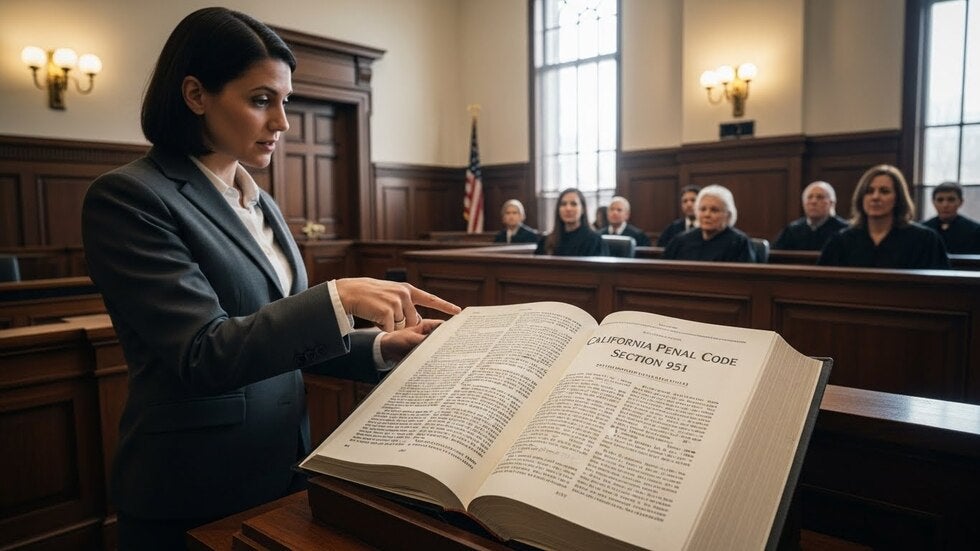
California Penal Code Section 951 establishes the standardized format for criminal indictments and informations, creating specific requirements that prosecutors must follow when formally charging defendants with crimes. From a defense attorney's perspective, understanding these formatting requirements becomes crucial for identifying procedural defects that may provide grounds for challenging criminal charges or seeking case dismissal. The statute's mandatory language creates enforceable standards that protect defendants' due process rights while ensuring adequate notice of criminal allegations.
Essential Elements of Valid Charging Documents
Jurisdictional and Court Identification Requirements
Section 951 requires that indictments and informations properly identify the court, county, and state where charges are filed, establishing clear jurisdictional foundations that ensure proper venue and court authority over criminal proceedings. These identification requirements serve both administrative and constitutional functions by providing defendants with clear notice of which court has jurisdiction over their cases.
Defense attorneys should carefully examine charging documents to verify that all jurisdictional elements are properly included and accurate, as defects in jurisdictional allegations may provide grounds for challenging court authority or seeking case transfer to appropriate venues.
Jurisdictional challenges based on Section 951 defects may be particularly effective when charging documents contain errors about court identity, county designation, or other foundational elements that affect court authority over defendants or alleged crimes.
Accusatory Party and Authority Requirements
The statute requires clear identification of whether charges are brought by grand juries or district attorneys, establishing proper prosecutorial authority and ensuring that defendants understand which entity is pursuing criminal charges against them.
This requirement serves important due process functions by identifying the source of criminal accusations while establishing accountability for prosecutorial decisions and charging strategies that affect defendants' liberty interests.
Defense challenges may focus on whether proper prosecutorial authority exists for specific charges or whether charging documents accurately reflect the actual source of criminal accusations against defendants.
Charge Specification and Notice Requirements
Crime Identification and Classification
Section 951 mandates that charging documents specify whether defendants are accused of felonies or misdemeanors while providing the specific name of charged crimes such as murder, burglary, or other statutory offenses. This classification requirement ensures that defendants understand both the general category and specific nature of criminal accusations.
The crime identification requirement serves constitutional notice functions by providing defendants with adequate information to prepare defenses while understanding the potential penalties and legal consequences associated with specific criminal charges.
Defense attorneys should examine whether charging documents provide sufficient specificity about charged crimes and whether crime classifications accurately reflect the statutory elements and penalty provisions applicable to alleged conduct.
Temporal and Geographic Elements
Charging documents must include approximate dates and specific counties where alleged crimes occurred, providing defendants with essential information about the time and place of accused criminal conduct. These requirements enable defendants to prepare alibis, challenge venue, and understand the factual scope of criminal allegations.
The temporal requirement allows for reasonable approximation rather than exact dates when specific timing cannot be precisely determined, but charging documents must provide sufficient temporal specificity to enable adequate defense preparation.
Geographic requirements ensure that defendants understand which county's laws apply and which court has proper venue over alleged criminal conduct, preventing inappropriate forum shopping or jurisdictional manipulation.
Statement of Acts and Omissions
Factual Allegations and Specificity
Section 951 requires that charging documents include statements describing the specific acts or omissions that form the basis for criminal charges, providing defendants with factual notice that enables preparation of adequate defenses against specific allegations.
The factual allegation requirement must provide sufficient detail to distinguish charged conduct from other potential criminal activity while giving defendants fair notice of exactly what behavior prosecutors claim violated criminal laws.
Defense challenges to factual allegations may focus on whether charging documents provide adequate specificity, whether alleged facts actually support charged crimes, or whether factual descriptions are too vague to enable meaningful defense preparation.
Constitutional Sufficiency Standards
The factual allegation requirements must satisfy constitutional due process standards that guarantee defendants adequate notice of criminal accusations while enabling preparation of defenses against specific charges and factual claims.
Constitutional sufficiency analysis requires examining whether reasonable defendants could understand what conduct is being charged and whether factual allegations provide adequate notice to enable defense against specific prosecutorial theories and evidence.
Due process challenges may succeed when factual allegations are so vague or conclusory that defendants cannot reasonably understand what specific conduct forms the basis for criminal charges or prosecution theories.
Defending Against Charging Document Defects
Motion to Set Aside Indictments and Informations
When charging documents fail to comply with Section 951 requirements, defense attorneys can file motions to set aside indictments or informations based on procedural defects that violate statutory mandates or constitutional due process protections.
Motions to set aside must identify specific defects in charging documents while demonstrating that such defects prejudice defendants' ability to understand charges or prepare adequate defenses against criminal allegations.
Successful motions may result in case dismissal with or without prejudice, depending on whether prosecutors can cure identified defects through amended charging documents that satisfy statutory and constitutional requirements.
Demurrer and Sufficiency Challenges
Defense attorneys can challenge the legal sufficiency of charging documents through demurrers that test whether alleged facts actually support charged crimes under applicable statutory definitions and legal elements.
Demurrer challenges focus on legal rather than factual sufficiency, examining whether alleged conduct could constitute charged crimes even if all factual allegations were proven true at trial.
Successful demurrers may result in charge dismissal when factual allegations fail to establish all elements of charged crimes or when legal theories underlying charges are fundamentally flawed.
Amendment and Repleading Issues
When courts grant defense motions challenging charging documents, prosecutors may seek to cure defects through amended indictments or informations that address identified procedural or substantive problems.
Defense attorneys should analyze whether proposed amendments actually cure identified defects or whether they create new prejudice to defendants through expanded charges, altered theories, or other changes that affect defense strategies.
Amendment challenges may focus on timing, prejudice to defendants, or whether amended charges are supported by grand jury proceedings or preliminary hearing evidence that authorized original charges.
Constitutional Due Process Analysis
Fair Notice Requirements
Charging documents must provide fair notice of criminal accusations that enables defendants to understand what conduct is being prosecuted and what defenses may be available against specific charges and factual allegations.
Fair notice analysis examines whether reasonable defendants could determine what specific behavior prosecutors claim violated criminal laws and whether charging documents provide adequate guidance for defense preparation.
Constitutional challenges may succeed when charging documents are fundamentally ambiguous about what conduct is being charged or when factual allegations fail to provide meaningful notice of prosecution theories.
Double Jeopardy Protections
Properly drafted charging documents establish the scope of criminal charges for double jeopardy analysis, ensuring that defendants cannot be prosecuted multiple times for the same criminal conduct or legal violations.
Double jeopardy analysis requires examining whether charging documents clearly define what conduct and legal theories form the basis for current charges compared to any prior prosecutions involving the same defendants.
Defense attorneys should ensure that charging documents provide sufficient specificity to enable meaningful double jeopardy analysis while protecting clients from multiple prosecutions based on the same underlying conduct.
Practical Defense Strategies
Early Case Assessment and Planning
Careful analysis of charging document compliance with Section 951 requirements enables defense attorneys to identify potential challenges while developing comprehensive case strategies that address both procedural and substantive defense issues.
Early identification of charging document defects allows defense counsel to file appropriate motions before trial preparation advances too far, potentially resulting in case dismissal or more favorable plea negotiations.
Strategic analysis should consider whether challenging charging documents serves overall defense objectives or whether other defense strategies may be more effective for achieving client goals and protecting legal interests.
Plea Negotiation Leverage
Identified defects in charging documents may provide leverage for plea negotiations by demonstrating prosecution weaknesses while creating risks of case dismissal that may motivate reasonable settlement discussions.
Negotiation strategies should balance the strength of charging document challenges against overall case assessment while considering client objectives and risk tolerance for various potential outcomes.
Defense attorneys should use charging document analysis as part of comprehensive case evaluation that considers all potential defense strategies and their likely effectiveness for achieving client goals.
Conclusion
California Penal Code Section 951 establishes critical formatting and content requirements for criminal indictments and informations that serve important due process functions while providing defendants with adequate notice of criminal charges. Understanding these requirements enables defense attorneys to identify procedural defects that may provide grounds for challenging criminal prosecutions.
Effective defense requires combining technical knowledge of statutory requirements with broader constitutional principles that protect defendants' due process rights and ensure fair criminal proceedings. Success depends on careful analysis of charging documents, strategic motion practice, and comprehensive understanding of how procedural challenges fit within overall defense strategies.
The intersection of statutory procedural requirements and constitutional due process protections creates vital safeguards for criminal defendants while ensuring prosecutions proceed on proper legal foundations. Skilled defense advocacy ensures these protections are meaningfully enforced while maintaining the integrity of criminal proceedings.
For experienced legal guidance in navigating these protections, contact Bulldog Law at thebulldog.law or call (888) 928-1609. Early consultation can make a critical difference in your case.