
What Is Postrelease Community Supervision Under California Law?
When a person completes a jail sentence for certain nonviolent, nonserious, and non-sex offenses, they are released under postrelease community supervision rather than state parole. The county agency in your area oversees this supervision, setting conditions you must follow during your release period, which can last up to three years.
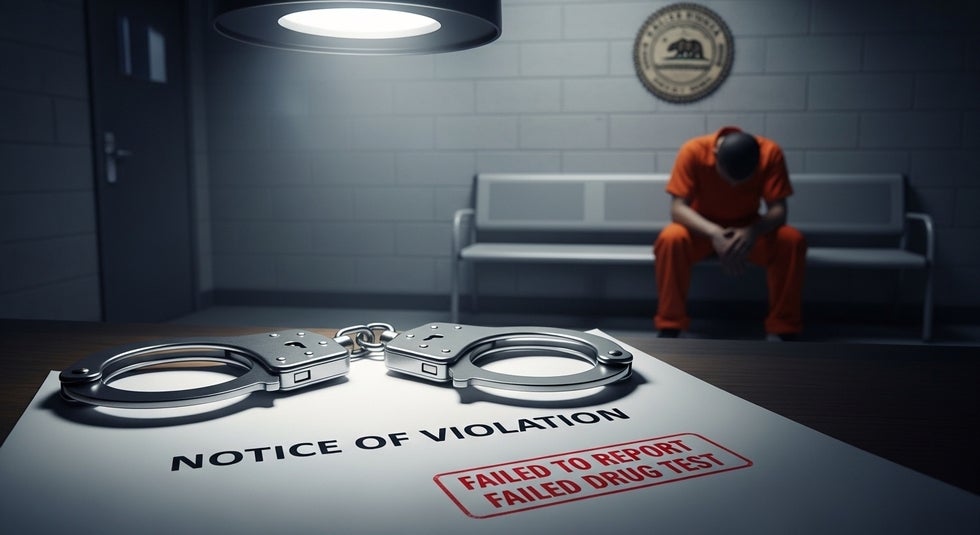
PRCS is meant to be a second chance, not a trap. Unfortunately, for many people, technical violations or misunderstandings about their conditions lead to serious legal consequences they were never prepared for. If your supervising agency believes you have violated a term of your release, the process outlined in PC 3455 begins, and the clock starts ticking.
How the PC 3455 Revocation Process Works
Before your case ever reaches a courtroom, the supervising county agency has some discretion. Under PC 3454, the agency can impose intermediate sanctions, such as additional reporting requirements or short periods of flash incarceration, without sending the matter to court. However, if the agency determines those intermediate steps are not appropriate, they must file a formal petition under PC 3455 to revoke, modify, or terminate your supervision.
That petition is not just a piece of paper. It comes with a written report that details the alleged violation, the terms of your supervision, your personal history, and the agency's recommendation. This report will be used against you at your revocation hearing, which is why having an experienced defense attorney review it line by line is so important.
Once the petition is filed, the revocation hearing must be held within a reasonable time. During that period, the agency has the authority to decide whether you remain in custody or are released while awaiting your hearing. That determination is based on whether you pose an unreasonable risk to public safety, whether you might fail to appear, or any other reason the agency finds compelling in the interest of justice.
Your Rights During a PC 3455 Proceeding
Many people do not realize they have meaningful rights during the revocation process. Under PC 3455, at any point during the proceedings, you have the right to counsel. You also have the right to a court hearing before any formal finding of violation is entered against you.
That said, the law also allows you to waive certain rights. In writing, you may admit the violation, waive your right to a hearing, and accept a proposed modification of your supervision terms. This might sound like a shortcut, but it is a serious legal step that can have lasting consequences. Before accepting any proposed modification or admitting to anything in writing, you should speak with a defense attorney. What seems like a simple agreement can affect your supervision conditions for months or years.
For more context on how violations interact with your criminal record and what outcomes are possible, visit our blog at Thebulldog law.
What Can the Revocation Hearing Officer Order?
If the hearing officer finds by a preponderance of the evidence that you violated your supervision conditions, they have three main options available to them:
The first is to return you to postrelease community supervision with modified conditions, which may include a period of incarceration in county jail. The second is to revoke and terminate your supervision entirely and order you to serve time in county jail. The third option is to refer you to a reentry court or other evidence based program at the court's discretion.
Critically, any period of confinement under options one or two cannot exceed 180 days in county jail for each custodial sanction imposed. This cap matters enormously when building a defense strategy, as it sets the outer boundary of what incarceration exposure you face at a revocation hearing.
Arrest Without a Warrant: What You Need to Know
One of the most alarming aspects of PC 3455 for people under PRCS is the warrant exception built into the law. Under subdivision (b), if a peace officer has probable cause to believe you are violating any term or condition of your release, that officer can arrest you without a warrant and bring you before the supervising agency.
Additionally, if you are the subject of a filed petition and you fail to appear at your hearing, the court has full authority to issue a warrant for your arrest. If you receive notice of a hearing related to your supervision, do not skip it. The consequences of a missed hearing can be far more severe than the underlying alleged violation.
Even when an arrest occurs, the law does allow the court to order your release pending further proceedings, except in certain flash incarceration situations. A skilled defense attorney can argue for your release under appropriate terms and conditions while your case moves forward.
How a Defense Attorney Can Help You Under PC 3455
From a defense standpoint, the PC 3455 revocation process offers several points of intervention that most people do not know about. Your attorney can challenge the sufficiency of the written petition, contest the evidence supporting the alleged violation, and argue against continued custody while the case is pending.
The standard of proof at a revocation hearing is preponderance of the evidence, which is lower than the beyond a reasonable doubt standard used in criminal trials. This means the agency does not have to prove much to secure a finding against you, making proactive, aggressive representation all the more essential. Context matters, your history matters, and the specific language of your supervision conditions matters.
A defense attorney can also advocate for the least restrictive outcome if a violation is found. Rather than revocation and confinement, your attorney can push for a modification of conditions, a referral to a reentry program, or other alternatives that keep you in the community and moving forward.
To understand how these defenses connect to the broader landscape of probation and supervision violations in California, you can explore related topics on our website.
The Three Year Maximum Supervision Period
It is worth knowing that under PC 3455, your supervision cannot extend beyond three years from the date you initially entered postrelease community supervision, with limited exceptions. Those exceptions include situations where supervision is tolled under PC 1203.2 or PC 3456, such as when you have an outstanding warrant or abscond from supervision.
This three year ceiling is a statutory protection, and it means there is a defined end date to the supervision period. If your supervising agency is attempting to extend your supervision beyond what the law allows, that is a defense worth raising.
Do Not Face a Revocation Petition Alone
A PC 3455 petition can feel overwhelming, but it is not the end of the road. The revocation process has built in procedural protections, and with the right legal representation, there are real opportunities to fight back, limit consequences, and preserve your freedom.
Whether you are facing an initial allegation, a pending hearing, or have already been taken into custody on a revocation matter, acting quickly is essential. The sooner you have counsel by your side, the more options you have available to you.
If you or someone you care about is facing a postrelease community supervision violation in California, contact The Bulldog Law today. Our team understands the stakes and knows how to fight for the best possible outcome at every stage of the process.