
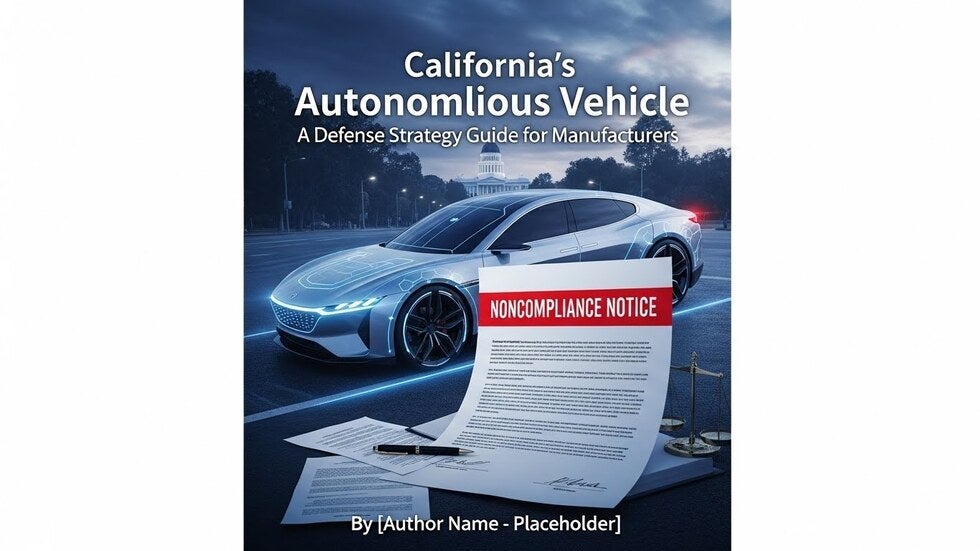
Understanding California's Autonomous Vehicle Citation Framework
California's groundbreaking Vehicle Code Section 38752 introduces an entirely new category of traffic enforcement specifically targeting autonomous vehicles operating in self driving mode. This innovative legal framework allows peace officers to issue "notices of autonomous vehicle noncompliance" when they observe alleged traffic violations committed by vehicles operating under autonomous technology.
For defense attorneys representing autonomous vehicle manufacturers, fleet operators, or technology companies, this new citation system presents unprecedented legal challenges. Unlike traditional traffic violations involving human drivers, these notices target the manufacturer's technology and operational decisions, creating complex liability scenarios that require sophisticated defense strategies.
The law creates a structured process for documenting, reporting, and addressing alleged violations while explicitly protecting manufacturers' rights to contest citations. Understanding these protections and procedural requirements is essential for developing effective defense approaches.
Essential Elements of Autonomous Vehicle Noncompliance Notices
Required Information Components
Each notice of autonomous vehicle noncompliance must contain specific identifying information to be legally sufficient. Peace officers must document the alleged violation of California Vehicle Code or local traffic ordinances, specify the exact date, time, and location of the incident, and record the vehicle's license plate number.
The law requires that violations occur "while the autonomous technology is engaged," creating an important threshold element for any defense strategy. Manufacturers can challenge citations by demonstrating that human operators had control of the vehicle during the alleged violation, or that autonomous systems were not actively directing vehicle behavior at the specified time.
Defense attorneys should carefully examine each notice to ensure all required elements are present and accurate. Missing information, incorrect timestamps, or vague location descriptions could provide grounds for challenging the notice's validity. The precision required for these citations creates multiple opportunities for procedural defenses.
Officer Authority and Observation Requirements
Only peace officers as defined in California Penal Code Section 830 possess authority to issue autonomous vehicle noncompliance notices. This includes police officers, sheriff's deputies, California Highway Patrol officers, and other certified law enforcement personnel with traffic enforcement authority.
Importantly, the law requires officers to personally observe alleged violations rather than relying on automated systems or third party reports. This observation requirement creates opportunities for defense challenges based on officer positioning, visibility conditions, or technical understanding of autonomous vehicle operations.
Defense strategies should focus on the officer's ability to accurately assess autonomous vehicle behavior, distinguish between normal system operations and actual violations, and understand the complex technology involved in self driving operations. Officers may misinterpret legitimate autonomous vehicle maneuvers as traffic violations due to unfamiliarity with the technology.
Mandatory Reporting Requirements for Manufacturers
72 Hour Notification Deadline
California law imposes strict reporting obligations on autonomous vehicle manufacturers who receive noncompliance notices. Manufacturers must provide copies of all issued notices to the Department of Motor Vehicles within 72 hours of issuance, unless the department establishes alternative timeframes through regulatory guidance.
This rapid reporting requirement demands that manufacturers establish robust internal communication systems ensuring immediate notice delivery to appropriate personnel. Failure to meet reporting deadlines could result in additional regulatory penalties beyond any underlying traffic violation.
Defense attorneys should help clients develop comprehensive notice management protocols including automated tracking systems, designated responsible personnel, and backup reporting procedures. Documentation of good faith compliance efforts with reporting requirements can help mitigate penalties for any inadvertent delays.
Department Submission Procedures
The DMV must establish accessible submission methods allowing manufacturers to provide noncompliance notices efficiently. While specific procedures await regulatory development, manufacturers should prepare for electronic submission systems requiring standardized formatting and supporting documentation.
Establishing clear internal procedures for notice submission, maintaining delivery confirmations, and documenting all communications with the DMV creates important evidence for potential defense strategies. These records can demonstrate manufacturer cooperation and good faith compliance efforts if regulatory enforcement actions arise.
Critical Defense Protections Under the New Law
No Presumption of Unsafe Operation
One of the most significant protective provisions explicitly states that noncompliance notices "shall not create a presumption that the autonomous vehicle is unsafe." This language provides crucial protection against attempts to use traffic citations as evidence of systematic safety problems or technology deficiencies.
Defense attorneys can leverage this provision to limit the scope of civil litigation, regulatory investigations, or media coverage following noncompliance notices. The law recognizes that isolated traffic violations do not necessarily indicate broader safety concerns with autonomous vehicle technology.
This protection becomes particularly valuable in product liability cases where plaintiffs might attempt to introduce noncompliance notices as evidence of design defects or inadequate safety systems. The statutory language provides strong grounds for excluding such evidence or limiting its impact.
Preserved Right to Contest Violations
The legislation explicitly protects manufacturers' rights to contest both the nature and occurrence of alleged violations identified in noncompliance notices. This preservation of due process rights ensures that manufacturers can challenge citations through appropriate legal channels without prejudicing their regulatory standing.
Contest procedures will likely mirror traditional traffic citation processes, allowing manufacturers to request hearings, present evidence, and argue legal defenses. However, the unique nature of autonomous vehicle operations may require specialized expertise to effectively challenge officer observations or interpretations.
Defense strategies should focus on technical evidence demonstrating proper autonomous system operation, environmental factors affecting vehicle behavior, or officer misunderstanding of legitimate autonomous vehicle maneuvers. Expert testimony from engineers and technology specialists may be essential for successful contest efforts.
Strategic Considerations for Defense Planning
Documentation and Evidence Preservation
Given the technical complexity of autonomous vehicle operations, maintaining comprehensive operational data becomes crucial for defending against noncompliance notices. Vehicle sensor data, decision making algorithms, environmental conditions, and system status information at the time of alleged violations can provide powerful defense evidence.
Defense attorneys should work with clients to establish data retention policies ensuring all relevant technical information is preserved for potential citation contests. This includes establishing protocols for identifying and protecting data related to specific incidents mentioned in noncompliance notices.
The 72 hour reporting requirement creates tight timeframes for evidence preservation, requiring automated systems that can quickly identify and secure relevant data before routine deletion or overwriting occurs.
Regulatory Relationship Management
The new citation system creates ongoing interactions between manufacturers and the DMV that require careful management to avoid escalating regulatory scrutiny. Frequent noncompliance notices could potentially influence permit renewal decisions or trigger enhanced oversight measures.
Defense attorneys can help clients develop proactive communication strategies with the DMV, demonstrating commitment to safety and continuous improvement rather than simply reactive compliance. Regular dialogue with regulatory officials can help contextualize individual citations within broader operational excellence efforts.
Maintaining positive regulatory relationships becomes particularly important given the DMV's discretionary authority over permit approvals and operational authorizations. Strategic engagement can help prevent isolated citations from becoming broader regulatory challenges.
Preparing for Implementation and Regulatory Development
Awaiting Final Regulations
The autonomous vehicle noncompliance notice system will not become operational until the DMV issues implementing regulations as required by Vehicle Code Section 38750. This delay provides manufacturers with valuable preparation time to develop compliance systems and defense strategies.
Defense attorneys should monitor regulatory development processes, participate in public comment periods, and advocate for fair implementation procedures that protect manufacturer rights while supporting legitimate law enforcement activities.
Early engagement with the regulatory process allows manufacturers to influence important procedural details that could significantly impact future defense options and compliance costs.
Technology and Training Considerations
The success of any defense strategy will depend heavily on law enforcement officers' understanding of autonomous vehicle technology and operations. Manufacturers and defense attorneys should consider proactive officer education programs that can reduce inappropriate citations and improve the quality of enforcement actions.
Working collaboratively with law enforcement agencies to develop appropriate training materials and operational guidelines can help prevent citation disputes while building positive relationships with the enforcement community.
Building Effective Defense Frameworks
The introduction of autonomous vehicle noncompliance notices represents a fundamental shift in how traffic enforcement intersects with emerging transportation technology. For manufacturers operating in California's crucial autonomous vehicle testing and deployment environment, developing comprehensive defense strategies is essential for managing legal risk and maintaining operational flexibility.
Successful defense approaches must integrate technical expertise, regulatory compliance, evidence preservation, and strategic relationship management. By focusing on these interconnected elements, manufacturers can protect their interests while contributing to the responsible development of autonomous vehicle technology in California's evolving regulatory landscape.
The unique nature of this enforcement system requires defense attorneys to develop specialized knowledge of both autonomous vehicle technology and emerging regulatory frameworks. This expertise will become increasingly valuable as other states consider similar enforcement mechanisms for self driving vehicles.
Before you talk to anyone else about your charges, speak with a defense lawyer who's on your side. Contact Bulldog Law at (888) 928-1609 or email our team and we'll walk you through your next steps.