
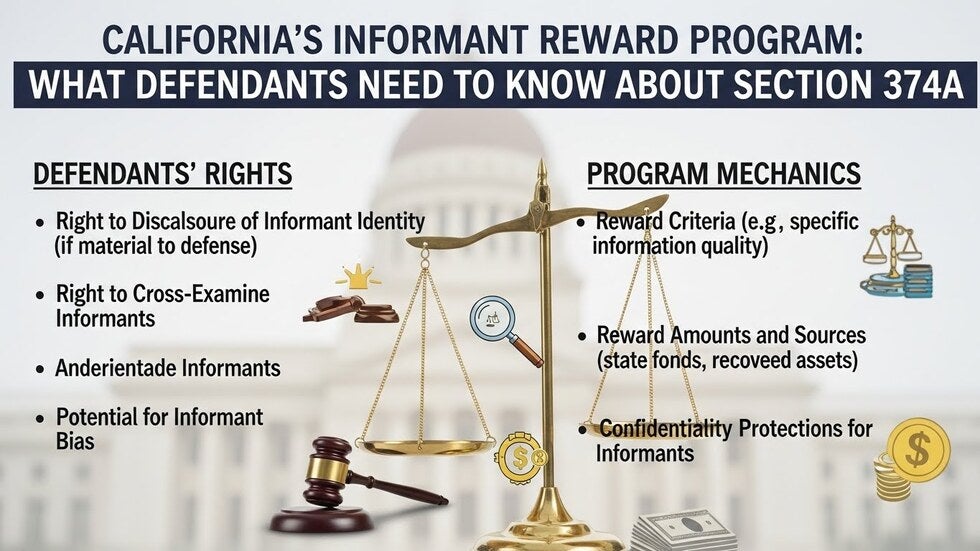
California's environmental protection statutes include a powerful incentive that encourages public participation in enforcement: a reward program that pays informants up to fifty percent of fines collected from convicted offenders. For anyone facing charges under Sections 374c, 374.2, 374.3, 374.4, or 374.7, understanding how this reward system works is essential to comprehending the full scope of what you're up against and how to mount an effective defense.
The Financial Incentive Behind Environmental Prosecutions
Section 374a creates a direct financial motivation for individuals to report suspected violations of specific environmental dumping and waste disposal laws. This statute fundamentally changes the dynamics of environmental enforcement by transforming ordinary citizens into potential witnesses for the prosecution, each with a significant monetary stake in securing a conviction.
Under this provision, any person who provides information leading to both the arrest and conviction of someone violating the covered statutes becomes entitled to a reward. The reward amount is substantial: fifty percent of the fine that the court levies against and actually collects from the convicted person. This is not a token payment or nominal amount. Given that the underlying violations often carry fines ranging from thousands to tens of thousands of dollars, informant rewards can reach significant sums.
The statute's structure means that informants have a vested interest not just in reporting violations, but in ensuring that arrests occur and that prosecutions result in convictions with substantial fines. This financial incentive can affect everything from the quality of information provided to investigators to the willingness of informants to testify at trial.
How the Reward Payment System Actually Works
The mechanics of the reward system reveal important details that defense attorneys must consider when evaluating cases. The reward payment comes directly from the fine collected from the defendant, and the court itself handles the payment process. This creates a direct financial link between the defendant's punishment and the informant's compensation.
When multiple individuals provide information leading to the same arrest and conviction, the statute requires equal division of the reward among all eligible informants. This provision can create situations where several people claim entitlement to reward money, potentially leading to disputes about who actually provided information that led to the arrest and conviction versus who merely reported after the fact.
Critically, the statute establishes that reward payments take priority over other fine distributions. Section 374a explicitly states that the reward amount must be paid before any distribution of the fine prescribed by other sections, including Section 1463.9. This prioritization means that informants receive their compensation first, ahead of allocations to state environmental funds, local agencies, or other designated recipients.
The Covered Violations: Understanding What Triggers Rewards
The informant reward program applies to five specific Health and Safety Code sections, each addressing different forms of illegal dumping and waste disposal. Understanding which violations qualify for rewards helps defendants recognize when informants may have financial motivations for their involvement in a case.
Section 374c addresses the dumping of waste matter in locations without lawful authority. This broad provision covers various forms of illegal disposal on public and private property. Section 374.2 deals with commercial waste disposal violations, including businesses that fail to properly contract for waste removal services. Section 374.3 targets the dumping of dirt, sand, or other materials on highways and public lands.
Section 374.4 specifically addresses waste tire disposal violations, recognizing the unique environmental challenges posed by tire dumping. Section 374.7 covers electronic waste disposal, reflecting California's recognition that improper handling of e-waste poses distinct environmental and health hazards requiring special enforcement mechanisms.
Each of these statutes carries its own penalty structure, which directly impacts potential reward amounts. Understanding the specific charges you face and the associated fine ranges helps predict the financial incentive motivating any informants in your case.
Defense Implications of Informant Financial Motivation
The existence of substantial financial rewards for informants creates several defense considerations that experienced attorneys explore when building cases. The monetary incentive can affect witness credibility, the reliability of information provided to law enforcement, and the overall fairness of the prosecution.
Witness credibility becomes a central issue when informants stand to gain thousands of dollars from a conviction. Defense attorneys must carefully examine whether the promise of a substantial reward influenced how informants presented information to investigators, whether they exaggerated or embellished details, or whether they omitted facts that might undermine the prosecution's case. Cross examination of informant witnesses at trial should explore these financial motivations thoroughly.
The timing of when informants came forward and what they knew at different points can reveal important details. Did the informant observe the alleged violation and immediately report it out of civic duty, or did they learn about the reward program first and then develop their account? Did they conduct their own investigation or surveillance after learning about potential reward money? These questions go directly to the reliability and motivation behind the information provided.
In some cases, financial incentives can lead to false accusations or mistaken identifications. Someone hoping to collect a reward might convince themselves that ambiguous circumstances constitute clear violations, or they might identify the wrong party as responsible for illegal dumping they witnessed. Defense attorneys must investigate whether the informant had independent, reliable knowledge of the alleged violation or whether their account is colored by financial self interest.
Challenging the Informant's Role in Your Case
Several strategic approaches can help defendants confronting cases where informants played key roles. Documentation and timeline analysis often reveal inconsistencies between what informants claim to have observed and what physical evidence or other witnesses establish actually occurred.
Examining the informant's background and potential biases is essential. Does the informant have a personal dispute with the defendant? Do they compete with the defendant's business? Have they provided information in other cases seeking rewards?
A pattern of reward seeking behavior or evidence of personal animosity can significantly undermine an informant's credibility.
The legal standard requiring that information must lead to both arrest and conviction creates potential challenges for informants seeking rewards. If the arrest resulted primarily from independent investigation by law enforcement rather than the informant's tip, or if the conviction rested on evidence other than what the informant provided, questions arise about whether the informant truly caused the arrest and conviction or simply reported information that authorities would have discovered through normal enforcement activities.
The Broader Context of Environmental Enforcement Incentives
California's informant reward program for environmental violations represents one tool among many that the state employs to encourage compliance with waste disposal regulations. Understanding how this program fits into the larger enforcement landscape helps defendants appreciate the full scope of what they face.
Environmental enforcement in California combines civil penalties, criminal prosecutions, administrative actions, and public participation incentives. The reward program amplifies enforcement capacity by essentially deputizing the public to watch for and report violations. This approach recognizes that government agencies cannot monitor every location where illegal dumping might occur, so financial incentives encourage private citizens to extend the enforcement net.
From a policy perspective, proponents argue that reward programs deter violations by increasing the likelihood of detection and prosecution. When potential violators know that witnesses might receive substantial payments for reporting them, the theory suggests they will think twice before engaging in illegal conduct. Critics counter that financial incentives can corrupt the fact finding process and lead to unreliable accusations driven by profit rather than truth.
For defendants, this policy context matters because it affects how prosecutors, judges, and juries view cases involving informant testimony. Courts generally uphold the validity of informant reward programs as legitimate law enforcement tools. However, the financial motivation remains a proper subject for cross examination and a factor that fact finders should consider when evaluating witness credibility.
Protecting Your Rights When Informants Are Involved
When you learn that an informant seeking a reward provided information leading to your arrest, taking immediate action to protect your legal rights becomes crucial. Several steps can help you mount the strongest possible defense while minimizing the impact of financially motivated testimony against you.
First, exercise your right to remain silent and obtain experienced legal representation before making any statements to investigators. Informant allegations often contain inaccuracies or omissions, and your statements can inadvertently confirm details that prosecutors might otherwise struggle to prove. An attorney can communicate with law enforcement on your behalf while protecting you from making damaging admissions.
Second, work with your attorney to conduct a thorough independent investigation of the circumstances surrounding the alleged violation. This includes documenting your activities at the relevant times, identifying other witnesses who can provide alternative accounts, and gathering physical evidence that contradicts the informant's version of events. The sooner this investigation begins, the more likely you are to preserve crucial evidence.
Third, ensure your attorney obtains all discovery materials related to the informant's involvement in your case. This includes any written statements the informant provided, recordings of interviews with investigators, and documentation of when and how the informant first contacted law enforcement. Details about the informant's knowledge of the reward program and any communications about potential payment amounts can provide valuable impeachment material.
Financial Consequences Beyond Criminal Penalties
Understanding the full financial impact of a conviction under one of the statutes covered by Section 374a requires looking beyond the fine itself. While the criminal fine represents a direct cost, the informant reward taken from that fine means that your punishment directly enriches the person who reported you.
This aspect of California's enforcement scheme can feel particularly harsh to defendants who may already face restitution obligations, cleanup costs, and other financial consequences of their alleged conduct. The knowledge that up to half of your fine will go directly to someone who may have had mixed or questionable motives for reporting you adds another dimension to the case's stakes.
Additionally, convictions under these environmental statutes can carry collateral consequences for businesses and professionals. Licensing boards may take action based on environmental convictions. Business reputations can suffer when news of illegal dumping allegations becomes public. Insurance rates may increase, and future business opportunities may be lost. These indirect costs often exceed the direct criminal penalties, making aggressive defense representation a wise investment.
The Importance of Early Legal Intervention
The unique dynamics created by informant reward programs make early involvement of experienced criminal defense counsel particularly important. An attorney familiar with California's environmental enforcement statutes can quickly assess the strengths and weaknesses of the prosecution's case, identify potential defenses, and develop strategies for challenging informant credibility.
Early legal intervention allows your attorney to preserve evidence, interview witnesses while memories remain fresh, and potentially negotiate with prosecutors before formal charges are filed. In some cases, demonstrating weaknesses in the informant's account or providing exculpatory evidence can lead to charges being reduced or dismissed entirely.
When facing allegations reported by someone with a financial stake in your conviction, you need a defense attorney who understands both the substantive environmental law and the tactical considerations for challenging motivated witnesses. The right legal representation can make the difference between conviction with substantial fines and a favorable resolution that protects your rights, your finances, and your future.
We can review the facts of your case, explain your rights, and show you how Bulldog Law can challenge the charges against you. To begin, call (888) 928-1609 or send our team an email.