
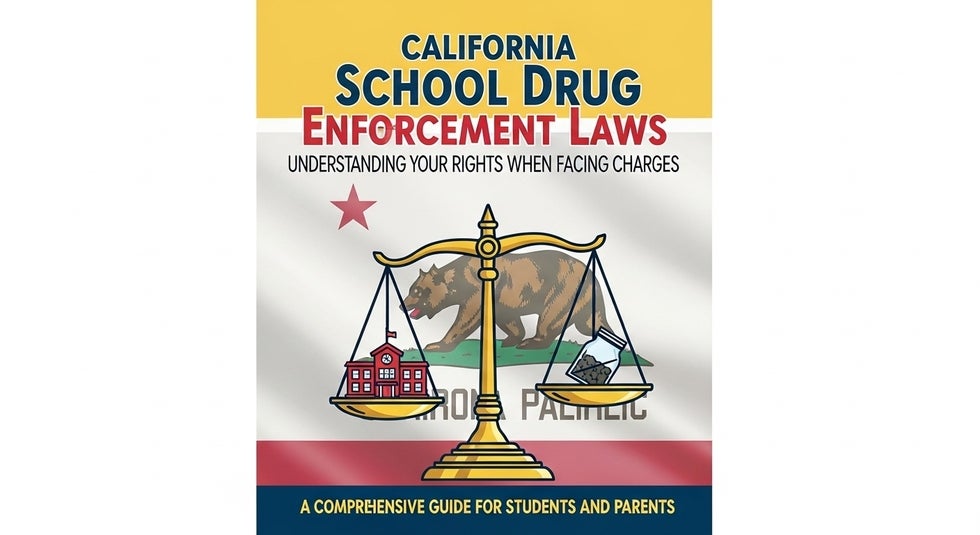
California Health and Safety Code Section 13860 establishes the legislative framework for combating drug related activities on and around school campuses throughout the state.
This statute reflects California's longstanding commitment to addressing substance abuse and drug trafficking involving school age children, while authorizing enhanced enforcement efforts and collaborative programs among law enforcement agencies, school districts, and drug prevention organizations.
For students, parents, and young adults facing criminal charges arising from alleged drug offenses on or near school property, understanding this legal framework and the enhanced penalties it authorizes is essential for protecting constitutional rights and mounting effective defenses.
This comprehensive guide examines California's school drug enforcement laws and the defense strategies available when facing these serious charges.
The Legislative Intent Behind School Drug Laws
California's Legislature enacted Section 13860 based on findings that a substantial drug abuse and drug trafficking problem exists among school age children on and around school campuses throughout the state.
The statute expresses clear legislative intent to support increased efforts by local law enforcement agencies working collaboratively with school districts and county drug offices to suppress trafficking and prevent drug abuse in educational settings.
The law authorizes development of what it terms "innovative and model programs" by local law enforcement agencies, schools, and drug abuse prevention organizations. It also establishes a program of financial and technical assistance for local law enforcement and school districts to implement these enhanced enforcement and prevention initiatives.
Understanding this legislative background is important for defense counsel because it reveals the policy priorities driving enforcement decisions and the institutional pressures that may influence how cases are charged and prosecuted.
When law enforcement agencies receive special funding and recognition for school drug enforcement activities, this can create incentives for aggressive charging decisions that may not always serve justice.
Broad Definition of Controlled Substances
Section 13860 employs an expansive definition of "drugs" that encompasses far more than traditional controlled substances. The statute specifically defines drugs to include marijuana, inhalants, narcotics, dangerous drugs, pharmaceuticals, glue, and alcohol. This broad categorization means that students can face enhanced penalties and intensive enforcement efforts for possessing substances that might be legal for adults or that have legitimate medical or household purposes.
The inclusion of alcohol in this definition is particularly significant, as it means that underage drinking violations occurring on or near school campuses may trigger the enhanced enforcement framework established by this chapter.
Similarly, the reference to pharmaceuticals means that possessing prescription medications without proper authorization, even if the medications were originally prescribed to a family member, can result in serious criminal charges when occurring in school zones.
Inhalants and glue are also specifically mentioned, reflecting concerns about substance abuse involving common household products. Students found possessing these items in school settings may face allegations of intending to use them for intoxication purposes, even when legitimate explanations exist for having such materials.
Enhanced Penalties in School Zones
While Section 13860 itself primarily establishes legislative findings and authorizes collaborative enforcement programs, it exists within a broader statutory framework that imposes enhanced penalties for drug offenses occurring on or near school grounds. California law generally treats drug offenses more seriously when they occur within specified distances of schools, parks, and other locations where children congregate.
These enhanced penalty provisions reflect policy judgments that drug activity near schools poses particular dangers to vulnerable populations and undermines educational environments. Prosecutors frequently pursue more serious charges and seek harsher sentences when alleged drug offenses occur in school zones, viewing these cases as opportunities to send deterrent messages.
For individuals facing charges, the enhanced penalty structure means that the location where alleged conduct occurred can dramatically affect potential consequences. Conduct that might result in relatively minor penalties elsewhere can trigger felony charges and substantial prison sentences when occurring near schools.
The Collaboration Between Law Enforcement and Schools
Section 13860 explicitly encourages collaboration between local law enforcement agencies and school districts in addressing drug issues. This collaborative approach has significant implications for how drug investigations are conducted in school settings and what legal protections apply.
School administrators and security personnel often work closely with law enforcement officers in investigating suspected drug activity. This collaboration can blur traditional lines between educational discipline and criminal prosecution, sometimes resulting in situations where students face both school consequences and criminal charges for the same conduct.
The involvement of school personnel in what are essentially law enforcement investigations raises important constitutional questions about search and seizure protections, interrogation procedures, and students' rights. Courts have recognized that students have diminished expectations of privacy in school settings compared to other contexts, but constitutional protections still apply and must be respected.
Constitutional Protections in School Searches
When facing allegations arising from searches conducted on school property, understanding the constitutional standards that govern those searches becomes critical for mounting effective defenses. The United States Supreme Court has established that school searches must be reasonable under all circumstances, applying a standard that differs from the probable cause requirement that applies to law enforcement searches in other contexts.
School officials can conduct searches based on reasonable suspicion rather than probable cause, and the scope of searches must be reasonably related to the circumstances that justified the search initially. However, when law enforcement officers become involved in school searches, courts may apply stricter constitutional standards depending on the specific facts.
Defense counsel examining allegations arising from school searches should carefully analyze who initiated the search, what information they possessed, whether law enforcement directed or participated in the search, and whether the search's scope exceeded what was reasonably justified by the initial suspicion. Searches that violate constitutional protections may result in suppression of evidence, potentially leading to dismissal of charges.
Interrogations and Miranda Rights in School Settings
Students questioned about suspected drug activity in school settings may not receive the Miranda warnings required before custodial interrogations by law enforcement.
The question of when Miranda warnings become necessary in school contexts depends on complex factors including whether the student is in custody, who is conducting the questioning, and what relationship exists between school officials and law enforcement.
Courts generally hold that questioning by school administrators acting independently to enforce school rules does not trigger Miranda requirements, even when students feel compelled to answer. However, when law enforcement officers conduct interrogations or when school officials act as agents of law enforcement, Miranda protections may apply.
Students who make incriminating statements during school interrogations without receiving proper warnings may have grounds to challenge the admissibility of those statements in criminal proceedings.
Defense counsel should thoroughly investigate the circumstances of any statements their clients made, including who was present, what questions were asked, whether the student felt free to leave, and whether any coercion or improper inducements occurred.
The Role of School Resource Officers
Many California schools employ or host school resource officers, sworn law enforcement officers who maintain a regular presence on campus. These officers occupy a unique position, serving both law enforcement and educational support functions. When school resource officers investigate suspected drug activity, determining their role in specific situations becomes important for assessing what constitutional protections apply.
If a school resource officer is acting in a law enforcement capacity during a search or interrogation, full constitutional protections should apply, including probable cause requirements for searches and Miranda warnings for custodial interrogations.
However, when these officers act in their capacity as school officials addressing educational and safety concerns, courts may apply the more relaxed standards governing school searches.
Defense counsel should carefully examine school resource officers' involvement in cases, including their training, job duties, how they typically function within the school, and what capacity they were acting in during the specific incidents at issue. Evidence that officers exceeded their educational support role and engaged in law enforcement activities may support arguments for applying stricter constitutional standards.
Diversion and Alternative Programs
For young people facing first time drug charges, California law provides various diversion and alternative sentencing programs that can avoid criminal convictions and provide opportunities for rehabilitation rather than punishment.
These programs reflect recognition that young people make mistakes and that drug abuse often reflects underlying issues better addressed through treatment than incarceration.
Drug diversion programs typically require participants to complete drug education classes, submit to testing, and avoid further legal trouble during a specified period. Successful completion results in dismissal of charges, allowing young people to move forward without criminal records that could affect educational opportunities, employment prospects, and other aspects of their futures.
Defense counsel representing juveniles and young adults should thoroughly explore all available diversion options, advocating for their clients' admission to programs that provide second chances. Even when prosecutors initially oppose diversion, effective advocacy highlighting clients' backgrounds, lack of prior record, family support, and commitment to change can sometimes persuade prosecutors and courts to approve participation.
Challenging the Sufficiency of Evidence
Many school drug cases rest on circumstantial evidence, witness statements of questionable reliability, and searches that may have legal vulnerabilities. Defense counsel should carefully evaluate whether the prosecution can prove each element of charged offenses beyond a reasonable doubt, the standard required for criminal convictions.
Common weaknesses in school drug cases include questions about possession and control, where substances were found in areas accessible to multiple people and the prosecution cannot definitively establish that the defendant possessed them.
Intent issues may arise when substances have legitimate purposes and the prosecution cannot prove the defendant intended to use them for intoxication or distribution.
Chain of custody problems can undermine the reliability of physical evidence, particularly when substances pass through multiple hands between initial seizure and laboratory testing. If proper documentation and procedures were not followed, defense counsel may successfully challenge whether the substances ultimately tested are the same materials allegedly found in the defendant's possession.
Witness Credibility Issues
School drug cases frequently rely heavily on witness testimony, including statements from students, teachers, administrators, and school security personnel. Evaluating witness credibility and identifying reasons to question their reliability becomes important for effective defense representation.
Student witnesses may have personal conflicts with defendants, motivations to deflect blame from themselves, or may be testifying under pressure from school authorities or law enforcement. Young witnesses may also have difficulty accurately recalling and relating events, particularly if significant time has passed between alleged incidents and when they provide statements.
Adult witnesses, including teachers and administrators, may have limited observations of alleged conduct, may have made assumptions not fully supported by what they actually saw, or may be influenced by preconceptions about particular students. Defense counsel should thoroughly cross examine all witnesses, highlighting gaps in their knowledge, biases that may affect their testimony, and inconsistencies in their accounts.
The Importance of Early Legal Representation
Students and parents facing potential criminal charges arising from school drug allegations should seek experienced legal representation as early as possible. Early intervention by defense counsel can protect constitutional rights, prevent damaging statements, and potentially influence charging decisions before cases are formally filed.
Defense attorneys can communicate with law enforcement and prosecutors on behalf of clients, providing context and information that may lead to decisions not to file charges or to pursue less serious charges. They can also ensure that clients understand their rights and do not inadvertently make statements or take actions that strengthen the prosecution's case.
At Bulldog Law, we represent students and young adults facing drug charges arising from alleged conduct on or near school campuses. Our legal team understands both the enhanced penalties these cases can carry and the unique defense strategies available in school settings.
Collateral Consequences Beyond Criminal Penalties
Criminal convictions for drug offenses can trigger consequences extending far beyond the direct criminal penalties imposed by courts. Students may face suspension or expulsion from school, loss of eligibility for financial aid, barriers to college admission, and difficulty securing employment or professional licenses in the future.
For students aspiring to careers in healthcare, education, law, or other licensed professions, drug convictions can create lasting obstacles to achieving their goals. Even relatively minor convictions can raise questions during character and fitness evaluations required for professional licensing.
Defense counsel should ensure that clients fully understand all potential consequences of conviction, not just immediate criminal penalties. This comprehensive understanding enables informed decision making about whether to accept plea offers or proceed to trial and helps clients appreciate why vigorous defense representation is essential even in cases involving relatively small amounts of substances.
Negotiating Favorable Plea Agreements
When the evidence against defendants is strong and trial risks are substantial, negotiating favorable plea agreements may represent the best strategy for minimizing consequences. Experienced defense counsel can often negotiate plea agreements that reduce charges, minimize penalties, preserve eligibility for diversion programs, or avoid consequences like school expulsion.
Effective plea negotiations require understanding prosecutors' concerns and priorities, marshaling mitigating evidence about clients' backgrounds and circumstances, and advocating persuasively for outcomes that serve clients' long term interests. Defense attorneys should also ensure that plea agreements are truly in clients' best interests before advising acceptance.
Some plea agreements may seem favorable initially but carry hidden consequences that only become apparent later. Defense counsel must thoroughly explain all terms and conditions, ensure clients understand what they are agreeing to, and advise about potential collateral consequences that may flow from particular convictions.
The Role of Family Support and Community Resources
Young people facing drug charges often benefit significantly from strong family support and connections to community resources addressing underlying substance abuse issues.
Defense counsel should work with families to identify treatment programs, counseling services, educational support, and other resources that can help their clients address problems and demonstrate commitment to positive change.
Evidence of proactive steps taken to address substance abuse issues, strong family involvement, participation in treatment or counseling, and community support can influence prosecutors' charging decisions, courts' sentencing choices, and eligibility for alternative programs. Defense counsel should help families understand how their support can positively impact case outcomes.
Moving Forward After Drug Charges
Facing criminal charges arising from school drug allegations represents a serious situation requiring immediate attention and experienced legal representation. The enhanced enforcement framework established by California law, combined with the severe penalties drug offenses can carry and the lasting collateral consequences of conviction, means that vigorous defense representation is essential.
At Bulldog Law, we understand that young people make mistakes and that drug related conduct often reflects underlying issues including peer pressure, mental health challenges, family problems, or substance abuse disorders requiring treatment rather than punishment. Our legal team works tirelessly to protect our clients' rights, challenge weak evidence, negotiate favorable outcomes, and help young people move past these charges to build successful futures.
If you or your child faces drug charges arising from alleged conduct on or near school property, Contact Bulldog Law for experienced legal representation that prioritizes protecting your rights and your future. Early intervention by skilled defense counsel can make a critical difference in how these cases are resolved.