
Updated October 2026 | The Bulldog Law | California Criminal Defense
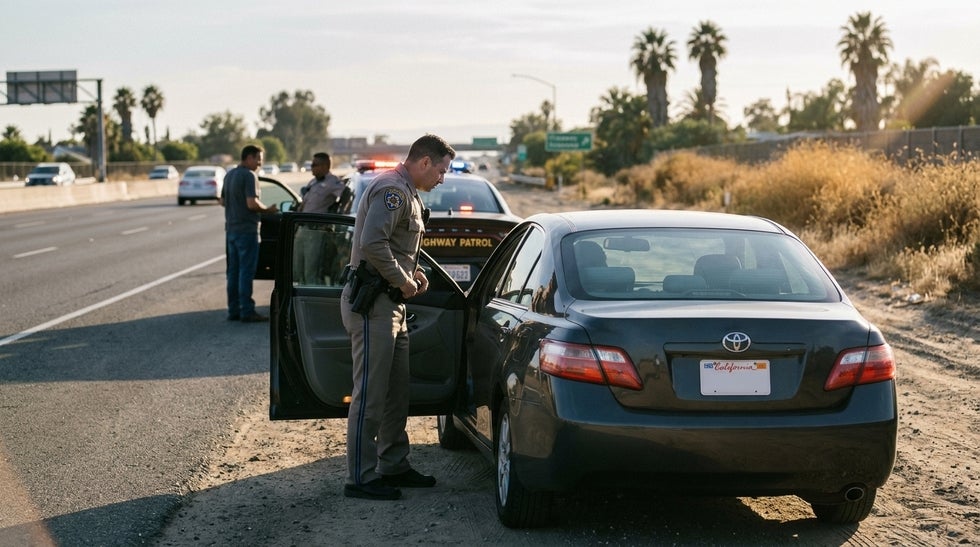
Imagine being pulled over, the officer asks to look inside your car, and you wonder whether they need a warrant. In California, the answer hinges on a handful of narrow exceptions, and misunderstanding them can cost you your freedom.
Warrant Requirement and the Automobile Exception in California
The Fourth Amendment and Article I, Section 13 of the California Constitution protect you from unreasonable searches. Generally, a search without a warrant is presumed unreasonable unless a recognized exception applies, and the automobile exception is the most common.
When officers rely on the automobile exception, they must have probable cause before searching. If you're unsure whether a warrant exists, you can start by checking for an active California arrest or bench warrant, which may affect the legality of the search.
Constitutional foundation of vehicle searches
California courts treat cars as less private than homes because they move and are subject to regulation on public roads. This reduced expectation of privacy lets courts apply the automobile exception more readily than they would for a house.
Under the Fourth Amendment, any search must be reasonable. The state balances this right against public safety, allowing warrantless searches when officers can point to specific facts that justify the intrusion.
How the automobile exception limits the warrant requirement
To invoke the automobile exception, police need probable cause that evidence or contraband is inside the vehicle. The cause must exist before the search begins; discoveries made during the search cannot retroactively create justification.
Once probable cause is established, officers may search any part of the car, including containers in the trunk or passenger's bag, as long as the search stays within the scope of the original justification.
When a search warrant is still required under Penal Code 1524
If officers lack probable cause, they must obtain a warrant under Penal Code 1524. The warrant must describe the place to be searched and the items sought, and it must be signed by a neutral magistrate.
Even after a vehicle is seized, a warrant is often required for a thorough inventory or forensic examination, unless another exception, such as inventory search, applies.
The Six Statutory Exceptions That Permit Warrantless Car Searches
In practice, most car searches fall under one of six statutory exceptions. Understanding each helps you recognize when an officer is overstepping and when you can safely refuse a search.
These exceptions include probable cause, voluntary consent, search incident to a lawful arrest, inventory searches, plain-view observations, and probation or parole conditions, each with its own strict requirements.
Probable cause and the automobile exception
Probable cause remains the cornerstone of the automobile exception. Officers must point to concrete facts, like a drug-detection dog alert or visible contraband, that would lead a reasonable person to believe evidence is present.
When those facts exist before the search, the officer may examine every compartment of the vehicle, including locked containers, without a warrant.
However, if the officer's suspicion arises only after opening the trunk, the search may be deemed unlawful, and any evidence found can be suppressed.
Valid consent and how to refuse it
Consent must be given voluntarily, without threats or coercion. You have the right to say, “I do not consent to a search,” and the officer must respect that decision.
Remember, you do not need to explain why you refuse, and the refusal cannot be used as evidence of guilt. A clear, concise statement is all that's required.
If you choose to limit consent, say, only the driver's side, you must state that limit explicitly. Any search beyond that scope creates a suppression issue for the prosecution.
Search incident to arrest, inventory searches, and plain view
A lawful arrest allows a limited search of the arrestee's immediate area, known as a search incident to arrest.
This does not give officers a blanket right to rummage through the entire vehicle. Readers comparing related California statutes also review our guide on evading a police officer under Vehicle Code 2800.
After a lawful impound, officers may conduct an inventory search under Vehicle Code 14602.6 to document the car's contents. This inventory must follow strict procedures to be valid.
When an officer sees contraband in plain sight from a lawful viewpoint, the plain view doctrine permits seizure without a warrant, provided the officer had a right to be in that position.
|
Exception |
Statutory Basis |
Key Requirement |
Typical Penalty for Violation |
|---|---|---|---|
|
Probable cause (automobile) |
Case law |
Facts existing before search |
Evidence suppression |
|
Consent |
People v. Garcia |
Voluntary, informed |
Suppression if invalid |
|
Search incident to arrest |
Penal Code 1538.5 |
Arrested person's area |
Suppression if overreached |
|
Inventory search |
Vehicle Code 14602.6 |
Lawful impound |
Suppression if improper |
Probable Cause Details: What Officers Must Show Before Searching
Probable cause is more than a hunch; it requires specific, articulable facts that would lead a reasonable officer to believe evidence is hidden in the vehicle.
Understanding what counts, and what doesn't, helps you evaluate whether a search was lawful or whether you have grounds to move to suppress the evidence.
Facts that establish probable cause for a vehicle search
Valid facts include seeing contraband in plain view, a reliable informant's tip corroborated by the stop, a drug-detection dog alert, or the odor of a controlled substance other than cannabis.
The plain view doctrine allows seizure when the officer is lawfully positioned and the item is immediately recognizable as illegal, without further intrusion.
Common misconceptions that do NOT satisfy probable cause
Officer hunches like nervousness, a prior record, or an air freshener do not meet the legal standard. Even a strong smell of marijuana alone no longer creates probable cause after Proposition 64.
Courts have repeatedly rejected these flimsy indicators, emphasizing that probable cause must be grounded in objective facts, not subjective impressions.
How timing and scope affect the validity of the search
Probable cause must exist before the search begins; facts discovered during the search cannot retroactively justify it. If the officer moves the car or opens containers after the fact, the search may be invalid.
Scope matters too, officers may only search areas where the object sought could reasonably be hidden. Overreaching beyond that scope opens the door to a motion to suppress the evidence.
The Marijuana Odor Rule After Proposition 64
Since California legalized cannabis, the simple smell of marijuana no longer gives officers a green light to search a vehicle. The law now demands more than odor alone to meet probable cause.
Under Health and Safety Code 11362.1(c), lawful possession of cannabis is not contraband, and the odor of a legal supply cannot trigger a warrantless search. Officers must find additional evidence before acting.
Why odor alone no longer creates probable cause
Courts have ruled that a single scent, even if unmistakable, does not satisfy the Probable Cause standard. The officer must observe another fact that links the vehicle to a crime.
Without a corroborating factor, the search violates the Fourth Amendment and the California Constitution. A lone odor is insufficient, even if the driver is under 21 or the amount exceeds the legal limit.
When cannabis odor combined with other facts does create probable cause
When the smell is paired with an open container, the officer can argue that the vehicle contains evidence of a violation, such as a Vehicle Code 14602.6 infraction.
Additional indicators, impairment signs, a quantity beyond the legal limit, or packaging that suggests sale, can together establish probable cause for a search under the automobile exception.
Effect of probation or parole search conditions on cannabis odor
Drivers on probation or parole face stricter search conditions. A search condition can allow officers to look for contraband, including cannabis, even if the odor alone would not suffice.
In such cases, the officer may rely on the Probation and Parole Search Condition to justify a warrantless search, but must still meet the statutory requirements of the condition. Readers comparing related California statutes also review our guide on drug possession under Health and Safety Code 11350.
Learn how long a DUI stays on your California record here. For a deeper dive, see Cornell's summary of the automobile exception and Health and Safety Code 11362.1(c).
Traffic Stops, Prolonged Detention, and Your Right to Remain Silent
When a driver is pulled over, the stop is limited to the time needed to verify license, registration, and insurance. Officers cannot extend the encounter for unrelated investigations.
California courts hold that a stop may not exceed the reasonable time required for the traffic violation, or else it becomes an unlawful detention that taints any subsequent search.
What a lawful traffic stop permits officers to do
During a legitimate stop, officers may request identification, check the vehicle for outstanding warrants, and issue a citation. They cannot, however, search without probable cause or consent.
They may also conduct a brief visual inspection of the vehicle's exterior, but any interior search must meet an exception such as the automobile exception or a warrant.
The prolonged-detention rule and its impact on later searches
If an officer waits for a K9 unit or for backup to conduct a search, the detention is unlawful. The search that follows is then subject to a motion to suppress.
Evidence of the unlawful extension, body-camera timestamps, dispatch logs, and the citation time, provides a strong basis for challenging the search's legality.
How to assert your Fifth Amendment rights without escalating the encounter
When asked about your destination or possession, you may calmly say, “I do not wish to answer.” This preserves your right to remain silent without provoking a confrontation.
Refusing to answer does not constitute a waiver of your rights, and officers cannot use your silence to justify a search or arrest. For more on sealing a California arrest record under Penal Code 851.91, visit this page.
Suppressing Illegally Obtained Evidence: Motion to Suppress Process
When evidence is seized without a valid exception, the defense can file a motion to suppress. The motion challenges the legality of the search and seeks to exclude the evidence.
To succeed, the motion must show that the officer lacked probable cause, obtained unlawful consent, or violated the prolonged-detention rule. The court will review all available records.
Grounds for a successful motion to suppress
Key grounds include lack of probable cause, an unlawful consent that was coerced or obtained after an unlawful detention, and searches that exceed the scope of an exception.
Evidence such as body-camera footage, dispatch logs, and citation timestamps can prove that the search began before the facts were known, thereby invalidating the search.
Evidence collection tips for building the suppression argument
Gather every piece of documentation: the officer's written consent form, the vehicle's registration, and any witness statements. These documents help establish the timing and legality of the search.
Consult a defense attorney early to ensure that the evidence is preserved and that the motion is filed within the statute of limitations.
When exigent circumstances may override the need for a warrant
Exigent circumstances, such as a threat to public safety or the imminent destruction of evidence, can justify a warrantless search. However, the circumstances must be immediate and unavoidable.
In the absence of exigency, the search incident to arrest exception applies only if the arrest is lawful and the search is related to the arrest.
How The Bulldog Law Defends Your Rights After a Vehicle Search
Our California criminal defense team reviews every dash-cam clip, dispatch log, and officer testimony to spot illegal stops or searches. We move quickly to protect your constitutional rights and keep charges from sticking.
From the first phone call we build a strategy that challenges unlawful evidence and seeks dismissal. Call (888) 928-1609 for a confidential case review and aggressive representation.
Frequently Asked Questions
What are the six California exceptions that allow police to search a car without a warrant?
The recognized exceptions are: (1) consent, (2) search incident to a lawful arrest, (3) probable cause arising from the stop, (4) protective sweep for weapons, (5) inventory search of impounded vehicles, and (6) exigent circumstances such as imminent destruction of evidence.
Each exception hinges on specific statutory authority, like Penal Code 1538.5 for suppression and Vehicle Code 22500 for inventory searches, and must be applied correctly to survive a court challenge.
Does the smell of marijuana give police probable cause to search a vehicle in California?
Generally, no. Under Health and Safety Code 11362.1(c), lawfully possessed cannabis is not contraband, so odor alone does not create probable cause.
Probable cause may arise if the smell is combined with other facts, open containers, driver impairment, a minor passenger, or quantities suggesting sale, especially for probationers or parolees.
What should you say to an officer during a traffic stop to protect your Fourth Amendment rights?
Clearly and politely state, “I do not consent to any search of my vehicle.” Do not resist physically and limit your answers to license, registration, and insurance requests.
Your refusal preserves the right to challenge any later search, and the officer cannot use your silence as evidence of guilt under Penal Code 1538.5.
How can a California driver suppress evidence from an unlawful vehicle search?
File a motion to suppress under the exclusionary rule and Penal Code 1538.5. The court will examine whether the stop, detention, consent, or probable cause was lawful.
If the judge finds any Fourth Amendment violation, all discovered items and any derivative evidence must be excluded, often ending the prosecution in drug, weapon, or DUI cases.
When can police conduct an inventory search of an impounded car in California?
Police may perform an inventory search when a vehicle is lawfully impounded, such as after a crash or for parking violations, to protect the owner's property and the police from claims of loss.
The search must follow standard procedures outlined in Vehicle Code 22658 and cannot be used as a pretext for investigating criminal activity.
What is the difference between consent and probable cause for a warrantless car search in California?
Consent is a voluntary, knowing agreement from the driver or owner, and it can be withdrawn at any time. No probable cause is needed if consent is valid.
Probable cause requires specific facts that would lead a reasonable officer to believe evidence or contraband is present, allowing a warrantless search even without consent.
Can police search my car without a warrant if they have a drug-detection dog alert?
A positive alert from a trained drug-detection dog creates probable cause, permitting a warrantless search of the vehicle under Health and Safety Code 11362.1.
However, the dog must be properly certified, and the alert cannot be the sole basis if the officer unlawfully prolonged the stop to wait for the dog.