
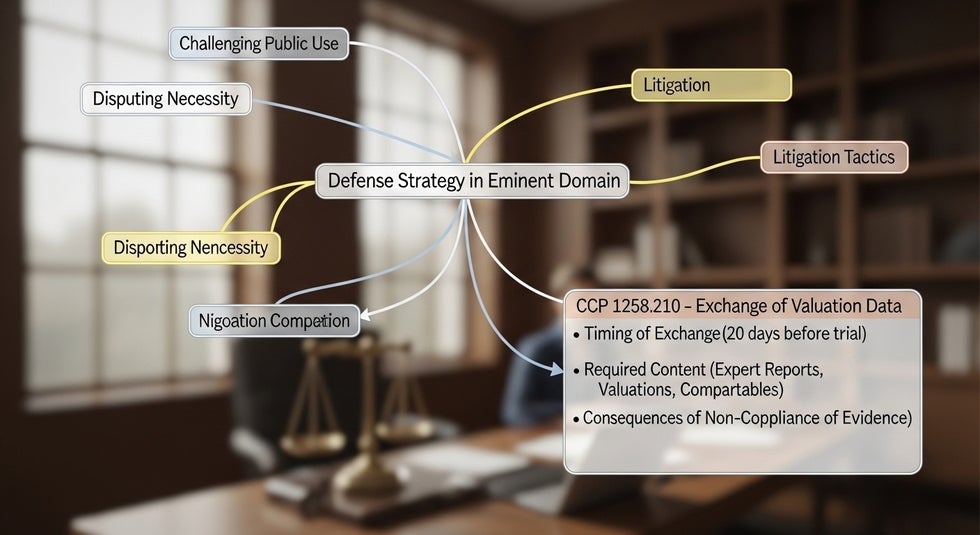
When the government moves to take your property through eminent domain, the legal process can feel overwhelming. There are strict timelines, procedural rules, and high stakes involved and one misstep can cost you far more than you realize. One of the most consequential procedural rules for property owners fighting for just compensation is California Code of Civil Procedure Section 1258.210, which governs the exchange of expert witness lists and valuation data.
If you are a property owner defending against a condemnation action, understanding how this statute works is not just helpful — it is essential. This article breaks down what CCP 1258.210 requires, why it matters from a defense standpoint, and how a well prepared legal team can use it strategically to protect your interests.
What Is CCP 1258.210 and Why Does It Matter?
California Code of Civil Procedure Section 1258.210 establishes the formal process by which parties in an eminent domain case must exchange expert witness information and statements of valuation data before trial. In plain terms, both sides — the condemning agency and the property owner — must disclose who their experts are and what those experts plan to say about the property's value.
This rule exists because eminent domain cases almost always hinge on competing opinions about what the condemned property is worth. Government agencies routinely hire appraisers who value properties at figures far below what the owner believes is fair. Without a structured disclosure process, the proceedings could devolve into a battle of ambushes, where neither side knows what arguments or evidence the other plans to present.
The statute sets a clear starting point: any party may file and serve a demand for exchange no later than the 10th day after a trial date is selected. After that window closes, the court can still allow a demand to be served if a party can show good cause through a noticed motion. This tight timeline signals just how seriously California law treats the expert disclosure process in condemnation litigation.
The Demand Requirement: What Must Be Included
Under CCP 1258.210, a proper demand must meet specific requirements. First, it must clearly describe the property at issue — though the law allows that description to reference the original complaint, which simplifies the paperwork in most cases.
Second, and more importantly, the demand must include a statutorily prescribed notice. That notice informs the receiving party that they are required to serve and deposit with the court clerk a complete list of expert witnesses and statements of valuation data before the exchange date. The notice also contains a critical warning: failure to comply will result in the waiving of the right to call any unlisted expert witnesses during the case in chief, and the right to introduce on direct examination any valuation matter that should have been disclosed but was not.
That warning is not just procedural boilerplate. It carries real consequences.
The Strategic Value of This Rule for Property Owners
From a defense perspective, CCP 1258.210 is a double edged tool. Used correctly, it creates significant advantages for property owners challenging the government's valuation.
Leveling the Playing Field
Government agencies in eminent domain cases often have substantial resources. They employ experienced appraisers and legal teams who handle condemnation litigation regularly. The mandatory expert exchange process helps level the playing field by requiring the government to show its hand early. When the condemning agency must disclose its expert witnesses and the basis for their valuations before trial, your legal team has time to analyze those opinions, identify weaknesses, and prepare a compelling counter narrative.
Locking In the Government's Position
Once the exchange is complete, the government is largely bound by the experts and valuation data it has disclosed. If the agency tries to introduce new expert opinions or valuation theories at trial that were not properly disclosed, those efforts can be challenged and excluded. This creates a degree of certainty that benefits the defense, particularly when you are trying to prevent the government from inflating arguments at the last minute.
Exposing Incomplete or Flawed Valuations
Valuation statements disclosed through the exchange process must be substantive enough to give the opposing party meaningful notice of the arguments to come. If the government's disclosed data is vague, incomplete, or methodologically flawed, your legal team can use that as the basis for motions, cross examination strategies, and expert rebuttal testimony. In many cases, the initial government appraisal significantly undervalues the property, and a thorough review of the disclosed statements often reveals why.
For more on how eminent domain appraisals work and where government valuations fall short, see the Bulldog Law Blogfor additional resources on protecting your property rights.
What Happens If You Miss the Deadline?
The consequences of failing to comply with the expert exchange requirements under CCP 1258.210 are serious. As stated in the statutory notice, a party who does not timely serve and deposit the required expert list and valuation data effectively waives the right to present that evidence at trial.
For a property owner, this could mean being unable to call the appraiser you retained to testify about the true value of your property during your case in chief. It could mean being barred from introducing key valuation arguments on direct examination. In a case where just compensation is the central dispute, losing the ability to present your core evidence is devastating.
This is why working with an experienced eminent domain defense attorney from the moment condemnation proceedings begin is so critical. The deadlines in this area of law are unforgiving, and procedural missteps are difficult or impossible to reverse after the fact. Learn more about how our team approaches eminent domain defense and what early legal intervention can mean for your outcome.
Timing Is Everything: Do Not Wait to Act
The 10 day window following the selection of a trial date moves quickly, particularly for property owners who may be unfamiliar with the litigation process. By the time many owners fully understand what they are facing, critical deadlines may have already passed.
If you have received notice that the government intends to take your property, or if a trial date has already been set in your case, the time to act is now. Making sure a demand is properly filed and served, and that your own expert disclosures are complete, accurate, and timely, is not something to leave to chance.
The rules in CCP 1258.210 exist in part to protect property owners from being blindsided by government appraisals. But they only protect you if you use them correctly and on time. An attorney who focuses on eminent domain defense understands how to navigate these requirements and how to use the exchange process as a strategic asset rather than just a procedural hurdle.
Final Thoughts: Know Your Rights, Protect Your Property
CCP 1258.210 is one of many procedural tools that shape how eminent domain cases unfold in California. From a defense standpoint, it represents both an obligation and an opportunity. The obligation is to comply fully and on time with expert disclosure requirements. The opportunity is to use the exchange process to understand what the government is arguing, challenge flawed valuations, and build the strongest possible case for fair compensation.
Property owners who engage knowledgeable legal counsel early are far better positioned to take advantage of these rules. If you are facing an eminent domain action and want to understand how the expert witness exchange process affects your case, explore the Bulldog Law Blog for insights and guidance tailored to California property owners.
Your property has value. Make sure the law works to protect it.For a free consultation, call our law firm toll free at (888) 928-1609 or contact us by email.