
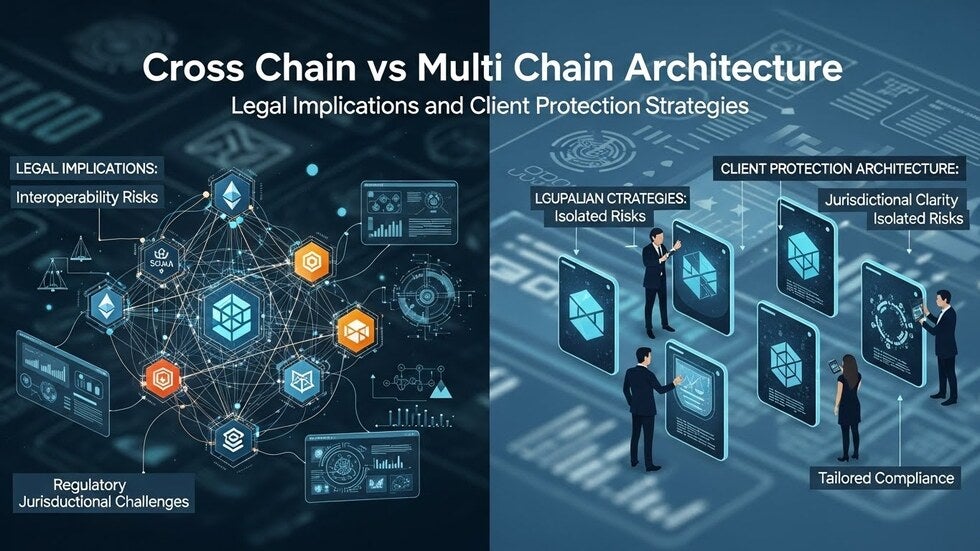
As blockchain technology evolves beyond single network solutions, legal professionals increasingly encounter disputes and compliance issues involving cross chain and multi chain architectures. Understanding these technical distinctions is crucial for effectively representing clients in blockchain related litigation, regulatory compliance matters, and smart contract disputes.
Defining Cross Chain and Multi Chain Architectures
Multi chain architecture involves deploying separate, independent smart contract instances across different blockchain networks. Each deployment operates autonomously with its own governance, security model, and operational parameters. This approach allows projects to leverage the unique capabilities of various blockchain platforms while maintaining isolated operations on each network.
Cross chain architecture, conversely, creates unified applications that span multiple blockchains through interconnected smart contracts and messaging protocols. These systems enable seamless communication and asset transfer between different blockchain networks, creating a single integrated experience despite operating across multiple underlying platforms.
For legal practitioners, these architectural differences create distinct liability profiles, regulatory considerations, and dispute resolution challenges. Multi chain deployments may face jurisdiction specific compliance requirements, while cross chain systems introduce complex security vulnerabilities that can impact multiple networks simultaneously.
Legal Implications of Multi Chain Deployments
Multi chain architecture presents unique legal challenges related to jurisdictional compliance and regulatory oversight. When projects deploy across multiple blockchain networks, they may inadvertently subject themselves to diverse regulatory regimes governing financial services, data protection, and consumer rights.
Each blockchain network operates under different governance structures and may be subject to various national or regional regulations. A multi chain deployment could simultaneously fall under European Union data protection requirements, United States securities regulations, and Asian financial services oversight, creating a complex compliance matrix.
For Bulldog Law clients facing regulatory investigations or compliance issues, multi chain architecture can complicate defense strategies by introducing multiple regulatory authorities with potentially conflicting requirements. However, the isolated nature of multi chain deployments also provides strategic advantages by limiting the scope of potential violations to specific networks.
Cross Chain Security Vulnerabilities and Legal Exposure
Cross chain systems rely heavily on bridge protocols and messaging systems that have historically proven vulnerable to sophisticated attacks. Major cross chain bridge exploits have resulted in billions of dollars in losses, creating significant litigation risks for projects utilizing these architectures.
The interconnected nature of cross chain systems means that security failures in one component can cascade across multiple networks, potentially affecting numerous stakeholders and creating complex liability scenarios. When cross chain bridges fail, determining responsibility among bridge operators, protocol developers, and end users becomes a contentious legal issue.
For attorneys representing clients in cryptocurrency litigation involving cross chain protocols, understanding the technical architecture becomes crucial for establishing causation and liability. The complexity of cross chain systems often requires expert testimony to explain how technical failures translate into legal damages.
Regulatory Compliance Considerations
Both architectural approaches present distinct regulatory compliance challenges that legal practitioners must address. Multi chain deployments require careful analysis of each jurisdiction where the protocol operates, ensuring compliance with local financial services regulations, tax requirements, and consumer protection laws.
Cross chain systems face additional scrutiny from regulators concerned about anti money laundering compliance and know your customer requirements. The ability to move assets seamlessly across different blockchain networks can trigger enhanced reporting requirements and compliance obligations under various financial crimes statutes.
Professional responsibility considerations also arise when advising clients on blockchain architecture choices. Attorneys must understand the regulatory implications of different technical approaches to provide competent representation and avoid potential malpractice exposure from inadequate technical guidance.
Smart Contract Governance and Legal Framework
Multi chain architectures require consistent governance mechanisms across different blockchain platforms, creating challenges for maintaining uniform user agreements and dispute resolution procedures. Each blockchain network may have different capabilities for implementing governance functions, potentially creating inconsistencies in user rights and procedural protections.
Cross chain systems must address governance coordination across multiple networks while ensuring that legal agreements remain enforceable despite the distributed nature of the underlying technology. This coordination becomes particularly complex when different blockchain networks have conflicting governance philosophies or technical limitations.
Bulldog Law assists clients in developing governance frameworks that address these architectural complexities while maintaining legal enforceability and regulatory compliance. Our approach ensures that technical design decisions align with legal requirements and business objectives.
Asset Recovery and Dispute Resolution
When disputes arise involving multi chain or cross chain systems, asset recovery becomes significantly more complex than traditional blockchain litigation. Multi chain systems may require separate legal actions across multiple jurisdictions, while cross chain systems introduce additional complexity through bridge protocols and messaging systems.
The decentralized nature of these architectures can complicate traditional asset recovery methods, requiring innovative legal strategies and technical expertise. Understanding how assets move between different blockchain networks becomes crucial for effective asset tracing and recovery efforts.
For clients involved in blockchain disputes, Bulldog Law provides comprehensive litigation support that addresses both technical and legal aspects of multi chain and cross chain asset recovery. Our expertise in blockchain technology enables effective representation in these complex matters.
Risk Assessment and Mitigation Strategies
Legal practitioners must help clients assess the risk profiles of different architectural approaches when making technology decisions. Multi chain architectures offer risk isolation benefits by containing failures to individual blockchain networks, but they also introduce compliance complexity and operational overhead.
Cross chain systems provide enhanced functionality and user experience benefits but create concentrated risk points through bridge protocols and messaging systems. The interconnected nature of these systems means that security failures can have widespread impacts across multiple blockchain networks.
Risk mitigation strategies must address both technical vulnerabilities and legal exposures. This includes implementing appropriate insurance coverage, developing incident response procedures, and establishing clear governance frameworks for addressing security incidents or compliance violations.
Professional Liability and Malpractice Considerations
Attorneys advising clients on blockchain architecture decisions must maintain competence in rapidly evolving technical areas while providing sound legal guidance. The complexity of multi chain and cross chain systems requires ongoing education and collaboration with technical experts.
Professional liability exposure can arise from inadequate technical understanding, failure to identify regulatory compliance requirements, or insufficient guidance regarding risk management strategies. Attorneys must balance the need for technical competence with recognition of professional limitations in highly specialized technical areas.
Bulldog Law maintains expertise in blockchain technology through ongoing education, strategic partnerships with technical experts, and active participation in industry developments. This approach ensures that clients receive competent representation while managing professional liability risks.
Contract Drafting and Technical Specifications
Smart contracts operating in multi chain or cross chain environments require careful drafting to address the unique challenges of distributed architectures. Contract terms must account for different blockchain network capabilities, governance mechanisms, and dispute resolution procedures.
Cross chain contracts must specify how interactions between different blockchain networks will be handled, including failure modes and recovery procedures. Multi chain contracts require consistency across different platforms while accommodating the unique characteristics of each blockchain network.
Legal practitioners must work closely with technical teams to ensure that smart contract implementations align with legal requirements and business objectives. This collaboration is essential for avoiding disputes arising from mismatched technical implementations and legal expectations.
Future Regulatory Developments
The regulatory landscape for blockchain technology continues evolving, with particular attention to the risks associated with cross chain bridge protocols and the complexity of multi chain compliance. Legal practitioners must anticipate regulatory developments while advising clients on architecture decisions.
Emerging regulations may impose specific requirements for cross chain systems, including enhanced security standards, incident reporting obligations, and governance requirements. Multi chain systems may face standardization pressures aimed at simplifying regulatory oversight and compliance monitoring.
For clients involved in regulatory compliance matters, staying ahead of regulatory developments is crucial for maintaining compliant operations and avoiding enforcement actions. Bulldog Law provides ongoing regulatory guidance to help clients navigate the evolving regulatory landscape.
Strategic Recommendations for Legal Practitioners
When representing clients in blockchain related matters, understanding the architectural distinctions between cross chain and multi chain systems provides strategic advantages in litigation, compliance, and business planning contexts. These technical details often prove crucial for establishing causation, assessing damages, and developing effective legal strategies.
For complex blockchain disputes or compliance matters, early engagement with technical experts and comprehensive risk assessment are essential for effective representation. The interconnected nature of these systems means that technical failures can have far reaching legal consequences requiring sophisticated legal strategies.
Conclusion
As blockchain technology continues evolving toward more complex architectural approaches, legal practitioners must develop expertise in both technical and legal aspects of multi chain and cross chain systems. Understanding these architectural distinctions enables more effective client representation while managing the unique risks associated with distributed blockchain technologies.
Whether representing plaintiffs seeking damages from cross chain bridge failures or defending clients against regulatory enforcement actions involving multi chain deployments, technical competence combined with strategic legal expertise provides the foundation for successful representation in this rapidly evolving field.
Bulldog Law's commitment to maintaining cutting edge expertise in blockchain technology ensures that clients receive comprehensive representation that addresses both technical complexities and legal requirements in an increasingly sophisticated regulatory environment.