
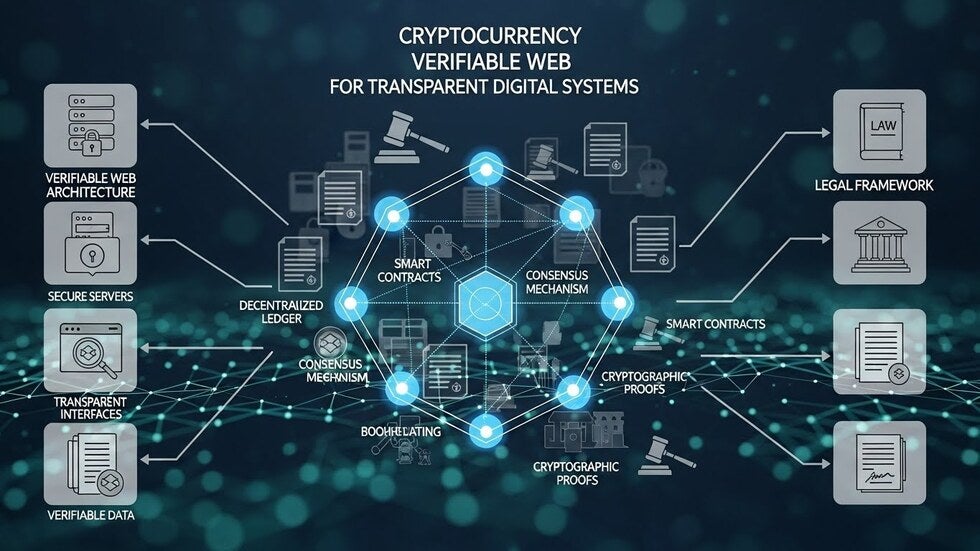
The emergence of verifiable web technologies represents a fundamental shift from trust based digital systems to cryptographically provable transparency that could reshape legal frameworks governing financial services, data integrity, and regulatory compliance. This architecture leverages cryptocurrency and blockchain infrastructure to create systems where users can independently verify operations, data integrity, and system behavior before engaging with digital platforms. Understanding the legal implications of verifiable web technologies is essential for financial institutions, regulatory agencies, and technology companies navigating this transformative approach to digital trust.
Foundational Principles of Verifiable Web Architecture
Verifiable web systems fundamentally transform how digital trust operates by replacing faith based relationships with cryptographically provable transparency that enables independent verification of system behavior, data integrity, and operational compliance. This shift addresses systemic failures in traditional digital systems where opacity enables manipulation, fraud, and regulatory violations.
Preemptive transparency enables users to understand exactly how systems will behave before committing funds, data, or resources to digital platforms. Unlike traditional systems that require trust in operator representations, verifiable systems provide mathematical proof of operational parameters and execution logic.
Real time integrity verification ensures that every computation, data update, and system operation can be independently verified for accuracy and compliance with stated specifications. This capability addresses longstanding problems with data manipulation, unauthorized system changes, and hidden operational parameters.
User autonomy enhancement through verifiable systems enables participants to understand exit conditions, operational constraints, and system limitations before engagement. This transparency addresses power imbalances between users and platform operators that have created legal liability and regulatory concerns.
Immutable execution guarantees mean that system behavior cannot be arbitrarily changed by operators, regulators, or other parties after users commit to platform participation. This predictability enables new forms of contractual relationships and risk management strategies.
The legal implications extend beyond technical specifications to encompass fundamental questions about fiduciary duty, regulatory compliance, consumer protection, and liability allocation in systems where traditional concepts of operator discretion and user reliance may not apply.
At Bulldog Law, we help clients understand how verifiable web architectures affect legal obligations, regulatory compliance, and risk management strategies while enabling beneficial innovation through enhanced transparency and user protection.
Regulatory Compliance and Transparency Requirements
Verifiable web systems create unprecedented opportunities for regulatory compliance while raising novel questions about oversight mechanisms, enforcement procedures, and the allocation of responsibility between automated systems and human operators.
Financial services regulation benefits significantly from verifiable systems that can provide real time proof of compliance with capital requirements, risk management procedures, and consumer protection standards. However, regulators must adapt oversight mechanisms to address automated systems that may not require traditional supervision.
Securities law compliance can be enhanced through verifiable systems that provide transparent proof of investor qualifications, trading restrictions, and disclosure obligations. However, the immutable nature of these systems may conflict with regulatory requirements for discretionary enforcement and remedial action.
Anti money laundering compliance requires adaptation when verifiable systems provide transparent transaction records that may conflict with traditional privacy expectations while potentially enabling enhanced monitoring and suspicious activity detection capabilities.
Consumer protection regulations must address how traditional concepts of deceptive practices, unfair dealing, and adequate disclosure apply to systems where operational parameters are mathematically verifiable but may be too complex for ordinary consumers to understand.
Banking regulations face challenges when verifiable systems blur traditional distinctions between custodial and non custodial services, potentially requiring new frameworks for safety and soundness oversight of algorithmically managed financial services.
Privacy regulations must balance transparency benefits with individual privacy rights when verifiable systems require public verification of personal data or financial information to maintain system integrity and user protection.
Our regulatory technology practice helps institutions navigate these complex regulatory interactions while implementing verifiable systems that enhance compliance capabilities without creating new regulatory risks.
Legal Liability and Risk Allocation Frameworks
Verifiable web systems fundamentally alter traditional concepts of legal liability by distributing responsibility among automated systems, human operators, and users in ways that existing legal frameworks may not adequately address.
Operator liability may be reduced when verifiable systems provide mathematical proof that operations conform to specified parameters and user agreements. However, operators may face enhanced liability for system design decisions, security vulnerabilities, and failure to implement adequate verification mechanisms.
Developer responsibility encompasses obligations to implement accurate verification mechanisms, provide adequate security measures, and ensure that system specifications match actual operational behavior. Professional liability and warranty considerations become critical when verification failures result in user losses.
User responsibility increases when verifiable systems provide complete transparency about operational parameters, risks, and exit conditions. However, legal protections may still apply when systems are too complex for reasonable user understanding or when verification mechanisms fail.
Smart contract liability raises questions about whether traditional contract law principles apply to algorithmically executed agreements that users can verify before commitment but cannot modify after deployment. Legal frameworks must address how contract interpretation and remediation work in immutable systems.
Insurance and indemnification arrangements require specialized approaches because traditional liability concepts may not adequately address risks associated with verifiable systems that operate autonomously while providing mathematical proof of compliance with specified parameters.
Dispute resolution mechanisms must adapt to address conflicts arising from verifiable systems where traditional concepts of fault, breach, and remedy may not apply when systems operate exactly as mathematically specified but produce unexpected or undesirable outcomes.
Technical Standards and Legal Framework Integration
Successful implementation of verifiable web systems requires careful integration of technical standards with legal requirements to ensure that verification mechanisms provide legally meaningful protection while maintaining operational effectiveness.
Cryptographic verification standards must meet legal requirements for evidence, audit trails, and regulatory compliance while providing technical assurance of system integrity and operational compliance. Legal frameworks must specify what types of verification constitute adequate proof for different purposes.
Data integrity mechanisms including blockchain recording, cryptographic proofs, and consensus verification must comply with data protection regulations, privacy requirements, and records retention obligations while providing transparent verification capabilities.
Identity verification systems must balance verifiable credentials with privacy protection, anti discrimination requirements, and regulatory compliance obligations including know your customer and anti money laundering requirements.
Audit and oversight procedures must adapt to address verifiable systems that provide continuous real time verification rather than periodic manual audits. Legal frameworks must specify how continuous verification affects traditional audit requirements and regulatory oversight obligations.
Business continuity requirements must address dependencies on cryptographic infrastructure, blockchain networks, and verification mechanisms that may create single points of failure or operational risks that traditional business continuity planning may not adequately address.
Interoperability standards must ensure that verification mechanisms work across different platforms, jurisdictions, and regulatory frameworks while maintaining legal validity and compliance effectiveness.
Our blockchain technology practice helps clients develop technical architectures that integrate seamlessly with legal requirements while providing meaningful verification capabilities and appropriate risk management.
Financial Services Applications and Market Impact
Verifiable web systems have particular relevance for financial services where transparency, auditability, and regulatory compliance are essential for market integrity and consumer protection. These applications demonstrate both the potential benefits and legal challenges of verifiable systems.
Decentralized finance protocols utilizing verifiable systems can provide transparent proof of collateralization, risk management procedures, and operational parameters that traditional financial services often keep proprietary. However, regulatory frameworks must adapt to address decentralized systems that may not have traditional oversight mechanisms.
Tokenized asset platforms can utilize verifiable systems to provide real time proof of asset backing, custody arrangements, and compliance procedures that enhance investor confidence while creating new questions about regulatory oversight and investor protection.
Payment systems leveraging verifiable architecture can provide transparent proof of transaction processing, settlement procedures, and risk management that addresses longstanding concerns about payment system opacity while potentially conflicting with traditional privacy expectations.
Lending and credit systems can utilize verifiable mechanisms to provide transparent proof of underwriting procedures, risk assessment methodologies, and collection practices that enhance regulatory compliance while potentially affecting traditional concepts of credit privacy and discrimination protection.
Investment management services can implement verifiable systems that provide real time proof of portfolio compliance, risk management procedures, and fiduciary obligation fulfillment that addresses longstanding investor protection concerns while creating new questions about proprietary strategy protection.
Market infrastructure utilizing verifiable systems can provide unprecedented transparency about trading mechanisms, price discovery procedures, and market manipulation prevention that enhances market integrity while potentially affecting traditional concepts of competitive advantage and trade secret protection.
Governance and Democratic Applications
Verifiable web technologies extend beyond financial services to enable transparent governance systems that could reshape how democratic institutions, corporate governance, and regulatory processes operate while creating new legal frameworks for accountability and participation.
Voting systems utilizing verifiable mechanisms can provide mathematical proof of election integrity while maintaining ballot secrecy and preventing coercion. However, legal frameworks must address how verifiable voting affects traditional concepts of election administration, dispute resolution, and voter protection.
Corporate governance systems can implement verifiable mechanisms that provide transparent proof of shareholder voting, board decision making, and fiduciary duty compliance. These systems may enhance accountability while creating new questions about director liability and business judgment protection.
Regulatory processes can utilize verifiable systems to provide transparent proof of compliance monitoring, enforcement actions, and policy implementation that enhances public accountability while potentially affecting traditional concepts of regulatory discretion and enforcement strategy.
Public records management can benefit from verifiable systems that provide tamper proof documentation while maintaining appropriate privacy protections and access controls. Legal frameworks must address how verifiable records affect traditional concepts of document authentication and legal evidence.
Government service delivery can utilize verifiable systems to provide transparent proof of benefit eligibility, service delivery, and compliance monitoring that enhances accountability while potentially affecting traditional concepts of administrative discretion and due process protection.
Future Development and Strategic Implications
The verifiable web represents an early stage technology paradigm that will likely evolve significantly as technical capabilities advance and legal frameworks adapt to address both opportunities and challenges associated with cryptographically verifiable systems.
Regulatory evolution will likely address verifiable systems through new guidance, enforcement actions, and legislative proposals that could significantly impact how these technologies are implemented and operated across different sectors and jurisdictions.
Technology standardization efforts including industry consortiums and international organizations will likely influence how verifiable systems develop and what legal frameworks govern their implementation across different applications and use cases.
Market adoption patterns will determine which verifiable web applications achieve widespread use while influencing how legal frameworks evolve to address the practical challenges and opportunities these systems create.
International coordination may be necessary to address cross border verifiable systems that operate across multiple legal jurisdictions while providing consistent verification capabilities and legal protections.
Academic and policy research will likely address fundamental questions about how verifiable systems affect democratic governance, economic efficiency, and social welfare that could influence future legal and regulatory development.
At Bulldog Law, we provide comprehensive legal support for verifiable web initiatives including regulatory analysis, system design consultation, compliance program development, governance framework creation, and ongoing legal counsel. Our experience spans emerging technology law, financial services regulation, and digital governance, enabling integrated solutions for complex verifiable system implementations.
Whether you're developing verifiable web applications, implementing transparent governance systems, or navigating legal challenges related to cryptographically verifiable operations, our experienced team can help navigate this rapidly evolving landscape while protecting your interests and enabling beneficial innovation.
The verifiable web represents a fundamental shift toward transparency and mathematical proof in digital systems that could reshape legal frameworks across multiple sectors. Contact us today to discuss how we can help ensure your verifiable web initiatives achieve their objectives while maintaining comprehensive legal protection and regulatory compliance in this emerging technological paradigm.