
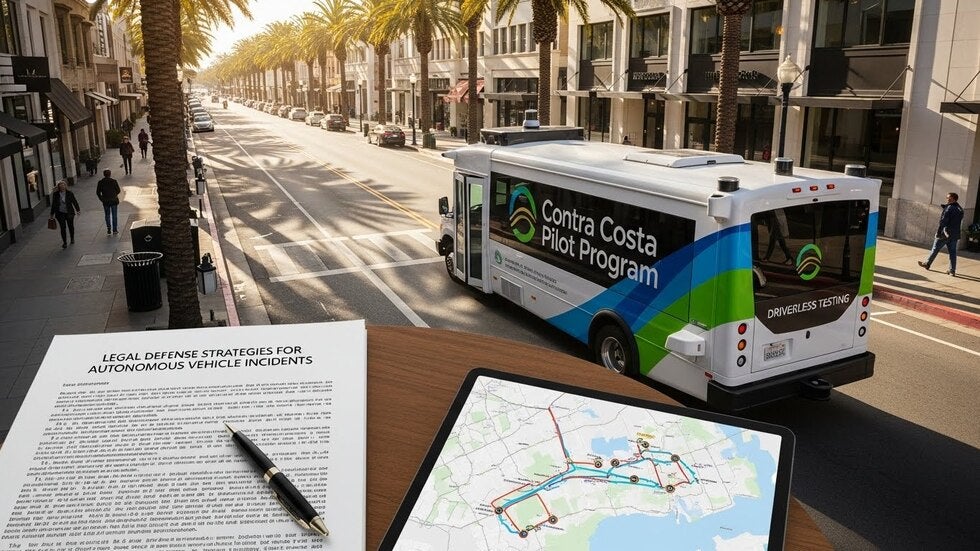
California's Revolutionary Approach to Driverless Vehicle Testing
The Contra Costa Transportation Authority pilot program represents a groundbreaking legal framework that permits testing of truly autonomous vehicles without human drivers, steering wheels, brake pedals, or accelerators. This innovative initiative under Vehicle Code Section 38755 creates unprecedented legal territory for manufacturers seeking to adva
nce fully autonomous vehicle technology.
For defense attorneys representing autonomous vehicle manufacturers or technology companies, understanding the unique legal landscape of this pilot program is essential. The program creates distinct compliance obligations, liability frameworks, and regulatory requirements that differ significantly from standard California autonomous vehicle testing regulations.
The pilot program's authorization to test vehicles completely devoid of traditional human controls represents a significant departure from conventional automotive legal frameworks. This creates novel legal questions about liability attribution, regulatory compliance, and risk management that require sophisticated defense strategies.
Geographic Limitations and Operational Boundaries
Designated Testing Zones and Legal Implications
Testing authorization extends exclusively to privately owned business parks designated by the Contra Costa Transportation Authority and GoMentum Station within the former Concord Naval Weapons Station boundaries. These geographic restrictions create important legal boundaries that provide both operational flexibility and liability containment for participating entities.
The inclusion of public roads within designated business parks creates a unique legal environment where standard vehicle operation laws apply within carefully controlled parameters. Defense attorneys must understand how traditional traffic enforcement intersects with autonomous vehicle testing protocols in these hybrid environments.
GoMentum Station's permanent designation provides crucial operational stability, with explicit statutory protection against ownership changes affecting testing authorization. This provision offers important continuity protections for long term research and development programs while providing predictable legal frameworks for ongoing operations.
Speed Restrictions and Safety Parameters
The mandatory speed limitation below 35 miles per hour serves multiple legal and practical purposes. This restriction reduces potential accident severity, provides enhanced reaction time for emergency interventions, and creates manageable risk profiles for insurance and liability assessment purposes.
From a defense perspective, the speed restriction establishes clear operational parameters that can demonstrate compliance with safety requirements. However, attorneys must ensure clients understand that exceeding these limitations could void pilot program protections and potentially expose operations to standard autonomous vehicle regulations or enhanced liability claims.
The speed limitation also creates interesting legal questions about how traditional traffic violations apply to vehicles without human operators. Defense strategies should address potential enforcement scenarios and establish clear protocols for addressing speed related incidents within the pilot program framework.
Comprehensive Insurance and Financial Responsibility Framework
Five Million Dollar Coverage Requirement Analysis
The substantial five million dollar insurance, surety bond, or self insurance requirement reflects legislative recognition of significant liability exposure associated with driverless vehicle testing on public roads. This coverage level substantially exceeds typical commercial vehicle insurance requirements and creates important strategic considerations for program participants.
The flexibility to choose between traditional insurance, surety bonds, or self insurance provides options for entities with different financial structures and risk management approaches. Defense counsel should evaluate which coverage mechanism best aligns with overall corporate liability strategy while ensuring adequate protection against catastrophic loss scenarios.
Evidence of coverage must be maintained continuously throughout the testing period and provided to the Department of Motor Vehicles in specified forms. Any coverage lapses could result in immediate testing suspension, making ongoing compliance monitoring essential for program participation.
Strategic Coverage Coordination
Understanding how pilot program coverage interacts with existing manufacturer product liability insurance, general commercial liability policies, and professional liability coverage is crucial for comprehensive risk management. Coordination between different insurance policies prevents coverage gaps that could expose clients to unexpected liability.
Defense attorneys should also evaluate whether the five million dollar requirement provides adequate protection against potential liability scenarios or whether additional umbrella coverage might be prudent. The unique nature of driverless vehicle testing creates novel liability exposures that may not be fully addressed by standard insurance products.
Detailed Certification and Compliance Requirements
Controlled Testing Prerequisites and Documentation
Before conducting any public road testing, entities must certify that vehicles have undergone controlled testing simulating real world conditions as closely as practicable. This requirement creates comprehensive documentation obligations that could prove crucial in defending against negligence claims or regulatory violations.
The reasonable determination standard for safety assessment provides operational flexibility while requiring substantive evaluation processes. Defense attorneys should ensure clients maintain detailed documentation of safety assessment methodologies, testing results, and decision making processes to support the reasonableness of their determinations.
Comprehensive controlled testing documentation can serve as important evidence demonstrating due diligence and good faith safety efforts in potential litigation scenarios. Proper documentation strategies can help establish that testing programs meet or exceed industry standards for autonomous vehicle development.
Local Government Approval Integration
Requirements for approval from the City of San Ramon and other local jurisdictions create additional compliance layers that must be carefully managed. These local approvals must specifically address geographic areas and environmental, traffic, and speed conditions authorized for pilot project operations.
From a defense perspective, obtaining proper local approvals provides important legitimacy and demonstrates good faith compliance efforts. However, the scope and conditions of these approvals should be carefully reviewed to ensure alignment with planned testing activities and to prevent unintended operational restrictions.
Local approval processes also create opportunities for community engagement and stakeholder education that can help build public support for autonomous vehicle testing while demonstrating responsible development practices.
Federal Compliance and Safety Standard Integration
Certification requirements include compliance with National Highway Traffic Safety Administration guidance on safe testing, deployment, and operation of autonomous vehicles. This federal compliance component adds regulatory complexity but provides important legitimacy for testing activities.
Requirements for compliance with federal Motor Vehicle Safety Standards or evidence of appropriate exemptions create potential complications for vehicles without traditional controls. Defense counsel should work closely with federal regulatory specialists to ensure proper documentation and exemption strategies.
Understanding how federal and state regulatory frameworks interact helps develop comprehensive compliance strategies that address both levels of government oversight while maintaining operational flexibility for testing programs.
Technology and Communication Infrastructure Requirements
Remote Operator Communication Systems
All pilot program vehicles must be equipped with communication links enabling remote operators to monitor vehicle location and status while providing two way communication capabilities with passengers during system failures or emergencies. This requirement creates ongoing operational obligations extending beyond the vehicle itself.
The remote operator system must function effectively during various failure scenarios that could endanger passenger safety or other road users. Defense attorneys should ensure clients understand the scope of monitoring obligations and maintain adequate staffing and backup systems to meet these requirements consistently.
Communication system reliability becomes crucial for demonstrating appropriate safety responses during incident investigations. Comprehensive documentation of communication system performance and operator training can provide important evidence for defending against negligence claims.
Detection and Response Capability Standards
Vehicles must be designed to detect and respond to roadway conditions in compliance with all applicable vehicle code provisions and local regulations. This broad requirement essentially mandates that autonomous vehicles perform at least as well as human drivers in recognizing and responding to traffic situations.
The scope of this requirement potentially includes complex scenarios involving construction zones, emergency vehicles, pedestrian activity, and unusual weather conditions. Defense strategies should focus on documenting comprehensive testing of detection and response capabilities across various scenarios.
Understanding how detection and response standards apply to unique driverless vehicle scenarios helps develop appropriate testing protocols and documentation strategies that demonstrate compliance with broad regulatory requirements.
Law Enforcement Interaction and Emergency Response Planning
Comprehensive Interaction Protocol Development
The pilot program requires development and implementation of law enforcement interaction plans instructing local agencies on proper procedures for interacting with autonomous vehicles during emergency and traffic enforcement situations. These plans must be shared with all relevant law enforcement agencies.
Creating effective law enforcement interaction protocols requires close coordination with local police departments and understanding their operational procedures and concerns. Defense attorneys should ensure these plans are comprehensive, clearly written, and regularly updated based on operational experience and law enforcement feedback.
Law enforcement interaction plans must address both routine traffic enforcement scenarios and emergency situations where immediate vehicle control or evacuation might be necessary. The unique nature of vehicles without traditional controls creates novel challenges for first responders that must be anticipated and addressed.
Emergency Response and Public Safety Considerations
Emergency response planning becomes particularly complex for vehicles without human operators or traditional controls. Defense counsel should work with clients to develop protocols that protect both public safety and testing operation integrity while providing law enforcement with clear, actionable procedures.
Understanding how emergency response protocols interact with remote operator communication systems helps ensure coordinated responses during critical situations. Comprehensive planning can prevent confusion during emergencies while protecting both public safety and legal interests.
Data Collection, Reporting, and Privacy Obligations
Accident Reporting and Investigation Requirements
The pilot program mandates reporting any accidents resulting in property damage, bodily injury, or death within 10 days using Department of Motor Vehicles specified procedures. This rapid reporting requirement creates immediate compliance obligations following any incident.
Defense attorneys should prepare clients for prompt incident response procedures ensuring timely reporting while preserving attorney client privilege for strategic communications and analysis. Developing template reporting procedures in advance helps ensure compliance while protecting legal interests.
Accident reporting requirements also create opportunities for proactive incident analysis and system improvement that can demonstrate commitment to safety and continuous improvement in potential litigation scenarios.
Annual Disengagement Reporting and Technology Assessment
Annual reporting requirements include detailed information about unplanned technology disengagements occurring during public road testing. These reports must document system failures or situations requiring deactivation of autonomous mode for safety reasons.
The broad definition of disengagement includes both detected system failures and safety required deactivations, creating comprehensive reporting obligations. Defense strategies should focus on demonstrating that disengagements reflect appropriate safety responses rather than system deficiencies.
Understanding how disengagement data might be used in regulatory assessments or litigation helps develop appropriate data collection and analysis strategies that support rather than undermine defense positions.
Strategic Planning for Regulatory Transition
The pilot program includes sunset provisions terminating authorization 180 days after the Department of Motor Vehicles promulgates statewide driverless vehicle testing regulations. This transition timeline creates planning obligations for entities wanting to continue operations under broader regulatory frameworks.
Defense counsel should monitor regulatory development timelines and begin preparing for transition to statewide regulations well in advance of pilot program termination. Understanding how pilot program experience might influence broader regulatory development can inform strategic participation decisions.
The unique legal framework of the Contra Costa pilot program offers valuable opportunities for advancing autonomous vehicle technology while establishing important legal precedents for future regulatory development.
However, successful participation requires comprehensive understanding of complex compliance requirements and proactive legal strategies protecting both innovation goals and legal interests.
We would be happy to evaluate your criminal charges and walk you through how we can fight for you. To get started, call Bulldog Law at (888) 928-1609 or send our team an email.