
Updated October 2026 | The Bulldog Law | California Criminal Defense
Missing a scheduled court appearance in California can trigger a bench warrant, bail loss, a driver's-license hold, and even new criminal charges, putting your freedom, finances, and driving privileges at serious risk while the court pursues you for the original case.
What Happens When You Miss a Court Date in California
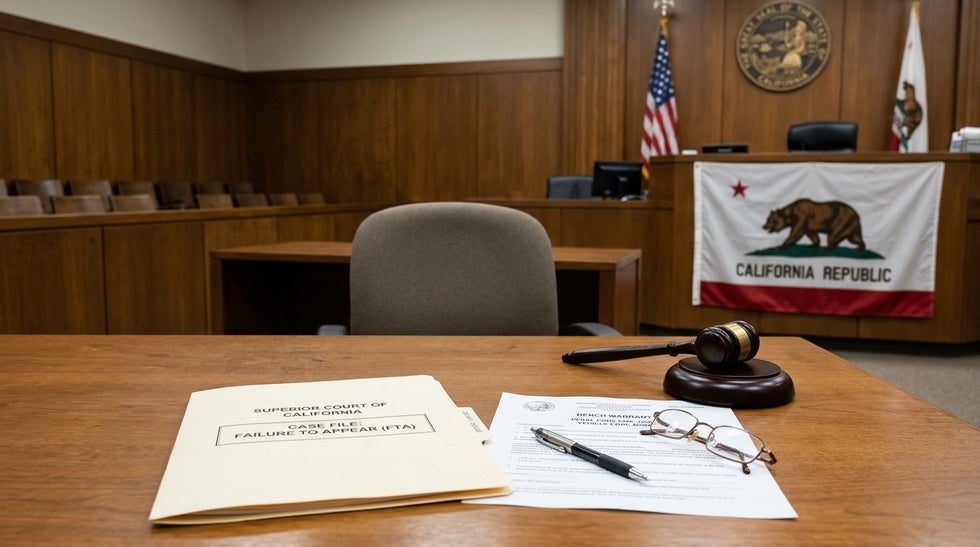
When a defendant fails to show up, the judge typically issues a Bench Warrant that enters law-enforcement databases and can be served anywhere, from a traffic stop to an airport. The court also notifies the bail agent that the bond may be forfeited.
Under Penal Code 1305, the court declares bail forfeited and starts a 180-day window for the defendant or surety to request reinstatement, plus five days for mailing the notice. If the bond is restored, the warrant can be recalled.
Bench Warrant Issuance and Enforcement
The judge signs a bench warrant that becomes an Arrest Warrant in the state's CJIS system, allowing police to arrest the defendant during any stop or routine encounter. Some judges may delay execution for a brief period to see if the person appears voluntarily.
Procedures for issuing and recalling these warrants follow felony hit and run under Vehicle Code 20001 guidelines, and the court can lift the warrant once the defendant appears or provides a satisfactory excuse.
Bail Forfeiture, 180-Day Reinstatement, and Penal Code 1305
If bail was posted, the clerk mails a notice of forfeiture to the bail agent and surety, triggering the 180-day reinstatement period. During this time the court may vacate the forfeiture if the defendant appears with a valid reason.
Should the defendant fail to act within the window, the court enters summary judgment against the surety, and the indemnitor, often a family member, must repay the full bond amount, creating a serious financial burden.
DMV License Hold Triggered by Vehicle Code 40509.5
In traffic cases, the court notifies the DMV under Vehicle Code 40509.5, which places an automatic hold on the driver's license until the court confirms the defendant has appeared or the case resolves.
Driving while the hold is active violates Vehicle Code 14601.1 and can add a misdemeanor charge, so it's critical to address the underlying appearance promptly to avoid further penalties.
The Three California Failure-to-Appear Crimes and Their Elements
California defines three separate FTA offenses, each tied to how the defendant was released and the underlying charge. Understanding which statute applies helps you and your attorney craft the right defense and avoid unnecessary felony exposure.
These crimes all require a willful intent to evade the court, but the law provides a presumption of willfulness after fourteen days, which can be rebutted with solid evidence of a legitimate excuse.
Penal Code 1320: FTA for Release on Own Recognizance
When a judge releases a defendant on their own recognizance, missing a court date can trigger a misdemeanor under Penal Code 1320. The charge hinges on a willful failure to appear, not merely a missed appointment.
Defendants can defeat the charge by showing they never received proper notice or were incapacitated, using medical records, custody documents, or travel logs as proof of a legitimate reason.
Penal Code 1320.5: Wobbler FTA for Bail in Felony Cases
If a defendant is out on bail for a felony, a missed appearance may lead to a wobbler offense under Penal Code 1320.5. The court can treat it as either a misdemeanor or a felony, depending on the circumstances.
The presumption of willfulness after fourteen days applies here as well, but a documented emergency or proof of mis-notification can persuade a judge to dismiss the charge or reduce it.
Vehicle Code 40508: Traffic-Ticket Failure to Appear
Even an infraction becomes a misdemeanor when the ticket signer willfully ignores the court date, as outlined in Vehicle Code 40508. The underlying traffic violation does not matter; the promise to appear is the key element.
Defenses focus on showing the failure was not intentional, perhaps the notice never arrived or a medical emergency prevented attendance, allowing the court to drop the misdemeanor charge.
|
Statute |
Release Type |
Potential Penalty |
Willfulness Presumption |
|---|---|---|---|
|
Penal Code 1320 |
Own recognizance |
Misdemeanor, up to 6 months |
After 14 days |
|
Penal Code 1320.5 |
Bail in felony case |
Wobbler, up to 1 year |
After 14 days |
|
Vehicle Code 40508 |
Traffic ticket |
Misdemeanor, up to 6 months |
After 14 days |
|
Vehicle Code 14601.1 |
Driving on hold |
Misdemeanor, up to 6 months |
Not applicable |
Understanding the Willfulness Element and How to Rebut It
The law treats a missed court date as willful if the defendant knowingly ignored the summons. Prosecutors rely on this presumption, but the defense can present evidence that the failure was accidental or unavoidable.
Courts look for clear proof, medical records, custody orders, or travel itineraries, that the defendant could not appear, which can overturn the presumption and lead to dismissal of the FTA charge.
Statutory Presumption of Willfulness After 14 Days
Both Penal Code 1320(b) and Penal Code 1320.5 state that failure to appear within fourteen days creates a rebuttable presumption of willful evasion. The burden then shifts to the defendant to produce evidence of a valid excuse.
When the defendant can show a documented emergency or lack of notice, the court may find the presumption defeated and reduce or dismiss the charge, sparing the defendant from additional penalties.
Documented Reasons That Defeat the Willfulness Presumption
Typical defenses include hospital records, child-care responsibilities, unexpected incarceration, or transportation failures. Providing copies of these documents to the court demonstrates that the missed appearance was not intentional. Readers comparing related California statutes also review our guide on California stalking charges under Penal Code 646.9.
Strong documentation often leads judges to recall the warrant and restore bail, especially when the defendant promptly contacts counsel and the bail agent after discovering the missed date.
Impact of Prompt Voluntary Appearance on Prosecutorial Discretion
When a defendant appears voluntarily and quickly after learning of the missed date, prosecutors frequently decline to file an FTA charge or may dismiss an existing one, recognizing the lack of evasive intent.
In many cases, a swift appearance combined with credible evidence can result in the court lifting the California robbery charges under Penal Code 211 related warrant, preserving the defendant's freedom while the underlying case proceeds.
Bail Forfeiture, Reinstatement, and the Role of the Surety
In my professional experience defending California felony cases, I have seen bail bonds evaporate because defendants missed a single hearing. The financial stakes are high, and the clock starts ticking immediately upon the missed date. Understanding the process helps you act fast.
When a defendant on bail misses a required appearance without sufficient excuse, the court must declare the bail forfeiture under Penal Code 1305. The clerk then mails notice of this forfeiture to the bail agent and the surety company. This action triggers a strict legal timeline.
Notice Requirements and the 180-Day Forfeiture Window
The forfeiture is not final immediately, giving the defendant a specific window to fix the issue. This period lasts 180 days, plus five days for mailing, creating a total of 185 days to act. Missing this deadline makes the debt permanent.
During this window, the court must vacate the forfeiture if the defendant appears in court or is surrendered. The defendant must also show a satisfactory excuse for the absence, or prove they are in custody elsewhere. This protects the surety from unfair loss.
How a Defendant Can Revoke Forfeiture and Reinstate Bail
Bail agents have a strong interest in locating the defendant during this critical window. They often call, visit, or arrange a surrender to save their own financial exposure. Working with the agent can help you avoid a full judgment against the bond.
If you missed a date while on bail, contact both your attorney and the bail agent immediately. Reinstating the bond and recalling the warrant can usually be handled together in one visit. This coordinated approach saves time and reduces attorney fees associated with prolonged legal battles.
Surety and Indemnitor Liability After Summary Judgment
If the 180-day period expires without resolution, the court enters summary judgment against the surety. The bail agent will then look to the indemnitor, often a family member who signed the contract, to repay the full amount. This liability can be severe and immediate.
Understanding the risk of a probation violation or new charges is essential when managing these situations. For serious financial crimes, see our guide on extortion and blackmail under Penal Code 518. Always review your specific bond contract terms carefully.
Driver's License Holds and Related Misdemeanor Risks
Missing a traffic court date triggers automatic consequences for your driving privileges. The court notifies the DMV, which places a hold on your license until the matter is resolved. This happens even for minor infractions.
Driving while this suspension is in effect creates a new, separate criminal charge. This adds a misdemeanor to your record, complicating your original case. You need to understand these risks before getting behind the wheel again.
DMV Suspension Process Under Vehicle Code 40509.5
In a traffic case, the court notifies the DMV under Vehicle Code 40509.5 when you fail to appear. The DMV then suspends your driving privilege until the court reports that you have appeared. This hold remains active until the court clears it.
Since 2017, California courts can no longer ask the DMV to suspend licenses for unpaid fines. However, failure to appear still triggers this specific hold. The distinction matters, as your license status depends entirely on your court attendance, not just payment.
Misdemeanor Penalty for Driving While Suspended (Vehicle Code 14601.1)
Driving while suspended under Vehicle Code 14601.1 is a separate misdemeanor offense. This charge can result in jail time, fines, and extended license suspension. It turns a simple missed date into a serious criminal problem.
Many clients in the Los Angeles Superior Court system face this exact scenario after ignoring a ticket. We handle these cases frequently, helping clients clear the suspension and avoid additional jail time. Do not risk driving until the hold is officially lifted.
Special Considerations for DUI Cases and Separate Administrative Holds
In a DUI case, a missed court date does not change the separate DMV administrative suspension. That process runs on its own timeline, independent of your criminal case. You may face two different suspensions at the same time.
Our California grand theft charges under Penal Code 487 page covers related property crimes, but DUI holds are unique. Understanding Vehicle Code 40508 helps you see how traffic violations escalate. Always check your DMV status after any court appearance.
How to Fix a Missed Court Date and Avoid Long-Term Consequences
I have seen this pattern many times when reviewing police reports: clients who wait too long face harsher outcomes. The problem gets harder the longer it waits, and the risk of arrest increases. Acting quickly is your best defense strategy.
If you missed a court date? Call before the warrant finds you. A person who walks in with counsel is more likely to be released immediately. Waiting for the police to find you often leads to jail booking.
Misdemeanor and Traffic Cases: Attorney Appearance Under Penal Code 977
In most misdemeanor and traffic cases, an attorney can contact the court and add the case to the calendar. Under Penal Code 977, the lawyer can appear on your behalf to request the warrant recall. This often allows the underlying matter to be resolved without you attending.
Our team can handle the how to fix a missed court date process efficiently for minor offenses. We present your reason for absence and ask the judge to dismiss the warrant. This saves you the stress of a personal court appearance.
Felony Cases: Required Personal Appearance and Bail Reinstatement
In felony cases, you must appear personally before the judge to resolve the warrant. An attorney can arrange a scheduled walk-in to present your reason for the absence. We will also ask the court to reinstate your original release or bail.
Bring documentation of your excuse, such as medical records or travel logs. This evidence helps prove you did not willfully evade the court. We argue against any bail increase to keep your release conditions manageable.
Preventing Future FTAs: Calendar Management and Court Notification Practices
A warrant recalled while the underlying case remains unresolved often leads to another missed date. You must address the root cause of the original absence to prevent repeat offenses. This includes managing your schedule and communication with your legal team.
Contact your bail agent if bail was posted, and keep all court documents organized. Use the Automated Reminder System or Text Message Alert Service if available in your county. Staying informed about every court date protects your freedom and your record.
Why Bulldog Law Is Your Best Ally for Resolving Failure-to-Appear Issues
Our California criminal defense team reviews every piece of evidence, from the original citation to the bench warrant, to protect your constitutional rights from the first phone call. We move quickly to stop the warrant and keep your bail intact.
We have helped dozens of clients across the state avoid jail and license holds. Call (888) 928-1609 now for a confidential case review and a clear plan of action.
Full statutory definitions and statewide court rules are maintained by Penal Code 1320 and Penal Code 1320.5 for criminal proceedings across all 58 California counties.
Frequently Asked Questions
What are the legal consequences of a Failure to Appear (FTA) in California?
A willful FTA on a misdemeanor case triggers Penal Code 1320(a), a misdemeanor punishable by up to one year in county jail and a fine. For felonies, Penal Code 1320(b) creates a wobbler that can become a felony.
If the original charge involved bail, the court forfeits the bail and may add a civil assessment of up to $100. A traffic-related FTA invokes Vehicle Code 40508(a), also a misdemeanor with up to six months jail and a $1,000 fine.
How does a bench warrant get issued for an FTA?
When a defendant fails to appear, the judge typically signs a bench warrant under the court's authority. The warrant stays active until the defendant is arrested or voluntarily appears.
The warrant can be served during any police contact, and it automatically triggers a bail forfeiture and, for traffic matters, a DMV notice that may suspend the driver's license.
Can a Failure to Appear be contested or withdrawn in California?
Yes. If the defendant appears promptly with a valid excuse, the court can recall the warrant, reinstate bail, and often dismiss the separate FTA charge.
A good-faith mistake or emergency can serve as a defense because the statutes require a “willful” intent to evade the court. Courts frequently dismiss the charge when the underlying case is resolved.
What are the typical fines and bond forfeiture amounts for an FTA in Los Angeles County?
For misdemeanor FTAs, judges may impose a fine up to $1,000 and a civil assessment of up to $100. Felony FTAs can lead to higher fines and loss of any posted bail.
Traffic FTAs under Vehicle Code 40508(a) also carry a $1,000 fine and may trigger a license suspension under Vehicle Code 40509.5 until the matter is resolved.
How do California courts notify defendants of upcoming court dates to prevent FTAs?
Courts send written notices by mail to the address on file and post the date on the online docket. For traffic citations, the notice also appears on the DMV record.
If the address is outdated, the defendant can request a change of address with the court to ensure future notices reach them and reduce the risk of an inadvertent FTA.
What steps can a defendant take to avoid a Failure to Appear penalty?
First, keep the court's address current and mark every docket date on a personal calendar. Second, contact an attorney immediately if a conflict arises; the lawyer can request a continuance.
Third, if a warrant is already issued, appear voluntarily with proof of a legitimate excuse. The court often recalls the warrant and may dismiss the separate FTA charge.
Does a missed court date automatically place a hold on my driver's license?
Only traffic-related FTAs trigger a DMV hold. The court notifies the DMV, which then suspends the license under Vehicle Code 40509.5 until the defendant appears.
For non-traffic FTAs, a license hold does not occur, but the warrant remains in law-enforcement databases and can affect future bail decisions.