
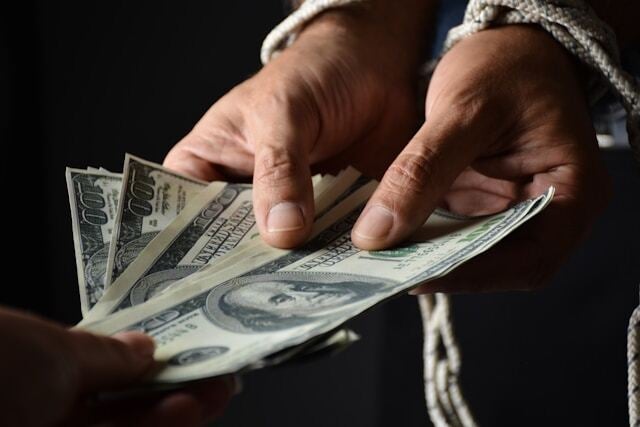
Law enforcementagencies across the United States are uncovering a sophisticated financial network where Mexican drug cartels leverage cryptocurrency to launder hundreds of millions of dollars in illegal proceeds. These criminal operations represent a significant evolution in how organized crime moves money, creating complex legal challenges for those caught in federal investigations.
The Digital Money Trail Begins in California
In May 2021, federal agents tracked Daniel Gonzalez through Pasadena streets as he transported approximately $600,000 in drug money inside a white Lexus. The cash was destined for conversion into cryptocurrency through a Chinese money broker operating under the alias "Dr. P," who had established connections with Sinaloa Cartel intermediaries.
When Drug Enforcement Administration agents attempted to stop Gonzalez, he rammed their vehicle before being apprehended with 46 bundles of sealed cash. This arrest became one piece of a much larger puzzle that federal prosecutors would assemble over the following years.
Similar enforcement actions unfolded across Los Angeles, Miami, and New York, revealing an interconnected web of cryptocurrency laundering operations serving Mexican and Colombian trafficking organizations. In Brooklyn, investigators documented couriers depositing $100,000 in cash through ATMs, with the funds quickly converted to digital assets and transferred through complex blockchain transactions.
Understanding the Cryptocurrency Advantage
For decades, drug trafficking organizations relied on traditional money laundering methods including cash smuggling, trade-based schemes, and front businesses.Cryptocurrency initially gained traction on darknet marketplaces during the 2010s, but traffickers remained hesitant due to price volatility and transaction traceability.
By 2018, the landscape transformed dramatically. Peer-to-peer cryptocurrency exchanges emerged with minimal identity verification requirements. Dollar-backed stablecoins like Tether eliminated volatility concerns. Perhaps most significantly, mixing services began offering transaction obfuscation by splitting, pooling, and shuffling digital tokens across multiple wallets and blockchain networks.
These technological developments lowered barriers to criminal adoption precisely as federal authorities intensified scrutiny of offshore banking, shell corporations, and bulk cash smuggling operations. Illicit cryptocurrency inflows quadrupled after 2020, reaching an estimated $40 to $51 billion in 2024 according to blockchain analytics firms. Nearly one quarter of this volume stems from transnational criminal networks.
The Mexico Connection
Federal investigations have identified organized crime groups in Mexico and Brazil as primary drivers of criminal cryptocurrency adoption. In December 2022, the DEA discovered that Jalisco Cartel New Generation used Binance, the world's largest cryptocurrency exchange, to process as much as $40 million in cocaine and methamphetamine proceeds.
The following year, the U.S. Treasury sanctioned Mario Jiménez Castro for laundering approximately $870,000 in fentanyl profits for the Chapitos faction of the Sinaloa Cartel through cryptocurrency transactions across New York, Boston, Denver, Nashville, Omaha, and Salt Lake City. Authorities offered a $1 million reward for information leading to his capture. Just over a year later, Castro was killed in Mexico's State of Mexico region.
While Castro's operation appeared modest in scale, it demonstrated a rapidly maturing model where criminal organizations shifted from experimental cryptocurrency use to industrial scale money laundering infrastructure.
Chinese Underground Banking Meets Mexican Cartels
Mexican trafficking networks forged partnerships with Chinese underground money launderers operating in the United States, creating what law enforcement describes as one of the most concerning threats in transnational organized crime.
Chinese brokers benefited from a steady supply of black market dollars to sell to clients evading China's $50,000 annual foreign exchange limit. Drug traffickers gained faster methods to convert U.S. currency into usable funds without physically moving cash across international borders.
The financial arrangement proved particularly advantageous because Chinese brokers could launder money for commissions below 6 percent, significantly undercutting the typical 10 to 15 percent rates. This competitive pricing was possible because brokers profited twice on the same dollars: first by cleaning drug proceeds, then by reselling dollars at premium rates to Chinese customers circumventing capital controls.
When COVID-19 border restrictions disrupted traditional cash smuggling routes in 2020, both sides accelerated their reliance on cryptocurrency methods, rapidly scaling high volume digital laundering operations across multiple U.S. cities.
Operation Fortune Runner Reveals the Scale
The June 2024 "Operation Fortune Runner" in California exposed the scope of a multi-year DEA investigation leading to pending prosecutions of dozens of alleged Los Angeles area Sinaloa Cartel associates laundering drug money through digital currencies.
The laundering scheme was allegedly orchestrated by Edgar Joel Martinez-Reyes and Peiji Tong. Tong reportedly traveled to Mexico to negotiate commission rates and secure money cleaning contracts directly with Sinaloa Cartel leadership. Between 2019 and 2024, the operation allegedly moved more than $50 million in illicit proceeds.
Authorities seized hundreds of kilograms of cocaine and methamphetamine while intercepting approximately $5 million in cash destined for laundering.
The operation followed a sophisticated pattern: cartel couriers collected drug proceeds and made structured ATM deposits in small increments to avoid reporting thresholds. Chinese brokers aggregated these funds, converted them to digital currencies, then used obfuscation tools including mixers and chain hopping techniques where funds move through multiple intermediate cryptocurrency wallets to obscure their origin. Finally, they routed the cleaned cryptocurrency back to clients for overseas cash outs or direct supplier payments.
Nationwide Cryptocurrency Hubs Emerge
Cryptocurrency laundering networks developed in cities beyond Los Angeles. In 2025, a Mexican broker known as "Meño" received an eight year prison sentence for laundering $5.4 million in cryptocurrency for Jalisco Cartel New Generation through networks spanning 13 U.S. cities.
Florida emerged as a hub rivaling Los Angeles in operational scale. From 2020 to 2024, Colombian national Nilson Sneyder Vasquez Duarte and approximately a dozen associates allegedly laundered tens of millions of dollars in South Florida drug money, routing cryptocurrency to trafficking groups in Mexico and Colombia.
Even after significant takedowns, the Florida hub continued functioning. Federal agents seized a record $10 million in Sinaloa Cartel cryptocurrency in Miami during July 2025, demonstrating the persistent nature of these criminal financial networks.
The Miami seizure may indicate a broader pattern: U.S. cash seizures have roughly halved since 2020, while cryptocurrency confiscations totaling $2.5 billion have exceeded physical currency seizures, reflecting what the DEA characterizes as criminal organizations prioritizing cryptocurrency over traditional cash based laundering methods.
The Chemical Supply Chain Connection
Evidence from federal court cases demonstrates that the same cryptocurrency network moving illegal proceeds also finances upstream production of synthetic opioids including fentanyl.
By 2023, U.S. indictments and sanctions were identifying China based chemical suppliers alongside their associated cryptocurrency wallets, while Mexico's Financial Intelligence Unit reported sharp increases in virtual asset alerts.
Cryptocurrency flows to chemical providers surged despite intensifying sanctions. Blockchain analytics firms found that supplier wallets received over $26 million in cryptocurrency from Mexican organized crime linked addresses in 2023, representing a 600 percent increase from 2022. On chain deposits more than doubled again by early 2024, with some firms estimating total 2024 flows at approximately $64 million.
Facing Federal Cryptocurrency Money Laundering Charges
Individuals charged in connection with cryptocurrency money laundering operations face serious federal penalties including lengthy prison sentences, substantial fines, and asset forfeiture. These cases involve complex financial evidence, blockchain analysis, and often multi district investigations spanning years.
At Bulldog Law, our experienced criminal defense attorneys understand the technical and legal complexities of cryptocurrency related prosecutions. We provide aggressive representation for clients facing federal money laundering charges, challenging evidence collection methods, questioning the sufficiency of blockchain analysis, and protecting constitutional rights throughout the investigation and trial process.
If you or someone you know is under investigation or has been charged with cryptocurrency money laundering or related federal offenses, contact our legal team immediately to discuss your defense options and protect your rights.
Comments
There are no comments for this post. Be the first and Add your Comment below.
Leave a Comment