
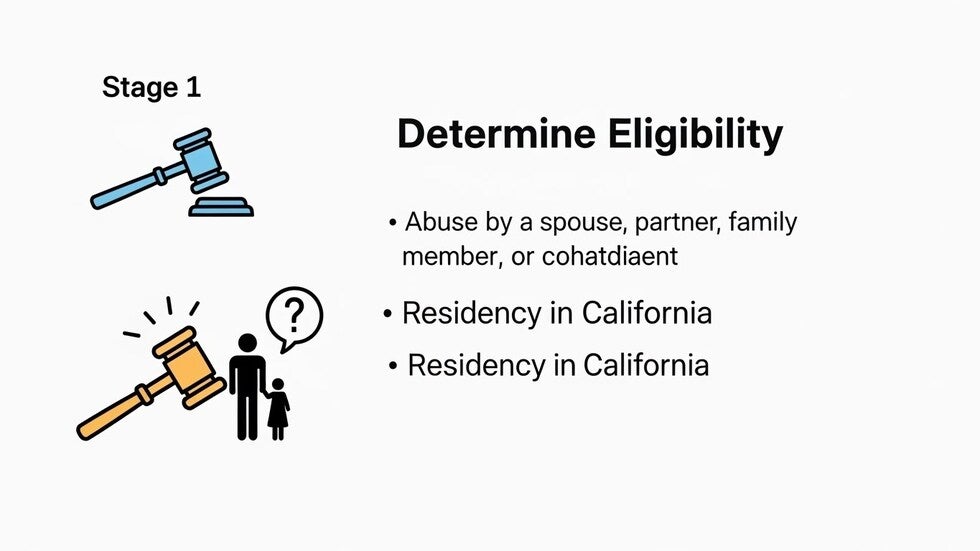
Domestic violence restraining orders (DVROs) provide crucial legal protection for victims of abuse in California. Understanding the legal process for obtaining these orders is essential for those seeking safety and protection. This comprehensive guide walks you through the procedures, requirements, and considerations for securing a DVRO under California's Domestic Violence Prevention Act (DVPA).
Required Forms for DVRO Applications
The first step in obtaining a DVRO is completing the necessary Judicial Council forms . California courts require specific forms for DVRO applications, including:
- DV-100: Request for Domestic Violence Restraining Order
- DV-110: Temporary Restraining Order
- DV-109: Notice of Court Hearing
- DV-130: Restraining Order After Hearing (to be completed after the hearing)
Depending on your specific situation, you may need additional forms such as:
- CLETS-001: Confidential CLETS Information Form
- DV-105: Request for Child Custody and Visitation Orders (if minor children are involved)
- DV-108: Request for Order: No Travel with Children (optional)
- Local forms, such as declarations regarding firearms
The Ex Parte Process: Seeking Immediate Protection
When immediate protection is needed, you can request a Temporary Restraining Order (TRO) through an ex parte application. These applications require specific timing and notice considerations:
- Applications submitted before 10:00 a.m. are typically reviewed the same day, with orders available by the afternoon
- Submissions after 2:00 p.m. may be ruled upon the next court day
Notice requirements are a critical aspect of the ex parte process:
- Notice must generally be given to the opposing party at least four hours before presenting the request
- Good cause may exist to excuse notice in certain circumstances
- If notice is excused, the applicant must provide a detailed explanation of why notice was not given
Evidence Standards for Restraining Orders
For ex parte residence exclusion orders (which remove the restrained person from a shared home), courts require a clear showing of assault, threats, or immediate harm. Declarations must include specific dates, detailed descriptions of incidents, and the harm caused or threatened.
The evidence standards differ between temporary and permanent restraining orders:
- Temporary Restraining Orders (TROs) are issued based on the evidence provided in the application and supporting declarations. These orders are enforceable by law enforcement and entered into the California Law Enforcement Telecommunications System (CLETS).
- Permanent Restraining Orders require a noticed hearing. The court evaluates all evidence presented, including any responses from the respondent. The standard of proof for issuing a restraining order is "clear and convincing evidence" of abuse or credible threats of harm.
Special Considerations in DVRO Cases
Mutual Restraining Orders
Courts only issue mutual restraining orders (protecting both parties from each other) under specific conditions. Both parties must present written evidence of abuse, and the court must find that both acted as primary aggressors, not in self-defense.
Firearms Restrictions
Firearms play an important role in DVRO proceedings:
- Applicants may file a declaration regarding the restrained party's firearms
- This declaration must be served with the restraining order
Service Requirements
Temporary restraining orders must be delivered to law enforcement for enforcement and must include a clear expiration date.
Modifications and Terminations
If circumstances change, parties can request modifications or terminations of existing orders. These requests must use specific forms, such as FL-300 for modifications and DV-400 for terminations.
Special Procedures for Minors
When the applicant is a minor under 12 years of age, additional protections apply. A guardian ad litem must be appointed to accompany the application process.
Practical Tips for DVRO Applicants
- Prepare thorough documentation: Record all incidents with dates, times, and detailed descriptions.
- Consider seeking legal assistance: While you can file for a DVRO without an attorney, legal representation can help navigate the complex process.
- Be specific in your declarations: Include concrete details about abuse incidents rather than general statements.
- Follow all court procedures carefully: Missing deadlines or failing to complete forms correctly can delay protection.
- Develop a safety plan: Work with domestic violence advocates to create a comprehensive safety strategy beyond legal protection.
What to Expect at the DVRO Hearing
The DVRO hearing is a critical opportunity to present your case. Here's what to expect:
- You'll have the chance to testify about the abuse you've experienced
- The restrained party will have an opportunity to respond
- The judge may ask questions of both parties
- If witnesses are available, they may be called to testify
- The judge will make a decision based on all evidence presented
After Obtaining a DVRO
Once a DVRO is issued, understanding enforcement is crucial:
- Keep copies of the order with you at all times
- Provide copies to relevant parties (schools, workplaces, etc.)
- Report any violations to law enforcement immediately
- Consider ongoing safety planning with domestic violence advocates
Conclusion
California's Domestic Violence Prevention Act provides vital protections through the DVRO process. By understanding these procedures, victims can take steps to secure their safety and well-being. The process balances the urgent need for protection with due process considerations for all parties involved.
If you or someone you know is experiencing domestic violence, remember that help is available. Organizations like The Bulldog Law Firm can provide guidance through the DVRO process and connect you with additional resources for support.