
Cannabis Sales and Transport in Humboldt County: HS § 11359, HS § 11360, and the Interstate Line
Selling cannabis in Humboldt County is usually just a misdemeanor. But the second that cannabis crosses a state line, everything changes.
That's not a county jail case anymore. That's a federal prison case. And in the Emerald Triangle, this one line in the law ends more lives than almost anything else we see.
Prop 64 made most cannabis sales and transport a small deal in California. Sell to a minor, run a huge unlicensed operation, or move cannabis over a state border, though, and the case turns serious fast. Cannabis still can't legally leave California, no matter what state law says. Even with all the changes to marijuana law over the past few years, that one rule has never moved.
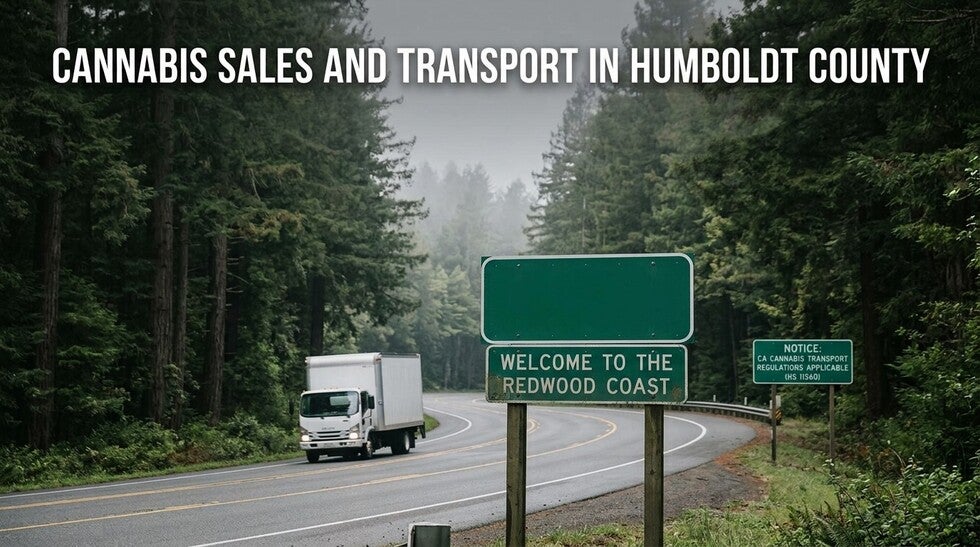
Here in Humboldt County, right in the heart of the Emerald Triangle, Highway 101 is the main road cannabis travels on. So almost every transport case starts with one question: was that traffic stop even legal? These cases land at the Humboldt County Superior Court in Eureka. If the cannabis crossed a state line, they can land in federal court instead. And once a case moves into federal court, the entire playbook changes, different rules, different judges, and far less room for error.
I've sat across the table from growers, sellers, and drivers who never expected their case to go this direction. Most of them made one wrong assumption early on, and by the time they realized it, the case had already grown teeth. That's exactly why understanding these lines, misdemeanor versus felony, state versus federal, matters so much before anything else happens.
Is Selling Cannabis a Felony in Humboldt County After Prop 64?
Usually, no. For most adults, unlicensed sale of cannabis under HS § 11359 and HS § 11360 is a misdemeanor. That means up to six months in county jail, not years in prison.
But there are a few triggers that turn it into a felony. Selling to a minor is one. Having certain prior serious felony convictions is another. So is running a large unlicensed operation. Prosecutors in Humboldt County look closely at quantity, location, and any sign of organized distribution when they decide which way to charge a case.
Licensed sale through the Department of Cannabis Control is completely legal. The charges we see are almost always aimed at unlicensed activity, not licensed shops doing things the right way. The Medicinal and Adult-Use Cannabis Regulation and Safety Act, known as MAUCRSA, sets out the licensing structure the California Department of Cannabis Control uses to regulate cultivation, distribution, manufacturing, retail, and testing statewide.
At the first meeting, we always check three things: what actually happened, whether any license was in place, and whether a felony trigger applies. Most of the time, our goal is simple, keep the case at the misdemeanor level and fight any felony trigger the prosecution tries to add.
I once sat with a client who assumed that because he'd grown cannabis in Humboldt for over a decade, the rules hadn't really changed for him. They had. Prop 64 rewrote the ground rules for everyone, longtime growers included, and the people who get hurt worst are usually the ones who never updated their understanding of the law.
What Counts as a Felony Trigger
A felony trigger isn't just one thing, it's a short list of specific circumstances that push a case out of misdemeanor territory. Selling to someone under 18 is the clearest one, and courts treat it seriously no matter the amount involved. A record of certain violent or serious prior felonies is another trigger that prosecutors will flag early.
The size and structure of the operation matters too. A backyard grow with a handful of plants looks very different to a prosecutor than a coordinated, large-scale unlicensed distribution ring. We walk through each of these triggers with every client so nobody is caught off guard by a charge they didn't see coming.
How Licensing Status Changes the Whole Case
Licensing status is often the single biggest factor in how a cannabis case unfolds. A person with a valid Department of Cannabis Control license operating within the terms of that license generally isn't looking at criminal exposure for the licensed activity itself.
Someone without a license, or operating outside what their license allows, is in a very different spot. If your operation could reasonably come into compliance, showing that path to the court and to prosecutors can meaningfully change how a case gets resolved. We've seen this shift outcomes more than once.
Why Is Transporting Cannabis Across State Lines Federal Trafficking?
Honestly, this is the part that catches the most people off guard. Cannabis remains classified as a Schedule I controlled substance under the federal Controlled Substances Act for any activity outside an FDA-approved product or a state-licensed medical program. In April 2026, the DEA and DOJ issued a final order moving certain FDA-approved marijuana products and state-licensed medical cannabis into Schedule III, but according to a legal analysis from Foley & Lardner, any cannabis outside that narrow carve-out, including state-licensed adult-use recreational cannabis, stays fully Schedule I. Prop 64 made cannabis legal in California, but that only covers what happens inside the state.
The moment cannabis crosses into Oregon, Nevada, or any other state, it becomes federal drug trafficking. Not a California misdemeanor. A federal case, in federal court, with federal prison time.
I've talked with people who truly believed that because they had it legal in California, they were safe moving it anywhere. That's one of the most common, and costly, misunderstandings I see in this line of work. It doesn't matter how careful the packaging is or how small the load looks, the moment that line is crossed, state law stops protecting you.
Humboldt County sits right where Highway 101 and Highway 299 connect to the wider interstate highway system. That makes it easy for a simple local trip to accidentally look like the start of an interstate run. So the very first thing we check in every case is where that cannabis was actually headed. If it never left California, we work to keep the case inside the state system, where the penalties are far lighter.
Why the Emerald Triangle Sees More of These Cases
Humboldt, Trinity, and Mendocino counties make up the Emerald Triangle, and this region has grown a large share of California's cannabis for decades. That history means federal agencies pay closer attention here than in most parts of the state.
Highway 101 runs straight through Humboldt County toward the Oregon border, and it's the natural route for anyone moving product north. That geography alone puts more eyes on local traffic than drivers might expect, which is part of why we take every stop this seriously.
What Federal Prosecutors Look For
Federal prosecutors generally build interstate trafficking cases around evidence of intent to cross state lines, not just proximity to a border. That can include travel patterns, communications, quantity, packaging built for transport, or destination information found on a phone or in paperwork.
We look at this evidence the same way federal prosecutors do, piece by piece, before deciding on a defense strategy. Sometimes what looks damaging at first glance turns out to have a simple, legal explanation once the full picture comes together.
Can Police Stop a Vehicle on Highway 101 for Suspected Cannabis Transport?
Only if they have a real reason. Not a hunch. Not just the smell of cannabis. They need reasonable suspicion tied to an actual traffic violation.
Highway 101 through Humboldt County gets watched closely by the Sheriff, CHP, and other agencies looking for cannabis transport. Every case that starts with a vehicle stop comes down to one question: was that stop actually legal?
Since Prop 64 passed, the smell of cannabis alone usually isn't enough to justify a search anymore. Legal amounts aren't a crime, so that old excuse doesn't carry the weight it used to. This is one of the more misunderstood shifts in California law, and it's a mistake we still see officers make on the road.
We check the real reason for every stop, compare it against dashcam footage, and challenge any search based only on smell. When a stop or search doesn't hold up, the evidence collected from it can get thrown out of the case entirely. If you're facing a related charge such as resisting arrest that came out of the same traffic stop, that charge deserves its own careful look too.
Reasonable Suspicion Versus a Hunch
Reasonable suspicion has to be specific and based on facts an officer can point to, a broken taillight, weaving across lanes, an expired tag. It can't just be a feeling that something looks off.
I once reviewed a case where the entire stop was justified in the report as "suspicious behavior," with nothing concrete behind it. That kind of vague language is exactly what a strong motion to suppress can pick apart.
What Happens When a Search Gets Thrown Out
When a court agrees that a search violated someone's rights, the evidence found during that search generally can't be used against them. In cannabis transport cases, that often means the actual product, packaging, and paperwork discovered in the vehicle.
Without that evidence, many prosecutors have little left to build a case on. This is why we spend so much time on the details of the stop itself before we even get to the substance of the charge.
What Is the Difference Between Licensed and Unlicensed Cannabis Operations in Humboldt County?
It's a big one. Licensed cannabis businesses working through the Department of Cannabis Control, under the state's MAUCRSA rules, plus local Humboldt County permits, are operating completely within the law.
Unlicensed sale or transport is what these charges actually target. A licensed grower, seller, or transporter following their license terms isn't breaking the law just by being in the cannabis business.
I once worked with a family whose farm had been in Humboldt County for two generations. They didn't fully understand which parts of their operation needed licensing and which didn't, and honestly, that confusion is more common than people think. If your activity could reasonably be brought into compliance, showing that path matters a lot for how your case turns out.
According to the California Department of Cannabis Control, the state's licensing system covers cultivation, distribution, manufacturing, retail, and testing, and operating without the right license is what triggers most enforcement action. We check the licensing picture for every Humboldt County case at the very first meeting.
The U.S. Drug Enforcement Administration still lists non-exempt cannabis, including all state-licensed adult-use recreational cannabis, as a Schedule I controlled substance under federal law, a distinction confirmed in the DEA and DOJ's own April 2026 final rule published in the Federal Register. That single fact is the reason a state-legal sale can still turn into a federal problem the moment it crosses a border. If your case also involves related charges like grand theft or a burglary allegation tied to a cannabis operation, we look at how those charges interact with the cannabis case as a whole.
Local Permits on Top of State Licenses
Humboldt County has its own local permitting process layered on top of state licensing, and both have to line up for an operation to be fully legal. A state license without the matching local permit, or the other way around, can still create legal exposure.
We've seen operators who assumed one covered the other. It doesn't. Checking both is a routine part of how we evaluate a case from day one.
Bringing an Operation Into Compliance
If part of an operation is unlicensed but could reasonably qualify for a license, that path forward matters to prosecutors and judges. It shows good faith and a genuine effort to operate lawfully, rather than an intent to skirt the rules.
We've guided clients through exactly this process, working alongside the compliance steps while also handling the criminal side of the case. It's not always simple, but it's often worth doing.
The Courthouse
Humboldt County Superior Court 825 Fifth Street, Eureka, CA 95501 (Criminal Division: 421 I Street, Eureka, CA 95501)
What Should You Do After a Cannabis Sales or Transport Arrest in Humboldt County?
Stay quiet. Don't talk about the cannabis, how much there was, or where it was headed.
Don't agree to any search of your vehicle, bags, or phone.
If you were stopped on Highway 101 or Highway 299, remember the exact reason the officer gave for the stop.
If there's any chance the cannabis was headed out of state, call us right away about federal exposure. Our federal drug trafficking defense guidance covers what to expect if your case moves into federal court.
Hold on to any license, permit, or transport paperwork you have.
Call (888) 928-1609.
Eureka: Eureka office | Arcata: Arcata office | Fortuna: Fortuna office | Ferndale: Ferndale | Trinidad: Trinidad | Rio Dell: Rio Dell | Blue Lake: Blue Lake | Humboldt County: Humboldt County office | (888) 928-1609
Why Staying Silent Protects You
Anything said at the scene, even something that feels harmless like explaining where you were headed, can end up as evidence later. Officers are trained to keep people talking, and it's a natural instinct to want to explain yourself.
Politely declining to answer questions beyond basic identification isn't an admission of guilt. It's a right, and it's one of the simplest ways to protect your own case before a lawyer is even involved.
Building the Record Right Away
Details fade fast, the exact words an officer used, which direction traffic was moving, whether a K-9 unit was called. Writing these down as soon as possible, even in a phone note the same day, can make a real difference weeks later.
Paperwork matters just as much. Any licensing documents, permits, or transport manifests should be kept safe and handed over to your attorney, not to police, unless your lawyer advises otherwise.
Final Thoughts on Cannabis Sales and Transport Charges
Getting arrested for cannabis sales or transport in Humboldt County isn't the end of the road. It usually means one of two things is true, and both are worth fighting over.
Either this stays a California misdemeanor, or it turns into something far bigger at the federal level. That one difference changes everything about how the case should be handled.
I've seen cases where a stop that looked airtight fell apart once we pulled the dashcam footage. I've also seen cases where a grower with the right paperwork walked away because we could show real compliance. The details always matter more than they first appear to.
Don't wait to get help. Footage gets deleted. Memories fade. The sooner someone starts working on your case, the more options stay open.
If you or someone you know is facing a cannabis sales or transport charge anywhere in Humboldt County, reach out today. Call (888) 928-1609 or visit The Bulldog Law to talk about your case. We'd love to hear what happened and help you figure out where things stand.
Cannabis Sales and Transport Questions in Humboldt County
Is selling cannabis a felony in Humboldt County after Prop 64?
Usually not. Unlicensed sale under HS § 11359 and HS § 11360 is a misdemeanor for most adults, carrying up to six months in county jail. It can turn into a felony if the sale was to a minor, if the person has certain prior serious convictions, or if it was part of a large unlicensed operation. Licensed sale through the Department of Cannabis Control is legal. We check the licensing status and any felony trigger at the first meeting, aiming to keep the case at the misdemeanor level wherever we can.
Why does crossing a state line turn a cannabis case into federal trafficking?
Because cannabis outside an FDA-approved product or a state-licensed medical program is still Schedule I under federal law, no matter what California says. Prop 64 only covers activity that stays inside the state. Cannabis grown here and moved toward another state becomes federal drug trafficking, prosecuted in federal court with penalties far heavier than anything under California's misdemeanor system. Humboldt County's spot in the Emerald Triangle, connected by Highway 101 and Highway 299 to the wider interstate system, means this risk comes up more here than in most places. We check where the cannabis was actually headed in every case, and if it stayed inside California, we work to keep it there.
Can police search my car just because it smells like cannabis?
Not anymore, in most cases. Since Prop 64 made legal amounts of cannabis, well, legal, the smell alone usually isn't enough reason for a search. Officers still need reasonable suspicion tied to an actual traffic violation. We check the real reason behind every stop, compare it to dashcam footage, and challenge searches that were based on smell alone. When a stop doesn't hold up, the evidence from it can be thrown out.
What's the difference between a licensed and unlicensed cannabis operation?
Licensed businesses working under the Department of Cannabis Control and the state's MAUCRSA rules, along with local Humboldt County permits, are operating legally. The charges under HS § 11359 and HS § 11360 target unlicensed sale or transport, not licensed activity. If your operation could reasonably become compliant, showing that path can shape how the case turns out. We look at the full licensing picture at the first meeting.
How fast do I need to talk to a lawyer after a cannabis transport arrest?
As soon as you can, the same day if possible. Dashcam footage doesn't stay around forever, and details fade fast from memory. If there's any chance of an interstate angle, that clock matters even more, since federal exposure changes the whole shape of a case. Call (888) 928-1609 and we'll start looking into your case right away.
For more on the Prop 64 sales and transport rules, interstate transport and federal trafficking risk, the Highway 101 stop and cannabis-smell search challenge, the licensed-versus-unlicensed line, and cannabis sales and transport defense at the Humboldt County Superior Court in Eureka, visit The Bulldog Law criminal defense blog.