
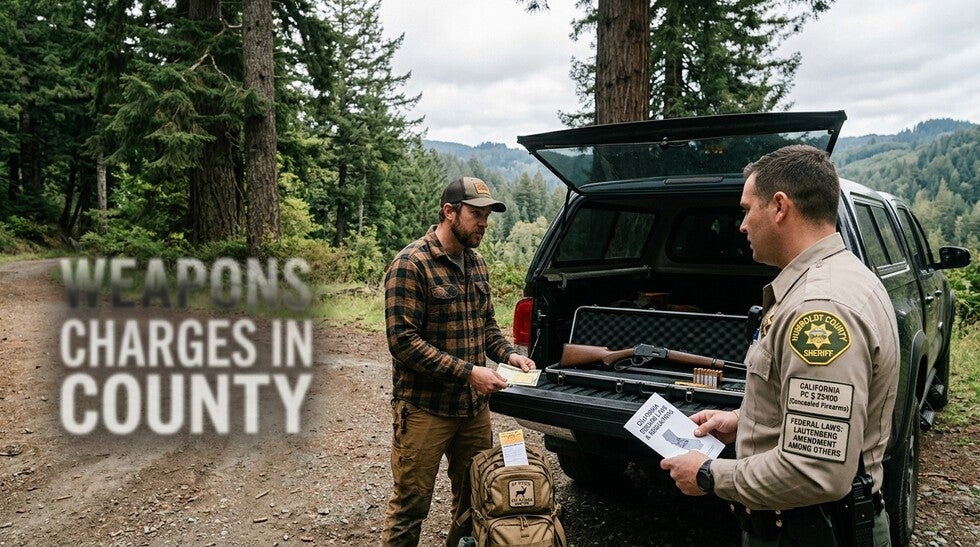
A gun in your truck can be totally legal one mile down the road, and a felony the next.
That's the reality of weapons law in Humboldt County. Most cases here come from three places: hunting trips, cannabis grow sites, and old domestic violence records that quietly follow people for life. Two of these, the grow-site guns and the old DV record, carry hidden federal danger that most people never see coming.
PC § 25400 bans carrying a concealed firearm, and it applies everywhere in Humboldt County. On Highway 101. On Highway 299. On every back road through the redwoods. The only truly safe way to move a firearm under state law is unloaded, locked up, and kept apart from the ammunition, out of reach from where you sit.
These cases usually go to the Humboldt County Superior Court in Eureka. But when guns show up at a cannabis grow site, the case can end up in federal court instead, and that's a different world entirely.
Why Are Firearms Found at a Cannabis Grow Site So Dangerous Legally in Humboldt County?
Because of one federal law: 18 U.S.C. § 924(c). If a gun is found "in furtherance of" drug activity, it can trigger this charge, and it doesn't care if the gun was bought legally or kept just to scare off wildlife.
Here's the part that shocks people. This charge adds a mandatory prison term on top of whatever the drug sentence already is. Not instead of it. On top of it. And if the gun was ever pulled out or fired, that extra time jumps even higher.
To be fair, most rural property owners in Humboldt County keep a firearm around for one simple reason, protection, from animals or from theft, out where help is far away. That's a completely normal, lawful reason to own a gun. The problem is proving that reason has nothing to do with any cannabis on the property.
I've seen cases where the gun had been in a family for generations, kept in a barn nowhere near the actual plants, and it still became the center of the entire federal case. That connection between the gun and the crop is exactly what we work to break apart from day one.
California also has its own armed-cultivation penalties layered on top of all this. Our job is simple to describe and hard to do: separate the firearm from the drug activity. We look at who owned it, why they had it, and whether there's any real link between the gun and the grow. We check every Humboldt County grow-site firearms case for this federal exposure at the very first meeting.
Can Hunters Be Charged for Transporting Firearms From Six Rivers National Forest?
Yes, even when the hunt itself was completely legal. This is one of the most common traps we see, and it's an honest mistake almost every time.
Six Rivers National Forest, Redwood National and State Parks, and the King Range all cover huge stretches of Humboldt County, and they're popular for deer and bear season. Federal forest rules let hunters carry a loaded firearm on that land during a lawful hunt.
Here's the catch. Once that hunter gets back in the truck and starts driving home, California's rules take over, not the forest's. A loaded rifle that was perfectly fine minutes ago on federal land can be a crime the moment it's driven down Highway 299 without being unloaded and locked away.
I once talked with a hunter who couldn't believe he was in trouble. He'd done everything right during the hunt itself. He just hadn't unloaded his rifle for the drive home, and that one detail was the whole case.
A valid license, tags, and a clean record won't make the charge disappear, but they matter a lot for how the case gets resolved. We always confirm exactly where the stop happened, federal land or public road, and pair that hunting context with a hard look at whether the stop itself was even legal.
According to the U.S. Forest Service, national forest land generally allows firearm possession for lawful activities like hunting, but state law still governs public roads and vehicle transport once you leave that land. That single line, forest rules versus road rules, is where most of these cases begin.
What Is the Lautenberg Trap and Who Does It Catch in Humboldt County?
It's a federal firearms ban that never goes away. Under 18 U.S.C. § 922(g)(9), anyone with a past qualifying domestic violence conviction, misdemeanor or felony, from any court, from any year, is permanently barred from having a firearm.
Permanently means permanently. It doesn't matter if California later restored your rights. It doesn't matter how long ago the case happened. Federal law simply doesn't recognize that restoration.
Honestly, this is where I've seen the most painful surprises. Someone pleads to a minor DV charge decades ago, moves on with life, and has no idea that a single old case still bars them from owning a gun forever under federal law.
In a county where hunting, rural living, and firearms are just part of everyday life, that old conviction can turn a routine traffic stop into a serious federal matter. If a Humboldt County stop turns up a firearm and there's a prior qualifying DV case anywhere in someone's history, the state PC § 25400 charge suddenly has a federal Lautenberg problem sitting underneath it.
The ATF confirms that a qualifying misdemeanor domestic violence conviction triggers this lifetime firearms ban, and it applies no matter which court entered the original conviction. We check for this exposure at the very first meeting, before any statement to police makes things worse.
The Courthouse
Humboldt County Superior Court
825 Fifth Street, Eureka, CA 95501
(Criminal Division: 421 I Street, Eureka, CA 95501)
What Should You Do After a Weapons Arrest in Humboldt County?
-
Don't say anything about the firearm, why you had it, or how it was stored, without a lawyer present.
-
Write down exactly how the firearm was stored at the moment of the stop.
-
If firearms were found near any cannabis grow, call us right away about federal exposure under 18 U.S.C. § 924(c).
-
If you have any prior domestic violence conviction, from any court, at any time, call us right away about Lautenberg exposure.
-
If this came from a hunting trip, hold onto your license and tags, and note whether you were on federal land or a public road.
-
Call (888) 928-1609.
Eureka: Eureka office | Arcata: Arcata office | Fortuna: Fortuna office | Ferndale: Ferndale | Trinidad: Trinidad | Rio Dell: Rio Dell | Blue Lake: Blue Lake | Humboldt County: Humboldt County office | (888) 928-1609
Final Thoughts on Weapons Charges in Humboldt County
A weapons charge in Humboldt County can look small on the surface and still hide something much bigger underneath. That's the hard truth about this area of law.
A hunter who forgot to unload a rifle for the drive home. A landowner keeping a gun near a crop that isn't even theirs. Someone with an old case they thought was long behind them. Each one of these stories can turn into a serious fight, and each one deserves a real defense.
The details are everything here. Was the gun tied to the drugs, or just nearby? Was the hunter on federal land or a public road? Is that old conviction even a qualifying one under federal law? These questions decide whether someone walks away with a misdemeanor or faces years in federal prison.
Don't wait to get help if you're facing any of this. Statements made early on can create federal exposure that didn't exist before you spoke. The sooner someone starts building your defense, the more paths stay open.
If you or someone you know is facing a weapons charge anywhere in Humboldt County, reach out today. Call (888) 928-1609 or visit The Bulldog Law to talk through what happened. We'd love to hear the details and help you understand where you stand.
Weapons Defense Questions in Humboldt County
Why are firearms found at a cannabis grow site treated so seriously?
Because a firearm found "in furtherance of" drug activity, even a firearm that was bought legally and kept for protection, can trigger a federal charge under 18 U.S.C. § 924(c). That charge adds a mandatory prison term on top of the underlying drug sentence, and the term jumps higher if the gun was ever brandished or fired. California adds its own armed-cultivation penalties on top of that. The defense is about separating the firearm from the drug activity showing lawful ownership, a real independent reason for having it, and no true connection to the grow. We check every grow-site firearms case for this exposure at the first meeting.
Can hunters get in trouble for bringing firearms home from Six Rivers National Forest?
Yes, and it happens more than people expect. Federal forest rules allow a loaded firearm during a lawful hunt on Six Rivers National Forest land. But California's transport rules unloaded, locked up, separate from ammunition take over the moment you're driving on a public road like Highway 299. A hunter who followed every federal rule during the hunt can still end up charged over how the rifle was handled on the drive home. A valid license and clean record help shape the outcome, though they don't erase the charge on their own. We always confirm exactly where the stop happened and challenge the stop itself wherever possible.
How does the Lautenberg ban affect people in Humboldt County?
Under 18 U.S.C. § 922(g)(9), any prior qualifying domestic violence conviction misdemeanor or felony, from any court, at any time bars someone from ever owning a firearm again under federal law. California state restoration of rights doesn't change this. In a county where hunting and rural firearm ownership are part of daily life, this old-conviction trap catches people who had no idea it still applied. We check for this exposure at the first meeting, before anything said to police makes the situation worse.
Is carrying a concealed firearm always illegal in Humboldt County?
Not always, but PC § 25400 bans it broadly across the county, whether you're on Highway 101, Highway 299, or any other public road. The only clearly legal way to transport a firearm under state law is unloaded, locked in a container, and kept away from ammunition, out of reach from the driver or passengers. We look closely at how the firearm was actually stored at the time of any stop, since that detail often decides the whole case.
What should I do if police find a firearm during a traffic stop?
Stay calm, and don't explain anything about the firearm without a lawyer there first. What you say in that moment can be used against you, and in grow-site or Lautenberg situations, a single statement can create federal exposure that didn't exist before you spoke. Write down how the firearm was stored as soon as you can afterward, and call us before making any statement to investigators.
For more on cannabis grow-site firearms and federal 18 U.S.C. § 924(c) exposure, Six Rivers National Forest hunting transport rules, the Lautenberg trap, and weapons defense at the Humboldt County Superior Court in Eureka, visit The Bulldog Law criminal defense blog.