
8 U.S.C. § 1324 Alien Smuggling, Illegal Entry, Illegal Reentry, and Related Federal Offenses Calexico Port of Entry Enforcement and Defense at the Southern District of California
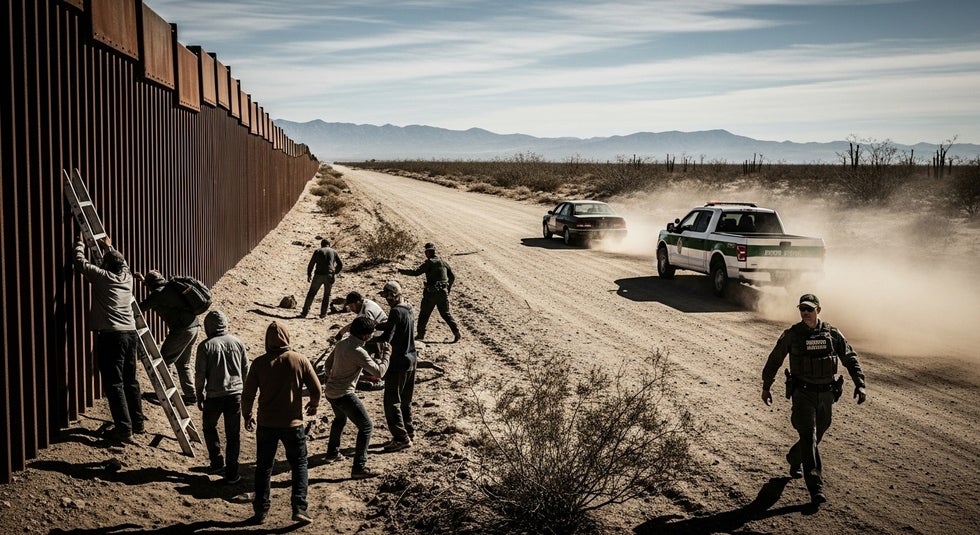
Imperial County's position on the United States-Mexico border makes it one of California's most active federal border crime enforcement zones. The Calexico ports of entry among the busiest land crossings in the Western Hemisphere are primary enforcement points for CBP's Office of Field Operations. Border Patrol's El Centro Sector covers the vast expanse of Imperial County between the ports of entry, including the remote desert terrain east of Calexico toward the Arizona border. Federal border crime prosecutions arising from Imperial County are handled at the U.S. District Court for the Southern District of California at 333 West Broadway in San Diego.
Federal border crimes encompass a broad range of offenses from alien smuggling under 8 U.S.C. § 1324 to illegal entry under § 1325 to illegal reentry under § 1326 to the transportation and harboring of undocumented persons. Each offense has specific elements that must be proved beyond a reasonable doubt, and each presents specific defense opportunities that experienced federal criminal defense counsel can exploit at 333 West Broadway.
The Bulldog Law defends federal border crime cases arising from Imperial County throughout the Southern District. For more on specific border crime defenses, visit our defense blog.
Primary Federal Border Crime Charges in Imperial County
8 U.S.C. § 1324 Alien Smuggling
The most serious border crime charge arising from Imperial County. Section 1324 prohibits knowingly bringing undocumented persons into the United States, transporting them within the country, harboring them, or encouraging or inducing their illegal entry. The charge has multiple levels of severity:
• Basic offense: Up to 5 years per person transported or harbored
• Financial gain enhancement: Up to 10 years when done for profit
• Serious bodily injury enhancement: Up to 20 years
• Death resulting: Up to life, or death penalty in cases involving murder
Alien smuggling prosecutions arising from the Calexico ports of entry require proof of knowing transportation of undocumented persons. The knowledge element what the defendant actually knew about the immigration status of the persons transported is the central battleground in every § 1324 defense at 333 West Broadway.
8 U.S.C. § 1325 Improper Entry by Alien
A misdemeanor for the first offense and a felony for subsequent offenses, § 1325 covers entry at any time or place other than a designated port of entry. Prosecuted in the Southern District from Imperial County cases when Border Patrol apprehends persons crossing the desert terrain between the Calexico ports and the Arizona border. The Bulldog Law analyzes every § 1325 case for defenses related to duress, necessity, and the specific circumstances of the crossing.
8 U.S.C. § 1326 Illegal Reentry After Deportation
A felony carrying up to 2 years, increased to up to 10 years if the prior removal followed a felony conviction and up to 20 years if it followed an aggravated felony conviction. A significant portion of Imperial County federal border crime prosecutions involve § 1326 charges. Defenses include challenging the validity of the underlying removal order, asserting that the prior removal was not properly executed, and identity challenges.
Transportation and Harboring 8 U.S.C. § 1324(a)(1)(A)(ii) and (iii)
Transportation and harboring charges under § 1324 are frequently brought against persons in Imperial County who transported undocumented individuals within the United States after they crossed the border. These charges arise from vehicle stops on Highway 111 and other Imperial County roads where Border Patrol or law enforcement encounters vehicles carrying undocumented persons. The knowledge element is critical: the prosecution must prove the defendant knew the passengers were undocumented.
THE KNOWLEDGE ELEMENT IMPERIAL COUNTY'S PRIMARY BORDER CRIME DEFENSE: Every § 1324 alien smuggling charge requires proof that the defendant knew the persons they transported, harbored, or brought into the country were undocumented. In Imperial County's tight-knit cross-border community where friends, family members, and community members regularly cross the Calexico ports of entry and travel throughout the county a person may transport someone they believed had legal status without knowing the passenger was undocumented. Challenging the knowledge element is the foundation of most § 1324 defenses at 333 West Broadway.
Federal Border Crime Enforcement in Imperial County's Unique Environment
Calexico Ports of Entry Primary Enforcement Zone
The Calexico East and Calexico West ports of entry are where CBP's Office of Field Operations conducts primary and secondary vehicle and pedestrian inspections. Alien smuggling arrests at the ports of entry typically involve concealed persons discovered in vehicles in hidden compartments, in the trunk, under cargo, or concealed in other ways. The driver's knowledge of the concealed person's presence and immigration status is the central issue we challenge at 333 West Broadway.
Border Patrol El Centro Sector Interior Enforcement
Border Patrol's El Centro Sector covers Imperial County's vast desert terrain between the ports of entry. Interior checkpoints on Highway 111 north of Calexico and other routes interdict vehicles moving northward from the border area. Apprehensions of both undocumented persons and alleged smugglers in the interior generate § 1325, § 1326, and § 1324 charges. Interior checkpoint stops must comply with constitutional requirements distinct from port of entry searches.
Desert Terrain Crossings and Remote Border Area
The remote desert terrain of eastern Imperial County stretching from east of Calexico toward the Arizona border generates § 1325 improper entry cases when Border Patrol apprehends persons who crossed outside of designated ports of entry. Cases involving crossing through extremely harsh desert terrain raise duress and necessity defenses when the crossing was driven by legitimate fear of persecution or immediate danger.
Community Member Transportation Cases
A significant category of Imperial County § 1324 cases involves community members often U.S. citizens or permanent residents who transported persons they believed had legal immigration status without knowing those passengers were undocumented. In Imperial County's cross-border community, where families span both sides of the Calexico-Mexicali border and where community members regularly assist each other with transportation, the knowledge element is frequently genuinely contestable.
Financial Gain vs. Family or Community Motivation
The § 1324 financial gain enhancement doubles the maximum penalty when smuggling is done for profit. The difference between a family member helping a relative cross and a professional smuggling operation is critical to sentencing exposure. We present evidence of family or community motivation in every Imperial County § 1324 case where the financial gain enhancement is alleged.
Where Federal Border Crime Cases Are Heard
U.S. District Court Southern District of California
333 West Broadway, San Diego, CA 92101
Federal border crime cases arising from Imperial County are prosecuted at 333 West Broadway in San Diego. Initial appearances before U.S. Magistrate Judges in San Diego typically occur within 24 to 48 hours of arrest. The Bulldog Law appears regularly at 333 West Broadway and knows the AUSAs and judges who handle Imperial County border crime cases in the Southern District.
Defense Strategies for Federal Border Crimes Arising from Imperial County
Knowledge Element Challenge
For § 1324 transportation and harboring cases, the prosecution must prove the defendant knew the persons transported or harbored were undocumented. We present evidence of the defendant's genuine belief in the passengers' lawful status, the circumstances of their relationship, and the absence of any indicators that would have alerted a reasonable person to the immigration status issue.
Fourth Amendment Port of Entry and Checkpoint Search Challenges
Port of entry searches and interior checkpoint stops are governed by specific constitutional frameworks. We challenge every search at the Calexico ports of entry and every interior Border Patrol checkpoint stop for compliance with applicable constitutional requirements.
Validity of Prior Removal Order § 1326 Defense
In illegal reentry cases, we challenge the validity of the underlying removal order. If the prior removal was unlawfully executed through a defective hearing, denial of due process, or improper procedure the prior order may be collaterally attacked, eliminating the predicate for the § 1326 charge at 333 West Broadway.
Duress and Necessity
When a person crossed the border under duress fleeing imminent danger of persecution, violence, or harm the duress or necessity defense may apply to § 1325 improper entry charges. We document the specific circumstances of the crossing and present evidence of the immediate danger that drove the decision to cross outside a designated port of entry.
Identity Defense
In cases where the government relies on biometric or documentary identification to establish that the defendant is the same person as the prior deportee, we challenge the reliability of the identification methodology and present evidence supporting identity confusion where applicable.
Arrested on Federal Border Charges in Imperial County? Act Immediately
1. Invoke your right to remain silent. Do not speak to CBP officers or Border Patrol agents without an attorney.
2. Do not consent to any search beyond what is legally required at the port of entry or checkpoint.
3. Federal border crime arrests from Imperial County result in initial appearances before a U.S. Magistrate Judge in San Diego, typically within 24 to 48 hours.
4. If you transported someone you believed had legal immigration status, preserve every communication with that person and every piece of evidence you had about their status.
5. Call The Bulldog Law at (888) 928-1609. Federal border crime cases move quickly from arrest to arraignment at 333 West Broadway. Early defense is critical.
Federal Border Crime Defense Across Imperial County
We also serve clients in Calipatria, Holtville, Imperial, Westmorland, and all Imperial County communities.
To speak with an Imperial County defense attorney, visit our Imperial County criminal law office or call (888) 928-1609.
Frequently Asked Questions: Federal Border Crimes in Imperial County
What is the knowledge element in alien smuggling cases from Imperial County?
Section 1324 requires proof that the defendant knowingly transported, harbored, or brought into the country persons the defendant knew were undocumented. In Imperial County's cross-border community where families and friends span both sides of the Calexico-Mexicali border a person who gave a ride to someone they believed had legal immigration status has not committed alien smuggling even if the passenger was undocumented.
We challenge the knowledge element in every § 1324 case by presenting evidence of the defendant's genuine belief in the passengers' lawful status.
What is the difference between § 1325 and § 1326 in Imperial County border cases?
Section 1325 covers improper entry crossing the border at a location other than a designated port of entry. It is a misdemeanor for the first offense and a felony for subsequent offenses. Section 1326 covers illegal reentry after having been formally deported or removed. It is a felony carrying up to 2 years for a first reentry, up to 10 years if the prior removal followed a felony conviction, and up to 20 years if it followed an aggravated felony. The Bulldog Law challenges every element of both charges at 333 West Broadway.
Can a prior deportation order be challenged in a § 1326 prosecution?
Yes. In illegal reentry prosecutions at 333 West Broadway, a defendant can collaterally attack the validity of the prior removal order. If the prior removal was executed through a defective hearing, denial of the right to counsel, improper waiver of appeal rights, or other procedural violation that denied due process, the removal order may be declared invalid eliminating the predicate for the § 1326 charge. We evaluate every prior removal order for collateral attack viability in every Imperial County § 1326 case.