
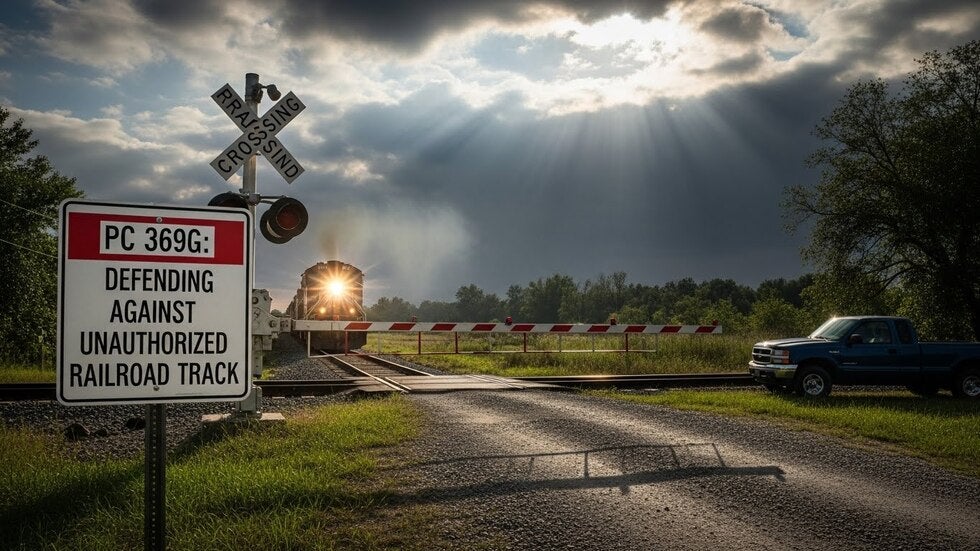
Railroad tracks might seem like shortcuts or alternative routes during traffic congestion, but using them without permission violates California Penal Code Section 369g. Whether you made a navigation error, followed incorrect GPS directions, or faced an emergency situation, being charged with unauthorized railroad track use creates serious legal consequences.
Understanding your defense options can make the difference between a conviction and a favorable outcome.
Understanding What PC 369g Prohibits
Penal Code Section 369g creates two distinct but related offenses involving unauthorized use of railroad tracks. Both subsections address similar conduct but apply to different types of rail systems throughout California.
Subsection (a) makes it a misdemeanor to ride, drive, or propel any vehicle upon and along railroad tracks through or over private railroad right of way without authorization from the railroad's superintendent or other officer in charge. This provision applies to traditional freight and passenger railroads operated by private companies or quasi public entities like Amtrak.
Subsection (b) addresses rail lines owned or operated by county transportation commissions or authorities. This includes light rail systems, metro lines, and other public transit rail networks. The prohibition remains the same: riding, driving, or propelling vehicles on these tracks without commission or authority authorization constitutes a misdemeanor.
Both provisions require that conduct occur on tracks and along the railroad's path. Simply crossing tracks at designated intersections doesn't violate this statute. The law targets sustained use of rail corridors as roadways, which creates extraordinary safety hazards and interferes with rail operations.
What Prosecutors Must Prove for Conviction
Like all criminal charges, PC 369g prosecutions require the state to establish specific elements beyond reasonable doubt. Understanding these requirements helps identify weaknesses in the prosecution's case and develop effective defense strategies.
First, prosecutors must prove you were riding, driving, or propelling a vehicle. This element seems straightforward but can raise questions about what constitutes a vehicle under the statute. While cars and trucks clearly qualify, the law's application to bicycles, scooters, or other conveyances may be less certain depending on how courts interpret the statute.
Second, the state must establish that your vehicle was upon and along railroad tracks. Brief crossings or momentary contact with tracks doesn't satisfy this element. The prosecution needs to show sustained travel along the rail corridor rather than perpendicular crossing or accidental encroachment.
Third, prosecutors must prove the tracks belong to a railroad's private right of way or are owned and operated by a county transportation commission or authority. Questions about ownership, operational responsibility, and whether specific sections constitute private right of way can become significant to your defense.
Fourth, the state must demonstrate you lacked authorization from appropriate officials. For private railroads, this means absence of permission from the superintendent or other officer in charge. For public transit systems, it requires showing the county transportation commission or authority didn't authorize your presence.
Finally, criminal intent becomes relevant. While the statute doesn't explicitly require specific intent, criminal prosecutions generally necessitate proving you acted willfully rather than accidentally. This intent requirement creates defense opportunities based on mistake, emergency, or other circumstances negating culpability.
Penalties and Consequences of PC 369g Violations
PC 369g violations constitute misdemeanors under California law. Misdemeanor convictions can result in up to six months in county jail, fines, probation, or combinations of these penalties. Courts consider various factors when determining appropriate sentences, including your criminal history, the circumstances of the violation, and whether anyone was endangered.
Beyond formal legal penalties, PC 369g convictions create collateral consequences affecting multiple aspects of your life. A misdemeanor on your record can impact employment opportunities, particularly in transportation industries or positions requiring background checks. Professional licenses may be jeopardized depending on your occupation and regulatory requirements.
Insurance rates often increase following any criminal conviction, especially those involving vehicle operation. Carriers view such convictions as indicators of risky behavior, potentially raising premiums substantially. Some insurers may decline to renew policies after certain types of convictions.
Civil liability represents another concern. If your unauthorized track use caused damage to railroad property or interfered with operations, the railroad or transit authority may pursue civil lawsuits seeking compensation. These claims proceed independently of criminal cases and can result in significant financial judgments.
Common Defense Strategies for PC 369g Charges
Every PC 369g case involves unique facts requiring individualized defense approaches. However, certain strategies consistently prove effective when challenging these charges.
Authorization Defenses
The statute requires lack of authorization, making any evidence of permission a complete defense. Your attorney investigates whether you actually had authorization that prosecutors overlooked or misunderstood.
Perhaps you work for a contractor performing maintenance on rail infrastructure. Maybe you have permits for utility work requiring track access. Even verbal authorization from someone you reasonably believed had authority can support defenses based on good faith belief in permission.
Documentation of any authorization becomes critical. Written permits, work orders, emails, or text messages showing communication with railroad or transit officials all potentially establish the authorization that negates criminal liability. Your attorney gathers and presents this evidence to demonstrate you weren't acting unlawfully.
Necessity and Emergency Circumstances
Emergency situations sometimes force drivers onto railroad tracks as the least dangerous option available. Perhaps you swerved to avoid a collision and ended up on tracks. Maybe medical emergency required using track access as the fastest route to reach help.
Necessity defenses require showing you faced immediate danger, had no reasonable legal alternative, and caused less harm through your actions than would have occurred otherwise. While these requirements set a high bar, genuine emergency circumstances can provide complete defenses to PC 369g charges.
Your attorney gathers evidence about the emergency you faced. Medical records, witness statements, photographs of accident scenes, and expert testimony may all support necessity arguments. For comprehensive guidance on emergency based defenses, understanding how courts evaluate these claims proves essential.
Mistake of Fact Defenses
Sometimes drivers end up on railroad tracks through honest mistakes about where they're going or what roads they're using. GPS navigation errors, confusing signage, or poorly marked access points can lead law abiding drivers onto rail corridors unintentionally.
Mistake of fact defenses require showing your misunderstanding was reasonable under the circumstances. If road markings were ambiguous, if GPS directed you onto what appeared to be a road, or if weather conditions obscured warning signs, these factors support mistake arguments.
Photographic evidence of the area where you accessed tracks helps establish reasonableness of any mistakes. Your attorney documents confusing intersections, inadequate signage, or visual similarities between legitimate roads and railroad access points. This evidence shows you weren't disregarding clear prohibitions but rather making understandable errors.
Challenging "Upon and Along" Requirements
The statute prohibits traveling upon and along tracks, not merely touching or crossing them. Your defense may argue that your conduct didn't meet this sustained use requirement.
Perhaps you only briefly entered railroad right of way while turning around. Maybe your vehicle became stuck on tracks accidentally and you were attempting to remove it. These situations differ from deliberately using rail corridors as roadways and may not satisfy statutory elements.
Video evidence, witness testimony, and physical evidence about exactly what occurred help establish the limited nature of your track contact. If prosecutors cannot prove sustained travel along the tracks, the charges may not be supported by sufficient evidence.
Questioning Track Ownership and Status
PC 369g applies to specific categories of railroad property. Your defense may challenge whether the location where you were cited actually qualifies under the statute.
Questions about whether particular track sections constitute private right of way can become legally complex. Some rail corridors cross public streets or involve shared use agreements complicating ownership questions. If the tracks where you traveled don't meet statutory definitions, PC 369g charges may be inappropriate.
Similarly, uncertainty about whether tracks are owned or operated by county transportation commissions versus other entities can impact prosecution viability. Your attorney researches property records, operational agreements, and regulatory filings to determine actual ownership and control of relevant rail sections.
Distinguishing PC 369g From Related Offenses
California law includes various statutes addressing railroad related conduct. Understanding how PC 369g differs from related offenses helps you recognize the specific nature of charges you're facing.
Trespassing statutes provide general prohibitions against unauthorized entry onto property. While trespassing charges might apply to railroad property, PC 369g specifically addresses vehicle use on tracks rather than mere presence on railroad land. This distinction matters because defenses and penalties differ between offenses.
Vehicle Code provisions govern conduct at railroad crossings, including requirements to stop for signals and avoid driving around gates. These violations address intersection conduct rather than sustained track use that PC 369g prohibits. You might face charges under both PC 369g and Vehicle Code sections if your conduct involved multiple violations.
Vandalism and property damage statutes may apply if track use caused damage to railroad infrastructure. These charges can accompany PC 369g allegations when unauthorized track use results in destruction of property. Each offense requires separate proof of distinct elements.
Investigation Process and Evidence Collection
PC 369g investigations typically begin when railroad employees, transit operators, or law enforcement observe vehicles on tracks. Understanding how evidence gets collected helps you and your attorney challenge its reliability and completeness.
Railroad companies often maintain surveillance systems monitoring their corridors. Camera footage may capture vehicles on tracks, providing prosecution evidence.
However, video quality, camera angles, and timing limitations can create questions about what footage actually shows. Your attorney reviews all video evidence for gaps, ambiguities, or exculpatory information.
Witness statements from train operators, track maintenance workers, or other observers form another evidence category. These witnesses may not have clearly observed all relevant details, especially regarding authorization or emergency circumstances. Cross examination can reveal limitations in witness observations and credibility issues.
Physical evidence including tire tracks, vehicle damage, or track damage may be documented. Your attorney examines how this evidence was collected, preserved, and analyzed. Mistakes in evidence handling can support motions to exclude unreliable physical evidence.
The Role of Intent in PC 369g Cases
While the statute doesn't explicitly require specific intent, criminal law principles generally necessitate proving you acted willfully. This intent requirement creates defense opportunities based on accident, mistake, or lack of awareness.
Perhaps you didn't realize you'd entered railroad property due to inadequate markings. Maybe you believed you were on a legitimate access road based on its appearance.
These circumstances suggest absence of the willful conduct typically required for misdemeanor convictions.
Your attorney presents evidence about your state of mind when the incident occurred. Testimony about what you believed, what you could see, and what information you had all inform whether you acted with culpable intent. Without proof of willful violation, conviction may not be warranted even if you were technically on tracks without authorization.
Negotiating Reduced Charges and Alternative Resolutions
Not every PC 369g case proceeds to trial. Experienced criminal defense attorneys often negotiate favorable resolutions through various mechanisms.
Prosecutors may agree to reduce charges to infractions or less serious misdemeanors when circumstances warrant leniency. First time offenders with clean records who made honest mistakes particularly benefit from such negotiations. Reductions can significantly minimize penalties and long term consequences.
Diversion programs offer alternatives to traditional prosecution in some jurisdictions. These programs typically require completing educational classes, community service, or other requirements. Successfully finishing diversion results in charge dismissal, leaving you without a conviction record.
Pretrial motions can also lead to favorable outcomes. If your attorney successfully moves to suppress evidence or dismiss charges based on legal deficiencies, the case may be resolved without trial or plea agreements. For insights into criminal case negotiations, understanding the pretrial process proves valuable.
Special Considerations for Transportation Workers
Some PC 369g defendants are transportation industry workers who accessed tracks for work related reasons. These cases present unique defense considerations requiring specialized approaches.
Employment records, work schedules, and job responsibilities help establish that your track presence related to legitimate work activities. Perhaps miscommunication with supervisors led to authorization confusion. Maybe you reasonably believed your employer had secured necessary permissions.
Union representatives and employment attorneys may need to coordinate with your criminal defense counsel. PC 369g charges can trigger workplace consequences including discipline or termination. Protecting both your liberty and your livelihood requires strategic legal representation addressing all implications.
Taking Action to Protect Your Rights
PC 369g charges carry serious consequences that extend beyond immediate criminal penalties. Your driving record, employment prospects, and personal freedom all face jeopardy when prosecuted under this statute.
Immediate consultation with an experienced criminal defense attorney provides the best protection for your interests. Your lawyer investigates circumstances surrounding your charges, identifies viable defenses, and develops comprehensive strategy for achieving the best possible outcome.
Don't attempt to explain yourself to prosecutors or investigators without legal counsel. Statements you make trying to clarify misunderstandings often become prosecution evidence. Let your attorney handle all communications while protecting your constitutional rights.
Time matters in building effective defenses. Evidence disappears, memories fade, and defense options narrow as cases age. Contact qualified legal counsel promptly to ensure your defense receives the thorough preparation necessary for success.