
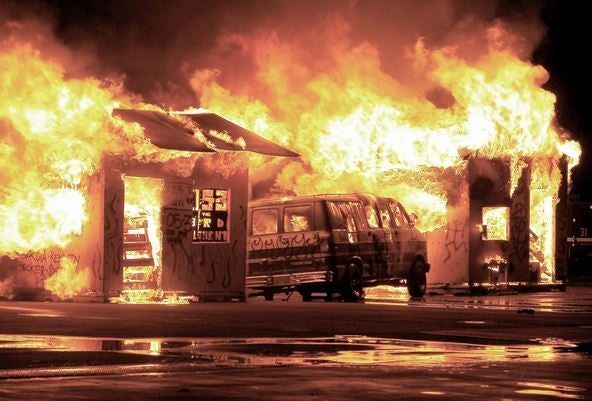
California takes fire related crimes extremely seriously, particularly when they occur during times of heightened vulnerability. Penal Code Section 454 establishes significantly harsher penalties for anyone who violates fire laws during a state of emergency or insurrection declared by the Governor. If you are facing charges under this statute, understanding the severe consequences and available defense strategies becomes absolutely critical to protecting your future.
Understanding California Penal Code Section 454
Penal Code Section 454 creates enhanced criminal penalties for fire related offenses committed during extraordinary circumstances when California is already facing crisis conditions. This law recognizes that fires set or caused during emergencies place additional strain on already stretched resources and endanger communities when they are most vulnerable. The statute applies specifically to violations of Section 451, which addresses arson with malicious intent, and Section 452, which covers recklessly caused fires. When these offenses occur within an area covered by a gubernatorial proclamation of emergency or insurrection, the penalties increase substantially compared to the base offenses.
For anyone facing charges under this section, the stakes could not be higher. These cases involve mandatory state prison sentences with no option for county jail, and probation becomes extremely difficult to obtain. Working with an experienced criminal defense attorney who understands the complexities of these enhanced charges is essential.
(Related context: SB 1242: Fire-Related Crimes)
When Does Section 454 Apply? State of Insurrection
The first trigger for enhanced penalties under Section 454 occurs when the Governor has proclaimed a state of insurrection pursuant to Section 143 of the Military and Veterans Code. This declaration typically happens during periods of civil unrest, riots, or other circumstances where public order has broken down to a degree requiring military intervention. From a defense perspective, the prosecution must prove that a valid state of insurrection was actually in effect at the time and location of the alleged offense. Your attorney should verify whether the Governor properly issued such a proclamation, whether it covered the specific geographic area where the incident occurred, and whether it remained in effect on the date in question.
These technical requirements matter. If the proclamation was invalid, had expired, or did not cover the relevant location, the enhanced penalties under Section 454 should not apply. Your defense team should obtain copies of all official proclamations and carefully review their terms, scope, and duration.
State of Emergency
The second and more common trigger involves a gubernatorial declaration of a state of emergency under Section 8625 of the Government Code. California governors frequently declare states of emergency in response to wildfires, earthquakes, floods, droughts, and other natural disasters, as well as public health crises and other threats to public safety. During recent years, many areas of California have been under emergency declarations for extended periods due to wildfire dangers, drought conditions, and pandemic concerns. This means that fire related offenses occurring in these areas during these timeframes could potentially face enhanced prosecution under Section 454.
However, the mere existence of an emergency declaration does not automatically mean Section 454 applies to your case. The prosecution must establish that the emergency proclamation specifically covered the location where the alleged offense occurred and that it was in effect at the relevant time. Emergency declarations often apply to specific counties or regions rather than the entire state. Your defense attorney should thoroughly investigate the scope and application of any emergency declaration. Were you within the geographic boundaries specified in the proclamation? Was the proclamation still active, or had it been lifted? Did the emergency declaration relate to fire dangers specifically, or was it for an unrelated matter? These details can make the difference between facing standard charges and the significantly enhanced penalties under Section 454.
The Harsh Penalties Under Section 454 Enhanced Sentences for Arson Offenses
For defendants convicted of violating subdivisions (a), (b), or (c) of Section 451 during a declared emergency or insurrection, Section 454 imposes imprisonment in state prison for five, seven, or nine years. These subdivisions cover the most serious arson offenses, including maliciously setting fires to structures, forest land, or property. These sentences represent substantial increases over the base penalties for Section 451 violations. The enhanced timeframes reflect the legislature's intent to severely punish those who intentionally set fires when communities are already struggling with emergency conditions. From a defense standpoint, challenging the underlying Section 451 charge becomes even more critical when Section 454 applies.
Can the prosecution prove malicious intent? Were you actually responsible for starting the fire? Could the fire have resulted from an accident or from someone else's actions? Every element of the arson charge must be scrutinized carefully given the severe consequences at stake.
Penalties for Other Fire Related Offenses
For all other persons described in subdivision (a) who commit fire violations during emergencies, Section 454 mandates imprisonment in state prison for three, five, or seven years. This provision primarily covers violations of Section 452, which addresses recklessly caused fires, as well as violations of the less serious subdivisions of Section 451.
(Related: PC 451.1 arson sentence enhancements)
Even these "lesser" enhanced penalties remain severe. A three year minimum state prison sentence for what might otherwise have been charged as a misdemeanor or lower level felony demonstrates how seriously California treats fire offenses during emergencies.
When defending against these charges, your attorney should carefully examine whether your conduct truly rose to the level of recklessness required under Section 452. Did you actually create a substantial and unjustifiable risk of fire? Were you aware of that risk? Could a reasonable person in your situation have acted differently? Challenging the recklessness element may be crucial to avoiding conviction under these enhanced provisions.
The Probation Restriction
One of the most challenging aspects of Section 454 involves the severe restrictions on granting probation. The statute explicitly states that probation shall not be granted to anyone convicted under this section except in unusual cases where the interests of justice would best be served. This language creates a strong presumption against probation. While not an absolute prohibition, it places the burden on the defense to demonstrate truly exceptional circumstances that justify probation rather than state prison. Courts interpret this provision strictly, making probation extremely difficult to obtain in Section 454 cases.
What Constitutes an Unusual Case?
California courts have established that unusual cases warranting probation must involve circumstances that distinguish the case from the ordinary run of Section 454 violations. Factors that courts may consider include: The defendant's minimal culpability or limited role in the offense. If you were peripherally involved or your conduct was significantly less serious than typical cases, this might support a probation grant. Extraordinary mitigating circumstances that explain the conduct without excusing it. Severe mental health issues, intellectual disabilities, or other circumstances that affected your judgment might be relevant. Evidence that you pose minimal risk to public safety and are amenable to rehabilitation.
A clean criminal record, strong community ties, employment history, and family support can all demonstrate that probation would serve the interests of justice.
Circumstances suggesting that the normal rationale for Section 454's enhanced penalties does not apply in your specific case. If, for example, the emergency declaration was for an unrelated matter and the fire posed no additional strain on emergency resources, this might distinguish your case. Your defense attorney should begin building a case for probation eligibility from the moment charges are filed.
This involves gathering character letters, documenting your personal history, obtaining mental health evaluations if relevant, and developing a comprehensive mitigation package that presents you as a complete person rather than just a defendant.
Defending Against Section 454 Charges Challenge the Applicability of Emergency Declarations
A primary defense strategy involves challenging whether Section 454 actually applies to your case. Your attorney should obtain and carefully review all relevant gubernatorial proclamations to determine their precise scope and duration. If the emergency declaration did not cover the specific location where the alleged offense occurred, or if it had expired by the relevant date, the enhanced penalties should not apply. Similarly, if multiple proclamations existed and the prosecution relies on the wrong one, this could provide grounds for reducing the charges to the base offenses under Sections 451 or 452.
Contest the Underlying Fire Offense
Since Section 454 only applies when there is a violation of Section 451 or 452, vigorously defending against the underlying charge remains essential. Can the prosecution prove beyond a reasonable doubt that you committed arson or recklessly caused a fire? What evidence links you to the fire's origin? Are there alternative explanations for how the fire started? Modern fire investigation techniques have evolved significantly, and many older methods have been discredited. Your defense team should consult with fire investigation experts who can review the evidence and potentially identify flaws in the prosecution's theory of how the fire began.
(On burden of proof: Evidence Code §520)
Examine the Chain of Causation
Even if a fire occurred, the prosecution must prove that your specific actions caused it. In many cases, fires result from complex interactions of multiple factors. Weather conditions, the presence of flammable materials, the actions of others, and pure accident can all contribute to fires. Your attorney should investigate all possible alternative causes and challenge the prosecution's causation evidence. If reasonable doubt exists about whether your conduct actually caused the fire, the charges should not stand.
Negotiate for Reduced Charges
In some situations, negotiating with prosecutors to reduce the charges before trial may be the most prudent strategy. An experienced criminal defense attorney may be able to convince prosecutors to file charges under the base statutes rather than Section 454, or to reduce arson charges to reckless burning charges. These negotiations require skill, credibility with prosecutors, and a thorough understanding of the strengths and weaknesses of the case. While not every case can be resolved through negotiation, exploring these options early can sometimes lead to significantly better outcomes.
The Importance of Expert Legal Representation
Cases involving Section 454 charges represent some of the most serious fire related prosecutions in California. The combination of mandatory state prison sentences, extremely limited probation eligibility, and enhanced terms means that your freedom hangs in the balance. These cases also tend to be factually and legally complex. They involve fire investigation science, interpretation of gubernatorial proclamations, analysis of emergency management laws, and sophisticated legal arguments about causation and intent. Successfully defending these charges requires an attorney with specific experience in fire related cases and the resources to retain qualified expert witnesses.
(Related: The Exclusionary Rule in criminal cases)
Do not wait to seek legal representation if you are under investigation or have been charged with fire offenses during an emergency declaration. Early intervention by a skilled attorney can make a critical difference in the outcome of your case. Your lawyer can begin investigating immediately, preserving evidence, identifying witnesses, and developing defense strategies before the prosecution's case solidifies.
Conclusion
California Penal Code Section 454 represents the state's determination to harshly punish fire related crimes during emergencies. However, being charged under this statute does not mean conviction is inevitable. Numerous defenses exist, from challenging the applicability of emergency declarations to contesting the underlying fire offense itself. Every case has unique circumstances that may support defense arguments or mitigation strategies.
With thorough investigation, expert assistance, and aggressive advocacy, it may be possible to achieve charge reductions, acquittals, or in truly unusual cases, probation instead of state prison. Your future depends on the quality of your legal defense. If you are facing charges under Section 454, contact an experienced criminal defense attorney immediately to discuss your options and begin building the strongest possible defense for your case. (Start here: Sacramento Criminal Law Office)