
By the The Bulldog Law Criminal Defense Team • Reviewed by a licensed California criminal defense attorney
Penal Code § 4573 makes it a STRAIGHT FELONY 2, 3, or 4 years to knowingly bring any controlled substance into a jail, prison, camp, or custodial facility, and its family covers the rest of the map: § 4573.5 (bringing alcohol or non-controlled drugs felony), § 4573.6 (POSSESSING controlled substances inside a facility felony 2/3/4), § 4573.9 (selling or furnishing inside harsher still), § 4574 (bringing WEAPONS felony), and § 4575 (wireless phones and devices the misdemeanor lane for the smuggled cell phone).
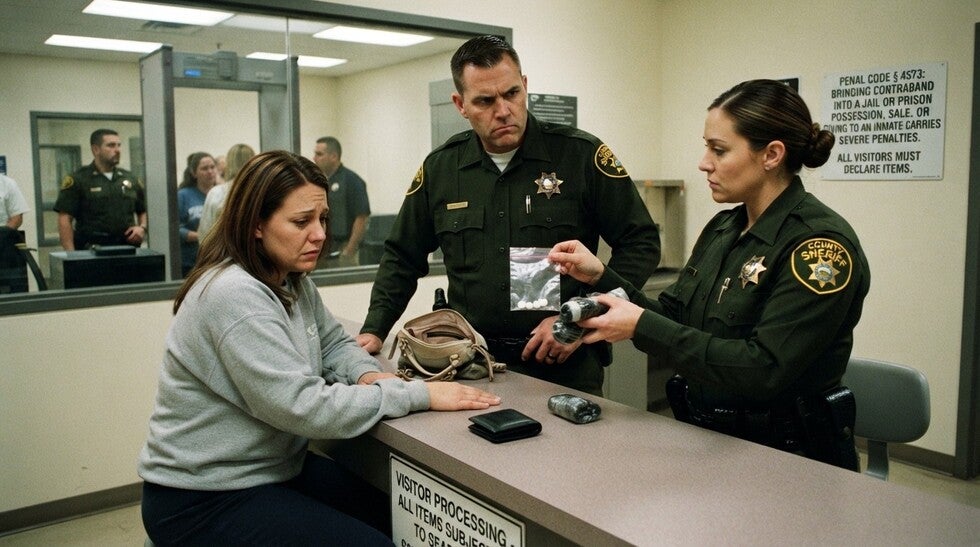
Two features make this family the shock of the criminal code. First, there is NO small version: Prop 47 does not reach these statutes, so the personal-use amount that would be a misdemeanor on the street or the joint that's LEGAL on the street becomes prison-exposure felony conduct at the facility door, which is why the posted signs at every entrance (‘bringing drugs into this facility is a felony') exist: they're building the knowledge element.
The defendants are visitors the girlfriend pressured into carrying, the parent with a forgotten vape cartridge, the friend with residue in a purse plus staff, and the throw-over and mail cases.
Second, THE BOOKING TRAP: California courts have held the bringing-in statutes apply even to ARRESTEES carried into jail with drugs still on them the person arrested with a baggie in a pocket who says nothing and is booked has ‘brought' drugs into the facility, stacking a § 4573.6 FELONY on top of what might have been simple misdemeanor possession which produces this page's single most valuable sentence: when officers ask, BEFORE you enter the jail, “Do you have anything on you?” that is the moment to DECLARE IT. Surrendering contraband at the door is how the in-custody felony is avoided; silence discovered inside is how it's charged.
The Bulldog Law's criminal defense practice companion to our jail visitation guides covers the family, the visitor and duress realities, and the defenses.
Who Actually Gets Charged and the Defenses That Fit
- The pressured visitor the defining pattern: inmates and their networks coerce girlfriends, mothers, and friends into carrying with threats to the inmate's safety, to the visitor, to family and DURESS is the defense built for it: help compelled by credible threat negates the crime, proven through the calls (recorded which cuts both ways), messages, and the relationship's documented pressure. If someone is pressuring you to carry RIGHT NOW: don't report it to the facility (anonymously if needed) and to counsel; the demand itself is evidence, and refusal plus reporting protects the inmate better than compliance ever could.
- The forgotten-item visitor the vape pen in a jacket, residue in a purse, the medication bottle with someone else's pills: KNOWLEDGE is an element genuinely forgotten and unknown items defeat it and the entry search's own circumstances (voluntary presentation, immediate acknowledgment, the item's location) prove the state of mind. The prevention rule our jail guides repeat: visit with a nearly-empty pockets policy ID, keys, nothing else.
- The booking-trap arrestee drugs on the person at arrest, silence through transport, discovery at booking: the stacked § 4573.6 felony. The protective move is the DECLARATION at the door and for those already charged, the defenses live in voluntariness (you didn't choose to enter the jail), the exact questions asked and warnings given, search and discovery circumstances, and the charging-equities argument that stacking a felony atop a street misdemeanor over involuntary entry deserves reduction arguments that succeed in negotiation regularly even where the doctrine is against you.
- Phones, weapons, and staff cases the smuggled phone (§ 4575) runs misdemeanor-lane with its own facility consequences; weapons (§ 4574) and staff-smuggling cases draw the family's harshest treatment plus employment and certification destruction; and every case in the family carries the same collateral: VISITING PRIVILEGES revoked - the consequence that outlasts many sentences for families built around visits.
How These Cases Resolve and the Rules for Every Visitor
The defense sequence: KNOWLEDGE and attribution first (whose item, who knew, where found), the SEARCH second (entry screenings are administrative but not limitless scope and consent get litigated), DURESS where the pressure pattern exists (with the recorded-call record obtained early), VOLUNTARINESS in booking-trap cases, and the standard audit throughout.
Resolution reality: these are felony filings with negotiation room first-offense pressured-visitor and forgotten-item cases resolve toward reduced counts, street-level possession substitutes, and probationary outcomes with counsel presenting the human context early, while smuggling-for-profit and staff cases draw the range's top.
The rules to give every family with someone inside, plainly: empty pockets at every visit; NOTHING passes hands not gum, not paper, not ‘just a photo' (the passing itself is the crime, contents notwithstanding); money goes on the books through official channels only; anything an inmate asks you to bring gets refused and, if pressure follows, reported; and if you're ever arrested with anything on you ANSWER THE DOOR QUESTION HONESTLY and surrender it before entry, because that one sentence is the difference between a citation-grade problem and a second felony. And if the charge has already landed on you or someone you love - treat it as the serious felony it is and get counsel before any statement: the human explanations that resolve these cases work through lawyers and collapse in interview rooms.
Frequently Asked Questions
Is bringing drugs into a jail really a felony even a small personal amount?
Yes straight felony, 2/3/4 years, and Prop 47's misdemeanor relief does NOT apply: the amount that's a citable misdemeanor on the street (or legal, in cannabis's case) is prison-exposure conduct at the facility door, for visitors, staff, and arrestees alike. The posted warnings at every entrance exist to prove you knew. What softens real cases: knowledge defenses for genuinely forgotten items, duress for pressured carriers, and negotiated reductions for first-offense human-context cases but the charging reality is harsh by design, because facilities treat contraband as a security crisis. The visitor's protection is absolute simplicity: ID and keys, nothing else, every visit.
I was arrested with drugs in my pocket and charged with bringing them into the jail how is that fair?
It's the booking trap: California courts have upheld charging arrestees under the custody-contraband statutes for drugs still on them at booking the theory being you ‘brought' them in stacking a felony (4573.6) atop what might have been simple possession. The defenses and arguments: voluntariness (you didn't choose to enter), the exact door-question-and-warning sequence (what were you asked, what were you told about declaring), search circumstances, and powerful charging-equity arguments that regularly produce reductions in negotiation. The prevention everyone should know BEFORE it matters: when officers ask ‘anything on you?' before entering the jail declare and surrender it. That honest sentence at the door is what prevents the second felony; silence is what creates it.
What happens if you bring a cell phone to an inmate?
The phone lane is misdemeanor-grade (PC 4575 up to six months for delivering or attempting to deliver a wireless device), with the inmate facing custody consequences and credit losses for possessing it lighter than the drug family on paper, but carrying the same collateral that hurts families most: visiting privileges revoked, sometimes permanently, plus prosecution exposure that turns every future visit into a search target. Staff who smuggle phones face termination and harsher treatment. The requests come constantly (‘just a cheap phone so we can talk') and the answer protects everyone: official channels only approved calls, mail, and tablets because the phone that connects you for a month can separate you for years.
An inmate is pressuring me or my family to bring things in what do we do?
Refuse and report it, because duress that isn't documented protects no one, while the demand itself, reported, protects everyone including the inmate. The pattern is common and coercive by design: threats to the inmate's safety, debts ‘you' now owe, escalating pressure on visits and calls and compliance doesn't end it, it deepens it (you become the proven mule). The moves: refuse plainly on the recorded call (the recording becomes YOUR evidence), report the pressure to the facility's investigative unit (anonymously if necessary) and to counsel, and if you already carried something under threat, get a lawyer NOW duress is a real defense, strongest when raised early with the pressure documented, weakest when it surfaces for the first time after arrest. Families survive incarceration through official channels; the smuggling economy consumes the people who love inmates most - stay entirely outside it.
The contraband statutes guard jail doors with felonies catching smugglers, pressured partners, and forgetful parents in the same net and the protections are almost embarrassingly simple: empty pockets, honest answers at the door, refusal and reporting when pressure comes. Teach them to everyone who visits. And when the net has already closed, the human context that explains these cases wins through counsel, never through interviews. The Bulldog Law's defense team handles the § 4573 family statewide. Contact the firm online or call (888) 928-1609.