
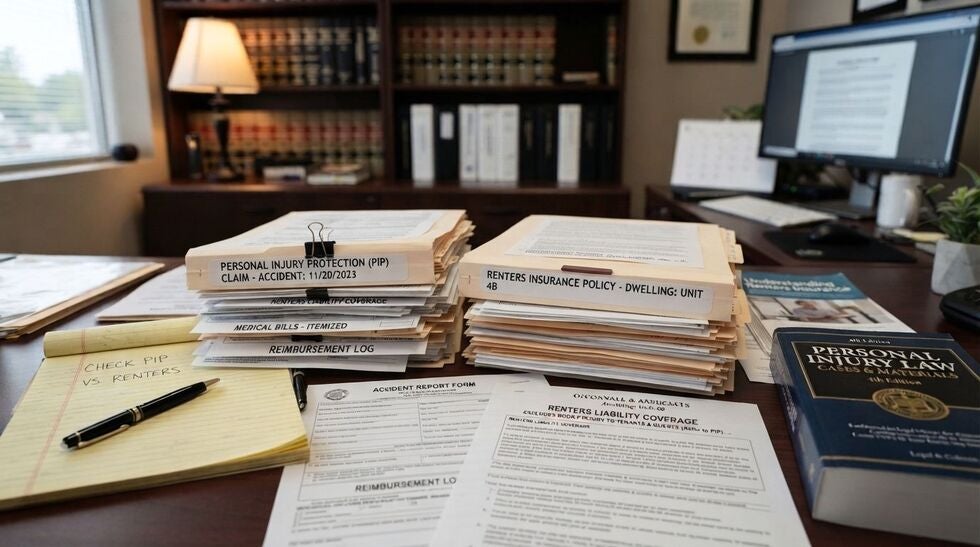
Most people don't think about their insurance until something goes wrong. Then, all of a sudden, you're sitting in an emergency room or talking to a claims adjuster, trying to figure out which policy covers what. It happens more than you'd think. Personal injury protection (PIP), MedPay, and renters insurance liability are three types of coverage that people often confuse, and in California especially, knowing the difference really matters.
This guide explains what each coverage does, how California's rules differ from most other states, and what you should know before you ever need to file a claim. This is general information, not legal or insurance advice; always check your specific policy.
What Is Personal Injury Protection (PIP)?
Personal injury protection (PIP) is a no-fault auto insurance coverage that pays for medical bills and sometimes lost wages for you and your passengers after a car accident, no matter who caused it.
In states that use it, PIP is designed to get money to injured people fast, without waiting to prove who was at fault. That's why it's called "no-fault" coverage. You don't have to go to court or argue with the other driver's insurance company to get your bills paid. Depending on the policy and state, PIP can cover medical treatment, a portion of lost income, essential services, and even funeral costs. It applies to the policyholder and often their passengers, no matter who was responsible for the crash.
How PIP Works in No-Fault States
In true no-fault states like Florida, Michigan, and New York, every driver is required to carry PIP. After a crash, each person turns to their own insurance first for medical costs, regardless of fault. Only in serious injury cases can someone step outside this system and sue the at-fault driver.
This approach speeds up medical payments and reduces the number of small lawsuits clogging the courts. But it also means your own coverage has to be strong enough to protect you, because you can't always rely on the other driver's policy.
Important for California: There Is No PIP Here
California is not a no-fault state and does not use or require PIP. Instead, California operates under a traditional fault-based system. If someone else causes a crash, you go after their insurance, not your own, for your medical expenses and other losses.
California drivers can, however, buy optional MedPay (Medical Payments) coverage, which works similarly to PIP by paying medical bills for you and your passengers regardless of fault. According to Nolo's guide to California car insurance requirements, MedPay is optional in California, it is not required by law. So if you want that quick, no-questions-asked coverage for medical bills after a crash, you need to add it yourself.
If you've been in a car accident and you're not sure what coverage applies to your situation, it's worth talking to a personal injury attorney who knows California law.
What Does PIP (or MedPay) Actually Cover?
PIP and California's MedPay both pay medical costs regardless of fault. They cover you and your passengers quickly, without first needing to determine who caused the crash. Here's what coverage commonly includes:
Medical Expenses and Passenger Coverage
Both PIP and MedPay cover hospital bills, doctor visits, emergency care, surgery, and other treatment costs for injuries from the accident, up to the policy limit. Importantly, passengers in your vehicle are also typically covered, not just the driver.
That's a key detail. If a friend is riding with you and gets hurt in a crash that wasn't your fault, MedPay can still pay their medical bills while the fault question gets sorted out. That can make a big difference when bills start arriving fast.
Lost Wages, PIP vs. MedPay
Here's where PIP and MedPay differ in a meaningful way. True PIP, in states that have it, can also cover a portion of lost income if your injuries keep you from working. California's MedPay, by contrast, is focused on medical costs only. It doesn't replace lost wages.
So if you're a California driver who is injured in a crash and misses two weeks of work, your MedPay won't cover that gap. You'd need to look to the at-fault driver's liability policy, your own uninsured/underinsured motorist coverage, or other sources for lost income.
Does Renters Insurance Cover Personal Injury?
Honestly, this is one of the most misunderstood questions in insurance. The short answer: renters insurance covers personal injury liability, meaning injuries you cause to others, but it does not cover your own injuries.
A standard renters insurance policy includes personal liability coverage. If a guest is injured in your rented home, or you accidentally injure someone or damage their property somewhere else, that coverage can pay the injured person's damages and your legal defense costs if they make a claim or sue you.
What the Liability Portion of Renters Insurance Covers
Many policies also include a small "medical payments to others" provision. This pays minor medical bills for a guest hurt on your property, regardless of fault, up to a usually small limit (often $1,000 to $5,000). It's designed for situations like a friend who slips on your wet floor and needs a few stitches. The idea is to handle small claims quickly and friendly, without anyone having to prove fault.
This is different from your personal liability coverage, which kicks in for bigger claims where someone argues you were legally responsible for their injury. If that person sues you, the liability portion pays for both their damages and your legal defense, up to your policy limits.
What Renters Insurance Does Not Cover
What renters insurance does not do is pay for your own injuries. If you hurt yourself at home, that's a matter for your health insurance, not your renters policy. Renters insurance isn't designed to be personal health coverage. It protects others from you, not you from accidents.
It also won't cover injuries from car accidents (those go through auto insurance), injuries from intentional acts, or injuries that happen in common areas like hallways or parking lots managed by the landlord. In those situations, a premises liability claim against the property owner may be the right path. You can learn more about how these situations work on our slip-and-fall injury page.
What Is the Difference Between These Coverages?
This is really the heart of it. Each coverage protects a different person in a different situation, and they don't overlap the way people often assume.
PIP / MedPay: Protects You After a Car Accident
PIP and MedPay cover your medical bills, and your passengers' bills, after a car accident, regardless of fault. They protect you, the policyholder. In California, this is optional MedPay coverage.
Renters Liability: Protects Others From You
Renters liability coverage pays when someone else is injured or their property is damaged and you are at fault. It protects others and shields you from a claim or lawsuit. It doesn't matter whether you're found to be 100% at fault or just partially responsible, the policy is there to cover your legal exposure.
According to the California Department of Insurance's consumer auto guide, medical expense coverage such as MedPay "pays for medical costs that you and your passengers incur in an accident... regardless of fault." Renters insurance liability, on the other hand, is triggered when another party brings a claim against you.
Health Insurance: Covers You for Everything Else
Health insurance pays for your own injuries and illnesses, generally, including injuries at home, injuries from accidents, and any medical situation not covered by your auto policy. If you slip and fall in your own kitchen, your health insurance is what picks up the bill.
Understanding this three-way split helps you see why people get confused. You might need all three kinds of coverage at different times, and none of them fully replaces the others.
If you were seriously hurt and aren't sure who is responsible or which insurance should apply, The Bulldog Law's California personal injury attorneys can help you sort through those questions.
When Insurance Isn't Enough: Pursuing a Personal Injury Claim
Sometimes an insurance policy, whether it's the other driver's liability coverage, your MedPay, or even someone's renters insurance, doesn't cover everything you lost. Medical bills pile up. You miss work. You're dealing with pain that affects your daily life.
That's when it makes sense to explore a personal injury claim against the at-fault party directly. Understanding how negligence works in California personal injury cases, including the four key elements of duty, breach, causation, and damages, is essential to knowing whether you have a strong claim.
California also uses a comparative fault system, which means you can still recover compensation even if you were partly responsible for what happened. Our blog post on contributory negligence and how it affects your case breaks down exactly how this works and what it could mean for your recovery.
If you need to discuss an injury claim with someone who knows California law, The Bulldog Law is here to help. Reach us at (888) 928-1609.
Frequently Asked Questions
Does California have personal injury protection (PIP)?
No. California is not a no-fault state and does not use or require PIP. Instead, California drivers can purchase optional MedPay (Medical Payments) coverage, which pays medical bills for the policyholder and passengers after an accident regardless of who was at fault. MedPay serves a similar function to PIP but is optional in California, so drivers should check whether they have added it to their auto policy.
Does renters insurance cover my own injuries?
No. Renters insurance does not cover your own injuries, those are covered by your health insurance. What renters insurance covers is personal liability: if a guest is injured in your home or you accidentally injure someone or damage their property, the policy can pay their damages and your legal defense if they make a claim. Many policies also include a small medical-payments-to-others coverage for minor injuries to guests, but not for injuries to you or your household members.
What is the difference between PIP and liability coverage?
PIP (or California's MedPay) pays for your own and your passengers' medical expenses after a car accident regardless of fault, it protects you. Liability coverage, by contrast, pays when you are at fault for injuring someone else or damaging their property, it protects the other person and shields you from their claim. The two work in opposite directions: one covers your injuries, the other covers harm you cause to others.
Can I use MedPay and health insurance at the same time?
Yes, in many cases. If your MedPay limits are reached, your health insurance can pick up remaining costs as secondary coverage. The two work together rather than against each other. MedPay often has no deductible and pays quickly, which makes it a useful first layer of coverage while other claims are still being processed.
What should I do if someone gets injured in my rental home?
First, make sure the person gets medical care right away. Then, contact your renters insurance company and report the incident. Your medical payments to others coverage may handle small bills quickly, and your personal liability coverage is there for more serious claims or lawsuits. If the situation is complex, for example, if a lawsuit is threatened or the injuries are severe, it's a good idea to speak with a personal injury attorney before making any statements to insurers.
Knowing whether you have PIP or MedPay, and understanding what your renters liability coverage does, helps you avoid surprises after an accident. This article is general information, not legal or insurance advice; always review your specific policy and its limits.
For more on personal injury and insurance questions, visit The Bulldog Law blog. To discuss an injury claim, you can reach The Bulldog Law at (888) 928-1609.