
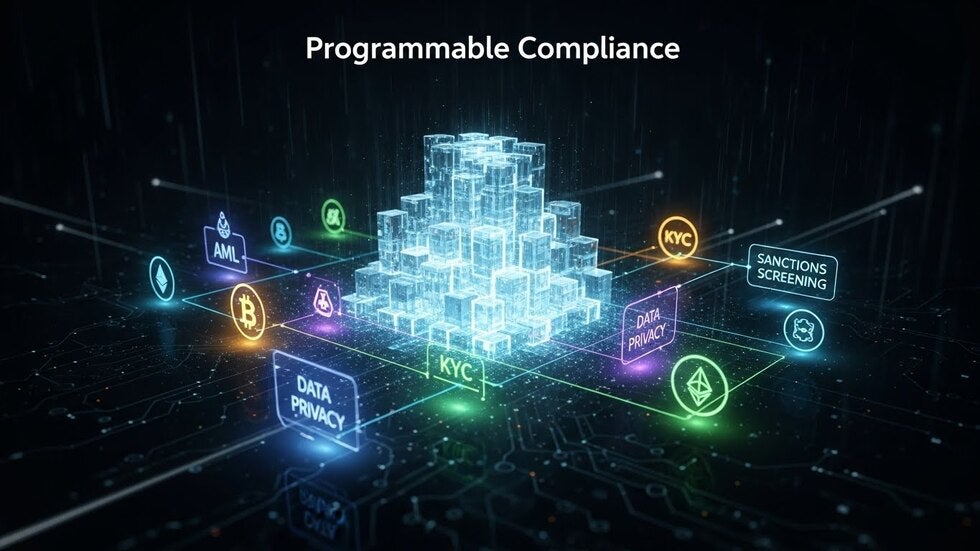
The integration of compliance mechanisms directly into cryptocurrency token architecture represents a fundamental shift from reactive regulatory oversight to proactive, automated enforcement that could reshape global digital asset markets.
This approach embeds regulatory requirements at the smart contract level, creating tokens that automatically enforce compliance rules without requiring manual intervention from intermediaries or regulatory authorities. Understanding the legal implications of programmable compliance is essential for issuers, investors, and regulators navigating this emerging technology.
The Evolution from External to Embedded Compliance
Traditional cryptocurrency compliance relies on external verification systems that create friction, delays, and costs at every transaction point. Financial institutions must repeatedly verify counter party credentials, regulatory status, and jurisdictional compliance for each transaction, creating bottlenecks that limit market efficiency and increase operational expenses.
Programmable compliance transforms regulatory requirements from external constraints into intrinsic token properties that travel with assets across different platforms, jurisdictions, and use cases. Smart contracts can automatically verify investor accreditation, enforce holding periods, and restrict transfers based on jurisdictional requirements without human intervention.
This technological shift creates new legal questions about liability allocation, regulatory oversight, and due process protection that existing legal frameworks may not adequately address. When compliance becomes automated, traditional concepts of intent, discretion, and human judgment in regulatory enforcement may require reconsideration.
The immutable nature of smart contract compliance creates both benefits and risks because programmed rules cannot be easily modified to address changing circumstances, regulatory updates, or unique situations that may warrant different treatment. This inflexibility requires careful initial design and comprehensive legal analysis.
Identity verification at the token level introduces privacy concerns because compliance data must be accessible to smart contracts while protecting sensitive personal information. Technical solutions like zero knowledge proofs may enable compliance verification without exposing private data, but these approaches require careful legal structuring.
At Bulldog Law, we help clients design programmable compliance systems that balance automation benefits with regulatory requirements, due process protections, and privacy considerations while maintaining appropriate flexibility for changing legal requirements.
Identity Oracle Systems and Legal Framework Integration
Identity oracles serve as critical infrastructure for programmable compliance by providing verified attestations about investor status, regulatory compliance, and jurisdictional eligibility that smart contracts can automatically enforce. These systems must integrate seamlessly with existing legal frameworks while maintaining appropriate privacy protections and accuracy standards.
Know Your Customer and Anti Money Laundering verification through identity oracles requires compliance with existing regulatory requirements while adapting to decentralized verification models. Traditional KYC/AML procedures assume centralized institutions with clear accountability, but oracle based systems may distribute responsibility among multiple parties.
Investor accreditation verification through automated systems must comply with securities law requirements while providing appropriate privacy protections and preventing unauthorized access to sensitive financial information. The Securities and Exchange Commission has specific requirements for accreditation verification that automated systems must satisfy.
Jurisdictional compliance enforcement through smart contracts raises questions about the application of local laws to global networks and whether automated enforcement mechanisms satisfy legal requirements for regulatory compliance. Different jurisdictions may have conflicting requirements that automated systems struggle to reconcile.
Data accuracy and liability allocation become critical when identity oracles provide incorrect information that results in improper token transfers or regulatory violations. Clear contractual frameworks must address responsibility for oracle errors while providing appropriate recourse for affected parties.
Privacy protection and data minimization requirements may conflict with compliance verification needs, requiring sophisticated technical solutions that provide necessary regulatory information while protecting personal data from unauthorized access or misuse.
Our digital identity law practice helps clients develop identity oracle systems that comply with applicable privacy laws, regulatory requirements, and data protection standards while enabling effective automated compliance enforcement.
Securities Law Implications and Regulatory Compliance
The integration of compliance mechanisms into cryptocurrency tokens creates complex securities law questions that require careful analysis of how automated enforcement affects traditional regulatory frameworks and investor protection requirements.
Securities registration requirements continue applying to programmable compliance tokens, but the automated nature of compliance enforcement may affect how registration obligations are satisfied and what disclosure requirements apply to token holders and intermediaries.
Exemption compliance becomes more complex when tokens automatically enforce investor qualifications because traditional exemption frameworks assume human verification and discretionary decision making that automated systems may not provide. Rule 506 and other private placement exemptions may require modification for automated compliance systems.
Transfer restrictions and resale limitations must be programmed into smart contracts in ways that satisfy securities law requirements while maintaining appropriate flexibility for legitimate secondary market activities. Automated enforcement of transfer restrictions raises questions about due process and appeal mechanisms.
Market making and liquidity provision activities may be affected by programmable compliance because automated systems may restrict trading activities in ways that affect market efficiency or create unintended barriers to liquidity provision by authorized market makers.
Custody and safekeeping requirements may need adaptation when compliance is embedded at the token level because traditional custody concepts may not adequately address smart contract based compliance enforcement or the allocation of responsibility between custodians and token protocols.
Regulatory reporting and surveillance requirements may need enhancement when tokens automatically enforce compliance because regulators need visibility into automated decision making processes and the ability to monitor system performance and potential failures.
Cross Border Regulatory Coordination and decision-making Jurisdiction Issues
Programmable compliance tokens that operate across multiple jurisdictions create complex legal questions about which laws apply, how conflicting requirements are resolved, and what mechanisms exist for regulatory oversight and enforcement.
Conflict of laws analysis becomes critical when tokens programmed with one jurisdiction's compliance requirements are accessed or transferred in other jurisdictions with different regulatory frameworks. Traditional choice of law principles may not adequately address globally accessible smart contracts.
Regulatory harmonization efforts may be necessary to prevent programmable compliance systems from creating barriers to cross border trade or enabling regulatory arbitrage that undermines policy objectives. International coordination becomes essential for effective oversight.
Tax compliance integration presents challenges because different jurisdictions have varying tax treatment of cryptocurrency transactions, and automated systems must accommodate these differences while providing appropriate reporting and withholding capabilities.
Sanctions compliance and export control requirements must be integrated into programmable compliance systems in ways that satisfy all relevant jurisdictions while preventing unauthorized access from restricted parties or countries.
Dispute resolution mechanisms must address situations where automated compliance systems produce results that conflict with applicable laws or create unintended consequences that require human intervention or judicial review.
Regulatory enforcement capabilities may need enhancement to address programmable compliance systems that operate across multiple jurisdictions and may be difficult to modify or shut down through traditional enforcement mechanisms.
Technical Implementation and Legal Risk Management
Successful implementation of programmable compliance requires careful integration of technical architecture with legal requirements to ensure systems operate effectively while maintaining appropriate protections for all stakeholders.
Smart contract security becomes critical when compliance enforcement depends on code that cannot be easily modified after deployment. Comprehensive testing, formal verification, and security audits become essential for protecting against technical failures that could compromise compliance.
Upgrade mechanisms must balance system flexibility with immutability requirements while ensuring that compliance updates can be implemented without compromising token holder rights or creating security vulnerabilities.
Error handling and dispute resolution procedures must address situations where automated compliance systems malfunction, provide incorrect results, or create unintended consequences that require human intervention or system modifications.
Performance monitoring and system reliability become essential for maintaining regulatory compliance and user confidence in automated systems that may handle large volumes of high value transactions across multiple jurisdictions.
Business continuity planning must address potential system failures, regulatory changes, or technical problems that could affect compliance enforcement capabilities and require alternative procedures for maintaining regulatory compliance.
Insurance and liability management require specialized approaches because traditional technology insurance may not adequately cover risks associated with automated regulatory compliance systems or the potential consequences of compliance failures.
Our smart contract law practice helps clients develop technical architectures that integrate seamlessly with legal requirements while providing appropriate risk management and protection against system failures or regulatory changes.
Market Impact and Competitive Positioning
Programmable compliance tokens have the potential to significantly impact cryptocurrency markets by reducing transaction costs, improving liquidity, and enabling new types of investment products and trading strategies that current regulatory frameworks may not accommodate.
Institutional adoption may accelerate when compliance becomes automated because reduced operational costs and regulatory uncertainty can make cryptocurrency investments more attractive to traditional financial institutions with strict compliance requirements.
Market liquidity improvements through reduced compliance friction may enable more efficient price discovery and lower transaction costs while potentially increasing market volatility if automated systems enable rapid capital flows across jurisdictions.
Competitive advantages may accrue to jurisdictions and platforms that develop effective programmable compliance standards because these systems could become preferred venues for digital asset trading and investment.
Innovation acceleration in decentralized finance and tokenized assets may result from reduced compliance costs and improved regulatory certainty, enabling new products and services that current regulatory frameworks may not anticipate.
Regulatory competition among jurisdictions may intensify as governments compete to attract digital asset businesses through favorable programmable compliance frameworks while maintaining appropriate investor protection and systemic risk controls.
Future Development and Strategic Planning
The programmable compliance landscape continues evolving rapidly with new technical solutions, regulatory developments, and market adoption patterns that could significantly impact legal and business strategies for cryptocurrency market participants.
Regulatory agencies are beginning to address automated compliance systems through guidance, enforcement actions, and rulemaking processes that could significantly affect how these systems are designed and operated.
Technology standardization efforts including industry consor
tiums and international organizations may influence how programmable compliance systems develop and what legal frameworks govern their operation.
Market infrastructure development including exchanges, custodians, and other service providers must adapt to accommodate programmable compliance tokens while maintaining their own regulatory obligations and risk management requirements.
At Bulldog Law, we provide comprehensive legal support for programmable compliance initiatives including regulatory analysis, system design consultation, compliance program development, and ongoing legal counsel. Our experience spans securities law, privacy regulation, and cryptocurrency compliance, enabling integrated solutions for complex automated compliance challenges.
Whether you're developing programmable compliance systems, implementing automated regulatory enforcement, or facing legal challenges related to embedded compliance mechanisms, our experienced team can help navigate this rapidly evolving landscape while protecting your interests and enabling beneficial innovation.
The future of cryptocurrency compliance lies in automated, embedded systems that reduce costs while improving regulatory effectiveness.
Contact us today to discuss how we can help ensure your programmable compliance initiatives achieve their objectives while maintaining comprehensive legal protection in this dynamic regulatory environment.