
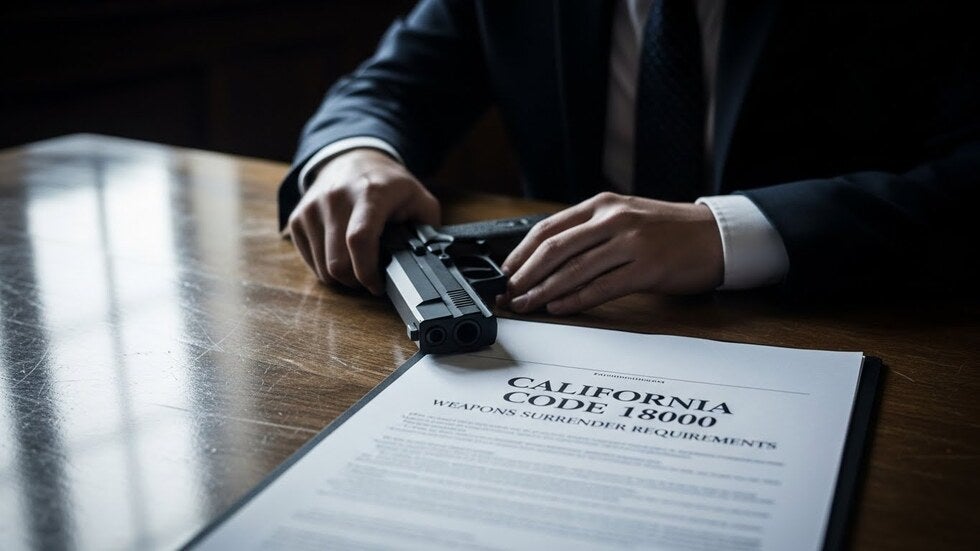
California's weapons surrender laws under Penal Code Section 18000 create significant consequences that extend far beyond criminal convictions. Understanding your rights during the surrender process can help preserve valuable property, protect constitutional interests, and minimize long term impacts on your life and livelihood.
Understanding Mandatory Weapons Surrender in California
Penal Code Section 18000 requires automatic surrender of specific weapons following certain criminal convictions or juvenile court findings. This mandatory surrender applies regardless of whether the weapons were involved in the underlying offense, creating potentially harsh consequences for lawful gun owners.
The surrender requirement triggers automatically upon conviction for offenses involving specified weapon types. These include assault weapons, destructive devices, short barreled rifles, machine guns, and other prohibited weapons categories that California law strictly regulates.
Understanding which convictions trigger surrender requirements helps defense attorneys develop comprehensive strategies that address both criminal charges and collateral consequences. Early identification of potential surrender issues allows for strategic plea negotiations that may minimize property losses.
The automatic nature of surrender requirements means that defendants often face property forfeiture regardless of the weapon's role in the alleged offense. This harsh consequence underscores the importance of aggressive defense strategies that seek to avoid triggering convictions entirely.
Specific Weapons Subject to Mandatory Surrender
Section 18000 references multiple code sections that define various categories of prohibited weapons subject to surrender requirements. These categories include assault weapons under Section 30600, destructive devices under Section 16460, and other specialized weapon types that California heavily regulates.
The breadth of weapons subject to surrender extends beyond what many defendants initially realize. Seemingly lawful firearms may become subject to forfeiture if they fall within technical definitions of prohibited weapons or if modifications render them non compliant with California law.
Defense strategies must carefully analyze whether weapons in a defendant's possession actually fall within surrender categories. Technical compliance issues, grandfathering provisions, or registration status may affect whether specific weapons must be surrendered following conviction.
Understanding the specific weapon categories helps defense attorneys advise clients about potential property losses while developing mitigation strategies that may preserve valuable collections or essential tools for lawful purposes like hunting or sport shooting.
Authorized Recipients for Surrendered Weapons
California law designates specific law enforcement agencies authorized to receive surrendered weapons. These include county sheriffs, municipal police chiefs, university police chiefs, and the California Highway Patrol Commissioner under limited circumstances.
The choice of recipient agency may impact how surrendered weapons are processed, stored, and potentially disposed of. Some agencies maintain better property management systems or more favorable policies regarding eventual return of lawfully owned firearms.
Strategic considerations may favor surrendering weapons to agencies with established procedures for handling complex ownership issues or agencies more likely to cooperate with future retrieval efforts when legally permissible.
Understanding recipient agency policies helps defense attorneys advise clients about minimizing losses during surrender while preserving potential future rights to valuable firearms that may be recoverable under certain circumstances.
Juvenile Court Proceedings and Weapons Surrender
Section 18000 extends surrender requirements to juvenile proceedings where courts find that firearm related offenses occurred. This extension means that young people face the same harsh property consequences as adult defendants for similar conduct.
Juvenile weapons surrender can have particularly devastating impacts on families who legally own firearms for hunting, sport, or protection. The loss of valuable family firearms may create significant financial hardship alongside the emotional trauma of juvenile proceedings.
Defense strategies in juvenile cases must address both the underlying charges and potential weapons surrender consequences. Early intervention may help negotiate resolutions that avoid findings triggering automatic surrender requirements.
Understanding how juvenile court findings interact with weapons surrender helps defense attorneys counsel families about potential consequences while developing comprehensive strategies that protect both the juvenile's future and family property interests.
Constitutional Challenges to Weapons Surrender
Mandatory weapons surrender raises significant constitutional concerns under both Second Amendment protections and due process requirements. These constitutional issues create potential defense strategies that experienced attorneys can leverage effectively.
Second Amendment analysis must examine whether automatic surrender upon conviction violates individual rights to keep and bear arms, particularly when surrendered weapons were not involved in the underlying offense and posed no public safety threat.
Due process challenges may focus on the automatic nature of surrender requirements and the lack of individualized hearings to determine whether specific weapons actually pose public safety risks warranting forfeiture.
Fifth Amendment takings analysis may apply when valuable firearms are surrendered without compensation, particularly when the weapons were lawfully acquired and maintained before conviction occurred.
Insanity Findings and Surrender Requirements
Section 18000 explicitly includes insanity findings as convictions for surrender purposes, creating harsh consequences for defendants who successfully establish mental health defenses. This provision means that even defendants found not guilty by reason of insanity face automatic weapons forfeiture.
The inclusion of insanity findings in surrender requirements creates tension between mental health treatment goals and punitive property forfeiture. Defendants who seek appropriate mental health treatment may face property losses that undermine rehabilitation efforts.
Defense strategies must carefully weigh the benefits of insanity defenses against potential weapons surrender consequences. In some cases, alternative plea arrangements may better serve client interests by avoiding automatic forfeiture triggers.
Understanding how insanity findings interact with surrender requirements helps defense attorneys provide comprehensive counseling about defense options while protecting client property interests whenever possible.
Strategic Defense Considerations
Effective weapons defense strategies must address both criminal charges and collateral consequences like mandatory weapons surrender. This comprehensive approach requires early identification of potential surrender issues and development of integrated defense plans.
Plea negotiation strategies should specifically address surrender consequences when advising clients about potential resolutions. Sometimes pleading to charges that do not trigger surrender requirements better serves client interests than seeking dismissals that risk trial convictions.
Case evaluation must include careful analysis of weapons ownership evidence and potential surrender requirements. Understanding these consequences helps attorneys advise clients about realistic expectations and available options.
Learn more about weapons defense strategies and how experienced criminal defense attorneys can protect both your freedom and your property rights in California weapons cases.
Timing and Procedural Requirements
Understanding the timing of weapons surrender requirements helps defense attorneys advise clients about compliance obligations while preserving potential challenges to surrender orders. Immediate surrender may be required upon conviction, creating urgent procedural deadlines.
Procedural requirements for surrender vary among different law enforcement agencies, creating potential complications for defendants attempting to comply with court orders. Understanding these variations helps ensure proper compliance while protecting client interests.
Documentation of surrender procedures becomes crucial for potential future retrieval efforts or compensation claims. Careful attention to surrender documentation may preserve important rights for clients facing mandatory forfeiture.
Protecting Property Rights During Surrender
Even when surrender becomes unavoidable, defendants retain certain property rights that experienced attorneys can help protect. These rights may include proper valuation, careful documentation, and preservation of potential future retrieval rights.
Storage and maintenance of surrendered weapons may affect their eventual disposition, creating ongoing property interests that warrant protection. Understanding agency storage policies helps attorneys advise clients about minimizing losses during surrender periods.
Some surrendered weapons may be eligible for eventual return under specific circumstances, making careful documentation and preservation of ownership records crucial for protecting long term property interests.
The Importance of Experienced Legal Representation
California's weapons surrender laws create complex legal and practical challenges that require experienced representation familiar with both criminal defense and property rights issues. The intersection of criminal law and property forfeiture demands sophisticated legal analysis.
When facing charges that may trigger weapons surrender requirements, the stakes extend beyond criminal penalties to include significant property losses and long term restrictions on constitutional rights. These consequences demand representation that understands how to minimize both criminal and collateral impacts.
Effective weapons defense requires attorneys who understand the technical requirements of surrender laws while maintaining focus on comprehensive client protection throughout the entire legal process.
Call (888) 928-1609 or contact us online