
How 18 U.S.C. § 2251 and § 2252 Work in the Southern District, What Mandatory Minimums Apply, and What Defense Looks Like
Federal child pornography charges carry some of the harshest mandatory minimum sentences in the entire federal criminal code. A conviction under 18 U.S.C. § 2251 for production of child sexual abuse material carries a 15-year mandatory minimum. Possession under § 2252 carries a 5-year mandatory minimum for a first offense. These sentences are served in full in federal prison no parole, no early release beyond a 15% good conduct reduction. They are accompanied by lifetime sex offender registration requirements that reshape every aspect of a person's life after release.
In San Diego, the FBI's Crimes Against Children unit works alongside Homeland Security Investigations and the Internet Crimes Against Children (ICAC) Task Force to investigate these cases. Because internet activity crosses state and international lines by definition, virtually every child pornography case in San Diego is a federal matter prosecuted by the U.S. Attorney's Office for the Southern District of California, not the local DA.
The Bulldog Law handles federal sex crime defense throughout the Southern District. Our criminal defense blog covers federal sex crime defense strategy and Southern District developments. This article explains the key federal statutes, how the FBI builds these cases in San Diego, and what defense options exist even in the most serious circumstances.
CALL IMMEDIATELY: If federal agents have contacted you, executed a search warrant at your home, or seized your devices, call The Bulldog Law at (888) 928-1609 before making any statement. The decisions made in the first 24 hours are critical to the entire defense.
The Federal Statutes: 18 U.S.C. § 2251, § 2252, and § 2252A
Federal child pornography law is spread across several statutes, each targeting a different category of conduct with different mandatory minimums:
18 U.S.C. § 2251: Production of Child Sexual Abuse Material
Section 2251 targets the production or attempted production of sexually explicit images or video of a minor. This is the most serious of the child pornography statutes. A first conviction carries a mandatory minimum of 15 years and a maximum of 30 years. A second conviction carries a mandatory minimum of 25 years. The statute also covers using a minor to engage in sexually explicit conduct for the purpose of producing visual depictions.
18 U.S.C. § 2252: Receipt, Distribution, and Possession
Section 2252 covers the receipt, distribution, transportation, and possession of child sexual abuse material that has traveled in interstate or foreign commerce which includes virtually all internet-based content. Receipt and distribution carry a 5-year mandatory minimum for a first offense, and 10 years for a second. Possession alone carries no mandatory minimum for a first offense but up to 10 years. When distribution is alleged including sharing files through peer-to-peer networks the mandatory minimum applies even if the sharing was automated by the software.
18 U.S.C. § 2252A: Material Involving Minors
Section 2252A is a broader version of § 2252 that explicitly covers computer-generated images and material that has been digitally altered. It carries identical mandatory minimums to § 2252. In San Diego, § 2252A charges frequently accompany § 2252 charges in cases involving peer-to-peer file sharing networks.
THE DISTRIBUTION TRAP: Peer-to-peer file sharing programs like BitTorrent automatically make downloaded files available for upload to other users. The Southern District regularly charges users of these programs with distribution triggering the 5-year mandatory minimum even when the user had no conscious intent to share files. This is one of the most contested issues in San Diego federal child pornography defense.
Sex Offender Registration Consequences
Any federal conviction under § 2251, § 2252, or § 2252A requires registration as a sex offender under the Sex Offender Registration and Notification Act (SORNA) at the federal level, as well as under California's Sex Offender Registration Act at the state level. Federal child pornography convictions result in Tier III registration the most serious tier, requiring lifetime registration, quarterly reporting, and public listing on the Megan's Law database.
How the FBI and HSI Build Child Pornography Cases in San Diego
Peer-to-Peer Network Investigations
The majority of San Diego federal child pornography prosecutions originate from FBI and HSI monitoring of peer-to-peer file sharing networks primarily BitTorrent. Federal agents use specialized software to identify IP addresses that are sharing known child sexual abuse material files. They then obtain a subpoena for the IP address from the internet service provider, identify the account holder, and apply for a search warrant.
We challenge the technical accuracy of IP address identification, the reliability of the government's detection software, and whether the IP address actually identifies the person who accessed the material.
Search Warrant Execution and Device Seizure
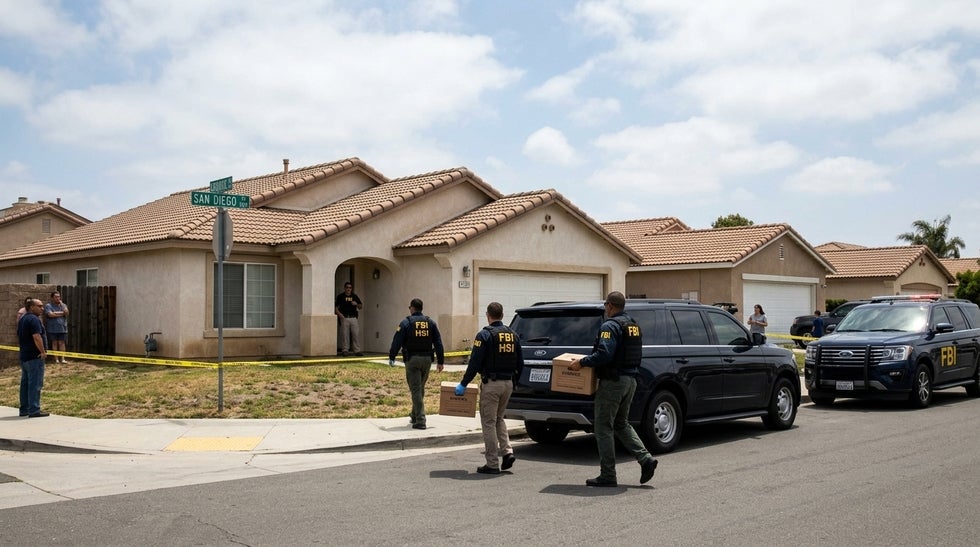
When the FBI executes a search warrant in a San Diego child pornography case, they typically seize every digital device in the residence computers, phones, tablets, external hard drives, gaming consoles, and smart TVs. The San Diego Regional Computer Forensics Laboratory (RCFL) examines seized devices and produces forensic reports identifying contraband material. We challenge the scope of the search warrant, the methodology of the forensic examination, and the chain of custody of all seized devices and forensic images.
Online Undercover Operations
The FBI's San Diego ICAC Task Force conducts undercover online operations targeting individuals who solicit minors or seek to produce child sexual abuse material. In these operations, an undercover agent poses as a minor or as an adult offering access to a minor. We challenge the legal sufficiency of entrapment defenses, the government's conduct during the undercover operation, and whether our client took a substantial step toward the charged offense.
Digital Forensic Analysis
Federal forensic examiners analyze seized devices for deleted files, access history, download patterns, and metadata that establishes when specific files were accessed and by whom. We retain independent digital forensic experts to review the government's forensic analysis, challenge attribution of files to specific users on shared devices, and identify technical errors in the government's methodology.
Where Federal Child Pornography Cases Are Prosecuted in San Diego
Federal child pornography charges are prosecuted exclusively in the United States District Court for the Southern District of California:
U.S. District Court Southern District of California
333 West Broadway, San Diego, CA 92101
U.S. Attorney's Office: 880 Front Street, San Diego, CA 92101
The Southern District's Crimes Against Children section handles these prosecutions. These prosecutors work closely with FBI Special Agents assigned to the Crimes Against Children unit and ICAC Task Force detectives from SDPD and the Sheriff's Department.
Defense Strategies in Southern District Child Pornography Cases
The Bulldog Law's federal sex crimes defense practice examines every federal child pornography case from the investigation forward. These are the core defense frameworks we deploy:
Challenging the Search Warrant
The warrant application that authorized the search of our client's home must be supported by probable cause based on accurate and reliable information. We review every search warrant affidavit for material misstatements, omissions, and overstatements that may have misled the issuing magistrate. A successful Franks hearing where we challenge the truthfulness of the warrant affidavit can result in suppression of all evidence obtained through the warrant.
IP Address Attribution Challenges
An IP address identifies an internet connection not a person. In households with multiple residents, public Wi-Fi networks, and unsecured routers, the person who used a particular IP address is not always the account holder. We retain digital forensics experts to challenge the government's attribution of specific online activity to our client specifically, as opposed to other users of the same network.
Challenging the Distribution Allegation
In peer-to-peer network cases, the government charges distribution based on the automatic sharing function of file sharing software arguing that making files available to others satisfies the distribution element. We argue that passive availability does not constitute knowing and intentional distribution, and we challenge the government's evidence that our client actually transmitted files to another user rather than merely having them indexed in a shared folder.
Unknowing Possession Defense
Federal child pornography possession requires knowing possession. Files that were automatically cached by a browser without the user's awareness, files downloaded as part of a larger archive without knowing their contents, and files accessed briefly and immediately closed can all support an unknowing possession defense. We analyze the access history and metadata of every charged file to identify evidence of passive, unknowing, or accidental access.
Sentencing Mitigation
Even when a conviction cannot be avoided, aggressive sentencing advocacy can make a significant difference in the final sentence. We present comprehensive mitigation packages including psychological evaluations, treatment history, family support, employment history, and expert testimony on risk assessment and recidivism. In appropriate cases, we advocate for sentences at or below the Guideline range, downward variances based on the nature of the offense and the defendant's background, and recommendations for placement in federal facilities with sex offender treatment programs.
Federal Agents at Your Door in San Diego? Read This First
- Do not speak to FBI agents, HSI investigators, or any law enforcement personnel who contact you about a child pornography investigation. Do not answer questions at the door when a search warrant is executed. Do not attempt to explain, minimize, or provide context. Invoke your right to remain silent immediately and clearly.
- Do not attempt to delete, destroy, or conceal any files, devices, or data after you learn of an investigation. Evidence destruction is a separate federal felony obstruction of justice that adds years to sentencing exposure and signals consciousness of guilt to prosecutors and judges.
- If a search warrant is executed at your home, you have the right to observe the search and receive a copy of the warrant and the inventory of items seized. Read the warrant carefully. Contact The Bulldog Law immediately with the warrant details the scope of the authorized search is the starting point for every suppression challenge.
- Do not consent to any additional searches beyond what the warrant authorizes. Officers sometimes ask for consent to search areas not covered by the warrant. Consent waives your Fourth Amendment rights. Decline clearly.
- If you have received a target letter or been contacted by a federal agent asking for a “voluntary interview,” do not schedule or attend any interview without retaining federal defense counsel first. Pre-charge representation gives The Bulldog Law the opportunity to evaluate the government's evidence and, in some cases, influence the charging decision before an indictment is filed.
- Call The Bulldog Law at (888) 928-1609 immediately. Federal child pornography cases move quickly from search to indictment. Every hour matters.
Contact The Bulldog Law From Your San Diego County
The Bulldog Law defends clients facing federal child pornography charges throughout San Diego County and the Southern District of California. Reach us directly from your city:
Escondido: North County inland clients in Escondido, San Marcos, and surrounding communities can reach The Bulldog Law through our Escondido office page. Federal cases from this area are prosecuted at 333 West Broadway, San Diego.
National City: South Bay clients in National City, Lemon Grove, and Imperial Beach can contact us through our National City office page.
Santee: East County clients in Santee, La Mesa, and El Cajon can reach us through our Santee office page.
We also serve clients in Poway, Vista, Carlsbad, Encinitas, Solana Beach, Del Mar, Coronado, Chula Vista, and all surrounding San Diego County communities.
View our full San Diego County service offices or contact our San Diego office directly:
San Diego Office
501 West Broadway, Suite 800 San Diego, CA 92101 Phone: (888) 928-1609
Frequently Asked Questions: Federal Child Pornography in San Diego
What is the difference between production, distribution, and possession charges?
Production under § 2251 involves creating child sexual abuse material it carries a 15-year mandatory minimum and is the most serious of the three. Distribution under § 2252 involves sharing material with others, including through peer-to-peer file sharing software it carries a 5-year mandatory minimum. Possession under § 2252 involves having material on a device without evidence of sharing it carries no mandatory minimum for a first offense. The distinction between distribution and possession is one of the most heavily litigated issues in Southern District child pornography cases because it determines whether a mandatory minimum applies.
Can I be charged with distribution if I never intentionally shared files?
Yes and this is one of the most contested issues in San Diego federal child pornography defense. The Southern District regularly charges distribution based on the automatic upload function of peer-to-peer software, arguing that having files indexed in a shared folder constitutes making them available to others. We challenge this theory by arguing that passive availability without knowing transmission does not satisfy the knowing distribution element of the statute, and by presenting evidence that our client had no understanding that the software was uploading files to other users.
What happens when the FBI executes a search warrant at my home in San Diego?
Federal agents will seize every digital device in the residence. You are not required to provide passwords, decrypt devices, or assist in the search beyond what the warrant specifically authorizes. You have the right to observe the search, request a copy of the warrant, and receive an inventory of seized items. Do not make any statements. Contact The Bulldog Law immediately after the search is completed. The scope of the warrant and the methodology of the search are the first two areas we analyze for suppression opportunities.
How does lifetime sex offender registration work after a federal conviction?
A federal conviction under § 2251 or § 2252 requires registration under SORNA at the federal level and under California's PC § 290 at the state level. Federal child pornography convictions receive Tier III designation lifetime registration with no possibility of removal. Registration requirements include quarterly in-person reporting to law enforcement, providing home and employment addresses, submission of a current photograph, and listing on the publicly accessible Megan's Law website. These obligations begin upon release from prison and continue for life.
Is it possible to receive a sentence below the mandatory minimum in the Southern District?
In limited circumstances, yes. Safety Valve relief under 18 U.S.C. § 3553(f) does not apply to child pornography offenses. However, substantial assistance cooperation under U.S.S.G. § 5K1.1 can allow the government to move for a sentence below the mandatory minimum when a defendant provides substantial assistance in the investigation of others. Additionally, in rare cases involving production charges, the First Step Act's expanded compassionate release provisions may eventually provide relief for elderly or seriously ill defendants. The Bulldog Law evaluates every available sentencing mechanism in federal child pornography cases.
What if the material was found on a device I share with other household members?
Shared devices are one of the most significant attribution challenges in federal child pornography cases. The government must prove beyond a reasonable doubt that you specifically, not another person with access to the device knowingly possessed or accessed the charged material. We retain digital forensics experts to analyze user account activity, file access timestamps, browser history under specific user profiles, and any other digital evidence that distinguishes one user's activity from another's on a shared device.
These technical challenges have produced acquittals and charge reductions in cases where the government assumed the account holder was automatically the responsible party.