
What 18 U.S.C. § 1962 Means, How Southern District Prosecutors Use RICO Against Border Organizations, and Where the Defense Wins
You ran a legitimate business. You had employees. You had suppliers. Some of those people, it turns out, were involved in criminal activity you either knew nothing about or played a peripheral role in. Now you are named in a federal RICO indictment alongside gang members, cartel associates, and individuals whose conduct you had no direct knowledge of. Federal prosecutors are seeking 20 years. This is how RICO works.
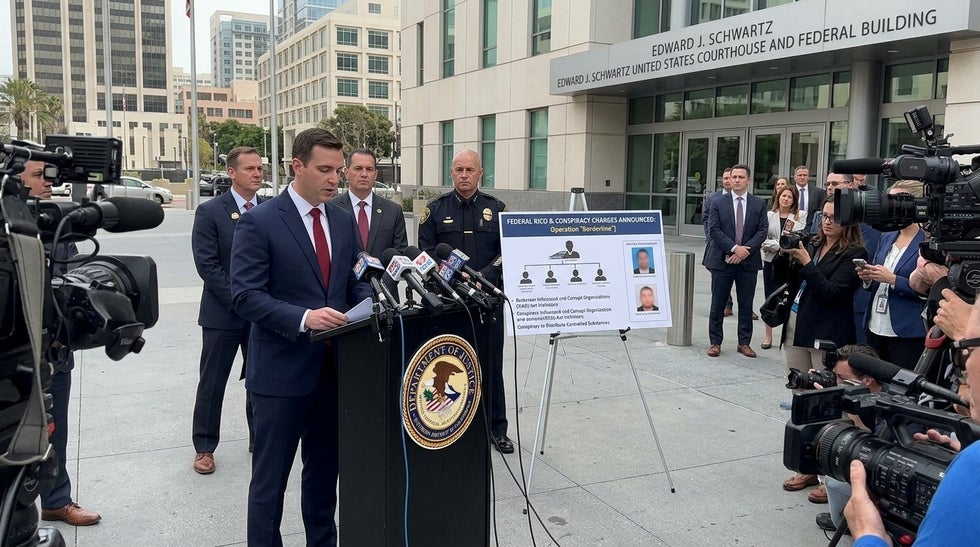
The Racketeer Influenced and Corrupt Organizations Act, 18 U.S.C. § 1961 through § 1968, is the federal government's most powerful tool for prosecuting organized criminal activity. Originally designed to target the Mafia, RICO is now used by Southern District prosecutors against street gangs, drug trafficking organizations, cross-border cartel networks, and increasingly, business enterprises alleged to have engaged in patterns of fraud. In San Diego, where cartel activity, gang networks, and complex financial schemes intersect at the border, RICO indictments are a recurring feature of the federal criminal docket.
The Bulldog Law covers federal RICO defense strategy in the Southern District on our criminal defense blog. This article breaks down exactly what RICO requires, why these cases are so dangerous, and where experienced defense counsel attacks them most effectively.
CRITICAL: RICO indictments in San Diego often name dozens of defendants across multiple criminal organizations. Being named alongside high-level cartel members or gang leaders does not mean your conduct rises to their level, but it does mean the prosecution will use their conduct to build pressure on every co-defendant. Separate, individualized defense strategy is essential from day one.
What 18 U.S.C. § 1962 Actually Requires
RICO is one of the most technically complex federal statutes in existence. It does not criminalize ordinary crime. It criminalizes participation in a pattern of criminal activity through an enterprise. Every element has specific legal meaning that creates genuine defense opportunities.
The Enterprise
An “enterprise” under RICO includes any individual, partnership, corporation, association, or other legal entity, or any group of individuals associated in fact, even without a formal legal structure. Street gangs, drug trafficking organizations, cartel cells operating in San Diego, and informal business associations all qualify as enterprises. The government must prove the enterprise's existence as a structure separate from the pattern of racketeering activity itself.
The Pattern of Racketeering Activity
A “pattern” requires at least two acts of racketeering activity, called predicate acts, within a 10-year period. The predicate acts must be related and must amount to, or pose a threat of, continued criminal activity. The list of qualifying predicate acts under § 1961(1) includes murder, kidnapping, bribery, extortion, drug trafficking, fraud, money laundering, and dozens of other state and federal crimes. In San Diego, drug trafficking and money laundering are the most commonly alleged predicates in RICO cases.
The Four Prohibited Activities Under § 1962
Section 1962 prohibits four types of RICO violations:
- § 1962(a): Investing proceeds of racketeering in an enterprise affecting interstate commerce.
- § 1962(b): Acquiring or maintaining an interest in an enterprise through racketeering.
- § 1962(c): Conducting or participating in the affairs of an enterprise through a pattern of racketeering. This is the most commonly charged subsection in San Diego RICO cases.
- § 1962(d): Conspiracy to violate any of the above. The conspiracy charge under (d) is particularly broad. It can reach individuals who agreed to participate in the enterprise without personally committing any predicate acts.
THE CONSPIRACY TRAP: Under § 1962(d), a defendant can be convicted of RICO conspiracy without personally committing a single predicate act. If the government proves you agreed to participate in an enterprise knowing it engaged in a pattern of racketeering, you are guilty of RICO conspiracy regardless of what you personally did. This is the most dangerous aspect of RICO for peripheral participants.
Penalties: Up to 20 Years Per Count
Each RICO count carries up to 20 years in federal prison. RICO convictions also carry mandatory forfeiture of all interests in the enterprise and any proceeds derived from racketeering activity. In large-scale Southern District RICO cases, forfeiture orders can reach into the millions. Civil RICO under 28 U.S.C. § 1964(c) allows private parties to sue for treble damages, adding civil liability on top of criminal exposure.
How RICO Is Used in San Diego's Southern District
Cartel and Transnational Criminal Organization Cases
The Southern District prosecutes more transnational criminal organization RICO cases than virtually any other federal district in the country. Sinaloa Cartel, CJNG, and MS-13 cells operating in San Diego County are regularly charged under § 1962. These cases typically involve dozens of defendants, years of wiretap evidence, cooperating witnesses from inside the organization, and predicate acts spanning multiple criminal categories: drug trafficking, murder, money laundering, and kidnapping. We build individualized defense strategies that separate our client's specific conduct from the organization's broader criminal activity.
Street Gang RICO Prosecutions
San Diego's gang landscape, including Barrio Logan, Shelltown, Lincoln Park, and North County gang networks, generates periodic federal RICO indictments targeting gang leadership and membership. These prosecutions use gang membership, prior arrests, and social media posts as evidence of enterprise participation. We challenge the sufficiency of evidence establishing our client's role in the enterprise, the reliability of gang expert testimony, and the use of constitutionally protected association as evidence of criminal participation.
Business and Fraud RICO Cases
Not all San Diego RICO cases involve violent criminal organizations. Federal prosecutors increasingly use RICO against businesses alleged to have engaged in systematic fraud, mortgage companies, healthcare providers, and financial services firms, where the government characterizes repeated fraudulent transactions as a pattern of racketeering. We challenge the enterprise characterization of legitimate businesses, the relatedness and continuity of alleged predicate acts, and the sufficiency of evidence connecting our client to the alleged scheme.
Where Federal RICO Cases Are Prosecuted in San Diego
Federal RICO charges are prosecuted in the United States District Court for the Southern District of California:
U.S. District Court — Southern District of California
333 West Broadway, San Diego, CA 92101
U.S. Attorney's Office: 880 Front Street, San Diego, CA 92101
Major RICO prosecutions in the Southern District are handled by the Organized Crime and Gang section of the U.S. Attorney's Office in coordination with the FBI, DEA, ATF, and HSI. These are among the most resource-intensive prosecutions in the district, often involving years of pre-indictment investigation and thousands of pages of discovery.
RICO Defense Strategies in the Southern District of California
The Bulldog Law's federal criminal defense practice approaches RICO cases by attacking the enterprise, challenging the pattern, and separating our client's conduct from the broader organization the government has placed them in:
Challenging the Enterprise
The government must prove the enterprise's existence as a structure with an ongoing organizational framework. Loose associations of individuals who committed similar crimes without coordination do not constitute a RICO enterprise. We challenge the government's enterprise theory by presenting evidence of the absence of organizational hierarchy, shared purpose, and continuity, arguing that what the prosecution characterizes as an enterprise was in reality a collection of independent actors with no genuine organizational connection.
Attacking the Pattern of Racketeering
The predicate acts must be “related,” sharing the same or similar purposes, results, participants, victims, or methods, and must amount to or threaten “continuity” of criminal activity. Isolated criminal acts, even serious ones, do not constitute a pattern. We challenge the relatedness and continuity of alleged predicate acts by presenting evidence of the disconnected, episodic nature of the conduct and the absence of any threat of ongoing criminal activity.
Severing from Co-Defendants
Multi-defendant RICO indictments create enormous pressure on peripheral participants who are grouped with high-level criminal actors. We file motions to sever our client's case from the broader indictment where joint trial would be unduly prejudicial, where the jury would be unable to evaluate our client's specific conduct independently from the dramatic evidence of co-defendants' crimes. Severance is difficult to obtain but critical to pursue in cases where association prejudice threatens a fair trial.
Challenging the Conspiracy Allegation
RICO conspiracy under § 1962(d) is the most broadly applied theory in San Diego RICO cases. We challenge the sufficiency of evidence that our client knowingly agreed to participate in the enterprise with knowledge of its racketeering activity. Mere association with enterprise members, presence at locations connected to the enterprise, or receipt of money from enterprise activities does not establish the knowing agreement required for conspiracy. We present evidence of innocent explanation for every point of contact between our client and the alleged enterprise.
Attacking Cooperating Witnesses
RICO prosecutions live and die on cooperating witness testimony. Every cooperating witness in a Southern District RICO case has made an agreement with the government that gives them powerful incentives to maximize the criminal involvement of others. We obtain every cooperating agreement, every proffer session memorandum, and every prior statement made by each cooperating witness and use these materials to expose inconsistency, fabrication, and the witness's motivation to lie.
Named in a San Diego Federal RICO Indictment? Act Immediately
- Retain federal defense counsel before your initial appearance. RICO indictments involve complex, multi-defendant cases where the government's narrative has been built over months or years. Getting an experienced federal defense attorney reviewing the indictment and the evidence before arraignment is essential to developing a coherent defense strategy from the start.
- Do not speak to any co-defendants, enterprise members, or anyone associated with the alleged organization after learning of the indictment. Contact with co-defendants can be charged as obstruction of justice and witness tampering, and can result in bail revocation or detention.
- Do not destroy, alter, or delete any records, communications, or financial documents. Evidence destruction is an independent federal felony that dramatically worsens your position in the case.
- Understand that the government's charging decision has been carefully thought through. RICO indictments are not filed impulsively. They represent the culmination of a long investigation. This means the government believes its case is strong. An aggressive, fact-intensive defense that challenges every element from the first day is the only effective response.
- If you have been approached by federal agents before an indictment, do not agree to any interview, proffer, or cooperation discussion without retaining counsel first. Premature cooperation agreements made without full knowledge of the government's evidence rarely produce the outcomes defendants hope for.
- Call The Bulldog Law at (888) 928-1609 immediately. RICO cases require the most intensive and sustained defense effort of any federal prosecution category. The earlier we are engaged, the more effectively we can build your individual defense within the broader case.
Contact The Bulldog Law From Your San Diego County Community
The Bulldog Law represents clients facing federal RICO and conspiracy charges throughout San Diego County and the Southern District of California. Reach us from your community:
San Marcos: North County clients in San Marcos, Vista, and Escondido can contact The Bulldog Law through our San Marcos office page. Federal RICO cases from this area are prosecuted at 333 West Broadway, San Diego.
Encinitas: North Coastal clients in Encinitas, Solana Beach, and Del Mar can reach us through our Encinitas office page.
Imperial Beach: South Bay border-adjacent clients in Imperial Beach, Chula Vista, and National City can contact us through our Imperial Beach office page.
We also serve clients in El Cajon, La Mesa, Santee, Carlsbad, Oceanside, Poway, Lemon Grove, Coronado, and all surrounding San Diego County communities.
View our complete San Diego County service area or contact our San Diego office directly:
San Diego Office
501 West Broadway, Suite 800 San Diego, CA 92101 Phone: (888) 928-1609
Frequently Asked Questions: Federal RICO in San Diego
Do I have to be a gang member or cartel member to be charged with RICO in San Diego?
No. RICO does not require formal membership in any criminal organization. The statute covers anyone who participates in the affairs of an enterprise through a pattern of racketeering, including business owners, employees, service providers, and family members who interacted with the enterprise in ways the government characterizes as furthering its criminal activity. Many San Diego RICO defendants had no formal affiliation with the criminal organization but were charged because their business or personal dealings intersected with enterprise activities in ways that the prosecution constructed as participation.
What is the difference between RICO conspiracy and regular federal conspiracy?
Regular federal conspiracy under 18 U.S.C. § 371 requires an agreement to commit a specific federal offense. RICO conspiracy under § 1962(d) requires an agreement to participate in an enterprise through a pattern of racketeering, a broader and more diffuse standard that does not require agreement on specific criminal acts. The RICO conspiracy charge does not even require that the defendant personally agreed to commit any predicate acts, only that they agreed to participate in the enterprise knowing it engaged in racketeering. This makes § 1962(d) significantly broader and more dangerous than ordinary conspiracy charges.
What is civil RICO and can it be used against me in San Diego?
Civil RICO under 18 U.S.C. § 1964(c) allows private parties, not just the government, to sue for treble damages and attorney's fees when they have been injured by a pattern of racketeering. Civil RICO claims are filed in federal court and can accompany or follow criminal RICO prosecutions. They are frequently used in San Diego business fraud cases, real estate fraud cases, and cases involving alleged systematic commercial misconduct. A criminal RICO conviction significantly simplifies a civil plaintiff's burden because criminal findings can be used as collateral estoppel in the civil case.
How long do Southern District RICO investigations typically run before indictment?
Major RICO investigations in the Southern District routinely run for one to three years before indictment. The government uses this time to develop cooperating witnesses, execute wiretaps, conduct surveillance, build financial cases, and ensure that the evidence against each defendant is sufficient to support conviction at trial. By the time you learn you are a target of a RICO investigation, the government has typically already built a substantial evidentiary record. This is why pre-indictment representation, engaging defense counsel before charges are filed, is so valuable in RICO cases.
What is mandatory forfeiture in a RICO conviction?
A RICO conviction carries mandatory forfeiture of all interests in the enterprise and any proceeds derived from the pattern of racketeering. In Southern District RICO cases, forfeiture orders frequently include bank accounts, real property, vehicles, business interests, and cash. The government can also seek substitute asset forfeiture, seizing legitimate assets to satisfy a forfeiture judgment when the original proceeds have been spent or transferred. We challenge forfeiture allegations throughout the criminal case and file independent legal challenges to forfeiture orders that are disproportionate to the conduct alleged against our specific client.
Can the RICO charges against me be dismissed if the enterprise leader is acquitted or cooperates?
RICO cases are designed to survive the acquittal or defection of individual participants. Each defendant's guilt is assessed based on their own conduct and knowledge, not the conduct of others. However, when key cooperating witnesses recant, are impeached, or are themselves convicted and unable to testify credibly, the evidentiary foundation of the government's case against all defendants can be significantly weakened. We monitor every development in co-defendant proceedings and use co-defendant outcomes strategically in our client's defense.