
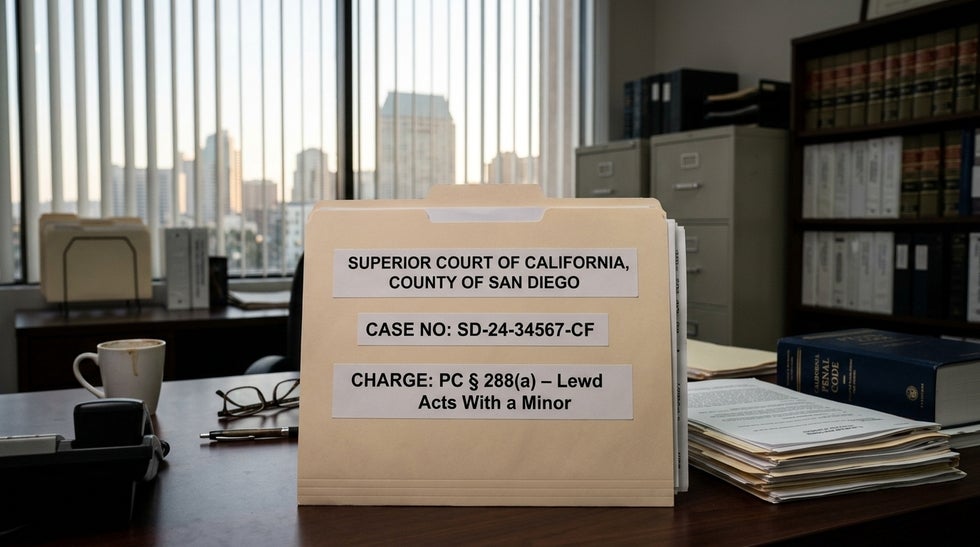
What the Charge Means, How San Diego Prosecutes These Cases, and Why the Defense Must Start Immediately
PC § 288 charges carry consequences that extend far beyond any prison sentence. A conviction for lewd or lascivious acts with a child under 14 in California results in mandatory Tier III sex offender registration the most serious tier, requiring lifetime registration. It destroys careers, ends marriages, eliminates housing options, and permanently restricts where a person can live and work. In San Diego, the DA's Sex Crimes Division prosecutes these cases with dedicated investigators and forensic interview specialists.
What makes these cases particularly dangerous is how easily allegations can be made and how seriously they are treated before any evidence is tested. A child's statement to a teacher, a therapist, or a forensic interviewer can trigger a full investigation and criminal charges before a defense attorney has been retained. By the time most clients contact The Bulldog Law, the investigation has been running for weeks and key evidence has already been collected.
The Bulldog Law handles sex crime defense throughout San Diego County. Our criminal defense blog covers case strategy, forensic interview science, and false allegation defense in detail. This article breaks down exactly how PC § 288 works in San Diego, what the prosecution must prove, and where the defense finds traction in these high-stakes cases.
CALL IMMEDIATELY: If you are under investigation or have been arrested for PC § 288 in San Diego, contact The Bulldog Law at (888) 928-1609 before speaking to anyone. The decisions made in the first 48 hours determine the trajectory of the entire case.
What PC § 288 Requires Under California Law
California Penal Code § 288 makes it a felony to willfully commit any lewd or lascivious act upon or with the body of a child under 14, with the intent to arouse, appeal to, or gratify the lust, passions, or sexual desires of that child or the defendant. The statute does not require penetration or direct genital contact any touching of any part of the body done with the required sexual intent can satisfy the elements.
PC § 288(a): Simple Lewd Acts
The base charge applies to lewd acts with a child under 14 without force. It is a straight felony carrying 3, 6, or 8 years in California state prison. It requires lifetime Tier III sex offender registration under California's Sex Offender Registration Act.
PC § 288(b)(1): Lewd Acts by Force or Fear
When the lewd act is committed through force, violence, duress, menace, or fear of bodily injury, the charge is elevated under subsection (b)(1). The sentence increases to 5, 8, or 10 years. This version is considered a violent felony strike under PC § 667.5(c) and PC § 1192.7(c), with all Three Strikes consequences that attach.
PC § 288(c): Lewd Acts With a 14 or 15 Year Old
Lewd acts with a child who is 14 or 15 years old when the defendant is at least 10 years older are charged under subsection (c). This version is a wobbler, allowing misdemeanor prosecution in some cases, and carries lesser sex offender registration requirements than the under-14 version.
Continuous Sexual Abuse PC § 288.5
When a defendant is alleged to have committed three or more acts of lewd conduct over a period of at least three months while living with or having recurring access to the child, the charge may be filed as continuous sexual abuse of a child under PC § 288.5 a straight felony carrying 6, 12, or 16 years. This charge is frequently filed when a child makes allegations spanning months or years of alleged conduct.
MANDATORY LIFETIME REGISTRATION: A PC § 288(a) conviction in California results in mandatory Tier III sex offender registration for life under PC § 290. This registration has consequences for where you can live, work, and travel that persist long after any prison sentence is completed. Avoiding conviction is the only way to avoid registration.
How the San Diego DA's Sex Crimes Division Builds PC § 288 Cases
Forensic Interviews at Rady Children's Hospital
In San Diego County, child forensic interviews in sex crime cases are typically conducted by trained forensic interviewers at Rady Children's Hospital's CARE (Child Abuse Research and Education) program, or through the San Diego County Child Abuse Services Team (CAST). These interviews are video-recorded and become the central evidence in most prosecutions. We retain independent child forensic interview experts to analyze the interview techniques used, identify leading questions, improper suggestion, and contamination that may have influenced the child's statements.
SART Examinations
Sexual Assault Response Team (SART) medical examinations are conducted when physical evidence of abuse is alleged. SART examiners document physical findings that prosecutors present as corroboration of the child's account. We retain independent forensic pediatricians to review SART findings and, where appropriate, present alternative medical explanations for physical findings that the prosecution characterizes as evidence of abuse.
Digital Device Evidence
SDPD and the San Diego DA's High Technology Crime Unit frequently obtain search warrants for phones, computers, and digital storage devices in PC § 288 investigations. We challenge the legal basis for these warrant applications, the scope of the authorized search, and the chain of custody of any digital evidence obtained. Where electronic communications are used as evidence, we analyze their full context and challenge selective presentation by the prosecution.
The Role of Mandatory Reporters
Most PC § 288 investigations in San Diego begin when a mandatory reporter a teacher, therapist, pediatrician, or school counselor makes a report to Child Protective Services or law enforcement based on something a child disclosed. These initial disclosures, made in emotionally charged contexts, frequently reflect the child's interpretation of events, adult influence, and misunderstanding rather than accurate descriptions of criminal conduct. We trace every disclosure back to its origin and evaluate whether the mandatory reporter's actions and communications may have shaped the child's account before law enforcement ever arrived.
Where PC § 288 Cases Are Prosecuted in San Diego
Lewd acts with a minor cases are State offenses heard in the San Diego Superior Court. Given the seriousness of the charge, these cases are assigned to specialized courtrooms:
San Diego Superior Court — Hall of Justice (Central)
330 West Broadway, San Diego, CA 92101
San Diego Superior Court — North County Division
325 South Melrose Drive, Vista, CA 92081
San Diego Superior Court — East County Division
250 East Main Street, El Cajon, CA 92020
The Bulldog Law appears regularly in all three San Diego Superior Court divisions. Sex crime cases are assigned to specialized judges with significant experience in these matters. We know the prosecutors, the experts they rely on, and the judges who preside over these cases in each division.
Defense Strategies for PC § 288 Charges in San Diego
The Bulldog Law's sex crimes defense practice builds PC § 288 defenses around a comprehensive investigation of the allegation's origins, the reliability of the child's account, and every piece of physical and digital evidence. These are the primary defense frameworks we deploy:
False Allegation Investigation
False allegations of child sexual abuse occur in the context of custody disputes, family conflicts, coaching by an adult, misinterpretation of innocent physical contact, and child suggestibility. We investigate the family dynamic, the circumstances under which the disclosure was first made, who the child spoke to before the forensic interview, and whether any adult had motive to encourage or fabricate an allegation. We retain child psychologists and forensic interview experts to evaluate the reliability of the child's account.
Challenging the Forensic Interview
The forensic interview at Rady Children's or CAST is typically the most important piece of evidence in the prosecution's case. These interviews are conducted by trained professionals but they are not infallible. Leading questions, repetitive questioning, reinforcing yes answers, and failing to explore alternative explanations can all contaminate a child's account. We retain nationally recognized child forensic interview experts to analyze the recorded interview and present testimony on the suggestibility research and accepted interviewing standards that the prosecution's interview may have violated.
Challenging Physical Evidence
Physical findings from SART examinations are frequently presented by prosecutors as proof of abuse. In reality, the vast majority of children who have experienced abuse have normal or non-specific physical findings. Conversely, some physical findings attributed to abuse have benign explanations. We retain independent forensic pediatricians to review SART findings and, where appropriate, present peer-reviewed research and alternative medical explanations that undermine the prosecution's physical evidence.
Intent Challenges
PC § 288 requires specific sexual intent at the time of the touching. Innocent physical contact a pat on the back, assistance with dressing, a medical examination, or a playful touch that a child later mischaracterized does not satisfy the intent element. We present evidence of the innocent, non-sexual context and purpose of any physical contact that forms the basis of the charge.
Attacking the Identification
In cases where the defendant was not known to the child stranger contact cases identification evidence is a critical battleground. We challenge photo lineup procedures, the reliability of the child's identification under stress, and any suggestive procedures that may have produced a false identification.
Under Investigation for PC § 288 in San Diego? Act Now
- Do not speak to SDPD detectives, Sheriff's investigators, or any law enforcement personnel without an attorney present. In sex crime investigations, law enforcement often contacts suspects before making an arrest claiming they “just want your side of the story.” There is no version of this conversation that helps you. Invoke your right to silence immediately.
- Do not contact the child, the child's family, or any potential witness. Contact with alleged victims or their families in a sex crime investigation is treated as witness tampering and will be used as evidence of consciousness of guilt. It will also damage any relationship or context that might otherwise support a false allegation defense.
- Do not post anything on social media about the investigation, the child, or the family. Prosecutors in San Diego's Sex Crimes Division actively monitor social media in child sex abuse cases. Anything you post can and will be used against you.
- Preserve all digital evidence that demonstrates the innocent nature of your relationship with the child or family. Text messages, emails, photos from family events, and any communications showing the normal, non-sexual character of your interactions are all potentially critical defense evidence.
- If CPS has become involved alongside the criminal investigation, understand that CPS investigators share information with law enforcement. Statements made to CPS social workers are not protected and can be used in the criminal case. Do not speak to CPS without your attorney.
- Call The Bulldog Law at (888) 928-1609 immediately. In PC § 288 cases, the investigation timeline is compressed and the evidence is collected quickly. Getting defense counsel involved immediately gives us the opportunity to conduct a parallel investigation, preserve evidence the prosecution will not collect, and prepare the strongest possible defense before the preliminary hearing.
Contact The Bulldog Law in Your San Diego County Community
The Bulldog Law defends clients facing PC § 288 and related sex crime charges throughout San Diego County. We serve every community in the county from our San Diego office. Contact us directly from your city:
Oceanside: North County clients in Oceanside, Carlsbad, and Vista can reach The Bulldog Law through our dedicated Oceanside office page. Cases from this area are prosecuted in the North County Division at 325 South Melrose Drive, Vista.
Chula Vista: South Bay clients in Chula Vista, National City, and Imperial Beach can contact us through our Chula Vista office page. These cases are prosecuted at the Hall of Justice in downtown San Diego.
El Cajon: East County clients in El Cajon, Santee, and La Mesa can reach us through our El Cajon office page. East County cases are heard at 250 East Main Street, El Cajon.
We also serve clients in Escondido, Poway, San Marcos, Encinitas, Solana Beach, Del Mar, Coronado, Lemon Grove, and all surrounding San Diego County communities.
View our complete San Diego County Office or contact our main San Diego office directly:
San Diego Office
501 West Broadway, Suite 800 San Diego, CA 92101 Phone: (888) 928-1609
Frequently Asked Questions: PC § 288 in San Diego
What is the difference between PC § 288 and statutory rape in California?
PC § 288 specifically targets lewd or lascivious acts any touching of any body part done with sexual intent against children under 14. It does not require sexual intercourse. Statutory rape under PC § 261.5 covers unlawful sexual intercourse with a minor who is under 18, regardless of consent, and is a separate offense. PC § 288 is a more serious charge with more severe penalties and mandatory lifetime sex offender registration. Both can be charged simultaneously when the conduct involves both types of contact.
Can a PC § 288 charge be based solely on a child's statement?
Yes. California courts have held that a child's testimony alone, if believed by the jury, is sufficient to support a PC § 288 conviction. There is no corroboration requirement for sex crimes in California. This makes the reliability of the child's account and the integrity of the forensic interview process that produced it the central battleground in most San Diego PC § 288 prosecutions. An experienced defense attorney challenges the interview methodology, the circumstances of the initial disclosure, and the potential for adult influence or coaching.
What is Tier III sex offender registration and what does it mean?
California's Sex Offender Registration Act classifies registered sex offenders into three tiers based on offense severity. Tier III is the most serious classification, requiring lifetime registration with no possibility of termination. A PC § 288(a) conviction results in automatic Tier III designation. Registered sex offenders must report to law enforcement every 90 days, provide home address and employment information, comply with residency restrictions near schools and parks, and appear on the Megan's Law public website. These consequences persist permanently. Avoiding a PC § 288 conviction is the only way to avoid Tier III registration.
What is CALCRIM 1110 and why does it matter?
CALCRIM 1110 is the jury instruction that defines the elements of PC § 288 for San Diego juries. It requires the jury to find that the defendant willfully touched the child, that the touching was of or on the child's body, that the touching was done with the intent to arouse, appeal to, or gratify the sexual desires of the defendant or the child, and that the child was under 14 at the time. The specific language of this instruction particularly the intent element is the foundation for several of the most effective defense arguments. We prepare jury instruction challenges and pinpoint instructions in every PC § 288 case to ensure the jury understands the full scope of what the prosecution must prove.
Can charges under PC § 288 be filed based on events from years ago in San Diego?
Yes. California has no statute of limitations for PC § 288 offenses when the victim was under 18 at the time of the offense. Charges can be filed decades after the alleged conduct, long after evidence has degraded, witnesses have forgotten details, and the defendant has no memory of the specific events alleged. These delayed reporting cases present unique defense challenges and unique opportunities to challenge the reliability of memory, the circumstances of the eventual disclosure, and any factors that may have influenced the complainant's account over time.
The Bulldog Law handles delayed reporting cases with the specialized investigative approach they require.