
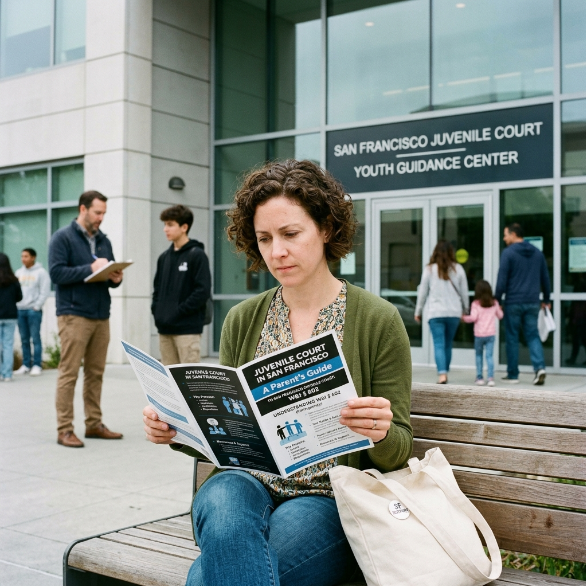
W&I § 602, SF's Restorative Justice Approach, Diversion Options, and How to Protect Your Child's Record and Future
Your Child Was Arrested in San Francisco. What Happens Now?
San Francisco's juvenile justice system reflects the City's commitment to rehabilitation over punishment more consistently than almost any other California county. The SF DA's Office, the San Francisco Juvenile Probation Department, and the SF Superior Court's Juvenile Division have all embraced restorative justice approaches that prioritize treatment, family engagement, and community accountability over incarceration. SF's nationally recognized restorative justice program which diverts eligible young people into facilitated community processes rather than formal prosecution operates in coordination with the public schools and the Juvenile Probation Department.
But San Francisco's progressive juvenile justice philosophy does not mean consequences are minimal. A sustained W&I § 602 petition the juvenile equivalent of a criminal conviction can result in confinement at SF Juvenile Hall, placement at Log Cabin Ranch, formal probation with consequences that affect your child's school enrollment and freedom of movement, and a record that follows them unless properly sealed at 18. For serious offenses, transfer to adult court means adult criminal consequences. The system moves faster than most parents expect, and the probation officer's social study that shapes the judge's disposition is prepared before most families have retained defense counsel.
The Bulldog Law represents juveniles and their families throughout San Francisco. For more on juvenile defense strategy, diversion options, and record sealing in SF, visit our criminal defense blog.
CALL IMMEDIATELY: The probation officer's social study which heavily shapes the judge's disposition decision is prepared before the hearing. Getting defense counsel involved early lets us provide the probation department with a complete picture of your child's background before that report is written. Call The Bulldog Law at (888) 928-1609.
How San Francisco's Juvenile Justice System Works Under W&I § 602
Arrest and the Initial Detention Decision
When SFPD, a school resource officer, or a transit police officer arrests a minor in San Francisco, they are taken to the San Francisco Juvenile Probation Department for intake processing at the Youth Guidance Center, 375 Woodside Avenue, San Francisco, CA 94127. A probation officer makes the initial decision: release the minor to a parent or guardian, issue a citation for a future appearance, or detain the minor at SF Juvenile Hall. We appear at detention hearings and argue for release to parental custody.
SF's Restorative Justice Diversion Program
San Francisco operates one of California's most developed restorative justice diversion programs for juvenile offenders a pre-charge diversion process that brings together the young person, the affected community members or victims, and trained facilitators to address the harm caused and develop a community accountability plan. Successful completion of the restorative justice process results in no petition being filed and no formal record. This program is available for eligible first-time and lower-level offenders and is one of the strongest outcomes available in any SF juvenile case. We advocate for restorative justice program referrals in every eligible case.
The Petition and Jurisdictional Hearing
If the SF DA's Juvenile Division decides to file charges, they file a W&I § 602 petition alleging specific criminal conduct. The jurisdictional hearing the juvenile equivalent of a trial is heard by a judge who determines whether the allegations are true beyond a reasonable doubt. There is no jury. We appear at every jurisdictional hearing prepared to challenge the prosecution's evidence with the same rigor as an adult criminal trial.
The Dispositional Hearing
If the petition is sustained, the case proceeds to a dispositional hearing where the judge determines consequences. The probation officer's social study which summarizes the minor's background, school record, family situation, and rehabilitation potential heavily influences the disposition. We provide the probation officer with comprehensive information about our client before the social study is written, presenting the full context that shapes a rehabilitative rather than punitive outcome.
San Francisco's Juvenile Justice Facilities and Programs
SF Juvenile Hall Youth Guidance Center
San Francisco's juvenile detention facility is the Youth Guidance Center at 375 Woodside Avenue, San Francisco, CA 94127. The YGC houses minors detained pending hearings and those serving short-term custodial dispositions. We appear at detention hearings and argue for the least restrictive detention conditions, presenting evidence of the minor's family support, community ties, and absence of flight risk.
Log Cabin Ranch
Log Cabin Ranch is San Francisco's juvenile residential camp program located in La Honda in San Mateo County providing education, vocational training, and structured programming for juvenile offenders requiring residential placement. It is a less restrictive alternative to secure detention and is frequently the dispositional recommendation for sustained petitions involving moderate offenses. We present evidence at dispositional hearings that community-based alternatives can achieve the same rehabilitative goals without residential placement.
Common Charges in SF Juvenile Court
- Phone snatching and theft from BART and Muni riders a significant and growing category of SF juvenile cases
- School-based assault and fighting at SF Unified School District schools
- Drug possession, including fentanyl-related cases in the Tenderloin and SoMa
- Vandalism and property crimes in commercial and residential neighborhoods
- Serious and violent felonies subject to transfer hearing under W&I § 707(b)
Diversion and Disposition Options in San Francisco
Restorative Justice Program SF's Unique Pathway
San Francisco's restorative justice diversion program is available for eligible first-time and low-to-moderate risk juvenile offenders. The program brings together the young person, community members, and a trained facilitator to address the harm caused through a community accountability conference. Successful completion results in no petition filed and no formal record. This is the strongest possible outcome in any eligible SF juvenile case and is not available in most other California counties.
WIC § 654 Informal Diversion
Before a petition is filed, the SF Juvenile Probation Department has discretion to handle a minor's case through informal supervision under W&I § 654 typically 6 months of counseling, community service, and restitution. Upon successful completion, no petition is filed and no formal record is created. We advocate for § 654 diversion from the earliest stage of every case where the minor's offense and history make them eligible.
WIC § 790 Deferred Entry of Judgment
For eligible first-time felony offenders, Deferred Entry of Judgment (DEJ) under W&I § 790 allows the minor to admit the petition and complete a supervision and treatment program. Upon successful completion, the petition is dismissed and the case sealed. DEJ results in no adjudication and an automatically sealed record one of the most valuable disposition options in SF juvenile court for first-time felony cases.
Formal Probation
Formal probation is the most common disposition in sustained SF juvenile petitions. The minor remains in the community under probation officer supervision with conditions including school attendance, curfew, drug testing, counseling, and community service. We work with SF Juvenile Probation officers to craft reasonable, achievable conditions focused on rehabilitation rather than punitive compliance.
Record Sealing Under WIC § 781
When a minor turns 18 or completes probation, whichever is later they may petition to have their juvenile record sealed under W&I § 781. A sealed record is inaccessible to most employers, landlords, and educational institutions. In San Francisco's competitive employment and housing environment, a sealed juvenile record allows young adults to begin their careers without a criminal history following them. The Bulldog Law files record sealing petitions for every eligible former juvenile client.
Where Juvenile Cases Are Heard in San Francisco
Juvenile delinquency cases under W&I § 602 are heard in the San Francisco Superior Court's Juvenile Division:
San Francisco Superior Court Juvenile Division
Youth Guidance Center, 375 Woodside Avenue, San Francisco, CA 94127
The Bulldog Law appears regularly in San Francisco's Juvenile Division at the Youth Guidance Center. We know the juvenile court commissioners and judges, the probation officers who prepare social studies, the restorative justice program coordinators, and the diversion program administrators who control access to the most beneficial outcomes in SF juvenile court.
Your Child Was Arrested in San Francisco What to Do Right Now
- Tell your child to stop talking immediately. Juveniles have the same Fifth Amendment right to remain silent as adults. Statements made to SFPD officers, probation officers, or school administrators are fully admissible in juvenile court and are frequently the most damaging evidence in any case.
- Do not pressure your child to explain what happened before speaking with a defense attorney. Well-intentioned parental conversations about the incident can create inconsistencies that the SF DA uses at the jurisdictional hearing.
- Contact the SF Juvenile Probation Department to confirm where your child is being held. If detained, they will be at the Youth Guidance Center, 375 Woodside Avenue. You have the right to visit and to have an attorney present at any further questioning.
- Gather documentation of your child's school record, extracurricular involvement, community ties, and any prior counseling or mental health treatment. This is the foundation of the mitigation presentation that influences the probation officer's social study and the judge's disposition.
- If your child attends an SF Unified School District school, understand that a school arrest may trigger independent school discipline proceedings alongside the juvenile court case. The Bulldog Law advises on both tracks simultaneously.
- Call The Bulldog Law at (888) 928-1609. Getting defense counsel involved before the probation officer writes the social study is the single most important step a parent can take in any SF juvenile case.
The Bulldog Law in San Francisco
The Bulldog Law represents juveniles and their families throughout San Francisco. For more on SF's restorative justice program, WIC § 654 diversion, transfer hearings, and record sealing in SF juvenile cases, visit our criminal defense blog.
To speak with a San Francisco juvenile defense attorney, visit our San Francisco County office or call us directly:
San Francisco Office
The Bulldog Law San Francisco, California Phone: (888) 928-1609
Frequently Asked Questions:
Does my child need an attorney for juvenile court in San Francisco?
Absolutely yes. Even in San Francisco's rehabilitation-focused juvenile system, the consequences of a sustained petition include confinement, formal probation, and a record that can follow your child into adulthood if not properly sealed. The SF DA's Juvenile Division is represented by experienced prosecutors. Your child deserves experienced defense counsel who knows SF's juvenile system, the restorative justice and diversion options available, and the specific disposition alternatives that protect their future.
What is San Francisco's restorative justice program for juveniles?
San Francisco operates one of California's most developed juvenile restorative justice programs a pre-charge diversion process in which the young person, affected community members, and trained facilitators work together to address the harm caused and develop a community accountability plan. The program operates in partnership with the SF DA's Office, the Juvenile Probation Department, and the SF Unified School District. Successful completion results in no petition being filed and no formal juvenile record. This program is not available in most California counties and represents one of the strongest possible outcomes for eligible SF juvenile defendants.
What is the Youth Guidance Center in San Francisco?
The Youth Guidance Center at 375 Woodside Avenue, San Francisco, CA 94127 serves as both San Francisco's juvenile detention facility (SF Juvenile Hall) and the location of the SF Superior Court's Juvenile Division. Juvenile court hearings detention hearings, jurisdictional hearings, and dispositional hearings are held at the Youth Guidance Center rather than at the Hall of Justice. Parents and attorneys appear at 375 Woodside Avenue for all juvenile proceedings.
Can my child's juvenile record be sealed in San Francisco?
Yes, in most cases. Under W&I § 781, a minor can petition to seal their record after turning 18 or after completing probation, whichever is later as long as they have not been convicted of a crime of moral turpitude as an adult. Certain serious offenses adjudicated in juvenile court cannot be sealed. Once sealed, the record is inaccessible to most employers, landlords, and educational institutions. In San Francisco's competitive job and housing market, record sealing is particularly important for young people beginning their adult lives.
Can a San Francisco juvenile be tried as an adult?
Yes. For offenses listed in W&I § 707(b) including murder, robbery, rape, and certain other serious and violent felonies the SF DA can file a motion to transfer the minor to adult court. The juvenile court judge holds a transfer hearing and considers the minor's age, the seriousness of the offense, criminal history, and whether the minor is amenable to treatment in the juvenile system. If transferred, the minor faces adult penalties including state prison. Transfer hearings require immediate and aggressive defense representation because the stakes are the difference between the juvenile system and a permanent adult criminal record.
What happens if my child was arrested at an SF Unified School District school?
A school arrest in San Francisco triggers two separate tracks: the juvenile court proceeding and the school's independent discipline process. SFUSD has its own Student Discipline Policy and may impose suspension or expulsion independently of the juvenile court outcome.
The Bulldog Law advises families on both tracks simultaneously appearing in SFUSD expulsion hearings as well as juvenile court to ensure a coordinated response that protects your child's educational future alongside their juvenile record. SFUSD's Student Hearing Office handles school discipline proceedings separately from the Youth Guidance Center court proceedings.