
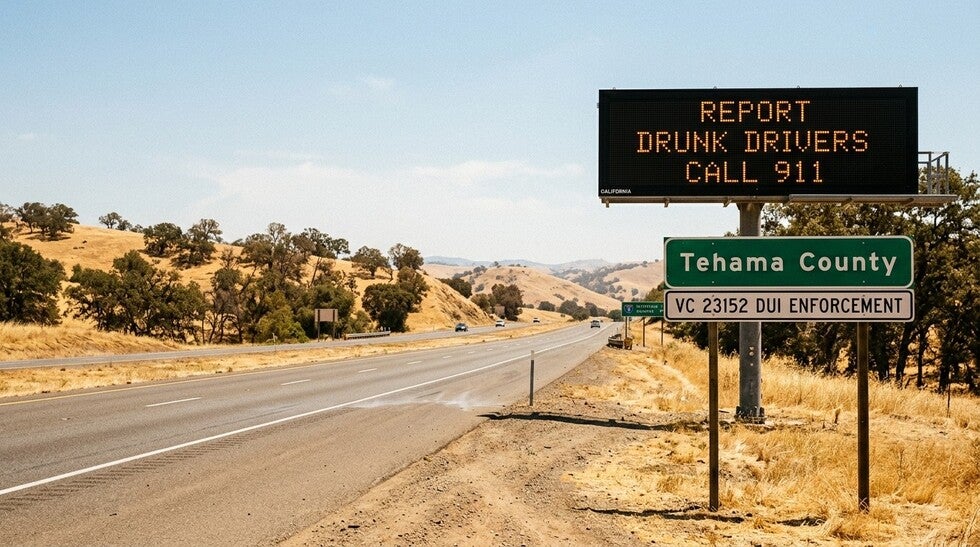
Red Bluff holds a distinction that shapes every summer DUI case in Tehama County: it is one of the hottest cities in California, with average July temperatures exceeding 100 degrees Fahrenheit and frequent days above 110 degrees. When CHP Tehama Area administers field sobriety tests on an I-5 shoulder in Red Bluff in July on asphalt radiating heat at 150 degrees, in direct sun, after the driver has been in a hot vehicle the physiological indicators being documented are not purely alcohol-attributable. Heat-induced nystagmus, balance instability from vasodilation and dehydration, flushed appearance, and elevated pulse are all documented responses to extreme heat exposure that appear in DUI reports as alcohol impairment indicators. The reliability of every field sobriety observation in a Tehama County summer DUI case requires forensic examination that accounts for the temperature at the time of administration.
The ten-day DMV Administrative Per Se deadline is the other constant in every Tehama County DUI case. It starts at arrest, runs independently of everything that happens at 633 Washington Street in Red Bluff, and cannot be recovered after it passes. The Bulldog Law files the APS hearing request on the first day of every Tehama County DUI retention.
The I-5 Corridor Red Bluff and Corning
Interstate 5 runs directly through Tehama County, connecting Red Bluff and Corning on one of California's busiest north-south freight and travel corridors. CHP Tehama Area maintains active enforcement on I-5 year-round, with intensified operations during summer travel season and holidays. Every DUI arrest from an I-5 stop begins with the constitutional validity of the stop itself. CHP needs reasonable articulable suspicion of a specific Vehicle Code violation not a profile, not a general enforcement instinct about the vehicle or driver.
We examine the specific basis documented in every CHP report against the dashcam footage at the first consultation. When those two sources tell different stories, the stop is challenged at 633 Washington Street. Evidence from an unlawful stop is suppressed, and without the BAC result and FST observations, no DUI charge can be sustained.
The I-5 corridor through Corning generates DUI arrests from the community's olive harvest season, when processing operations at Bell-Carter Foods and the surrounding olive industry facilities generate post-shift social gatherings whose consumption patterns produce rising BAC cases during the drive back to Red Bluff or the surrounding communities. Alcohol consumed at a post-harvest event that ends an hour or two before driving may still be absorbing during the I-5 drive home, meaning the chemical test BAC at a CHP stop can substantially overstate what was present at the wheel.
Red Bluff extreme heat and FST reliability: The National Weather Service records for Red Bluff show average July temperatures exceeding 100°F with frequent days above 110°F among the highest sustained summer temperatures of any city in California. When CHP administers Horizontal Gaze Nystagmus tests, walk-and-turn tests, and one-leg-stand tests on an I-5 shoulder or a Red Bluff surface street in these conditions, the documented indicators are not purely alcohol-attributable. Heat-induced nystagmus is documented in medical literature as occurring independent of alcohol at high ambient temperatures. Balance instability from heat-related vasodilation and the dehydration of extended heat exposure directly affects FST performance in ways that are physiologically distinct from alcohol impairment but appear identical in an officer's field notes. We develop this challenge through forensic toxicologist analysis of heat effects on FST performance in every applicable Tehama County summer DUI case at 633 Washington Street.
Sacramento River Boating DUI VC § 655
The Sacramento River's stretch through Tehama County from the Corning area south through the Red Bluff Diversion Dam and the surrounding recreational stretches attracts boaters, anglers, and rafters throughout the summer season. California State Parks rangers and the Tehama County Sheriff's marine unit enforce VC § 655 boating DUI on these waters. A boating DUI conviction carries the same criminal penalties and DMV consequences as a road DUI including the ten-day APS hearing deadline and generates a separate boating privilege suspension through California State Parks.
In Red Bluff's extreme summer heat, the physiological effects of extended time on the Sacramento River hours of direct sun exposure, physical activity in and on the water, and the dehydration that accompanies outdoor recreation in 105-degree temperatures produce the same indicators that officers document as alcohol impairment: flushed appearance, balance instability, elevated pulse, and slowed coordination. The environmental context of the Sacramento River in Tehama County's summer heat is part of every boating DUI impairment indicator challenge at 633 Washington Street.
Corning Olive Industry and Post-Harvest Rising BAC
Corning is the olive capital of the United States. Bell-Carter Foods' processing facility and the surrounding olive orchards and processing operations that define Corning's agricultural identity generate a specific DUI case pattern during olive harvest season: post-shift and post-processing social gatherings where industry workers and agricultural community members consume alcohol over several hours before driving on I-5 or Highway 99W. When alcohol consumed at a post-harvest gathering is still absorbing during the drive, the rising BAC defense applies with full force.
We work with forensic toxicologists who calculate driving-time BAC from the specific post-harvest gathering consumption timeline in every applicable Corning olive industry DUI case. The specific foods consumed which affect alcohol absorption rates the duration of the gathering, the departure time, and the distance driven to the CHP stop location are all inputs to the driving-time BAC calculation that challenges the VC § 23152(b) per se count at 633 Washington Street.
Ranching and Agricultural CDL Workforce
Tehama County's cattle ranching community the county's economic backbone, celebrated at the Red Bluff Bull and Gelding Sale and its agricultural transport workforce generate CDL DUI cases where the federal CDL disqualification consequence is the career priority from the first consultation. Under 49 C.F.R. Part 383, a first DUI conviction disqualifies a CDL holder from commercial driving for one year. A second produces lifetime disqualification. For the ranching CDL drivers and agricultural transport operators whose commercial authorization defines their livelihood in Tehama County, wet reckless reduction under VC § 23103 which doesn't trigger the federal CDL disqualification is the specific disposition outcome that preserves the career.
The Courthouse
Tehama County Superior Court
633 Washington Street, Red Bluff, CA 96080
All DUI cases in Tehama County proceed at 633 Washington Street in Red Bluff regardless of where in the county the arrest occurred on I-5 near Corning, in Red Bluff, in the Tehama community, or on the Sacramento River.
After a DUI Arrest in Tehama County
- Call The Bulldog Law immediately. The ten-day DMV APS deadline begins at arrest and is absolute.
- Write down the complete consumption timeline: every drink, when, where, what you ate. For Corning olive industry gatherings, document the specific event timeline and food consumed.
- Document the specific temperature and conditions at the time of the FST administration. The heat matters.
- If this is a Sacramento River boating case, document the duration of sun exposure, physical activity on the water, and hydration throughout the day.
- If you hold an agricultural or ranching CDL, contact The Bulldog Law immediately about CDL disqualification consequences.
- Call (888) 928-1609.
Red Bluff: Red Bluff office | Corning: Corning office | Tehama: Tehama office | (888) 928-1609
Frequently Asked Questions
How does Red Bluff's extreme heat specifically affect field sobriety test reliability?
At temperatures above 100°F which Red Bluff regularly experiences throughout July, August, and September the human body's thermoregulatory responses produce physiological changes that directly overlap with alcohol impairment indicators. Peripheral vasodilation causes flushed appearance. Heat stress produces balance instability and slowed coordination. Dehydration from heat exposure elevates pulse rate. Nystagmus the involuntary eye movement that HGN testing measures can be produced by heat exposure, inner ear effects of dehydration, and other conditions entirely unrelated to alcohol. When officers administer FSTs on an I-5 shoulder in Red Bluff in 110-degree heat, every observation they record requires examination by a forensic toxicologist who accounts for the specific temperature at the time of administration. We develop this challenge in every applicable Tehama County summer DUI case at 633 Washington Street.
How does the Corning olive harvest rising BAC defense work?
During Corning's olive harvest season typically October through December post-processing social gatherings sometimes involve alcohol consumption that ends an hour or two before driving on I-5 or Highway 99W. When alcohol is still absorbing at the time of a CHP stop, the chemical test BAC measured at the roadside can substantially overstate the BAC that was present during driving. We work with forensic toxicologists to calculate driving-time BAC from the specific gathering's consumption timeline accounting for food consumed, the timing of each drink, the departure time, and the stop location and present that calculation to challenge the VC § 23152(b) per se count at 633 Washington Street in Red Bluff.
What is the CDL consequence for Tehama County's ranching and agricultural workforce?
Federal regulations under 49 C.F.R. Part 383 disqualify any CDL holder from operating a commercial motor vehicle for one year upon a first DUI conviction regardless of whether the arrest involved a commercial vehicle. A second conviction produces lifetime disqualification. For Tehama County's ranching CDL drivers, cattle transport operators, and olive and almond agricultural transport workforce, this consequence is career-ending in ways that the standard DUI penalties alone are not. Wet reckless reduction under VC § 23103 which carries lighter penalties and, critically, does not trigger the federal CDL disqualification is the specific disposition outcome that preserves the commercial driving career. We pursue wet reckless wherever the evidence and the specific facts of the Tehama County case support the negotiation at 633 Washington Street.
For more on Red Bluff extreme heat FST challenges, I-5 Corning olive industry rising BAC, Sacramento River boating DUI, ranching and agricultural CDL consequences, the ten-day DMV deadline, and DUI defense at the Tehama County Superior Court, visit Bulldog blog.