
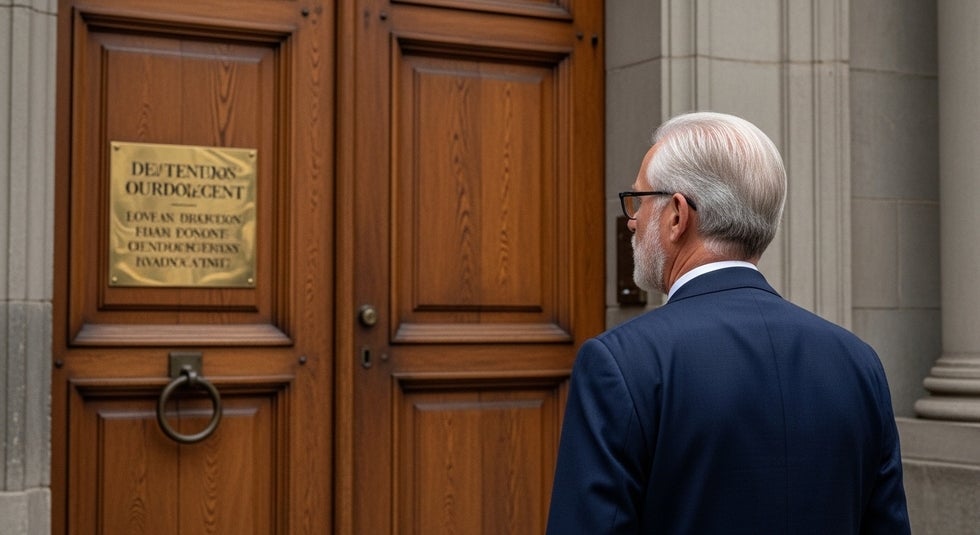
The Grand Jury Room: More Exclusive Than You Think
If you or someone you love is the subject of a grand jury investigation in California, one of the first things your defense attorney will explain is this: the grand jury process is intentionally designed to exclude you. That might sound alarming, but understanding exactly how these rules work and when they can be challenged is one of the most powerful tools a skilled criminal defense lawyer can use on your behalf.
Under California Penal Code Section 939, the rules governing who may be present during a criminal grand jury session are strict. Only a narrow set of individuals are permitted inside that room, and any deviation from those rules can have real consequences for the case against you.
What the Law Actually Says
California law limits grand jury attendance to a specific group of people. During a criminal session, only the following are permitted to be present:
Those persons specified under Article 3 of the Penal Code beginning with Section 934, as well as those permitted under Sections 939.1, 939.11, and 939.21. The officer having custody of a prisoner witness may also be present, but only while that prisoner is actively testifying. Beyond these individuals, only grand jury members themselves and witnesses currently under examination may be in the room.
There is one additional restriction that often surprises people: grand jurors who have been excused under Section 939.5 are prohibited from returning. They cannot be present during any portion of the proceedings once they have been dismissed. And when it comes to the most sensitive moments, such as when grand jurors are expressing their opinions, deliberating, or casting votes on either a criminal or civil matter, absolutely no one other than the grand jurors themselves may be present. Not prosecutors. Not clerks. No one.
Why This Matters for Your Defense
From a defense standpoint, these rules exist as both a shield and a potential sword. They were designed to protect the integrity of the grand jury process, but when they are violated, that violation can become a critical issue in your case.
Here is why this matters directly to you as a defendant.
Unauthorized presence can taint the proceedings. If someone who was not legally permitted to be in that room was present during testimony or deliberations, the grand jury's indictment may be challengeable. California courts take procedural compliance seriously, and your attorney should scrutinize the record carefully.
You are not entitled to be there, but your attorney can still fight for you. The law does not give defendants or their lawyers the right to attend grand jury sessions. This is one of the most fundamentally one-sided aspects of the criminal process. However, that does not mean you are powerless. An experienced defense attorney can challenge the sufficiency of evidence presented, investigate whether proper procedures were followed, and file motions to set aside an indictment if misconduct occurred.
Witness rights matter too. If you are called as a witness before a grand jury, the rules about who else is in that room directly affect your rights. Witnesses have the right to know who has access to their testimony, and any irregularity in that process can affect the admissibility and credibility of what was presented to the grand jurors.
For a broader look at how defense attorneys challenge improper grand jury procedures, visit the criminal defense resources on The Bulldog Law blog.
The Secrecy Behind Closed Doors
Grand jury proceedings are fundamentally secret, and the laws about attendance are a core part of that design. The California Legislature structured these rules for a few important reasons: to protect potential witnesses from outside pressure, to encourage witnesses to testify freely, to prevent those who might be indicted from fleeing or destroying evidence before charges are filed, and to protect individuals who are investigated but ultimately not charged from public embarrassment.
But here is the uncomfortable truth that prosecutors rarely publicize: this secrecy also means there is very little oversight of what actually happens during those proceedings. There is no judge in the room. The defense is not present. The grand jury hears only what the prosecutor chooses to present. That profound imbalance is precisely why the attendance rules and every other procedural protection built into the grand jury system matter so much.
If those rules are bent or broken, the resulting indictment may not be the product of a fair and lawful process. That is something every defendant deserves to have examined.
What Happens When the Rules Are Violated
When an unauthorized person is found to have been present during a grand jury session, California courts have the authority to take action. The most significant remedy is a motion to set aside the indictment under Penal Code Section 995. While courts do not automatically dismiss an indictment based on procedural error, a showing of prejudice, meaning that the violation actually affected the outcome, can be grounds for relief.
This is not a technicality in the dismissive sense of the word. Procedural rules exist to protect the constitutional rights of people accused of crimes. When those rules are ignored, the entire integrity of the charging process is called into question.
Your defense attorney should always obtain and review the grand jury transcript and any available records about who was present during your proceedings. This kind of meticulous review is part of what separates an effective criminal defense from a passive one.
To learn more about how defense attorneys approach grand jury indictments and pretrial motions, explore additional articles at Law blog.
Questions to Ask Your Defense Attorney Right Now
If you have been indicted by a grand jury or believe you are under grand jury investigation, these are the conversations you should be having with your lawyer today.
Was the grand jury properly constituted and were attendance rules followed throughout the proceedings? Was any unauthorized individual present at any point during testimony or deliberation? Were any excused jurors permitted to remain or return? Is there a viable motion to set aside the indictment based on procedural violations?
These are not hypothetical questions. They are the starting point for a serious, aggressive defense strategy.
Your Rights Deserve a Serious Defense
The grand jury process is one of the most opaque parts of the criminal justice system. As a defendant, you are excluded from a proceeding where critical decisions about your future are being made. The law permits that exclusion but also surrounds it with procedural rules meant to ensure fairness.
When those rules are followed, the system works as intended. When they are not, that is where defense attorneys do some of their most important work.
If you are facing charges that originated in a grand jury indictment, do not assume the process was clean just because it concluded with charges against you. Demand a thorough review. Push for answers. And make sure you have an attorney who understands exactly what the law requires inside that room and what it means when those requirements are not met.
For more information on how we can best meet your needs, contact our nationwide attorneys at (888) 928-1609 for a free consultation. You may also fill out our online contact form.