
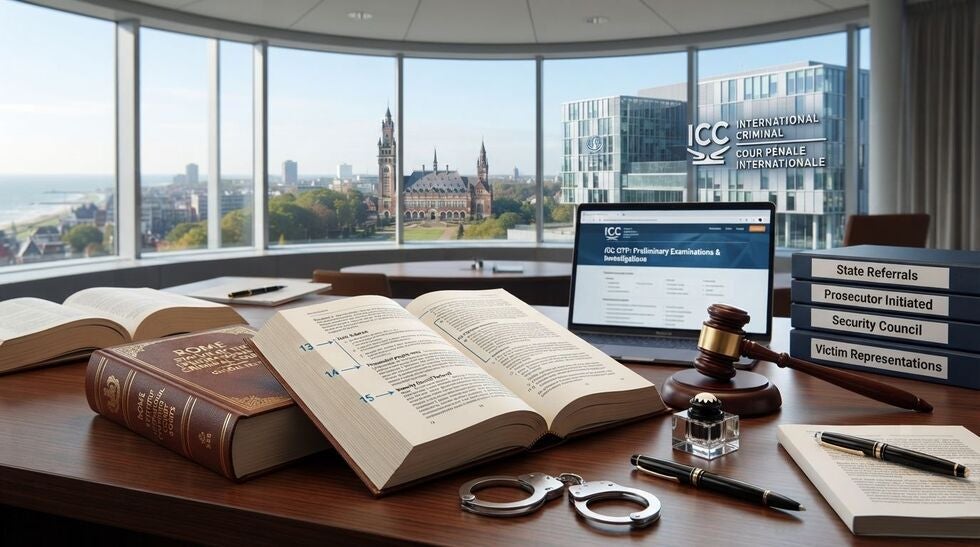
When major world events unfold, wars, atrocities, mass violence, people often ask: can someone be held accountable at The Hague? It's a fair question. But the answer is more specific than most people expect. Criminal charges at The Hague aren't filed by victims, governments acting alone, or concerned citizens. There's a precise legal process, and understanding it helps make sense of how international criminal justice actually works.
What Court Handles Criminal Charges at The Hague?
The court that handles criminal charges at The Hague is the International Criminal Court, almost always referred to as the ICC. It was established by a treaty called the Rome Statute, which was adopted in July 1998 and entered into force on July 1, 2002.
The ICC is a permanent, independent international court that tries individuals, not countries, for four core categories of international crime: genocide, crimes against humanity, war crimes, and the crime of aggression. It is not a court for ordinary criminal matters. It exists specifically to address the most serious crimes of concern to the international community as a whole.
According to the ICC's official information about the Court, the ICC is a court of last resort. This is a key concept. The Court does not step in and take over cases that national courts are already handling. It only acts when national courts are genuinely unable or unwilling to prosecute. This principle is called complementarity, the ICC complements national justice systems rather than replacing them.
It is also important not to confuse the ICC with another court located at The Hague: the International Court of Justice (ICJ). Both courts sit in the Netherlands, but they do very different things. The ICJ resolves legal disputes between countries. The ICC prosecutes individuals for international crimes. They are entirely separate institutions.
Who Can Bring a Case to the International Criminal Court?
This is where many people get surprised. A case does not come before the ICC simply because someone files a complaint. There are only three ways a situation can be triggered, and a private individual filing charges is not one of them.
A State Party Referral. Any country that is a party to the Rome Statute can refer a "situation" to the ICC Prosecutor, asking the Prosecutor to investigate crimes that appear to have occurred. The referral doesn't identify specific defendants, it refers a broader situation for the Prosecutor to examine.
A UN Security Council Referral. The United Nations Security Council has the authority to refer a situation to the ICC, even when the country involved has not joined the Rome Statute. This power comes from the Security Council's mandate to address threats to international peace and security. Situations like Darfur (Sudan) and Libya were referred to the ICC through this mechanism.
The Prosecutor's Own Initiative. The ICC Prosecutor can open an investigation on their own initiative, known in legal terms as proprio motu. However, before doing so, the Prosecutor must first obtain authorization from the Court's Pre-Trial Chamber. This built-in check prevents the Prosecutor from acting unilaterally without judicial oversight.
Understanding these pathways helps make clear why the ICC moves slowly and cautiously. Each step involves legal authorization and review, not just political will.
Can an Individual File Criminal Charges at the ICC?
No, but individuals are not entirely without a role.
Private people, victims, non-governmental organizations, and others cannot file criminal charges at the ICC the way a prosecutor files a complaint in a domestic court. This is the most common misconception about The Hague.
What individuals and organizations can do is submit "communications" to the Office of the Prosecutor. These are written submissions providing information about alleged crimes. According to the ICC's Office of the Prosecutor page on preliminary examinations, preliminary examinations can be initiated based on information sent by individuals, groups, states, intergovernmental organizations, or non-governmental organizations.
The Prosecutor then reviews that information and decides whether it warrants a preliminary examination and, ultimately, a formal investigation. So the door is not completely closed to ordinary people, but submitting information is very different from filing charges. Only the Prosecutor can pursue charges, and only after completing the required legal steps and obtaining the necessary authorizations.
This matters because it reflects how seriously international criminal law takes due process. Even at the world's most powerful criminal tribunal, there are multiple layers of oversight before an investigation begins. If you've ever wondered whether innocent people can get swept into systems that don't have proper safeguards, the question of whether innocent people go to jail is one worth thinking about at every level of criminal justice.
What Crimes Does the ICC Prosecute?
The ICC has jurisdiction over four categories of the most serious international crimes. These are not everyday offenses. Each one represents conduct so grave that the international community collectively decided it demands a permanent court to address it.
Genocide. Acts committed with the specific intent to destroy, in whole or in part, a national, ethnic, racial, or religious group. The intent element is what makes genocide legally distinct from other mass violence.
Crimes Against Humanity. Widespread or systematic attacks directed against a civilian population, which can include murder, enslavement, torture, forced disappearance, and other severe acts. These crimes do not have to occur during a war, they can be committed in peacetime as well.
War Crimes. Serious violations of the laws of war, including grave breaches of the Geneva Conventions. These can include targeting civilians, using prohibited weapons, taking hostages, and ordering no quarter given.
The Crime of Aggression. Added by amendment in 2010, this covers the planning or execution, by a person in a position of leadership, of an act of aggression by one state against another. It is the most politically complex of the four categories, and the ICC's jurisdiction over it is subject to additional requirements.
The common thread across all four is scale, intent, and the failure of national systems to act. The ICC is not a venue for resolving individual grievances, it exists for crimes that shock the conscience of humanity.
What Are the Limits on ICC Jurisdiction?
The ICC's reach is significant but limited, and these limits are a defining feature of how international criminal justice operates.
In general, the Court can act only when:
The crime occurred on the territory of a Rome Statute member state, or the alleged perpetrator is a national of a member state, unless the situation has been referred by the UN Security Council, which expands the Court's reach regardless of membership.
The Court also acts only where national courts cannot or will not prosecute. If a country with jurisdiction over the accused is genuinely and actively pursuing the case, the ICC will typically defer. The complementarity principle means the ICC only steps in when domestic justice has failed.
One of the most notable jurisdictional gaps involves the United States. The U.S. is not a party to the Rome Statute, which significantly limits the ICC's reach over American nationals. This is a longstanding point of tension in international law and has been the subject of significant political debate over the years.
Understanding how evidence is gathered and evaluated in these high-stakes settings connects to broader questions of what makes criminal cases strong or weak. The difference between building a case on solid proof versus tenuous inferences applies in international courts just as in domestic ones, which is why understanding the difference between circumstantial and direct evidence matters at every level of criminal justice.
How the ICC Process Works Step by Step
For those curious about what actually happens once a situation comes before the ICC, here is a simplified overview:
Preliminary Examination. The Office of the Prosecutor reviews available information to determine whether a formal investigation is warranted. This stage can take months or years.
Investigation. If the Prosecutor decides to proceed (and receives Pre-Trial Chamber authorization in proprio motu cases), a formal investigation begins. The Prosecutor's office gathers evidence, interviews witnesses, and builds the factual record.
Arrest Warrants or Summonses. If the evidence supports it, the Pre-Trial Chamber can issue arrest warrants or summonses to appear. Enforcement depends on cooperation from member states, the ICC has no police force of its own.
Confirmation of Charges Hearing. Before a full trial, a Pre-Trial Chamber reviews the charges to confirm there is sufficient evidence to proceed.
Trial. The case goes before a Trial Chamber of three judges. There are no juries at the ICC. Defendants have the right to legal representation, to examine witnesses, and to present their own evidence.
Appeals. Both the prosecution and the defense can appeal verdicts and sentences to the ICC's Appeals Chamber.
This is a long, careful process by design. The stakes are enormous, the crimes involved are among the gravest humanity has ever witnessed, and the Court's legitimacy depends on scrupulous fairness.
If you're interested in how criminal defense works at the domestic level in the United States, The Bulldog Law handles federal criminal defense cases and can help you understand how serious charges are defended at the highest levels of the American legal system. And for a broader look at the value of strong legal representation in any serious matter, the page on the benefits of hiring a lawyer lays out why it matters. For California-specific criminal matters, The Bulldog Law's criminal defense team is ready to help.
Frequently Asked Questions
Can a private person file charges at the International Criminal Court?
No. Private individuals cannot file criminal charges at the ICC. Only three mechanisms can trigger a case: a referral by a Rome Statute member state, a referral by the UN Security Council, or an investigation opened by the ICC Prosecutor on their own initiative, with Pre-Trial Chamber authorization. Individuals, victims, and organizations can submit information called communications to the Office of the Prosecutor, who decides whether to investigate. But submitting information is not the same as filing charges.
What is the difference between the ICC and the ICJ at The Hague?
Both are located at The Hague, but they serve entirely different purposes. The International Criminal Court (ICC) prosecutes individuals for genocide, war crimes, crimes against humanity, and the crime of aggression. The International Court of Justice (ICJ) is the principal judicial organ of the United Nations and resolves legal disputes between countries, it does not try individuals or impose criminal punishment. Criminal charges against individuals are an ICC matter. State-versus-state disputes go to the ICJ.
What crimes can the ICC prosecute?
The ICC has jurisdiction over four core international crimes: genocide, crimes against humanity, war crimes, and the crime of aggression. It is a court of last resort that acts only when national courts are genuinely unable or unwilling to prosecute. Its jurisdiction generally requires that the crime occurred in a member state, was committed by a national of a member state, or was referred by the UN Security Council.
Does the ICC have jurisdiction over U.S. citizens?
Generally, no, at least not through the standard membership pathway. The United States is not a party to the Rome Statute, which significantly limits the ICC's jurisdiction over American nationals. However, if a situation involving U.S. nationals were referred by the UN Security Council, the Court's jurisdiction could potentially extend further. This remains a contested area of international law and U.S. foreign policy.
Can the ICC prosecute crimes that happened before 2002?
No. The ICC's jurisdiction is non-retroactive. The Court has no power to investigate events that took place before July 1, 2002, when the Rome Statute entered into force. For crimes committed before that date, other mechanisms, such as ad hoc tribunals (like those established for the former Yugoslavia or Rwanda), were used instead.
The International Criminal Court plays a unique role in holding individuals accountable for the world's most serious crimes. But the path to bringing a case is deliberately narrow, running through states, the UN Security Council, and the Prosecutor, not private complaints. That careful structure reflects the weight of what the Court does and the importance of getting it right.
This article is general information about international law, not legal advice.
For more explainers on criminal law topics, visit The Bulldog Law criminal defense blog.