
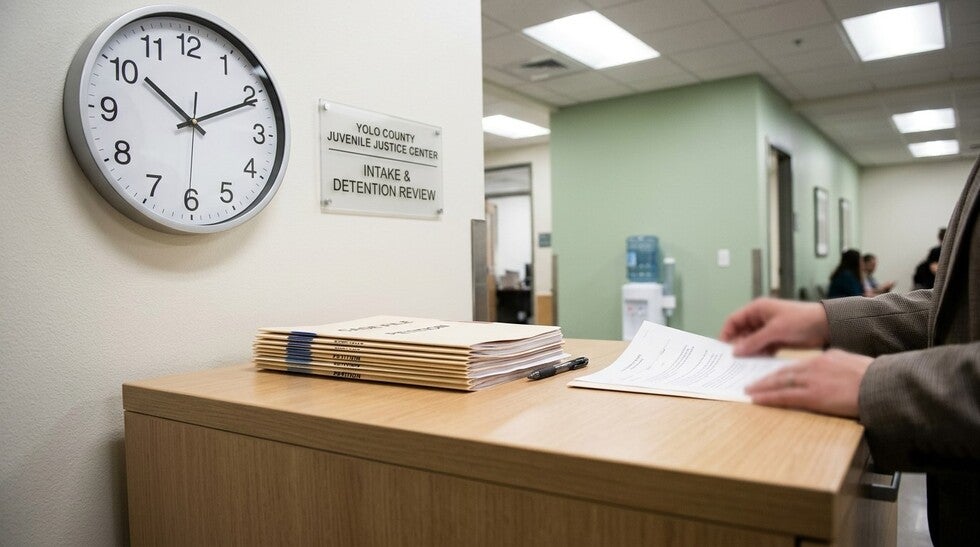
Juvenile Charges in Yolo County can move quickly after an arrest, citation, school incident, or police contact. The first 48 hours can shape whether a child is released home, detained, referred to diversion, placed on informal supervision, or formally charged through a Welfare and Institutions Code 602 petition.
California's juvenile system is supposed to focus on rehabilitation, not adult punishment. But a juvenile case can still affect school discipline, college plans, immigration discretion, licensing, employment, family stability, and future record sealing. Parents should treat the first call from law enforcement, school officials, or probation as a legal emergency.
Juvenile Charges in Yolo County under WIC 602
Welfare and Institutions Code 602 applies when a minor is accused of conduct that would be a crime if committed by an adult. The case is handled in juvenile delinquency court, where the court decides whether the allegations are true and what rehabilitative orders are appropriate.
A sustained petition is not an adult criminal conviction. That distinction matters. Still, a juvenile adjudication can create real consequences, especially if the case involves violence, theft, drugs, weapons, school conduct, gang allegations, sexual conduct, immigration concerns, or a possible transfer to adult court.
For families comparing how WIC 602 cases work across California, juvenile crimes under WIC 602 in Riverside County show how the same statewide juvenile law can produce different local procedures, diversion options, and court expectations.
Juvenile Charges in Yolo County and the first 48 hours
The first 48 hours matter because probation, law enforcement, and the District Attorney may make early decisions before the family understands the full consequences. If a child is taken into custody, the law imposes strict timing rules for filing a petition, detention review, and release in many situations.
Early defense work should focus on:
- Stopping unnecessary statements.
- Preserving video, messages, school records, and witness information.
- Advocating for release to parents or guardians.
- Preparing for probation intake.
- Building a diversion packet before filing decisions harden.
- Identifying school discipline, immigration, and licensing consequences.
- Preventing a minor case from being treated as a more serious case than the facts support.
If a child is cited and released instead of booked, the family still needs to take the case seriously. California juvenile citation and release rights can affect what parents should do after a police contact that does not immediately result in detention.
Questioning, Miranda, and a minor's right to counsel
Parents often assume they have to let police or school officers question their child. In California, a youth 17 or younger generally must consult with legal counsel before custodial interrogation and before waiving Miranda rights, unless a narrow emergency exception applies.
That consultation requirement is critical. A child may try to explain, apologize, protect a friend, minimize the incident, or answer confusing questions without understanding how statements can be used later. A statement made in the first hours can shape detention, filing, school discipline, probation recommendations, and plea negotiations.
Parents should clearly state that the child is invoking the right to remain silent and wants an attorney. They should not pressure the child to “tell the truth” to investigators before legal counsel is involved. Cooperation can happen through counsel when it helps the defense, but unprotected statements can cause lasting harm.
Probation intake and diversion in Yolo County
In many Yolo County juvenile cases, the first major decision happens at probation intake. Probation may assess the allegations, school history, family support, prior record, risk factors, treatment needs, and whether the case should be handled informally or referred for a formal WIC 602 petition.
Possible outcomes may include informal diversion, informal supervision, filing of a petition, formal probation, placement, or other orders depending on the case. In lower-level first offenses, the defense should be ready to show why the child can be safely released and rehabilitated without a sustained petition.
Useful materials may include:
- School attendance and grades.
- IEP or 504 records if relevant.
- Letters from coaches, teachers, employers, mentors, or clergy.
- Proof of counseling, treatment, community service, or restitution efforts.
- Family supervision plans.
- Evidence contradicting the police report.
- Immigration, college, or licensing consequences that make diversion especially important.
When the child may qualify for deferred entry or another nontraditional resolution, deferred entry of judgment in California juvenile cases can be part of a strategy to avoid the harshest long-term consequences if eligibility and local practice support it.
Davis school arrests and disciplinary proceedings
School-based arrests in Davis, Woodland, West Sacramento, Winters, and other Yolo County communities can create two tracks at once: juvenile court and school discipline. A student may face suspension, expulsion, no-contact rules, campus restrictions, athletic consequences, or special education placement issues while the juvenile case is pending.
The defense must coordinate both tracks. A statement made during a school investigation may be used in juvenile court. A school discipline admission may affect the probation intake packet. A no-contact order may affect classes, activities, transportation, and graduation requirements.
Common school-based allegations include fights, threats, vandalism, graffiti, vaping, drugs, theft, sexual misconduct, weapons, cyberbullying, and social media conflicts. Juvenile graffiti charges and mandatory community service show how a school or community property case can create court orders beyond a simple apology or discipline meeting.
UC Davis, Yolo College, and professional pathways
Yolo County includes students whose futures depend on clean records and careful disclosure. A youth may be aiming for UC Davis, community college transfer, nursing, medicine, veterinary school, law school, teaching, military service, public employment, or a licensed trade.
A juvenile adjudication may not be an adult conviction, but it can still create disclosure questions. Professional schools, licensing boards, internships, clinical placements, and background checks may ask about discipline, arrests, adjudications, or conduct. A diversion dismissal or sealed record can be much better than a sustained petition when a student later applies for competitive programs.
That is why the defense should discuss educational goals immediately. The best resolution is often the one that preserves the child's future, not just the one that ends the next court date.
Immigration concerns for DACA and mixed-status families
Juvenile adjudications are generally not treated as criminal convictions for federal immigration purposes, but that does not mean they are harmless. Immigration agencies can consider conduct, arrests, gang allegations, drug issues, violence, or records as discretionary factors in DACA, adjustment, naturalization, or other immigration benefits.
For DACA recipients, mixed-status households, H-2A agricultural families, undocumented youth, and lawful permanent residents, the defense should involve immigration analysis early. The goal is often to avoid adult court, avoid sustained findings where possible, minimize harmful conduct language, and pursue diversion or sealing as soon as legally available.
Families should not assume confidentiality alone will protect the child. The record, allegations, and admissions can still matter in immigration and school settings.
West Sacramento gang allegations and transfer risk
Gang allegations can change a juvenile case immediately. Even when the underlying incident began as a fight, social media dispute, theft, robbery allegation, or group confrontation, prosecutors may use gang language to argue the child is higher risk.
In serious cases, the District Attorney may seek transfer to adult court under Welfare and Institutions Code 707. Transfer risk is one of the most serious issues in juvenile defense because adult court can expose a child to adult criminal consequences, public records, and harsher sentencing.
The defense should respond with rehabilitation evidence, family support, school records, mental health information, community ties, lack of prior record, and facts showing the child can be treated within the juvenile system. California juvenile transfer proceedings under section 707 require a focused defense against any claim that the minor is not amenable to juvenile rehabilitation.
Comparing Yolo County juvenile practice to other counties
Juvenile law is statewide, but each county has its own court culture, probation practices, diversion resources, school systems, and local programs. Yolo County cases may involve UC Davis, agricultural communities, West Sacramento urban issues, Woodland court practice, and Davis school discipline in ways that differ from other regions.
For comparison, juvenile WIC 602 cases in San Luis Obispo County may involve different campus, coastal, and local probation factors. San Diego juvenile crimes under WIC 602 may involve a larger urban juvenile system, different diversion pathways, and different law enforcement resources.
The defense should use the statewide law while tailoring the presentation to Yolo County's local agencies, schools, court expectations, and family circumstances.
Record sealing after a Yolo County juvenile case
Record sealing should be part of the defense plan from the beginning. In many successful diversion or probation outcomes, California law may allow juvenile records to be sealed automatically or by petition, depending on the type of case, offense, outcome, and eligibility.
Sealing can make records inaccessible to most employers, schools, and the public. But some serious offenses, adult transfers, or later convictions can limit sealing options. The defense should avoid resolutions that unnecessarily damage future sealing eligibility.
For students, DACA recipients, professional applicants, and young people entering the workforce, record sealing can be the difference between a juvenile mistake and a long-term barrier.
Yolo County Juvenile Court and what families should expect
Yolo County juvenile matters are handled through the Yolo County Superior Court Juvenile Division at 1000 Main Street, Woodland, CA 95695. The Yolo County Juvenile Detention Facility is a separate facility located at 2880 East Gibson Road, Woodland, CA 95776. Families should confirm the correct appearance location, department, and time before any hearing.
The juvenile process may include intake, detention hearing, petition filing, arraignment, jurisdiction hearing, disposition, probation terms, restitution, school orders, counseling, community service, placement, transfer litigation, and record sealing.
Yolo County Superior Court, Yolo County Probation, local schools, law enforcement agencies, prosecutors, UC Davis, school districts, and detention facilities are independent public institutions. Bulldog Law is not affiliated, endorsed, partnered, connected, or associated with any court, probation department, school, university, prosecutor, agency, detention facility, or government institution.
What parents should do immediately
- Tell your child not to answer questions until counsel is involved.
- Ask where your child is, whether they are detained, and when the next hearing may occur.
- Write down the names of officers, school officials, witnesses, and probation contacts.
- Preserve texts, videos, social media posts, school notices, emails, and call logs.
- Do not let your child post about the incident online.
- Ask whether a school discipline process has started.
- Gather grades, attendance, counseling records, achievements, and letters of support.
- Tell the lawyer immediately about immigration status, DACA, probation, prior cases, or special education needs.
- Do not contact alleged victims or witnesses in a way that could be viewed as pressure.
Juvenile Charges in Yolo County lawyers in California
Bulldog Law defends minors and families facing juvenile charges in Yolo County, including WIC 602 petitions, diversion, probation intake, school arrests, Davis disciplinary matters, West Sacramento gang allegations, transfer hearings, theft, drugs, weapons, assault, graffiti, and record sealing.
Juvenile Charges in Yolo County require action before the case becomes fixed in the system. The first 48 hours can affect release, detention, diversion, school discipline, immigration risk, college pathways, transfer exposure, and record sealing. A strong juvenile defense starts with silence, family coordination, evidence preservation, and an immediate plan for rehabilitation-focused resolution.